How to Repair Skin Barrier | Luxyora
If your skin has suddenly become moodily tight after cleansing, flaky by noon, stinging when you apply products you used to love, and somehow breaking out and drying out at the same time, you’re not “doing skincare wrong.” You’re likely dealing with a stressed (or compromised) skin barrier, the outermost system that keeps water in and irritants out.
Think of your barrier as the cashmere coat of your face: it’s meant to protect you from wind, pollution, and microbes while keeping everything underneath comfortably hydrated. The barrier primarily resides in the stratum corneum, where corneocytes (“bricks”) and a lipid matrix (“mortar”) work together to regulate diffusion and reduce transepidermal water loss (TEWL). That “mortar” is famously made of ceramides, cholesterol, and free fatty acids, a trio that shows up repeatedly in barrier science.
The vibe shift happens when your barrier gets overstressed by over-exfoliation, too many actives, harsh cleansers, climate extremes, or underlying skin conditions until it can’t keep calm and carry on. The fix isn’t a 15-step routine. It’s a “quiet luxury” strategy: simplify, soothe, and rebuild.
Recognize the signs (before you accidentally make it worse)
A compromised barrier often looks and feels like:
- Tightness or “squeaky clean” discomfort after washing
- Stinging when you apply moisturizer (yes, moisturizer)
- Redness, dryness, flaking, rough texture
- Sudden sensitivity to fragrance, acids, or retinoids
- Breakouts that appear alongside dehydration
This isn’t just aesthetic, it’s physiology. Barrier disruption increases water loss and makes skin more reactive to irritants and allergens.
The Barrier Repair Reset (the chic 10-14 day plan)
1. Stop the “actives pile-on”
If you’re using exfoliating acids, retinoids, strong vitamin C, scrubs, peel pads, or cleansing brushes, pause them. Barrier repair works best when you remove repeat triggers and let self-repair mechanisms do their job.
What stays: cleanser, moisturizer, sunscreen. That’s your entire personality for the next two weeks.
2. Cleanse gently, like you’re washing silk
Cleansing is where most barrier damage begins: too hot, too harsh, too frequent. “Non-soap” cleansers and lukewarm water are commonly recommended for barrier-compromised skin, especially in eczema-prone routines.
The rules:
- Lukewarm water only
- Use fingertips, not friction
- Cleanse once daily at night if you’re very reactive
3. Moisturize with barrier-identical ingredients
Moisturizer isn’t optional; it’s the repair crew. Organizations focused on eczema and barrier dysfunction note that lipid- and ceramide-infused barrier creams help form a protective layer, lock in moisture, and support healing.
Look for formulas featuring:
- Ceramides + cholesterol + fatty acids (barrier “mortar” support)
- Glycerin / hyaluronic acid (humectants that draw water into the skin)
- Petrolatum or dimethicone (occlusives that reduce TEWL, especially helpful during acute dryness)
A clinical study in adults with eczema found that a ceramide-dominant moisturizing cream and cleanser improved skin permeability barrier measures and symptoms, with good tolerability.
4. Sunscreen every day (yes, even during barrier repair)
UV exposure is not neutral when your barrier is stressed. Dermatology guidance for dry, compromised skin consistently includes daily sun protection. Choose the most comfortable formula you’ll actually wear because consistency is more important than perfection.
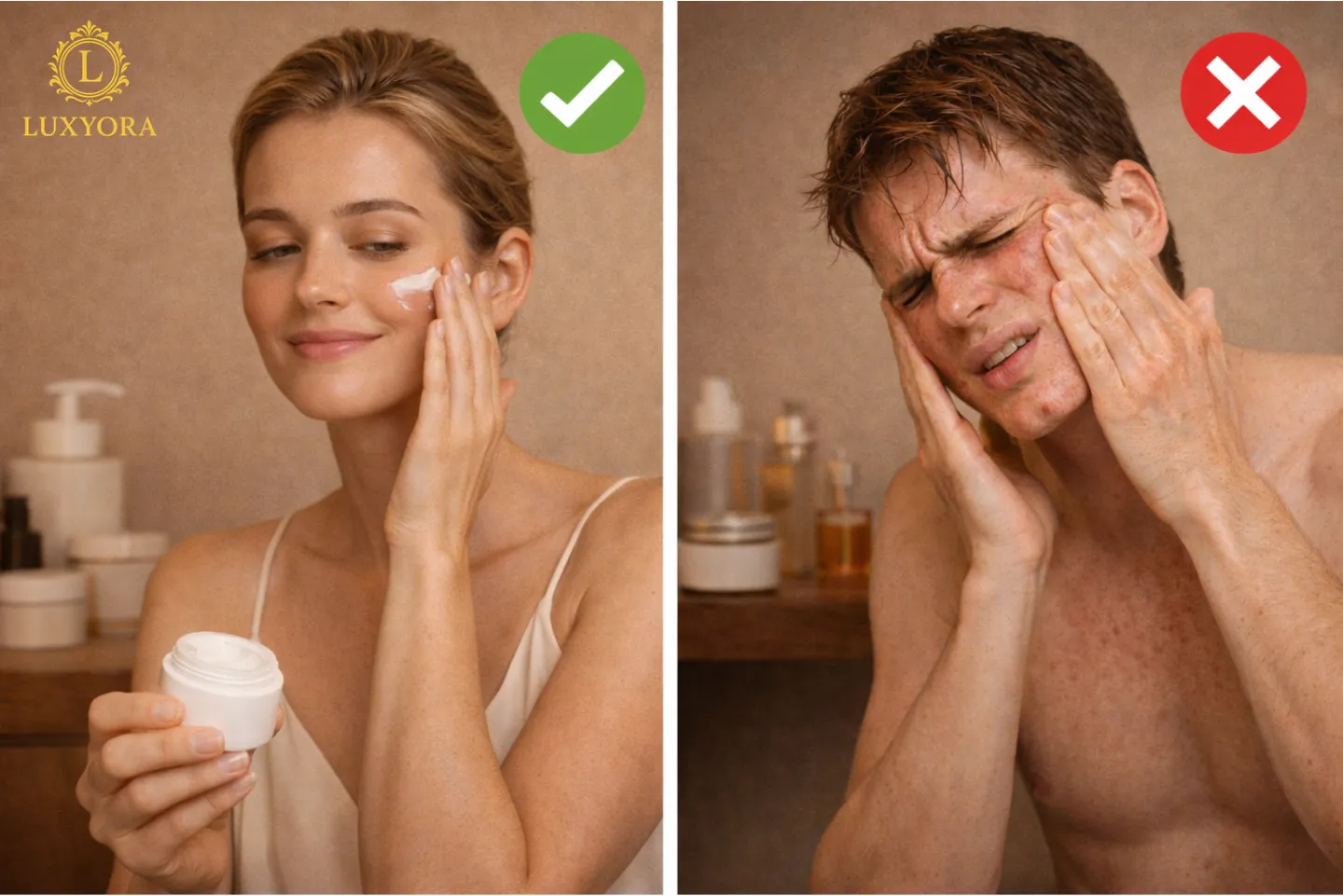
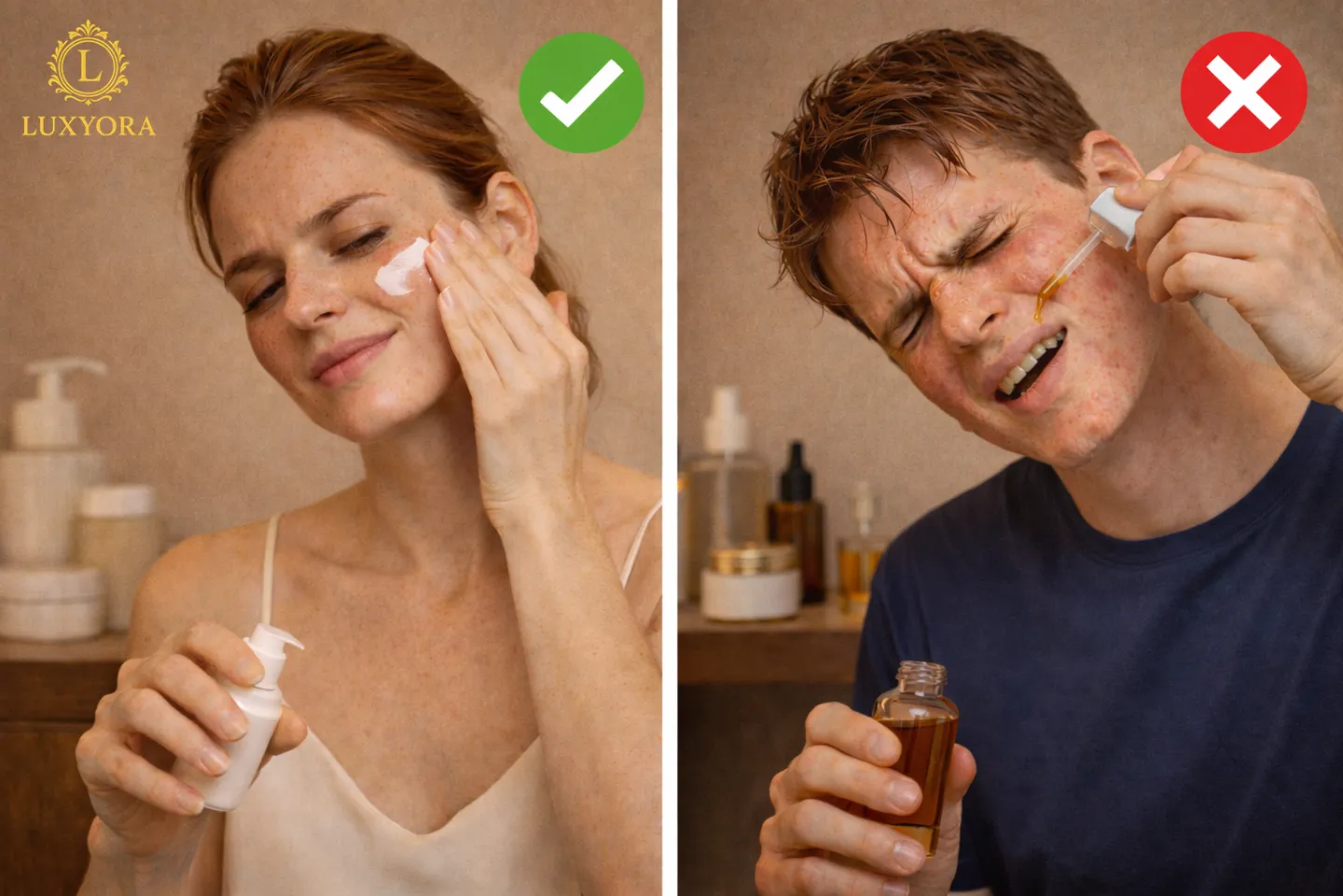
The “Do This, Not That” list
Do: Layer like a minimalist
A barrier-friendly routine is a trio:
- Gentle cleanse
- Moisturize (barrier lipids + humectants)
- Sunscreen
That’s it. Your skin doesn’t need excitement right now; it needs stability.
Do: Apply moisturizer at the right time
Moisturizer works best when applied to slightly damp skin after cleansing or bathing. Gentle bathing and immediate moisturizing are classic barrier-support techniques, especially in eczema education.
Don’t: Exfoliate “just a little” to remove flakes
Flaking is not an invitation to scrub. It’s a sign the barrier needs cushioning. Friction can worsen inflammation and sensitivity.
Don’t: Keep switching products
Barrier repair hates chaos. If you rotate products constantly, you’ll never know what’s helping or irritating.
When to reintroduce actives (without re-breaking the barrier)
Most people need 2-4 weeks of calm before adding treatments again (and longer if there’s an underlying condition). When you’re ready:
The re-entry method (very safe):
- Add one active only
- Use it 1-2 nights per week at first
- Buffer with moisturizer if needed
- If stinging returns, step back
A smart order:
- Niacinamide (often barrier-supportive and well-tolerated; also used in some “novel barrier creams”)
- Retinoid (slowly) or a mild exfoliant (rarely at the same time)
- Stronger acids later only if your skin truly tolerates them
Lifestyle: the underrated part of barrier glow
Barrier health isn’t only topical. Dry air, over-showering, harsh soaps, and environmental exposures all matter, and experts increasingly emphasize how modern habits can strip essential fats and disrupt skin acidity. Small upgrades help:
- Use a humidifier in dry seasons
- Keep showers shorter and not-too-hot
- Avoid fragranced body washes if you’re reactive
- Wear gloves for cleaning products
When to see a dermatologist
If you have persistent burning, cracking, oozing, severe redness, or recurring flares, you may be dealing with eczema, rosacea, contact dermatitis, or another condition where professional treatment is the real barrier repair. Barrier damage can be both a cause and a symptom, so don’t white-knuckle it.
Luxyora Philosophy: A repaired barrier is quite luxurious – fewer products, better choices, and the patience to let skin return to its natural intelligence. Protect the basics daily, and your glow becomes inevitable.
References:
- American Academy of Dermatology Association. (n.d.). Dermatologists’ top tips for relieving dry skin. Retrieved February 1, 2026, from https://www.aad.org/public/everyday-care/skin-care-basics/dry/dermatologists-tips-relieve-dry-skin
- Bouwstra, J. A., & Ponec, M. (2023). The skin barrier: An extraordinary interface with the environment. Advanced Drug Delivery Reviews. https://www.sciencedirect.com/science/article/pii/S0163782723000425
- Del Rosso, J. Q. (2025). Skin 101: Understanding the fundamentals of skin barrier physiology—Why is this important for clinicians? Journal of Clinical and Aesthetic Dermatology. https://pmc.ncbi.nlm.nih.gov/articles/PMC11896616/
- DermNet NZ. (2023). Skin barrier function. https://dermnetnz.org/topics/skin-barrier-function
- National Eczema Association. (n.d.-a). Moisturizing for eczema. Retrieved February 1, 2026, from https://nationaleczema.org/treatments/moisturizing/
- National Eczema Association. (n.d.-b). Eczema management. Retrieved February 1, 2026, from https://nationaleczema.org/eczema-management/
- National Eczema Association. (2022, September 24). Skin barrier basics for people with eczema. https://nationaleczema.org/blog/what-is-my-skin-barrier/
- Rajkumar, J., et al. (2023). The skin barrier and moisturization: Function, disruption, and repair. Skin Pharmacology and Physiology, 36(4), 174–189. https://karger.com/spp/article/36/4/174/863006/The-Skin-Barrier-and-Moisturization-Function
- Schild, J., et al. (2024). The role of ceramides in skin barrier function and repair. International Journal of Cosmetic Science. https://onlinelibrary.wiley.com/doi/full/10.1111/ics.12972
- Spada, F., et al. (2021). A daily regimen of a ceramide-dominant moisturizing cream and cleanser restores skin permeability and improves signs and symptoms of eczema in adults. Clinical, Cosmetic and Investigational Dermatology. https://pmc.ncbi.nlm.nih.gov/articles/PMC8459234/
- TIME. (2025). Are “broken skin barriers” a real thing? https://time.com/7212990/what-is-broken-skin-barrier-dermatologists/
- Vogue. (2023). 7 expert tips on how to repair a damaged skin barrier. https://www.vogue.com/article/expert-tips-on-how-to-repair-damaged-skin-barrier