No products in the cart.

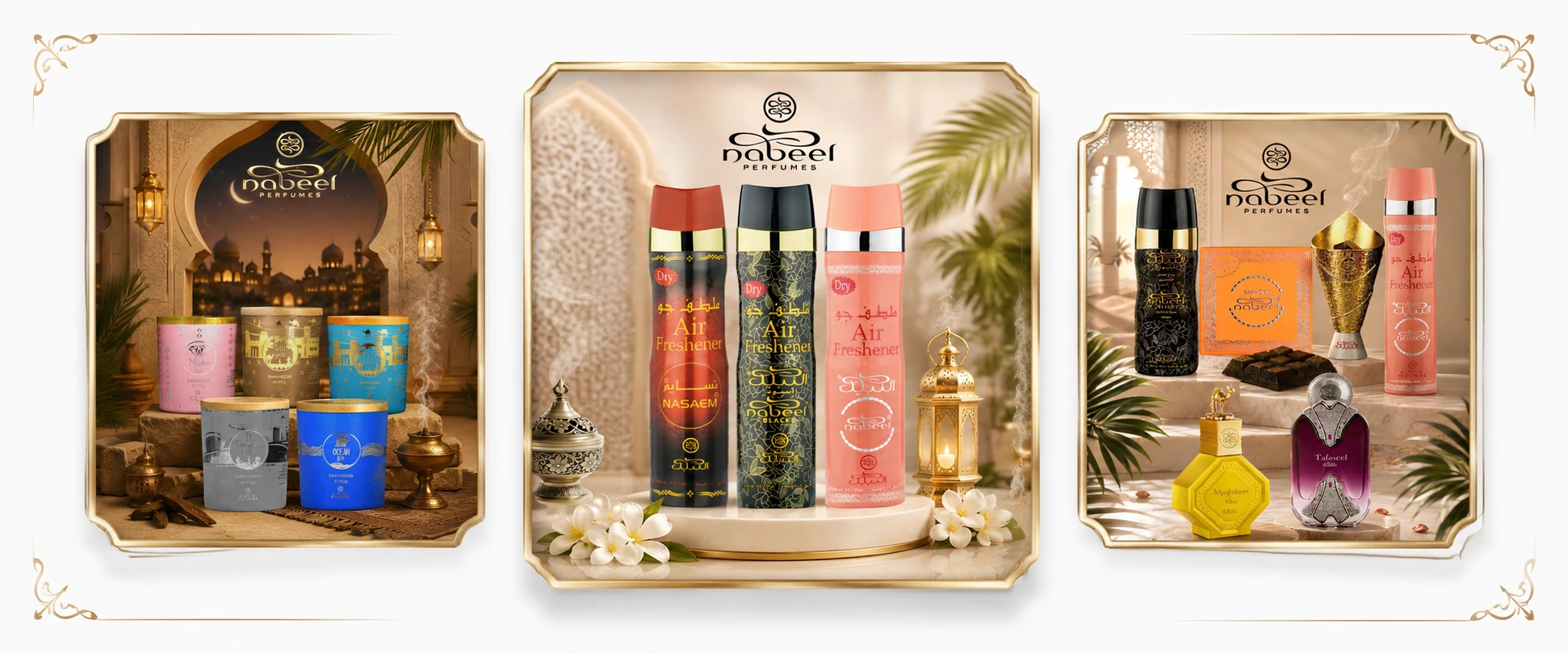
Nabeel Perfumes Group of Companies is a UAE-based, family-founded fragrance group whose roots reach back to 1969. Established by perfumer and entrepreneur Asghar Adam Ali Al Attar, the business has grown from an early perfume shop in Aden into a multi-brand enterprise based in Sharjah, producing Arabic and oriental fragrances, contemporary perfumes, incense, perfume oils, personal-care products and gift collections for international markets. Its four homegrown brands Nabeel, Chris Adams, The Spirit of Dubai and Nuvo allow the group to work across heritage perfumery, accessible contemporary fragrance and luxury niche creation while retaining a clear connection to the scent culture of the Arab world.
The Nabeel story began in Aden in 1969, where Asghar Adam Ali Al Attar established a small perfume shop. The founder’s official biography records that the family later moved to the United Arab Emirates, while Nabeel’s corporate history notes that a manufacturing plant was established in Sharjah in 1992. These beginnings remain central to the company’s identity: the business was shaped not only by commercial ambition but also by practical knowledge of attars, spray perfumes, and bakhoor formats deeply embedded in everyday fragrance traditions across the Arabian Peninsula.
The name “Nabeel” means “noble” in Arabic. The company has consistently linked that meaning to its emphasis on quality, presentation and long-term reputation. Its motto, “Be Daring, Be First, Be Different,” expresses another side of the house: an interest in experimentation and distinctive presentation alongside respect for established perfume rituals.
Asghar Adam Ali remains identified in the company’s public materials as Founder and Chairman. His son, Mustafa Adam Ali, is presented as Vice Chairman, representing the next generation of leadership. In his published note, Mustafa describes the group as contemporary in outlook and committed to carrying forward the founder’s legacy through modernity, originality and international growth.
The original Nabeel brand forms the heritage centre of the group. Its collections span concentrated perfume oils, spray fragrances, incense, bakhoor, perfumed sticks, deodorants, air fresheners, toiletries and gift sets. The breadth of this assortment reflects the way fragrance functions in Arab culture: not only as something applied to the skin, but also as part of hospitality, dress, domestic atmosphere and ceremonial life.
Bakhoor is particularly important to this world. Fragrant wood chips and aromatic blends are traditionally heated to perfume interiors, clothing and gatherings. Oud and attar carry a similarly intimate character, valued for their depth, persistence and ability to develop gradually on the skin. By maintaining these categories beside modern eau de parfum and lifestyle products, Nabeel connects long-established fragrance habits with contemporary formats and international retail expectations.
The company’s approach is therefore broader than that of a single perfume label. It operates as a fragrance manufacturer, product developer, and brand owner, spanning scent formulation, filling, packaging, and distribution. Nabeel’s corporate materials also stress the importance of bottle and packaging design, treating visual presentation as part of the fragrance experience rather than a secondary concern.
Nabeel’s manufacturing base is located in Sharjah Airport International Free Zone. The company reports that its facilities extend across more than 200,000 square feet and include production areas, research and development, storage, warehousing, fragrance preparation, maceration, chilling, filtering, silk-screen printing and hot-stamping capabilities. Its official contact information places the business at plots D4-10 and D4-11 within SAIF Zone.
According to the group, this infrastructure supports an annual production capacity of approximately 60 million units or bottles, while its workforce exceeds 600 employees. These are company-reported figures, but they illustrate the scale required to serve a wide portfolio of products and markets while maintaining control over formulation, production and presentation.
Quality control is described by Nabeel as an active part of development and manufacturing, beginning with raw materials and continuing through production and delivery. The company says that a fragrance may take between six and eighteen months to progress from concept to launch. This extended process reflects the many decisions behind a finished product: perfume composition, stability, bottle engineering, decoration, packaging and the practical demands of production at scale.
Nabeel’s mission, as stated by the company, is to create high-quality perfumes with attractive packaging at value-for-money prices. That wording helps explain the group’s structure. It is not focused on a single price tier. Instead, it uses different brands to address distinct fragrance audiences while drawing on shared manufacturing knowledge.
Nabeel Perfumes Group publicly identifies four principal homegrown brands, each with a defined position within the portfolio.
Nabeel is described as the group’s Arabic and oriental fragrance brand. It has the strongest connection to perfume oils, bakhoor, oud, and the richly layered scent traditions of the region.
Chris Adams is positioned as a French masstige brand. Within the group, it provides a more internationally styled fragrance language intended for consumers seeking contemporary presentation and accessible aspiration.
The Spirit of Dubai occupies the luxury niche segment. Publicly unveiled at Esxence in Milan in 2015, it was conceived as a tribute to Dubai, its heritage, landscapes, architecture, hospitality and modern ambition.
Nuvo is described by the company as “value redefined.” It extends the group’s reach into accessible fragrance, giving Nabeel a broader commercial foundation while allowing its heritage and luxury labels to retain distinct identities.
Together, these brands give the company an unusual degree of range. A consumer may encounter Nabeel through incense, a perfume oil, an everyday spray fragrance, a contemporary Chris Adams composition or an elaborate presentation by The Spirit of Dubai. The formats differ, but the broader narrative remains consistent: fragrance developed in the UAE with roots in Arabian perfumery and an outward-looking approach to international markets.
The Spirit of Dubai is the group’s most overtly narrative brand. Its official description frames the collection as an inspiration, celebration and tribute to a city defined by contrasts: ancient tradition beside cosmopolitan luxury, coastlines and desert landscapes beside towers and ambitious urban design.
Rather than using Dubai simply as a place name, the brand translates aspects of the city into olfactory themes and decorative objects. Its early fragrances referenced elements such as the sea, desert, oud, architecture and gathering places. Later creations continued this idea, turning fragrance into a form of portraiture: each composition representing a different facet of Dubai’s character.
The brand was unveiled internationally at the 2015 edition of Esxence in Milan. In the same year, The Spirit of Dubai received two Luxury Packaging Awards in London, according to the company: one for its shopping-bag design and another for the Dubai Royal Gift Set. The recognition affirmed packaging’s role in the brand’s luxury language. Bottles, cases and presentation pieces were conceived not merely as containers, but as part of the story being told.
The most ambitious object associated with The Spirit of Dubai is Shumukh, unveiled in Dubai in 2019. Its Arabic name is translated by the brand as “deserving the highest.” Designed as both a perfume presentation and a sculptural artwork, Shumukh combines fragrance, jewellery, precious materials and symbolic references to Dubai.
Guinness World Records confirms that Shumukh holds the record for the most diamonds set on a perfume bottle: 3,571 diamonds. Once installed on its pedestal, the piece stands 1.97 metres tall. Guinness also reported that the unisex fragrance, created by Spirit of Dubai Parfums as part of Nabeel Perfumes Group, was presented at a value of US$1.295 million.
The Spirit of Dubai states that the diamonds total 38.55 carats and are accompanied by topaz, pearls, 18-karat gold and pure silver. The structure incorporates seven motifs: pearl diving, falconry, Arabian horses, roses, luxury, Arabian hospitality and Dubai as a city of the future. The bottle’s scale is matched by the perfume itself, which fills a three-litre reservoir.
According to the brand, the composition took more than three years and 494 trials to complete. Its listed materials include amber, sandalwood, musk, Indian agarwood, Turkish rose, patchouli, ylang-ylang and frankincense. The result is best understood not as a conventional perfume presentation, but as a statement of creative capability, an object intended to demonstrate how perfumery can meet jewellery, engineering, decorative art and cultural symbolism.
Nabeel’s corporate materials place considerable emphasis on formal systems of quality and manufacturing. The company lists Good Manufacturing Practices aligned with ISO 22716:2007 and ISO 9001:2015 as part of its credentials. Its certification page also displays an Environmental Performance certificate, a Sharjah Economic Excellence Award certificate, and an Emirates Quality Mark associated with the former Emirates Authority for Standardization and Metrology.
The company reports receiving the 2013 Sharjah Economic Excellence Award, Silver, in the Large Companies category. It also records an Environmental Performance Certification from the UAE Ministry of Environment and Water, as well as a 2013 SAIF Excellence Award for its founder in the Business Leader category. These distinctions form part of a wider corporate story in which fragrance creation, manufacturing discipline and presentation are closely connected.
For a group exporting products across many regions, repeatability matters as much as inspiration. A fragrance must arrive with its formula, appearance and performance intact, whether it is sold close to the manufacturing base or thousands of miles away. Nabeel’s investment in facilities, internal processes and quality systems supports that requirement.
Nabeel states that it exports to more than 100 countries, covering the Gulf, the United Kingdom, the United States, Australia, parts of Europe, Africa, South America and Asia. This reach has helped the group participate in a wider shift in global fragrance culture: oud, incense, concentrated oils and deep oriental compositions are now familiar reference points well beyond their traditional markets.
The group’s multi-brand model is well suited to this environment. It can introduce consumers to Arabian perfumery through an accessible product, serve established users of oils and bakhoor, or engage fragrance collectors through The Spirit of Dubai. This flexibility makes Nabeel both a custodian of regional scent practices and a modern manufacturer able to interpret them for different audiences.
Nabeel’s corporate social responsibility material refers to recyclable packaging, biodegradable shopping bags, employee training and educational support. It also states that charitable trusts associated with Asghar Adam Ali have supported education, medical aid and scholarships in Yemen and India.
The founder’s official biography adds that he established and chaired the Nabeel Education & Social Taskforce, known as N.E.S.T., in 2014, with a focus on charitable projects, particularly those involving children. These activities sit alongside the company’s environmental certification and present responsibility as part of the group’s wider legacy.
Nabeel Perfumes Group of Companies demonstrates how a fragrance business rooted in traditional Arabian forms can develop into an international, multi-brand manufacturer without allowing heritage to become a static idea. Its perfume oils, incense and oud products preserve familiar rituals, while its contemporary sprays, lifestyle categories and luxury presentations speak to changing consumer expectations.
The group’s history is also closely tied to the development of the United Arab Emirates as a centre for fragrance creation and trade. From its beginnings in Aden to its manufacturing base in Sharjah, Nabeel has built its identity through continuity: family leadership, knowledge of perfumery, production capability and a willingness to create for several levels of the market.
At one end of the portfolio is the quiet intimacy of oil perfume or bakhoor used at home. At the other is Shumukh, a monumental object set with thousands of diamonds. Between those points sits the real breadth of Nabeel: a company able to work with memory, ritual, accessible pleasure, industrial scale and spectacular luxury.
More than five decades after its founding, Nabeel remains defined by the relationship between roots and reach. Its story is Arabian in origin, Emirati in its modern industrial identity and international in ambition. That combination has made the group a distinctive presence in contemporary fragrance one built not around a single product or audience, but around the many ways scent can become part of personal style, hospitality, place and cultural memory.
Asghar Adam Ali. (n.d.). About us. Retrieved July 22, 2026.
Guinness World Records. (2019, April 11). This record-breaking perfume bottle is covered in 3,500 diamonds—and costs more than $1 million.
Guinness World Records. (2019, March 12). Most diamonds set on a perfume bottle.
Nabeel Perfumes. (n.d.-a). Awards. Retrieved July 22, 2026.
Nabeel Perfumes. (n.d.-b). Certifications. Retrieved July 22, 2026.
Nabeel Perfumes. (n.d.-c). Chairman’s note. Retrieved July 22, 2026.
Nabeel Perfumes. (n.d.-d). Corporate social responsibility. Retrieved July 22, 2026.
Nabeel Perfumes. (n.d.-e). Pillars of strength. Retrieved July 22, 2026.
Nabeel Perfumes. (n.d.-f). Quality control. Retrieved July 22, 2026.
Nabeel Perfumes. (n.d.-g). The beginning. Retrieved July 22, 2026.
Nabeel Perfumes. (n.d.-h). Vice Chairman’s note. Retrieved July 22, 2026.
The Spirit of Dubai. (2015, May 20). The Spirit of Dubai ultra-luxury perfumery range unveiled at Esxence 2015 Milan.
The Spirit of Dubai. (n.d.-a). About us. Retrieved July 22, 2026.
The Spirit of Dubai. (n.d.-b). About Shumukh. Retrieved July 22, 2026.

Stay inspired with exclusive brand features, luxury insights, and the latest in fine fashion and beauty — directly in your inbox.