DIAMOND : What Is a Diamond?
Diamonds have fascinated humanity for centuries. Known for their brilliance, durability, and rarity, diamonds are among the most sought-after gemstones in the world. From engagement rings and luxury jewellery collections to industrial applications, diamonds continue to hold immense cultural, emotional, and economic value.
In today’s luxury market, diamonds are more than just precious stones they are symbols of love, achievement, status, and timeless elegance. Understanding diamonds involves much more than admiring their sparkle. Their formation, classification, quality grading, symbolism, and various types all contribute to their value and desirability.
This comprehensive guide explores everything you need to know about diamonds.
What Are Diamonds?
A diamond is a naturally occurring mineral composed primarily of carbon atoms arranged in a crystal lattice structure. This unique atomic arrangement gives diamonds their exceptional hardness, making them the hardest naturally occurring substance on Earth.
Diamonds are formed deep within the Earth’s mantle under extreme pressure and temperature conditions over billions of years. Volcanic eruptions bring these crystals closer to the Earth’s surface through geological formations known as kimberlite and lamproite pipes.
Today, diamonds are sourced from natural mining operations and advanced laboratory production facilities, creating a diverse marketplace for consumers and investors.
The History of Diamonds
The earliest known diamonds were discovered in India more than 2,500 years ago. Ancient civilizations valued diamonds for their beauty and believed they possessed supernatural powers.
During the Middle Ages, diamonds became associated with royalty and aristocracy. By the late 19th century, major discoveries in South Africa transformed the global diamond industry, making diamonds more accessible while establishing them as symbols of luxury and commitment.
In the 20th and 21st centuries, technological advancements in cutting, grading, and synthetic diamond production further expanded the industry.
How Diamonds Are Formed
Diamonds are created approximately 140 to 200 kilometers beneath the Earth’s surface. Carbon atoms are exposed to pressures exceeding 725,000 pounds per square inch and temperatures above 1,000°C.
Over millions or even billions of years, these conditions allow carbon atoms to bond into the crystalline structure that forms diamonds.
The Diamond Formation Process
- Carbon deposits deep within the mantle.
- Exposure to extreme pressure and heat.
- Crystal formation over geological timescales.
- Volcanic activity transports diamonds toward the surface.
- Mining operations recover diamond-bearing rocks.
This natural process contributes significantly to the rarity and value of natural diamonds.
The Four Cs of Diamonds
The Four Cs are the internationally recognized standards used to evaluate diamond quality and value. Developed by the Gemological Institute of America (GIA), they remain the cornerstone of diamond grading.
1. Cut
Cut refers to how well a diamond has been shaped and faceted. It is often considered the most important factor because it directly influences a diamond’s brilliance, sparkle, and fire.
A well-cut diamond reflects light efficiently, creating exceptional visual appeal.
Cut grades typically include:
- Excellent
- Very Good
- Good
- Fair
- Poor
Example Scenario
Two diamonds may have identical carat weight and clarity, but the better-cut diamond will appear significantly brighter and more valuable.
2. Clarity
Clarity measures the presence of internal inclusions and external blemishes.
Common clarity grades include:
- Flawless (FL)
- Internally Flawless (IF)
- Very Very Slightly Included (VVS1, VVS2)
- Very Slightly Included (VS1, VS2)
- Slightly Included (SI1, SI2)
- Included (I1, I2, I3)
Diamonds with fewer imperfections are generally more valuable.
Practical Tip
Many VS and SI diamonds appear flawless to the naked eye, offering excellent value for buyers.
3. Colour
Diamond colour grading evaluates the absence of colour in white diamonds.
The grading scale ranges from:
- D (Colourless)
- E-F (Near Colourless)
- G-J (Slight Colour)
- K-M (Faint Colour)
- N-Z (Noticeable Colour)
Colourless diamonds are generally the most valuable among white diamonds.
Example Situation
A D-colour diamond may command a significantly higher price than a G-colour diamond despite appearing nearly identical to most consumers.
4. Carat
Carat measures a diamond’s weight.
- 1 carat = 200 milligrams
- 0.50 carat = 100 milligrams
Larger diamonds are generally rarer and more expensive.
Practical Tip
A well-cut 0.90-carat diamond often appears nearly identical in size to a 1.00-carat diamond but may cost substantially less.
Classification of Diamonds
Diamonds can be classified based on their origin, chemical composition, colour, and cut.
Classification by Origin
Natural Diamonds
Formed naturally within the Earth over billions of years.
Characteristics:
- Rare
- Geologically unique
- High collectible value
Laboratory-Grown Diamonds
Produced in controlled environments using advanced technology.
Characteristics:
- Chemically identical to natural diamonds
- More affordable
- Environmentally efficient in some production methods
Industrial Diamonds
Used primarily in manufacturing and engineering applications.
Characteristics:
- Lower gemstone quality
- Exceptional hardness
- Utilized in cutting and drilling tools
Classification by Chemical Composition
Type Ia Diamonds
The most common category.
Characteristics:
- Contain nitrogen clusters
- Represent approximately 95% of natural diamonds
Type Ib Diamonds
Contain isolated nitrogen atoms.
Characteristics:
- Rare
- Often exhibit intense yellow coloration
Type IIa Diamonds
Contain almost no measurable nitrogen.
Characteristics:
- Extremely pure
- Often among the most valuable diamonds
Type IIb Diamonds
Contain boron impurities.
Characteristics:
- Electrically conductive
- Often display blue coloration
Classification by Colour
White Diamonds
The traditional and most widely recognized diamonds used in engagement rings and luxury jewellery.
Yellow Diamonds
Known for their warm and vibrant appearance.
Pink Diamonds
Highly prized due to their rarity.
Blue Diamonds
Among the rarest and most valuable coloured diamonds.
Green Diamonds
Created by natural radiation exposure over millions of years.
Black Diamonds
Distinctive and increasingly popular in modern jewellery designs.
Champagne Diamonds
Display warm brown tones and unique elegance.
Classification by Cut
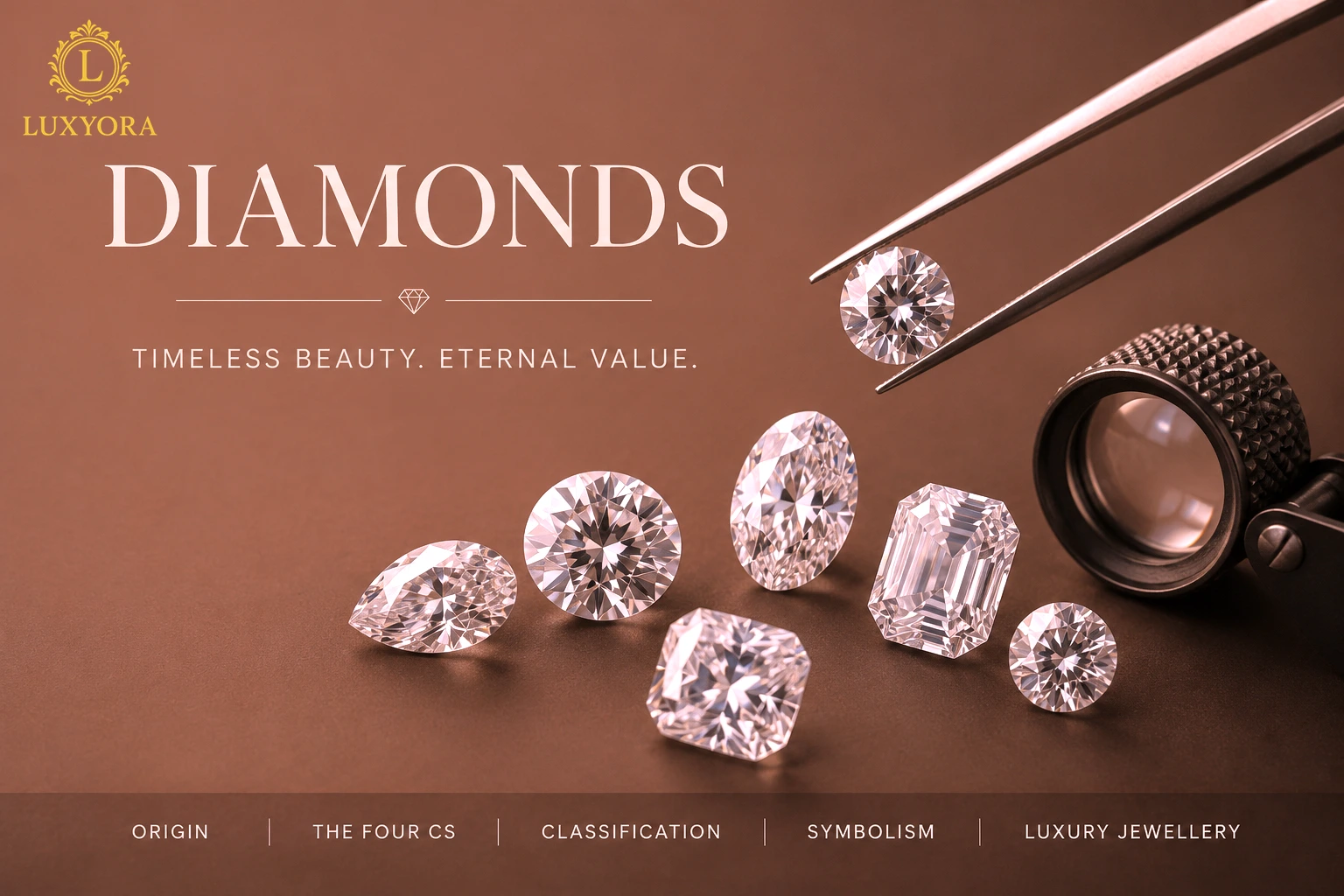
Round Brilliant Cut
The most popular diamond shape worldwide.
Princess Cut
Known for its square shape and contemporary appearance.
Cushion Cut
Features rounded corners and vintage appeal.
Emerald Cut
Recognized for elegant step-cut facets.
Oval Cut
Provides excellent brilliance while appearing larger.
Pear Cut
Combines round and marquise characteristics.
Marquise Cut
Creates an elongated appearance.
Asscher Cut
A sophisticated square step-cut design.
What Do Diamonds Symbolise?
Diamonds have powerful symbolic meanings across cultures and generations.
Eternal Love
Diamonds are most commonly associated with everlasting love and commitment. Their durability symbolizes relationships that can withstand the test of time.
Strength and Resilience
As the hardest natural material on Earth, diamonds represent inner strength, endurance, and perseverance.
Success and Achievement
Luxury diamonds are often viewed as symbols of accomplishment and personal milestones.
Wealth and Prestige
Throughout history, diamonds have represented status, prosperity, and social distinction.
Purity and Perfection
Their clarity and brilliance often symbolize purity, honesty, and excellence.
Example Situation
An engagement ring featuring a diamond is not merely a piece of jewellery; it communicates commitment, trust, permanence, and emotional significance.
The Most Popular Diamond Types Used in Luxury Jewellery
Luxury jewellery designers carefully select diamonds based on beauty, rarity, and consumer demand.
White Diamonds
White diamonds remain the most popular choice for engagement rings and high-end jewellery.
Popular Uses:
Fancy Yellow Diamonds
These diamonds offer vibrant colour and sophistication.
Popular Uses:
- Statement rings
- Luxury earrings
- Designer necklaces
Pink Diamonds
Among the rarest diamonds available.
Popular Uses:
- Exclusive luxury collections
- Investment jewellery
- Auction-grade pieces
Blue Diamonds
Blue diamonds are highly coveted due to their rarity and stunning appearance.
Popular Uses:
- High-jewellery creations
- Collector pieces
- Museum-quality designs
Black Diamonds
Modern luxury brands increasingly feature black diamonds.
Popular Uses:
- Men’s jewellery
- Contemporary rings
- Fashion-forward collections
Laboratory-Grown Diamonds
Rapidly gaining popularity among environmentally conscious consumers.
Popular Uses:
- Engagement rings
- Everyday luxury jewellery
- Sustainable collections
How to Choose the Right Diamond
Selecting a diamond requires balancing quality, budget, and personal preferences.
Prioritize Cut Quality
A superior cut often enhances appearance more than increased carat weight.
Consider Eye-Clean Clarity
Many VS and SI diamonds provide excellent visual quality at lower prices.
Balance Colour and Budget
Near-colourless diamonds often offer exceptional value.
Choose the Right Shape
Different cuts create different visual effects and styles.
Request Certification
Always purchase diamonds accompanied by certification from reputable grading laboratories.
Ethical and Sustainable Diamonds
Modern consumers increasingly prioritize ethical sourcing and sustainability.
Industry initiatives focus on:
- Responsible mining practices
- Supply chain transparency
- Environmental stewardship
- Fair labour standards
- Laboratory-grown alternatives
These developments are reshaping consumer expectations and industry standards worldwide.
Diamonds as an Investment
Certain diamonds can serve as alternative investment assets.
Investment-grade diamonds typically feature:
- Exceptional colour
- High clarity
- Large carat weight
- Strong certification
- Rare fancy colours
However, investment decisions should always involve professional guidance and market research.
Future Trends in the Diamond Industry
The diamond industry continues evolving through innovation and changing consumer preferences.
Emerging trends include:
- Sustainable sourcing
- Traceability technologies
- Laboratory-grown diamond demand
- Personalized jewellery
- Digital certification systems
- Coloured diamond popularity
These developments are shaping the future of luxury jewellery and diamond commerce.
Original boxes and accessories often increase collector value.
Photos assist with:
- Insurance documentation
- Inventory tracking
- Resale listings
Conclusion
Diamonds remain one of the world’s most admired and valuable gemstones. Their extraordinary formation process, unmatched hardness, stunning brilliance, and deep symbolism make them central to luxury jewellery and personal milestones.
Understanding the Four Cs Cut, Clarity, Colour, and Carat helps consumers make informed purchasing decisions. Equally important is recognizing how diamonds are classified by origin, chemical composition, colour, and cut.
Whether choosing a natural diamond, exploring laboratory-grown alternatives, investing in rare coloured diamonds, or selecting the perfect engagement ring, knowledge empowers buyers to appreciate the true beauty and value of these remarkable gemstones.
As sustainability, innovation, and transparency continue to influence the industry, diamonds will remain enduring symbols of elegance, achievement, and everlasting love for generations to come.
References
De Beers Group. (2024). Diamond insight report 2024. De Beers Group.
Gemological Institute of America. (2024). Diamond grading and identification guide. Gemological Institute of America.
King, J. M., Moses, T. M., Shigley, J. E., & Liu, Y. (2018). Color grading of laboratory-grown diamonds. Gems & Gemology, 54(1), 2–25.
Nassau, K. (2020). The physics and chemistry of color: The fifteen causes of color (2nd ed.). Wiley.
Read, P. G. (2019). Gemmology (4th ed.). Routledge.
Shigley, J. E., Breeding, C. M., & Eaton-Magaña, S. (2021). Advances in laboratory-grown diamond production and identification. Gems & Gemology, 57(3), 196–215.
United States Geological Survey. (2024). Mineral commodity summaries: Diamond (industrial). U.S. Geological Survey.
World Diamond Council. (2023). Diamond facts and responsible sourcing report. World Diamond Council.
Zimnisky, P. (2022). Global diamond industry analysis and market trends. Paul Zimnisky Diamond Analytics.