Shoe Hygiene | Luxyora
When discussing personal hygiene, we usually emphasize hands, face, and clothing. However, footwear hygiene is often neglected yet vital for overall health, comfort, and style. Proper shoe maintenance helps prevent bad odors and decrease infection risks, making it an important aspect of daily care.
In today’s fast-paced lifestyle, shoes endure constant exposure to dirt, sweat, bacteria, and environmental pollutants. Without proper care, they can quickly become breeding grounds for microbes. This article covers everything you need to know about shoe hygiene, including practical tips, real-life scenarios, and industry insights to help you keep your footwear clean and long-lasting.
What Is Shoe Hygiene?
Taking good care of your shoes means keeping them clean, smelling fresh, and safe to wear every day. This involves regular cleaning, drying, disinfecting, and storing them properly to ensure they stay in great condition.
Key Elements of Shoe Hygiene
- Regular cleaning (inside and outside)
- Moisture control
- Odor management
- Proper storage
- Rotation of footwear
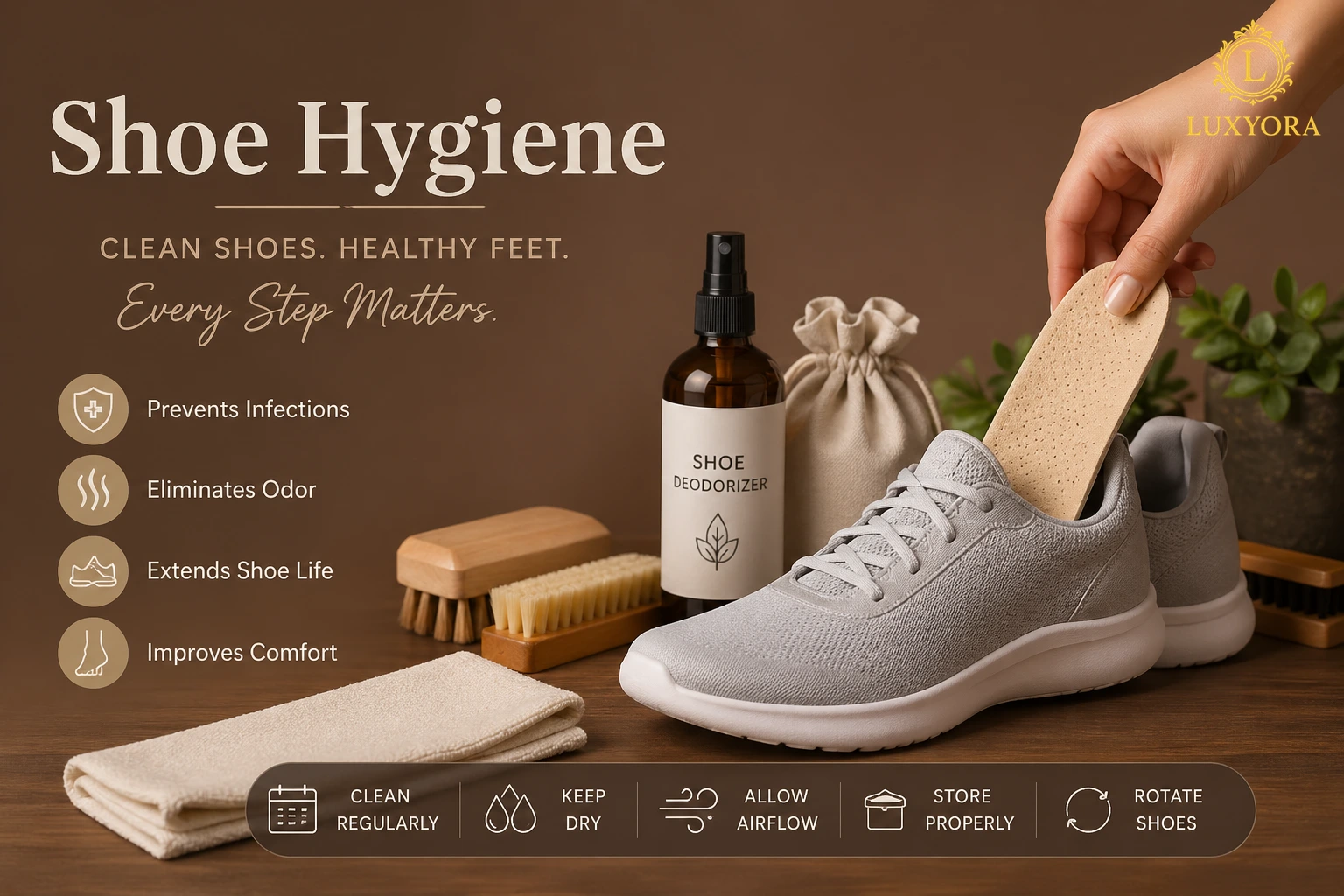
These practices not only extend the lifespan of your shoes but also improve foot health.
A little attention to shoe hygiene today can make a remarkable difference in how long your footwear stays stylish tomorrow. Explore Shoe Care Secrets: How to Make Your Favorites Last Longer.
Why Shoe Hygiene Is Important
1. Prevents Foot Infections
Sweaty, damp shoes create the perfect environment for fungi and bacteria. Poor shoe hygiene can lead to conditions like athlete’s foot, toenail fungus, and bacterial infections.
2. Eliminates Odor
Foot odor is primarily caused by bacteria breaking down sweat. Clean shoes significantly reduce unpleasant smells.
3. Extends Shoe Lifespan
Dirt, moisture, and neglect can degrade materials over time. Proper hygiene helps preserve both the appearance and durability of footwear.
4. Improves Comfort
Clean shoes feel better. Removing debris and maintaining proper cushioning enhances comfort, especially for people who are on their feet all day.
Common Causes of Poor Shoe Hygiene
Sweat Accumulation
Feet contain thousands of sweat glands. When moisture gets trapped inside shoes, it encourages bacterial growth.
Lack of Ventilation
Closed shoes without airflow worsen moisture retention.
Irregular Cleaning
Many people clean their shoes only when visibly dirty, ignoring internal hygiene.
Wearing the Same Pair Daily
Not allowing shoes to dry properly between uses leads to long-term hygiene issues.
Types of Shoes and Their Hygiene Needs
Athletic Shoes
These absorb sweat and require frequent cleaning and airing.
Leather Shoes
Need special care to avoid cracking while maintaining cleanliness.
Casual Sneakers
Often used daily, requiring regular washing and deodorizing.
Formal Shoes
Less frequent use, but still need proper storage and occasional cleaning.
Practical Shoe Hygiene Tips
1. Rotate Your Shoes
Avoid wearing the same pair every day. Give each pair at least 24 hours to dry out.
Example Scenario:
If you work a 9-5 job and wear formal shoes daily, keep two or three pairs in rotation. This reduces moisture buildup and extends their lifespan.
2. Use Moisture-Absorbing Inserts
Silica gel packs, cedar shoe trees, or moisture-wicking insoles help absorb sweat.
Pro Tip: Cedar shoe trees not only absorb moisture but also maintain the shoe’s shape.
3. Clean Shoes Regularly
- Wash fabric shoes every 2-3 weeks
- Wipe leather shoes with a damp cloth and use conditioner
- Clean insoles separately
4. Air Dry Properly
Never store damp shoes in closed spaces. Let them air dry in a well-ventilated area.
Avoid: Direct sunlight for long periods, as it can damage materials.
5. Use Antibacterial Sprays
Footwear sprays help eliminate bacteria and reduce odor.
6. Wear Clean Socks
Socks act as a barrier between your feet and shoes. Always wear fresh, moisture-wicking socks.
7. Store Shoes Correctly
Keep shoes in a dry, cool place. Avoid stacking them in cramped, humid areas.
Deep Cleaning Methods for Different Materials
Fabric Shoes
- Remove laces and insoles
- Wash using mild detergent
- Air dry completely
Leather Shoes
- Use a leather cleaner
- Apply conditioner
- Polish for protection
Suede Shoes
- Use a suede brush
- Avoid water-based cleaning
- Use specialized suede cleaners
Keeping your shoes fresh is important, but suede demands a cleaning routine that’s very different from other materials. Explore
How to Clean Suede Shoes.
Shoe Hygiene in Different Lifestyles
Office Workers
Office environments may seem clean, but shoes still accumulate sweat and bacteria.
Tip: Keep an extra pair at work and switch during the day.
Athletes
Athletes face higher risks due to intense sweating.
Tip: Use antifungal powders and ensure daily drying routines.
Students
Students often wear the same shoes for long hours.
Tip: Encourage weekly cleaning and proper storage habits.
Travelers
Travel exposes shoes to various environments.
Tip: Carry portable deodorizing sprays and cleaning wipes.
Signs Your Shoes Need Immediate Cleaning
- Persistent odor
- Visible dirt or stains
- Damp interior
- Skin irritation on feet
- Discoloration or mold spots
Ignoring these signs can lead to both health and durability issues.
The Science Behind Shoe Odor
Foot odor is primarily caused by bacteria such as Brevibacterium, which thrive in warm, moist environments. These bacteria break down sweat into acids, producing a foul smell.
Key Insight
Sweat itself is odorless; the smell comes from bacterial activity.
Eco-Friendly Shoe Hygiene Practices
Use Natural Deodorizers
- Baking soda
- Activated charcoal
- Essential oils
Reduce Water Waste
Spot-clean instead of full washing when possible.
Choose Sustainable Materials
Opt for breathable, eco-friendly footwear that reduces moisture buildup.
Common Mistakes to Avoid
1. Ignoring Insoles
Insoles trap the most moisture and bacteria.
2. Using Harsh Chemicals
They can damage materials and reduce the lifespan of shoes.
3. Storing Shoes While Damp
Leads to mold growth and odor.
4. Overwashing
Frequent washing can weaken fabric and adhesives.
Industry Trends in Shoe Hygiene
Antimicrobial Technology
Modern footwear increasingly includes antimicrobial linings.
Smart Insoles
Some brands are experimenting with odor-detecting and moisture-monitoring insoles.
Sustainable Cleaning Products
Eco-friendly sprays and cleaners are gaining popularity.
Real-Life Example: Office Professional
Rahul, a corporate employee, struggled with shoe odor due to long working hours. By rotating shoes, using cedar inserts, and cleaning them weekly, he eliminated odor issues and extended his shoe lifespan by over a year.
Real-Life Example: Fitness Enthusiast
Anita, a gym-goer, experienced recurring foot infections. After adopting proper shoe hygiene practices, such as drying shoes daily and using antifungal sprays, her condition improved significantly within weeks.
Final Thoughts on Shoe Hygiene
Shoe hygiene is more than just keeping your footwear looking good; it’s about health, comfort, and sustainability. By adopting simple habits like regular cleaning, proper storage, and moisture control, you can prevent infections, eliminate odor, and extend the life of your shoes.
Whether you’re an office worker, athlete, or student, keeping your shoes clean is a small effort with significant benefits. Start implementing these practices today, and your feet and your shoes will thank you.
References
Aiello, A. E., & Larson, E. L. (2018). What is the evidence for a causal link between hygiene and infections? The Lancet Infectious Diseases, 18(2), e11–e19.
Centers for Disease Control and Prevention. (2020). Healthy feet and hygiene practices.
Knapik, J. J., et al. (2019). Footwear hygiene and foot health in physically active populations. Journal of Athletic Training, 54(9), 940–947.
López-López, D., et al. (2020). Impact of footwear and hygiene on foot health. International Journal of Environmental Research and Public Health, 17(3), 1–12.
World Health Organization. (2021). Hygiene practices in daily life and infection prevention.
- Use mild soap and warm water
- Avoid harsh chemicals
- Use a soft cloth to polish
- Increasing demand for minimalist jewelry
- Growth in personalized and charm-based designs
- Rising interest in durable, everyday pieces
Industry Trends (2018–2025)