Filigree Jewellery
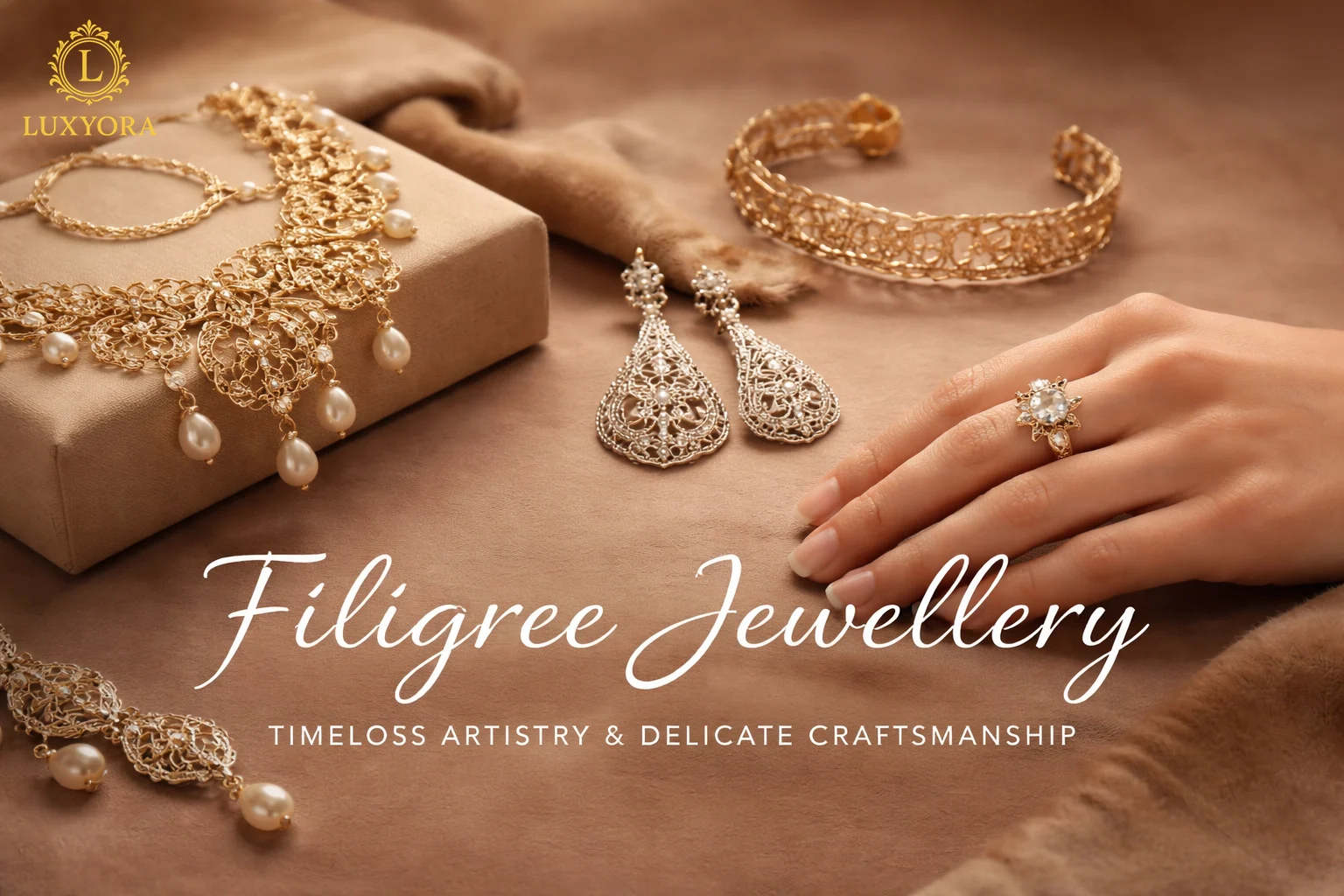
Filigree jewellery is one of the most intricate and mesmerizing forms of ornamentation in the world of fine accessories. Known for its lace-like patterns crafted from fine metal wires, filigree jewellery combines artistry, heritage, and craftsmanship into wearable pieces that feel both luxurious and deeply cultural. Whether you’ve seen delicate silver earrings from Odisha, ornate gold necklaces from the Middle East, or vintage European brooches, you’ve likely admired filigree without even realizing it.
In this detailed guide, we’ll explore everything you need to know about filigree jewellery from its history and craftsmanship to modern trends, buying tips, and practical usage scenarios.
What is Filigree Jewellery?
Filigree jewellery refers to ornaments made by twisting and soldering thin wires of precious metals, usually gold or silver, into intricate patterns. These designs often resemble lace, vines, flowers, or geometric motifs.
Unlike solid metal jewellery, filigree pieces are lightweight yet visually complex. The technique requires immense skill, as artisans work with extremely fine wires to create detailed patterns without compromising structural integrity.
Key Characteristics:
- Ultra-fine metal wires (gold, silver, or platinum)
- Intricate, lace-like patterns
- Lightweight yet durable designs
- Often handcrafted with traditional techniques
A Brief History of Filigree Jewellery
Filigree is not a modern invention; it dates back thousands of years.
Ancient Origins
The earliest known filigree pieces were discovered in Mesopotamia and ancient Egypt around 3000 BCE. These civilizations used gold wires to create decorative motifs for royal ornaments.
Global Spread
- Mediterranean (Greece & Italy): Filigree flourished during the Etruscan period.
- Middle East: Known for gold filigree craftsmanship in royal adornments.
- India: Regions like Odisha, Andhra Pradesh, and Telangana became famous for silver filigree (locally called Tarakasi).
- Europe: Renaissance artisans elevated filigree into high art.
Modern Revival
Today, filigree jewellery is experiencing a revival due to growing appreciation for handmade, artisanal pieces and sustainable fashion.
How Filigree Jewellery is Made
Understanding the process behind filigree jewellery helps you appreciate its value.
Step-by-Step Process
- Wire Preparation
Precious metals are melted and drawn into extremely thin wires. - Twisting and Curling
The wires are twisted, coiled, or braided into intricate patterns. - Design Formation
Patterns are arranged into shapes like flowers, leaves, or geometric grids. - Soldering
The wires are carefully soldered together using heat. - Finishing
Polishing, oxidizing, or plating enhances the final look.
Why It’s So Labor-Intensive
Each piece can take hours or even days to complete. Precision is critical, as even a slight mistake can ruin the design.
Types of Filigree Jewellery
Filigree jewellery comes in various forms, catering to different tastes and occasions.
Gold Filigree Jewellery
- Luxurious and elegant
- Popular in bridal collections
- Often used in Middle Eastern and South Asian designs
Silver Filigree Jewellery
- More affordable
- Known for oxidized or antique finishes
- Widely crafted in India and Southeast Asia
Mixed Metal Filigree
- Combines gold and silver
- Offers modern, contemporary aesthetics
Gemstone Filigree
- Incorporates stones like emeralds, rubies, or pearls
- Adds depth and color to intricate designs
Popular Filigree Jewellery Pieces
Filigree isn’t limited to one type of accessory.
Earrings
Lightweight and perfect for daily wear or festive occasions.
Necklaces
Statement filigree necklaces are ideal for weddings and cultural events.
Rings
Delicate and elegant, often used for vintage-inspired looks.
Bracelets & Bangles
Intricate bangles are popular in traditional attire.
Brooches and Hair Accessories
Common in vintage and European styles.
Why Filigree Jewellery is Trending Again
Filigree jewellery is making a strong comeback, and here’s why:
Rise of Handcrafted Luxury
Consumers are moving away from mass-produced jewellery toward artisanal craftsmanship.
Lightweight Comfort
Despite its intricate appearance, filigree jewellery is surprisingly light, perfect for long wear.
Sustainable Fashion
Handmade jewellery often has a lower environmental footprint compared to machine-made alternatives.
Cultural Revival
There’s a renewed appreciation for traditional crafts and heritage designs.
Practical Tips for Buying Filigree Jewellery
Buying filigree jewellery requires attention to detail.
Check Craftsmanship
Look closely at the design:
- Are the wires evenly placed?
- Is the soldering neat?
Verify Metal Purity
Ensure authenticity:
- Gold: Check for hallmarks (e.g., 22K, 18K)
- Silver: Look for 925 stamp
Consider Durability
Filigree is delicate, so ensure:
- Strong frame structure
- Reinforced edges
Choose the Right Occasion
- Daily wear: Opt for simpler designs
- Weddings/events: Go for elaborate patterns
Example Scenarios for Choosing Filigree Jewellery
Scenario 1: Wedding Jewellery
A bride looking for lightweight yet grand jewellery might choose a gold filigree necklace. It offers intricate detailing without the heaviness of solid gold pieces.
Scenario 2: Office Wear
A professional woman might prefer small silver filigree earrings, subtle, elegant, and comfortable for long hours.
Scenario 3: Gifting
Filigree jewellery makes a thoughtful gift due to its artistic value. A filigree pendant can symbolize elegance and tradition.
How to Care for Filigree Jewellery
Because of its delicate nature, filigree jewellery requires proper care.
Cleaning Tips
- Use a soft brush to remove dirt
- Avoid harsh chemicals
- Clean with mild soap and water
Storage Tips
- Store in separate pouches
- Avoid stacking with heavy jewellery
- Keep away from moisture
Wearing Tips
- Avoid wearing during heavy activities
- Remove before swimming or exercising
Filigree Jewellery vs Other Jewellery Styles
Weight | Lightweight | Heavy |
Design | Intricate | Simple or bold |
Cost | Moderate to high | High (due to metal weight) |
Craftsmanship | Highly skilled | Less complex |
Filigree Jewellery in Modern Fashion
Designers are now blending traditional filigree techniques with modern aesthetics.
Minimalist Filigree
Simplified designs for everyday wear.
Fusion Jewellery
Combining filigree with contemporary elements like geometric shapes.
Statement Pieces
Oversized filigree earrings and necklaces for bold fashion statements.
Challenges in the Filigree Industry
Despite its beauty, the filigree industry faces several challenges:
Decline of Skilled Artisans
Fewer young artisans are learning the craft.
Time-Intensive Production
Mass production is difficult, limiting scalability.
Competition from Machine-Made Jewellery
Cheaper alternatives affect demand.
Future of Filigree Jewellery
The future looks promising due to:
- Increased demand for handmade products
- Growth of online jewellery platforms
- Global appreciation for traditional crafts
With proper support and innovation, filigree jewellery can thrive in modern markets.
Conclusion
Filigree jewellery is more than just an accessory; it’s a testament to human creativity, patience, and cultural heritage. From ancient civilizations to modern fashion runways, its delicate beauty continues to captivate jewellery lovers worldwide.
Whether you’re buying your first filigree piece or adding to a collection, understanding its craftsmanship and value will help you make informed choices. With the right care, these intricate pieces can last a lifetime and even become treasured heirlooms.
References
Agarwal, R. (2020). Traditional Indian Jewellery: Heritage and Craftsmanship. New Delhi: Craft House Publications.
Bhattacharya, S. (2019). Filigree work in Eastern India: A study of Tarakasi. Journal of Cultural Heritage Studies, 12(3), 45–58.
Davis, M. (2021). The History of Jewellery Design: From Ancient to Modern Times. London: Thames & Hudson.
Gillow, J., & Barnard, N. (2018). World Textiles and Traditional Crafts. London: Thames & Hudson.
Kumar, A. (2022). Revival of handmade jewellery in the global market. International Journal of Fashion Studies, 9(2), 101–118.
Smith, J. (2023). Sustainable jewellery trends and consumer behavior. Fashion and Sustainability Review, 5(1), 22–34.
UNESCO. (2019). Traditional craftsmanship and cultural preservation. Paris: UNESCO Publishing.