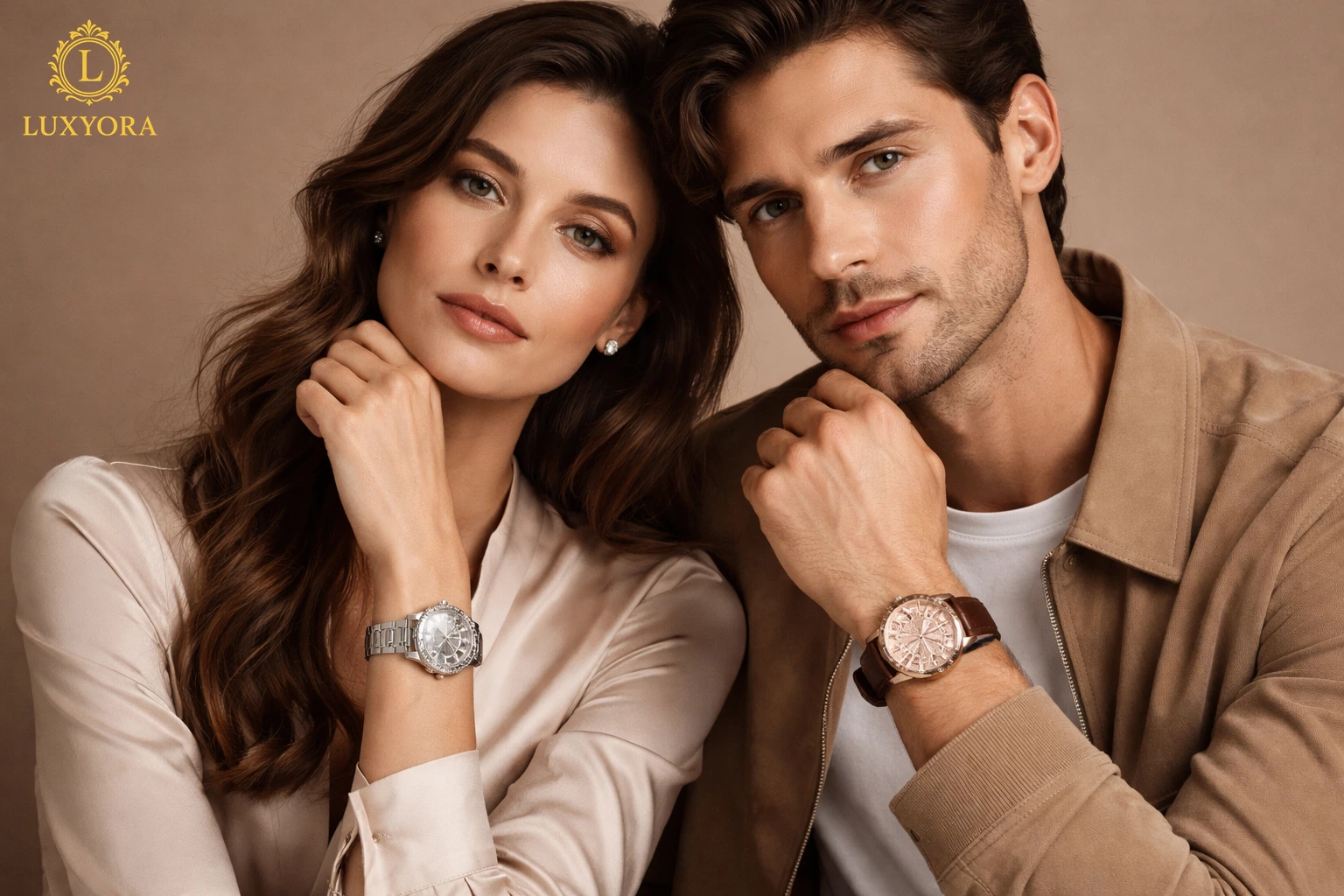
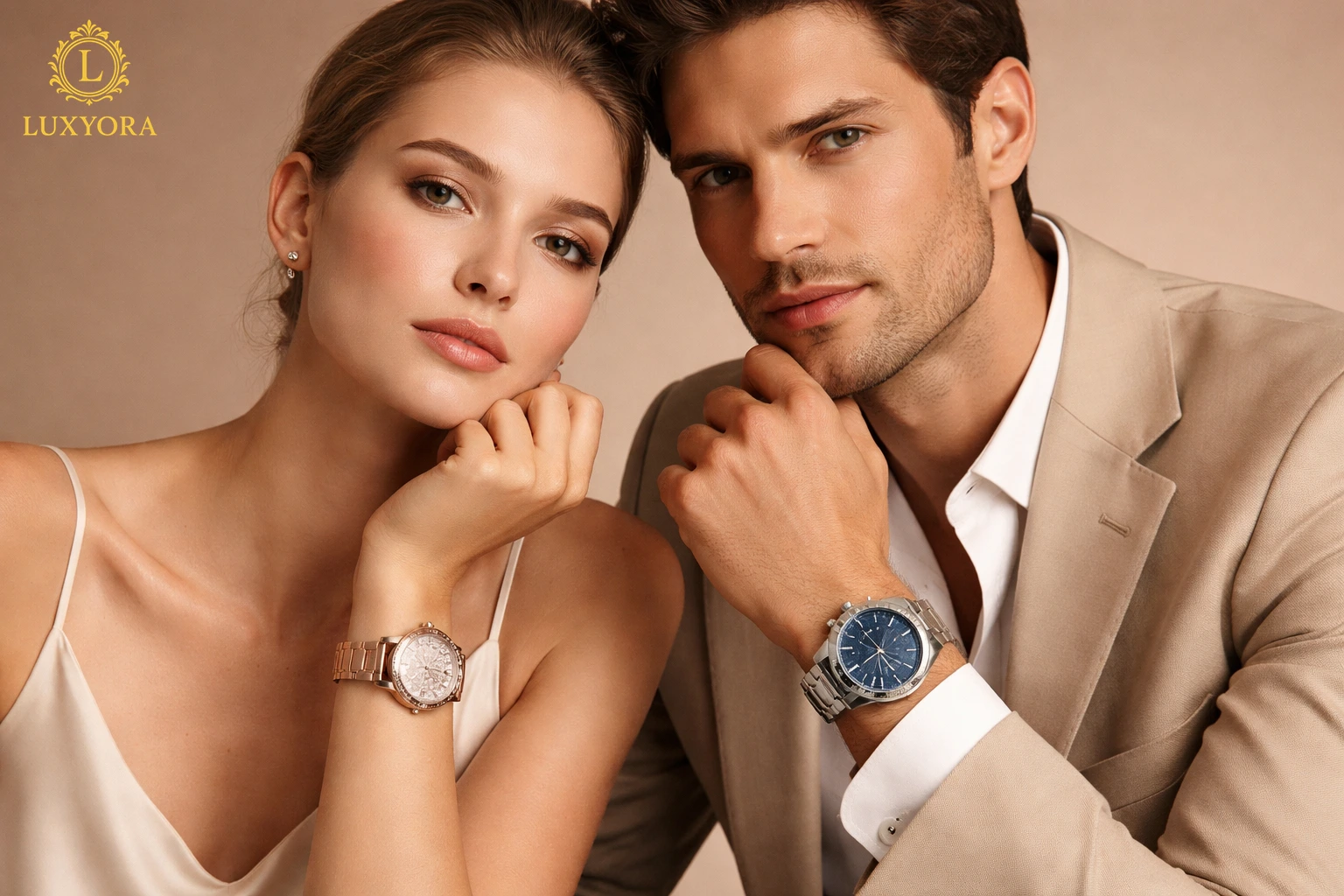
Textured Dial Luxury Watches: Guilloché and Patterned Finishes in Focus | Luxyora
There’s something incredibly captivating about a luxury watch dial that isn’t perfectly flat. When texture is added, the watch transforms from just a timepiece into a piece of art, combining atmosphere, architectural elegance, and exquisite craftsmanship. While the world often values sleek, minimal designs, textured-dial luxury watches introduce a warm richness and inviting touch, creating shadow and relief and offering visual depth that draws you in closer.
Among all decorative dial treatments, guilloché truly stands out as the most poetic. It combines precision, a touch of old-world charm, and a quietly dramatic presence. But it’s just one chapter in a richer story. Today’s most captivating patterned watch dials also showcase a variety of finishes like frosted effects, hammered textures, linen-inspired surfaces, basketweave designs, stamped geometries, granular details, and radiant engraved patterns. These finishes do more than add beauty; they change how a watch feels when you wear it, influence how you read the time, and let craftsmanship shine in ways that go beyond what you initially see.
For collectors, stylists, and design-conscious buyers, the dial truly becomes the heart of the watch. At the same time, the movements are what power the piece; it’s the dial that gives it its unique identity. Nowadays, in the world of luxury watches, texture takes center stage and isn’t just a minor detail; it’s the highlight of the design.
Why textured watch dials matter more than ever
Today’s luxury watch buyers are more visually perceptive than ever. They appreciate subtle details such as surface treatments, artisanal techniques, nuances in metalwork, and the difference between printed and cut patterns. This is important because these delicate details define the texture of watch dials.
A textured dial completely transforms the watch’s visual rhythm. A smooth, lacquered surface reflects light broadly, while a patterned finish breaks it into controlled fragments. As a result, the dial can appear silvery at one moment, smoky at another, or sharply architectural under direct light. Texture adds a sense of motion without increasing bulk, making a slim watch feel layered and giving a restrained design a bold personality.
There’s also a heartfelt reason behind this renewed fascination. In luxury, people want to see visible signs of human craftsmanship. A textured dial provides exactly that. Whether hand-engraved on traditional machines, etched with modern precision, or stamped with carefully designed reliefs, the surface becomes a testament to the craftsmanship involved, showing that effort extends beyond just choosing colors, delving into material, reflection, and finishing techniques.
What guilloché actually is
Guilloché is a beautiful decorative engraving technique that forms repeating geometric patterns on metal surfaces, usually achieved with specialized mechanical machines such as the rose engine or straight-line engine. These machines set the rhythm of the pattern, while the artisan carefully controls the pressure, spacing, alignment, and overall look. True guilloché isn’t just random decoration; it’s a blend of craftsmanship and artistry.
What makes guilloché feel so luxurious? It’s the perfect mix of precision and allure. The patterns are meticulously made, yet they seem to flow effortlessly. When fine lines catch the light from slightly different angles, they produce a gentle shimmer that dances on the wrist. It’s intricate detail crafted from micro-an precision.
Material knowledge is key here. Guilloché is usually done on metal dial blanks, often in precious or finely finished materials that can showcase sharp cuts without tearing or deforming. The depth of the cut, the spacing of the lines, and the metal’s hardness all influence the final appearance. A lighter, more subtle pattern looks elegant and understated, while a deeper cut offers a striking contrast and captivating light play. The most exquisite examples never feel overwhelming; they seem to come alive with subtle energy.
The allure of patterned finishes beyond guilloché
While guilloché is striking, the broader world of patterned watch dials also deserves attention. Textured dial luxury watches now feature a wider range of finishes, each creating a unique visual mood.
Frosted dials
A frosted finish creates a fine crystalline surface that diffuses light rather than reflecting it sharply. The effect feels velvety, almost powder-soft to the eye, even when rendered in metal. Frosting often gives a dial a cool glow, making it especially effective in pieces that aim for quiet sophistication rather than theatrical shine.
Hammered and grained finishes
Hammered dials and granular surfaces introduce irregularity in a very controlled way. Unlike geometric patterning, these finishes create organic micro-topography. The result can evoke raw, precious metal; hand-beaten jewelry; or artisanal metalwork traditions. These dials feel intimate because they avoid machine-perfect repetition.
Linen, basketweave, and woven motifs
These textures mimic textiles or woven structures, adding softness to an otherwise rigid material. Linen-style dials in particular are interesting because they bring a tailored, fashion-adjacent quality to watch design. They read as refined, cultured, and subtly decorative without becoming ornate.
Sunray and radial textures
Technically simpler than guilloché but still highly effective, sunray dials create lines that radiate outward from a central point. They are among the most commercially successful textured finishes because they flatter nearly every dial color and instantly enhance dimensionality. While often less artisanal than engine-turned surfaces, a well-executed radial finish can still feel richly luxurious.
How craftsmanship reveals itself on the dial
Texture is where watchmaking starts to overlap with decorative arts. And that overlap is exactly why textured dials have such a strong emotional pull. They reveal labor.
On a plain dial, craftsmanship may hide in tolerances, coatings, and edge refinement. On a textured dial, craftsmanship becomes visible in the surface itself. Misalignment would be obvious. Uneven engraving would catch the eye. Weak finishing would flatten the pattern. A great textured dial must therefore balance design intent, material suitability, and execution discipline.
Traditional guilloché remains especially revered for resisting shortcuts. Even when a machine helps generate the pattern, the craft lies in setup, control, and consistency. The artisan must understand how line spacing affects light, how a pattern behaves near apertures or subdials, and how to preserve visual harmony across a small circular field. This is part engineering, part decorative intuition.
Modern manufacturing has expanded the category through CNC engraving, precision stamping, laser texturing, and hybrid finishing techniques. Purists often celebrate handwork above all else, and understandably so. But the real conversation is more nuanced. Advanced methods can produce remarkable sharpness and repeatability, while artisanal finishing can add warmth and individuality. In today’s luxury landscape, both approaches coexist. What matters is honesty of execution and visual excellence.
The most compelling guilloché patterns to know
Not all guilloché looks the same, and understanding pattern families helps explain why some dials feel stately while others feel energetic.
Clous de Paris
Often described as a hobnail pattern, this finish forms tiny raised pyramidal points arranged in a precise grid. It is crisp, architectural, and deeply associated with classic elegance. It gives a dial structure and authority.
Grain d’orge
This barleycorn-inspired pattern tends to feel softer and more flowing. It can create a gentle wave-like movement on the dial, making it especially attractive in dress pieces where fluidity matters.
Panier or basketweave
Basket-style guilloché has a woven visual rhythm that feels decorative but balanced. It offers richness without overwhelming the rest of the design.
Flinqué-inspired layered effects
When translucent enamel or lacquer is applied over engraved metal, the underlying pattern can glow through the surface. This layered effect is especially captivating because the dial seems to have depth beneath the top finish rather than only on its surface.
These patterns do not merely decorate. They communicate mood. Some feel ceremonial, others modernist, others romantic. This is why textured dial luxury watches speak so personally to collectors. Surface can become identity.
Why texture changes legibility and wrist presence
One of the most underrated aspects of patterned finishes is their influence on readability. Many people assume texture complicates a dial, but the best examples actually sharpen visual hierarchy.
A textured central field can make polished hands stand out more clearly. A matte granular background can reduce glare. A contrasting chapter ring can separate time indication from decorative detail. In other words, texture often improves the reading experience when used intelligently.
Wrist presence is also transformed. A watch with a flat dial may wear elegantly, but a textured dial tends to feel more animated in real life than in photographs. It reacts to movement. It catches ambient light at dinner, in daylight, under gallery lighting, or inside a car. This shifting behavior gives the watch a kind of private performance. The owner notices new details repeatedly, which is one reason textured dials often create long-term attachment.
Material knowledge: why the base surface matters
The magic of patterned watch dials is not only in the pattern itself but in the material beneath it. Metal composition, surface hardness, and finishing compatibility all influence the outcome.
Softer metals may offer warmth and ease of engraving, but require careful handling to preserve sharpness. Harder surfaces can support crisp detailing but may demand more specialized tools or slower cutting. Coatings, galvanic treatments, and lacquers further change how texture reads. A silver-toned engraved dial can look icy and formal, while a warm-toned finish over the same pattern may feel opulent and intimate.
Thickness matters too. The dial blank must tolerate engraving or stamping without warping, while still leaving room for feet, apertures, applied markers, and protective surface treatment. Even the smallest design choice has consequences. Deeply cut patterning might deliver drama, but it must coexist with printing clarity and hand clearance. This is where true dial making becomes a discipline of balance rather than decoration alone.
The difference between authentic texture and decorative imitation
Luxury buyers are increasingly savvy, which makes this distinction important. Not every patterned dial is crafted in the same way, and not every texture marketed as artisanal truly is.
Some dials are hand-engraved. Some are CNC engraved. Some are stamped from dies. Some use embossing, brushing, laser ablation, or chemically assisted texturing. None of these methods is automatically inferior in every context, but they do create different visual and tactile results.
Authentic texture usually has one giveaway: depth with character. The surface interacts with light in a way that feels dimensional rather than printed-on. Edges look intentional. Repetition feels controlled but not lifeless. There is richness in the transitions between highlight and shadow.
For editorial, collecting, and SEO alike, this distinction matters because readers searching for guilloché dial watches, engine-turned dials, patterned luxury watches, artisanal watch dials, and textured metal watch faces are often trying to understand value. They are not just asking what looks pretty. They are asking what is genuinely crafted.
Why textured dial luxury watches are having a lasting moment
This fascination is not a passing flourish. It reflects a larger shift in luxury culture toward connoisseurship. People want objects that reveal something new over time. Texture does exactly that.
Patterned finishes reward attention. They are photogenic, yes, but they are even better in person. They bridge fashion and horology beautifully because they speak both languages: surface and structure, styling and substance. They can make a restrained watch feel elevated, a formal watch feel modern, or a minimalist piece feel emotionally rich.
In an era when so many products compete through size, novelty, or loud branding, textured dials offer another route. They whisper. They seduce through detail. They ask for a second look, then a third. And that quiet confidence is perhaps the most luxurious trait of all.
Choosing the right textured dial for your style.
If your taste leans toward tailored, symmetrical, and polished, geometric guilloché patterns offer refinement with a crisp backbone. If you prefer something moodier and more contemporary, frosted or grained finishes deliver softness and intrigue. If you want a design that feels fashion-aware yet timeless, linen or woven motifs can be especially compelling. And if you are drawn to light, glamour, and visual movement, sunray or radial textures remain endlessly flattering.
The smartest choice is not necessarily the most elaborate one. It is the one whose surface language fits your own. The best textured dial luxury watches do not scream for attention. They create a relationship with light, craft, and personality that feels instinctively right.
The elegance of a patterned dial is amplified when its color works effortlessly with the rest of your look. Explore the guide in Color Guide – Matching Watch Dial Colors With Your Wardrobe.
Conclusion: The dial is the soul of the watch
Luxury watch texture is no longer a niche detail appreciated only by specialists. It has become one of the clearest expressions of craftsmanship, taste, and material intelligence in contemporary watch design. Guilloché remains the icon of this world, but it now sits within a wider renaissance of patterned finishes that bring nuance, depth, and emotion to the wrist.
To understand a fine watch today, it is no longer enough to ask what movement is inside. You must also ask what the dial is doing with light, how its surface was made, and whether its beauty is merely visible or deeply constructed. That is where the real story begins.
Luxyora Philosophy
True luxury is not loud; it is felt in the details that reward attention. The finest objects do not chase the eye; they teach it how to see.
References:
A Collected Man. (2021). The art of dial finishing.
A Collected Man. (2025). In practice: Enamel dials at Émailleurs de la Cité.
Chia, C. (2024, March 5). Understanding métiers d’arts: Guilloché. Revolution Watch.
Europastar. (2023). Behind the scenes of a decorative art: Guilloché.
Outlook Luxe. (2025, December 31). Guilloché pattern explained: A guide to luxury watch dials.
Van der Klauw, S. (2025, July 18). Ultimate guide to watch dial finishes: Texture, craft & value. Wristler.
Ganoksin. (2018, February 13). Striking crafts skill.
Monochrome Watches. (2024, May 3). Understanding the art of guilloché dials.