Suede : What is Suede
In fashion, suede refers to a leather with a soft, velvety “nap” (raised fibers) on the surface, prized for its tactile luxury and warm, matte look. Unlike glossy full-grain leathers that show a smooth outer “grain side,” suede is typically created from the underside of the hide (or from split layers of thicker hides) and then finished to produce that signature fuzzy texture.
Today, suede is more than a seasonal material; it’s a core fashion texture used across jackets, skirts, boots, loafers, sneakers, belts, and handbags, and it consistently cycles back into trend leadership because it instantly adds depth to an outfit without loud prints or heavy embellishment.
What Suede Means in Industry Language
In product development, “suede” usually signals:
- A napped leather surface (brushed/buffed to raise fibers)
- Matte, light-absorbing color depth
- Soft drape compared with many smooth leathers
- A material that benefits from protective finishing and correct care, because the nap can trap dust and absorb moisture more readily than many smooth-grain leathers.
Key related terms you’ll see in fashion descriptions:
- Split suede / split leather: suede made from the underside or split layers of a hide.
- Nubuck: a “suede-like” nap made on the outer grain side of the hide; generally a tighter, finer nap and often described as more robust.
How Suede Is Made: From Hide Structure to the “Nap”
Suede’s fashion identity is created by surface engineering. The hide has different layers and fiber structures. Suede typically uses the underside or split layer, and the surface is buffed/abraded so thefibers lift and create a soft, uniform nap.
The role of finishing
Leather science emphasizes that finishing is used to provide protection, improve durability, and create surface effects (such as color, feel, and performance). This matters for suede because the nap affects how a finish behaves and how the material ages.
Why Fashion Loves Suede: The Aesthetic Advantage
Suede delivers a combination that designers consistently return to:
1) Texture as “quiet impact.”
Suede adds richness through texture, especially in neutrals like chocolate brown, sand, taupe, camel, and black, making it ideal for “quiet luxury” styling.
2) Color looks deeper and more dimensional
Because suede is matte and textured, dye can appear more complex and “softly shaded” than on smooth leather.
3) A runway-to-real-life material
Recent fashion coverage shows suede repeatedly returning as a key direction in accessories and outerwear. Suede handbags are being highlighted across silhouettes from slouchy to structured, positioning suede as a major moment in bag materials.
Where Suede Performs Best: Product Categories
Footwear:
Suede is especially popular in loafers, Chelsea boots, desert boots, and sneakers because it looks premium and breaks in comfortably.
Outerwear:
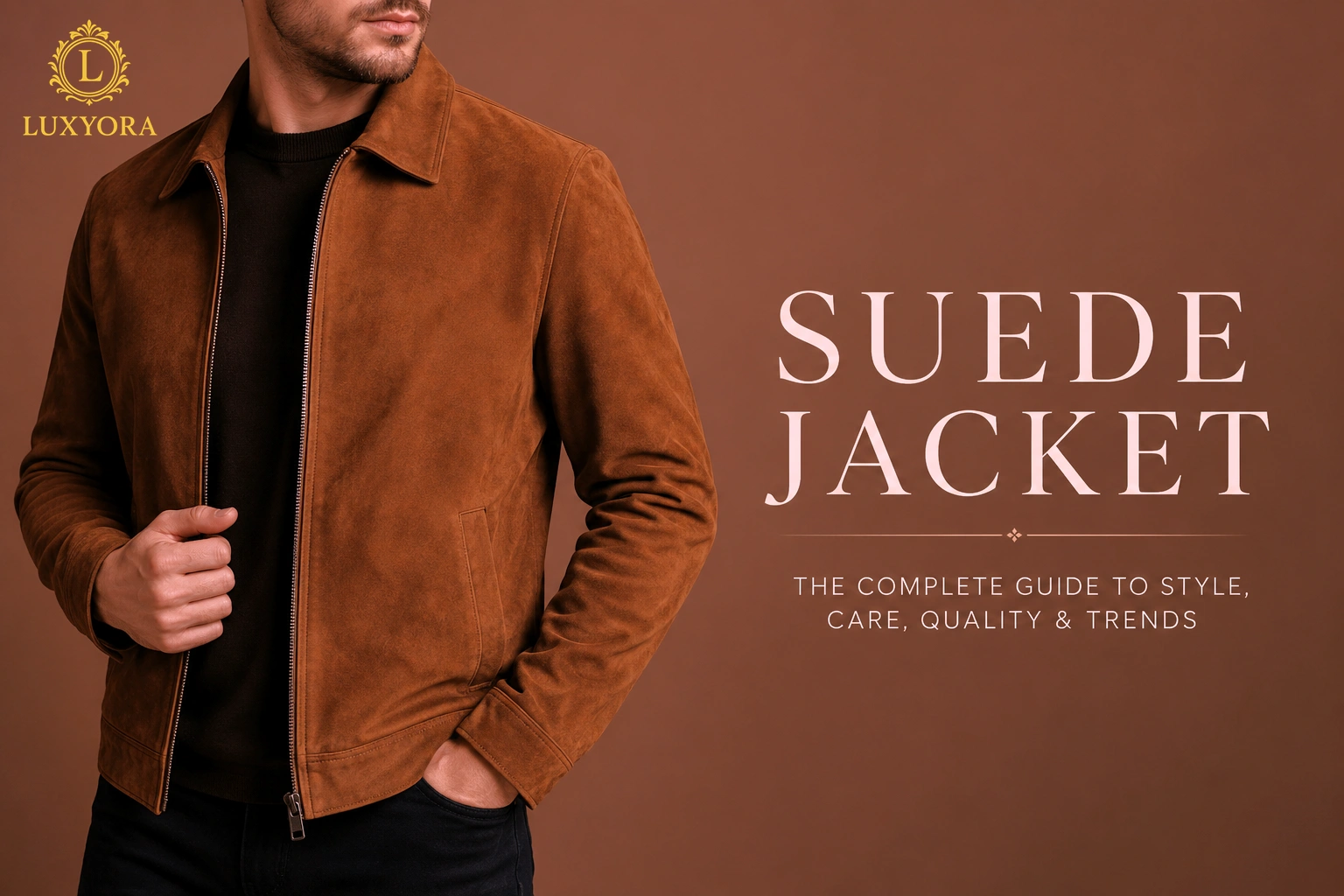
Suede jackets, from bomber to blazer silhouettes, signal heritage cool (often associated with Western, moto, or 1970s codes) while still feeling modern when cut cleanly.
Handbags:
Suede bags are trending because they offer a “soft-structure” alternative to rigid leather, and they photograph beautifully in earthy tones.
Care and Maintenance: Keeping Suede Looking New
Suede’s beauty comes with a clear rule: protect the nap.
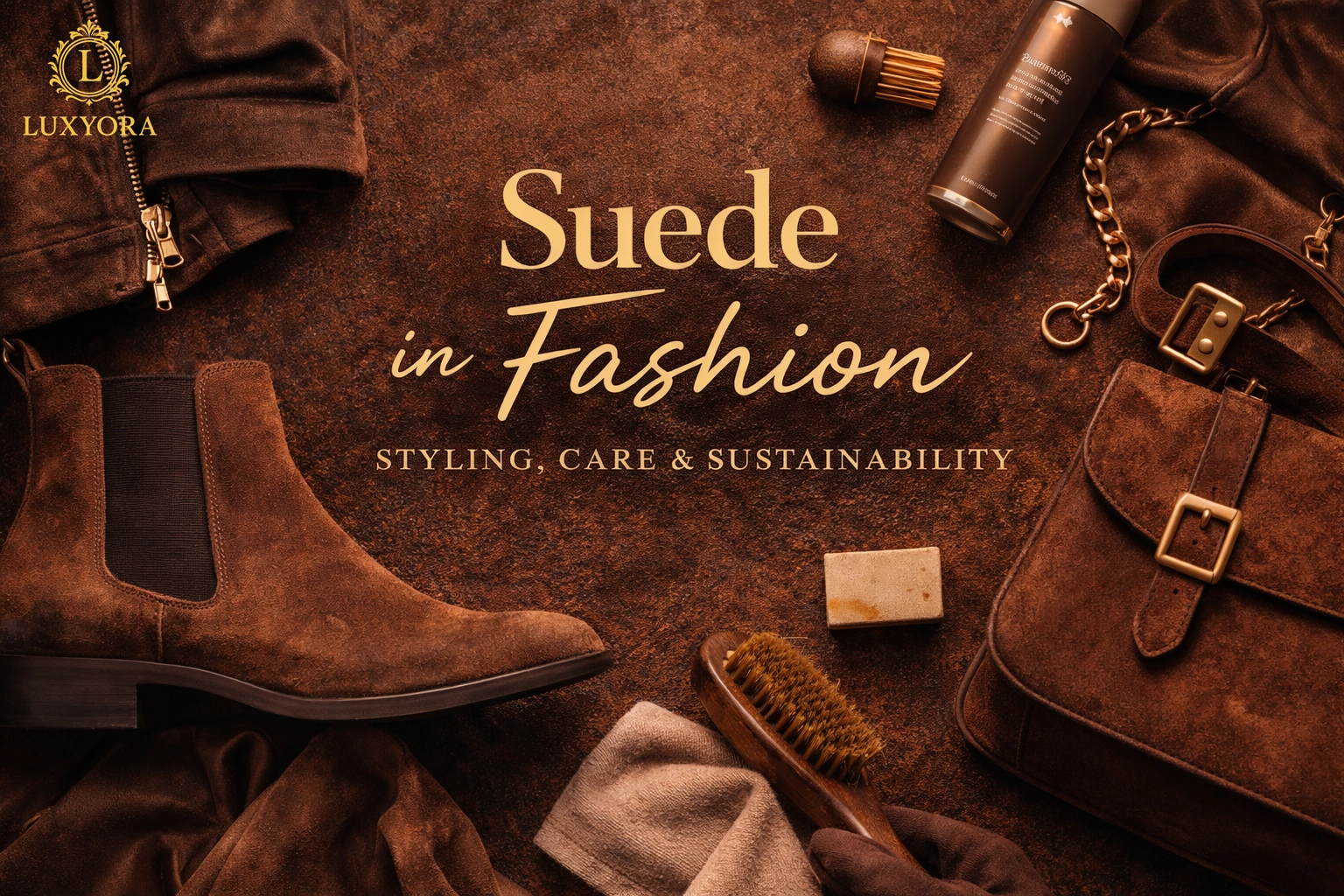
Essential suede care toolkit
- Suede brush (to lift nap and remove surface dust)
- Suede eraser (for dry scuffs/marks)
- Protector spray (to reduce water and stain absorption)
- Spot-cleaning approach (avoid soaking)
A practical, step-by-step care guide recommends starting with dry-stain removal with a suede eraser, then brushing to restore the nap.
Fashion-industry tip: brush suede after it dries, not while wet, to avoid flattening the nap and setting marks.
Sustainability and the Modern Suede Conversation
Because suede is a form of leather, sustainability questions often focus on:
- Upstream raw material impacts
- Tanning and finishing chemistry
- Energy and water use
- Longevity and repairability
The Leather Working Group’s LCA report summary emphasizes that leather’s environmental footprint is assessed across multiple product families and processes, enabling more targeted footprint-reduction actions.
Leather Naturally’s LCA white paper explains how LCAs consider direct and indirect impacts across the product lifecycle, reinforcing why “materials choice” and “use phase/maintenance” matter.
From a production and policy perspective, UNIDO’s leather manufacturing framework is frequently used as a reference to improve sustainability practices and industry training.
For a broader context, academic literature on leather and footwear sustainability addresses environmental/chemical sustainability across the tanning supply chain and mitigation measures.
Practical takeaway: In real wardrobes, suede’s sustainability improves when it’s protected, maintained, repaired, and worn for years because extending product life reduces replacement cycles.
Suede as an Industry Term: What Readers Should Remember
Suede is not just “soft leather.” It’s a finish + structure + care system:
- It’s defined by a napped surface created through material selection and buffing.
- It sits alongside related categories like nubuck and split leather, which affect durability and price.
- It thrives in fashion because texture communicates luxury, especially in outerwear and bags.
- It rewards owners who treat it as a premium material by brushing, protecting, and storing it correctly.
If you can read suede in product descriptions and care for it properly, you’ve gained a foundational piece of fashion materials literacy.
References
BuyLeatherOnline. (2025, May 7). Nubuck vs suede leather: What’s the real difference? https://buyleatheronline.com/en/blog/what-are-the-differences-between-nubuck-leather-hides-and-suede-leather-n33
Covington, A. D., & Wise, W. R. (2019). Tanning chemistry: The science of leather (2nd ed.). Royal Society of Chemistry.
Leather Naturally. (2025). Life cycle assessments (LCAs) (White paper) [PDF]. https://www.leathernaturally.org/wp-content/uploads/2025/02/LN_White_Paper_LCA_st12-1.pdf
Leather Working Group. (2024). Measuring the environmental impact of leather: Life cycle assessment report summary [PDF]. https://www.leatherworkinggroup.com/fileadmin/user_upload/LWG_LCA_2024_Summary_.pdf
Marie Claire. (2026). A suede jacket is still the cover-up of choice for stylish women. https://www.marieclaire.co.uk/fashion/shopping/best-suede-jackets
MasterClass. (2021, August 12). What is suede fabric? Learn about the difference between suede, leather, and nubuck. https://www.masterclass.com/articles/what-is-suede-fabric-learn-about-the-difference-between-suede-leather-and-nubuck
Muthu, S. S. (Ed.). (2020). Leather and footwear sustainability: Manufacturing, supply chain, and product level issues. Springer. https://link.springer.com/book/10.1007/978-981-15-6296-9
Saphir India. (2019, November 12). Suede shoe care guide. https://www.saphirindia.com/blogs/diy/diy-suede-shoe-care-guide
UNIDO. (2019). The framework for sustainable leather manufacturing (2nd ed.) [PDF]. https://leatherpanel.org/sites/default/files/publications-attachments/the_framework_for_sustainable_leather_manufacturing_2nd_edition_2019_f.pdf
Vogue. (2025). 36 suede bags we’re eyeing right now—from slouchy styles to structured silhouettes. https://www.vogue.com/article/suede-bags
Zatchels. (2020, July 14). What’s the difference between split leather, suede & nubuck? https://www.zatchels.com/blogs/news/what-s-the-difference-between-split-leather-suede-nubuck
-