Exotic Leathers : What is Exotic Leather
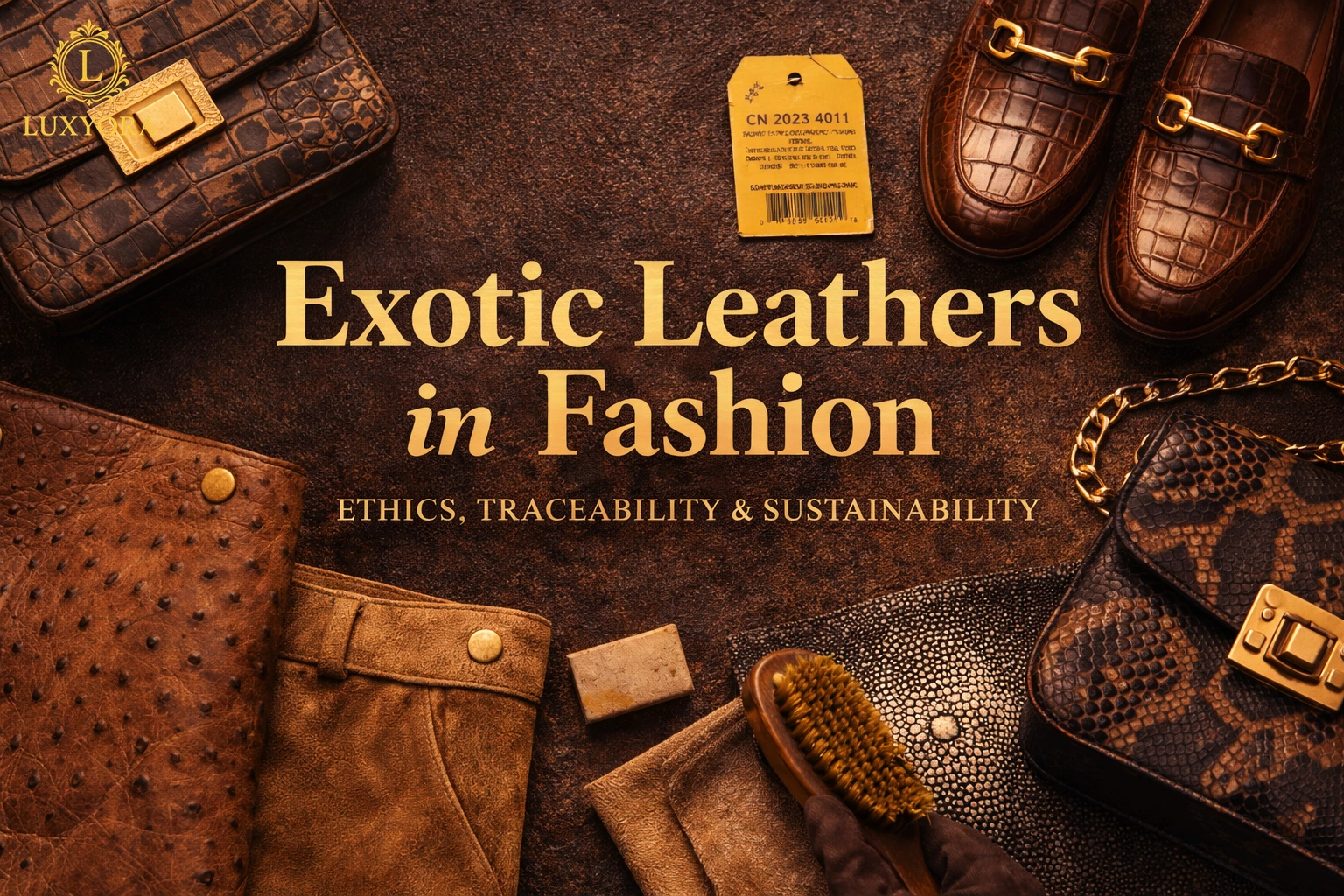
In the fashion industry, exotic leathers refer to non-bovine, non-standard luxury skins, most commonly crocodilian (crocodile/alligator/caiman), python and other snakes, lizard, ostrich, and stingray, used in handbags, shoes, belts, small leather goods, watch straps, and trims. The term “exotic” is less about rarity alone and more about distinctive scale patterns, quill follicles, unusual hand feel, and high-status craftsmanship. In luxury merchandising, exotic leathers function as material signifiers of exclusivity because their skins are harder to source consistently, require specialized tanning and cutting, and often demand stricter compliance documentation than conventional leather.
At the same time, exotic leathers sit at the center of a rapidly evolving debate in which heritage luxury, animal welfare expectations, biodiversity impacts, and trade regulations collide.
This is why “exotic leathers” is a powerful industry term: it describes not only a category of materials, but also a whole ecosystem of supply chain governance, traceability, brand policy, and consumer scrutiny.
What Makes a Leather “Exotic” in Luxury Fashion?
Exotic leathers are valued for signature visual codes that can’t be replicated perfectly by smooth calfskin:
- Crocodilian: large-scale, architectural patterning and a high-gloss “dress” finish often used in structured handbags.
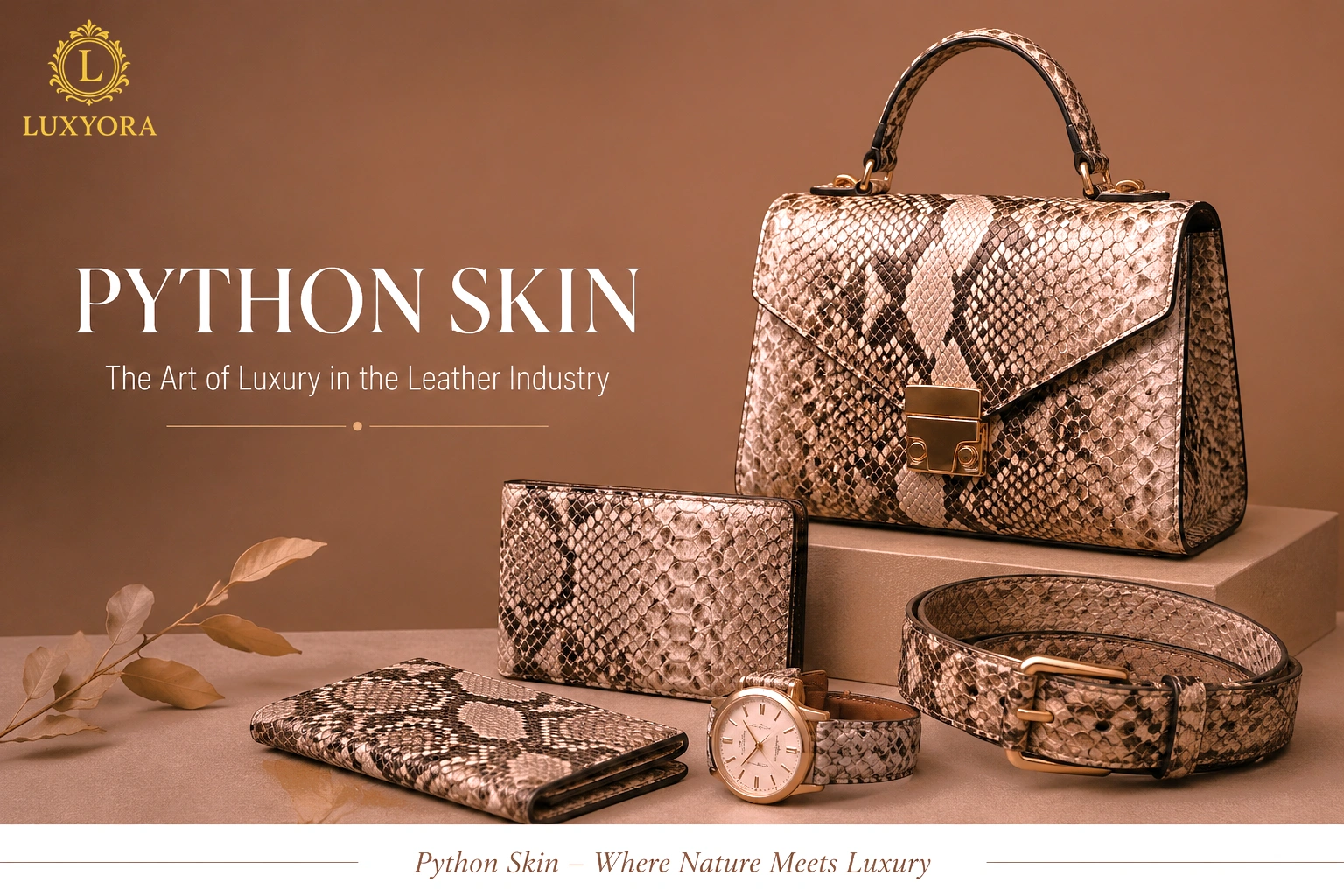
- Python/snake: repeating scales that create dramatic texture and color movement across panels.
- Ostrich: the recognizable quill follicle pattern (raised “dots”) that reads immediately as luxury.
- Stingray: a hard, pebbled, almost “beaded” surface prized for durability and a jewel-like look.
In design language, exotic leathers are often deployed as hero materials, meaning the item is built around the skin’s pattern placement, not just covered by it.
How Exotic Leather Supply Chains Are Regulated: CITES and Traceability
A major reason exotics are treated differently from conventional leather is that many species involved are regulated under the Convention on International Trade in Endangered Species of Wild Fauna and Flora (CITES). CITES sets rules for international trade, including documentation requirements and, in particular, for crocodilian skins, measures such as tagging to support traceability and enforcement.
From a fashion-industry perspective, this matters because compliance isn’t optional. For a luxury brand selling globally, exotic leather sourcing must align with:
- Species listing and legal trade pathways
- Permits and records for cross-border movement
- Traceability practices (e.g., tagging protocols in crocodilian trade)
Independent conservation and trade reporting (e.g., IUCN Specialist Group materials on crocodilian trade patterns) highlights how regulated markets have changed over time, underscoring the importance of monitoring species, volumes, and sourcing models.
The Ethics Conversation: Why Brands and Fashion Weeks Are Splitting
Exotic leathers sit at a crossroads of values:
- Animal welfare and activist pressure have prompted some institutions and brands to restrict or eliminate the use ofexotic skins.
- Conservation/trade experts sometimes argue that regulated trade can create economic incentives tied to management and enforcement (this viewpoint is contested and highly context-dependent).
A clear example of the current direction is policy change at major fashion events: London Fashion Week announced a ban on exotic skins for show collections, framed as part of an ethical/sustainability posture, while also drawing criticism from some conservation specialists.
For students of fashion business, this split is important: it shows how “sustainable fashion” can mean different things to different stakeholders, animal-free materials for some, regulated biodiversity-linked livelihoods for others.
Legal Restrictions in Key Markets: The California Example
Beyond global trade frameworks, local laws can reshape demand. In the U.S., California has been a focal point because regulations restrict the commercial sale of certain crocodile/alligator products and other exotic skins under specified conditions and timelines, which has fueled ongoing legal and industry scrutiny.
For brands, this creates practical complexity: a material may be legally sourced internationally through CITES-compliant channels but still face jurisdiction-specific sales limits.
Sustainability: What “Responsible Exotic Leather” Requires
When the fashion world discusses sustainability in leather, it increasingly relies on Life Cycle Assessment (LCA) and chemical/process management in tanneries.
- The Leather Working Group (LWG) published an LCA summary describing an effort to evaluate environmental impacts across multiple leather product families and to support footprint reduction decisions.
- UNIDO’s Framework for Sustainable Leather Manufacturing is widely used as a technical background for improving tannery practices (effluent management, chemical controls, cleaner technologies).
- Circular fashion research emphasizes that sustainability also depends on product longevity, repair, and systems thinking, which is highly relevant for long-life luxury leather goods.
Key fashion takeaway: whether a brand uses exotic leathers or not, credibility increasingly depends on transparent sourcing policies, traceability, and verifiable environmental management, not marketing language alone.
Craft, Cutting, and Value: Why Exotics Cost More
Exotic leathers are costly because:
- Yield is limited: scale patterning and natural variation reduce usable cutting area.
- Panel placement is a skilled craft: symmetry and visual continuity are important (especially for crocodilian belly scales or python alignment).
- Specialized finishing is required, and finishing is a major lever for both performance and aesthetics in leather.
In retail storytelling, exotics are often positioned as the “top tier” above calfskin because they combine material rarity signals + labor-intensive craftsmanship.
Consumer Knowledge: How to Buy (or Avoid) Exotic Leathers Responsibly
If your goal is informed buying (even if you ultimately choose not to purchase exotics), the industry checks are consistent:
- Ask about compliance and documentation (especially for internationally traded skins).
- Look for traceability signals and published sourcing commitments.
- Consider the “use phase”: luxury leather goods last longer when properly cared for, repaired, and stored, thereby supporting a circular value model.
And if you prefer alternatives, remember: sustainability isn’t automatic. Materials marketed as “eco” still have footprints. The real evaluation is comparative, evidence-based, and increasingly data-driven.
References
Convention on International Trade in Endangered Species of Wild Fauna and Flora. (n.d.). Resolution Conf. 11.12 (Rev. CoP15): Universal tagging system for the identification of crocodilian skins. CITES. (cites.org)
International Union for Conservation of Nature Crocodile Specialist Group. (2024). World trade in crocodilian skins 2021–2023 [PDF]. IUCN-SSC CSG. (iucncsg.org)
Leather Working Group. (2024). Measuring the environmental impact of leather: Life cycle assessment report summary [PDF]. (Leather Working Group)
Loeb & Loeb LLP. (2023). California 2023 luxury law update: First state to ban animal testing and furs but loses preemption battle (client alert). (loeb.com)
Niinimäki, K. (Ed.). (2018). Sustainable fashion in a circular economy. Aalto ARTS Books. (Acris)
Steptoe & Johnson LLP. (2019). Seller beware: California bans fur and alligator skin products (client alert). (Steptoe)
The Guardian. (2024, December 18). “Ridiculous” ban on exotic animal skins at London Fashion Week criticised by experts. (The Guardian)
UNIDO. (2019). The framework for sustainable leather manufacturing (2nd ed.) [PDF]. (Leather Panel)
Vogue Business. (2024). London Fashion Week bans exotic skins. (Vogue)
Muthu, S. S. (Ed.). (2020). Leather and footwear sustainability: Manufacturing, supply chain, and product level issues. Springer. (Springer)
-