Heat Styling Tips to Minimize Damage | Luxyora
If haircare had a red-carpet question that refuses to leave the afterparty, it’s this one: How often should I wash my hair? One person swears by daily shampooing, another is proudly on “day eight,” and someone in the corner is quietly misting dry shampoo like it’s holy water.
Here’s the chic truth: there isn’t one perfect schedule because hair doesn’t get “dirty” on a calendar. Your scalp produces oil (sebum), you pick up sweat, pollution, and product buildup, and your hair texture determines how fast that oil travels from roots to ends. So the real goal isn’t “washing less” or “washing more.” It’s washing when your scalp needs cleansing without making your lengths feel like straw.
Dermatologists tend to keep it practical: wash based on oiliness, lifestyle, and hair type. For example, the American Academy of Dermatology notes that straight hair and oily scalps may need daily shampooing, while dry, textured, curly, or thick hair might shampoo far less often (even every 2-3 weeks, as needed).
Let’s make it feel effortless.
First: are you washing your hair or your scalp?
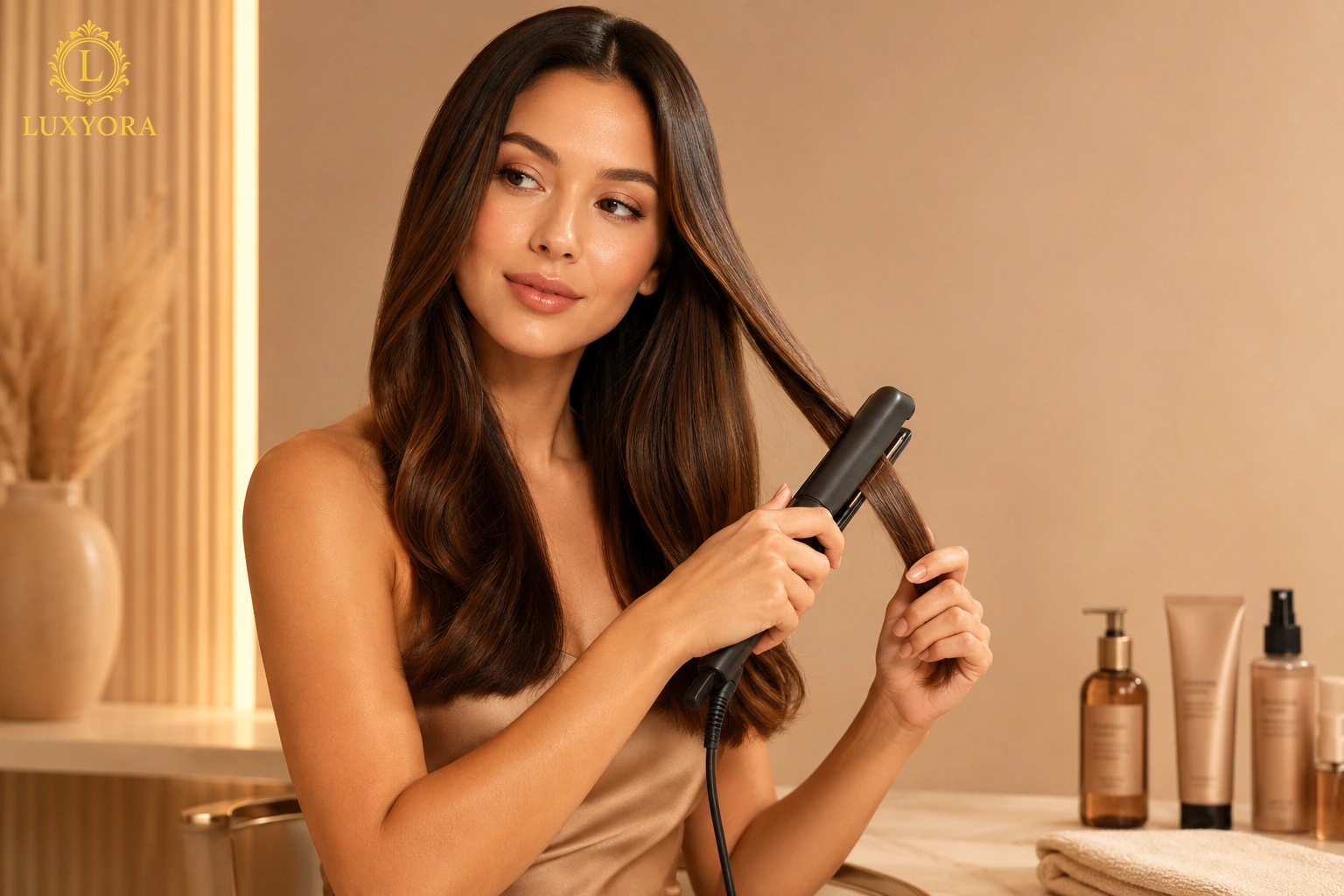
There’s a very specific kind of confidence that comes from a great blowout or a glassy flat-iron finish the kind that makes you walk like you’re late to a casting. Heat styling is that girl in our beauty routines: dependable, transformative, and (if we’re honest) occasionally a little chaotic. The good news? You don’t have to break up with your hot tools to keep your hair looking expensive. You just need smarter boundaries.
Heat damage happens when repeated high temperatures dehydrate the hair fiber, rough up the cuticle (your hair’s outer “armor”), and, at higher exposures, begin altering the proteins and internal structures that give hair strength and flexibility. Research on thermal straightening shows that damage can develop progressively, and chemically treated hair tends to become heat-damaged faster. And hair-science reviews consistently flag straighteners and curling irons as especially intense because they deliver high heat directly to the shaft.
Here’s how to keep the drama on your ends to a minimum.
1) Start with the golden rule: dry hair is safer hair
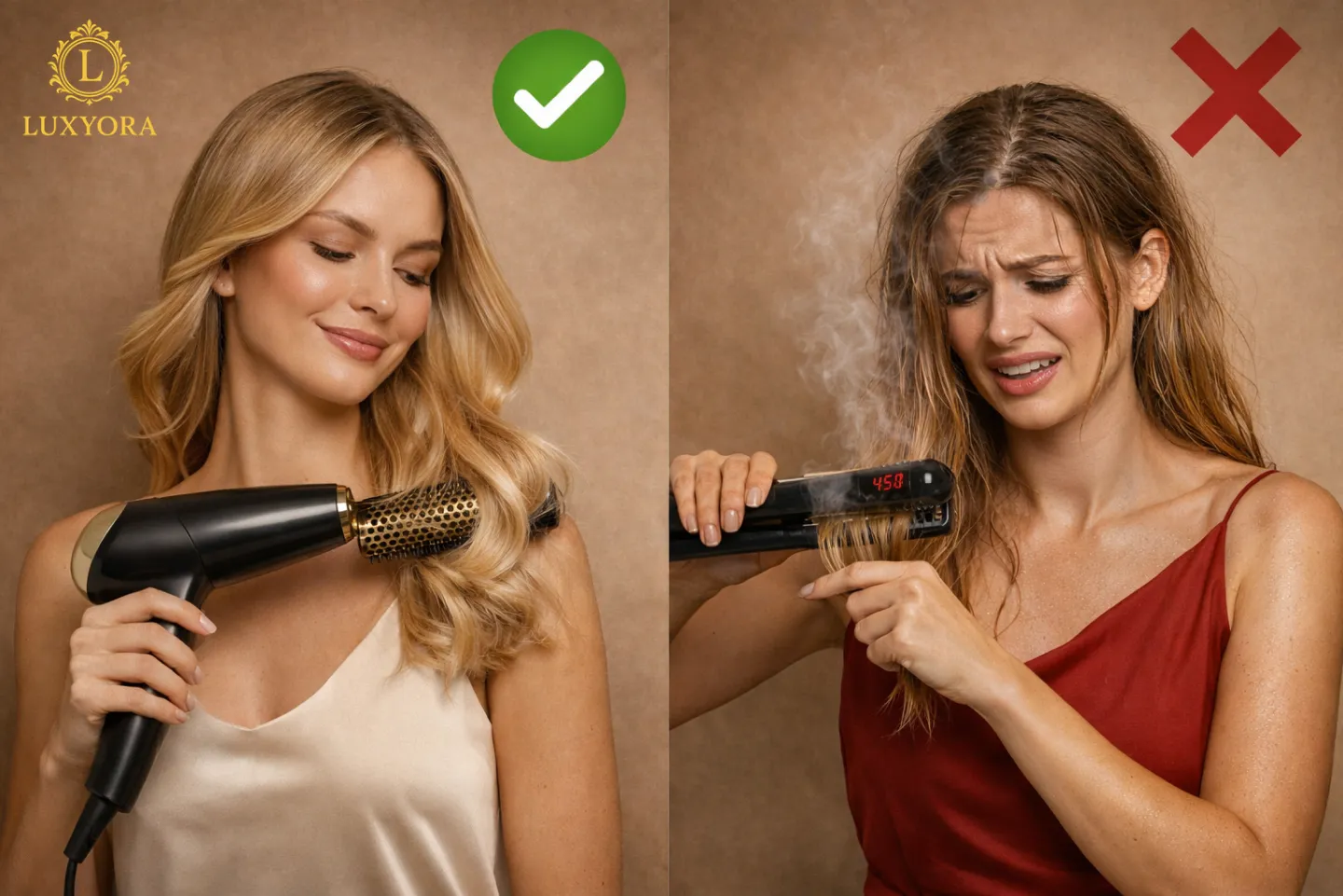
If you’ve ever heard a suspicious little sizzle while styling, yes, that’s the sound of moisture inside the hair flashing into steam. That “bubble hair” situation is one of the reasons dermatology guidance tends to emphasize not over-heating, not over-styling, and being cautious with wet hair.
Try this instead:
- Air-dry to 70-80% when you can, then finish with a dryer.
- If you must style quickly, use a microfiber towel or soft cotton tee to reduce friction and speed up drying.
2) Your heat protectant is non-negotiable (and it’s not just marketing)
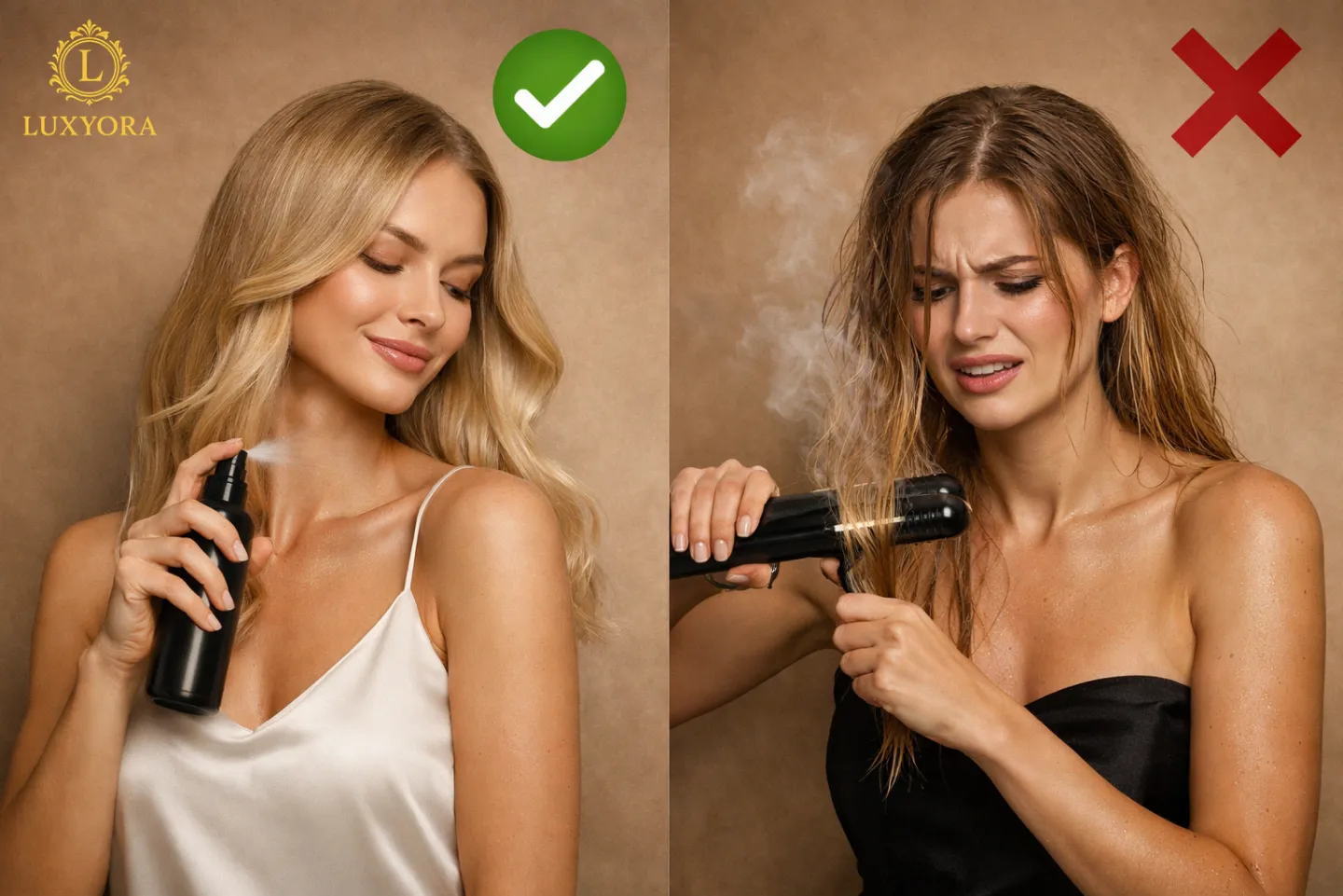
Heat protectants aren’t magic shields, but there is credible science behind the idea: many protectants form a thin film that helps reduce moisture loss and smooth the fiber surface, which can lower mechanical wear during styling.
How to use it like a pro:
- Apply on damp hair before blow-drying.
- If you’re going in with a flat iron after drying, use a second light layer designed for dry hair (or a mist that won’t re-wet the strand).
- Focus on mid-lengths to ends; your scalp doesn’t need the buildup.
3) Turn the temperature down your hair doesn’t need “maximum” to look maximal
Many tools can reach very high temperatures, but higher heat isn’t inherently better. A major hair-care physicochemistry review notes that hot irons straighten by rearranging hair bonds temporarily, but overheating weakens and can rupture the fiber.
Practical temperature “vibes”:
- Fine/fragile/bleached hair: keep it lower and do fewer passes.
- Medium density hair: moderate heat, slow, controlled passes.
- Coarse or very curly hair: you may need more heat, but technique matters even more (protectant + fewer passes)
If you colour, bleach, relax, or do keratin/straightening services, assume your threshold is lower; thermal damage develops faster with oxidative pre-treatment.
4) Fewer passes, slower glide, cleaner sections
Every extra pass is cumulative exposure. The sleekest stylists aren’t working harder; they’re working cleaner.
Try:
- Smaller sections (especially at the back of the head).
- One slow pass instead of three frantic ones.
- Let each section cool and “set” before you touch it again; hair shape holds better as it cools.
5) Blow-dry like you’re painting: distance, direction, and airflow
Blow-dry damage is often about time + proximity. Dermatologist guidance emphasizes adjusting how you style to reduce damage potential.
Upgrade your technique:
- Keep the nozzle moving; don’t camp out on one spot.
- Aim airflow down the shaft to smooth the cuticle (hello, shine).
- Finish with a cool shot if your dryer has it—it helps lock in the style and reduces frizz.
6) Build a “heat schedule” (yes, like skincare cycling, but for hair)
You don’t need to be perfect; you need to be consistent. Give hair regular breaks so it can retain moisture, elasticity, and surface smoothness. Clinical and cosmetic literature on hair morphology and styling practices links frequent styling and stressors with structural changes.
A realistic rhythm:
- Heat style 1-3 times/week, depending on hair condition.
- On off-days: try braids, twist-outs, rollers, or a chic low bun with a smoothing cream.
7) Treat “damage control” like wardrobe care: prevention + maintenance
Once hair is severely heat-damaged, you can improve feel and appearance, but you can’t truly “repair” split fibers back to factory settings. The best strategy is prevention plus surface conditioning: conditioners, masks, and leave-ins that improve lubrication and reduce friction (which means fewer snaps when you brush or style). A detailed review of hair conditioning and degradation supports this protective, film-forming approach.
Do this weekly:
- A hydrating mask (look for fatty alcohols, conditioning agents, silicones if you like them).
- A lightweight oil on ends (especially before bed) to reduce friction.
8) Know when it’s time to see a dermatologist
If you’re noticing breakage that seems extreme, thinning at the hairline, or shedding that doesn’t match your normal pattern, don’t just buy another product and hope. Dermatology guidance recommends seeking professional help when you’re worried about hair loss or damage.
Luxyora Philosophy: Luxury isn’t about never using heat; it’s about using it intentionally. When your routine respects your hair’s limits, shine stops being a special occasion and becomes your baseline.
References:
- American Academy of Dermatology Association. (n.d.). Hair styling without damage. Retrieved February 2, 2026. (American Academy of Dermatology)
- Fernandes, C., et al. (2023). On hair care physicochemistry: From structure and degradation to novel biobased conditioning agents. Polymers, 15(3), 608. (MDPI)
- Kunchi, C., et al. (2018). Correlation between mechanical and thermal properties of human hair fibers. International Journal of Trichology. (LWW Journals)
- Malkani, R. H., et al. (2020). Hair styling procedures and hair morphology: A cross-sectional study. Indian Dermatology Online Journal. (LWW Journals)
- Tinoco, A., et al. (2019). Crystallin fusion proteins improve the thermal properties of human hair. Frontiers in Bioengineering and Biotechnology. (Frontiers)
- Wortmann, F. J., & colleagues. (2018). Kinetics of the changes imparted to the main structural components of human hair by thermal straightening. Thermochimica Acta. (ScienceDirect)
- Rai, V. K., Das, C., Dash, P., Mishra, A., Kar, B., Rajwar, T. K., Sharma, A., Yadav, N. P., & Rath, G. (2021). Nanoparticles and emerging technologies in modern hair care products (Book chapter). ScienceDirect. (ScienceDirect)