The Future of Wearing Time : What Comes After Traditional Watches | Luxyora
Time used to be something you checked. Now it’s something that finds you on lock screens, dashboards, kitchen appliances, meeting invites, and the little corner of every video call that quietly judges your punctuality. And yet, we still wear watches. Not because we lack clocks, but because we like the idea of time having a home, preferably on the wrist, preferably beautiful.
But here’s the twist: the wrist is no longer the only address.
The next era of “wearing time” isn’t just about replacing traditional watches. It’s about dissolving the boundaries between timekeeping, wellness, identity, and style until time becomes ambient, personal, and almost invisible. Think less “watch as an object,” more “time as an experience.”
1) From Wristwear to Whisperwear: The Rise of Subtle Tech
The first wave of wearable tech loved a screen. Bright. Busy. Constantly begging for attention. The second wave is learning restraint.
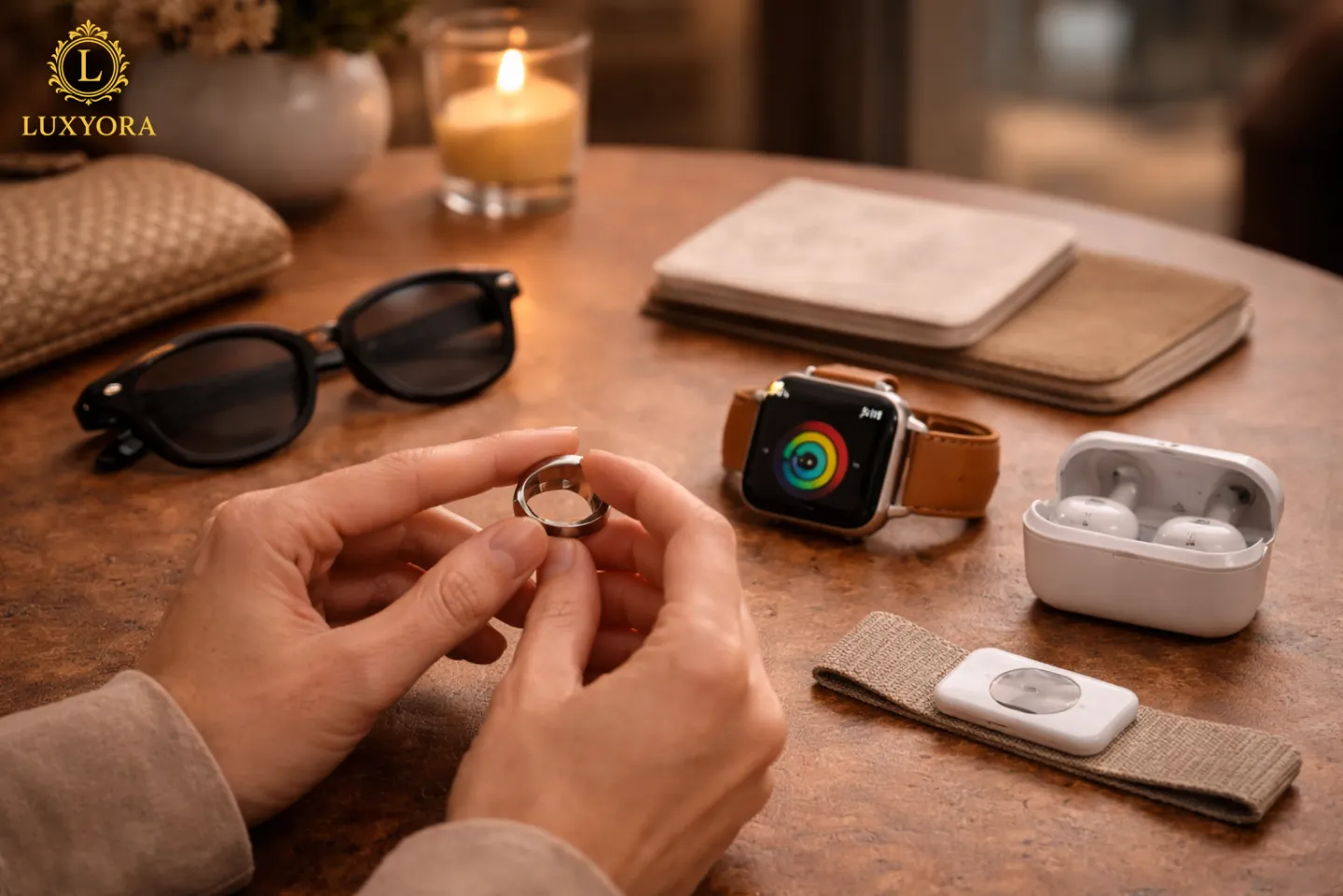
Smart rings are the poster child for this new mood: discreet, jewelry-adjacent, and designed to disappear into your day. They’re also a signal that people want fewer devices, not more, fewer bulk, fewer glow, fewer “I’m wearing a gadget.” When a wearable can track your body, nudge your habits, and keep a low profile while doing it, that feels like the future, making eye contact with luxury.
And this is where “time” quietly shifts roles. You’re not just reading the hour, you’re reading your readiness, your recovery, your rhythm. Time becomes biometric: how long you slept, how deeply you recovered, how stressed your heart rate looks. In other words, wearing time starts to mean wearing your time.
The next chapter of wristwear may not replace traditional watches it may redefine what wearing one actually means. Somewhere between utility, connection, and personal habits, the role of the watch is quietly changing. Discover where that evolution leads in From Timekeeping to Data Tracking: The New Role of Smartwatches.
2) The Watch Becomes a Relationship, Not a Screen
Traditional watches, especially mechanical ones, have always offered something tech struggles to replicate: emotional durability. They don’t need a new operating system. They don’t become “unsupported.” They age into themselves.
What comes next won’t necessarily delete that romance. It will split the category into two lanes:
- Heritage timepieces that lean harder into craft, servicing, longevity, and design integrity (the “forever objects” lane).
- Living wearables that update, learn, and integrate with your life (the “always evolving” lane).
The real shift is that the future buyer may treat watches the way they treat fragrance: not one signature for everything, but a wardrobe. A mechanical piece for evenings and milestones; a ring or glasses for weekday utility; perhaps something woven into clothing for travel and training. Time becomes modular, chosen for context.
If the next era of wristwear is about evolution, then understanding what ages well becomes more interesting than predicting what comes next. Some watches seem designed for permanence, others for progress and that contrast continues in Why Some Watches Get Better With Age While Others Need Updates.
3) Smart Glasses and the End of “Checking”
If watches made time portable, smart glasses aim to make time ambient.
The big promise of glasses as a platform is that they let you stay present while receiving information in a more natural, heads-up way. That matters because “checking” your phone and even your watch breaks the spell of whatever you’re doing. A glance is a tiny exit.
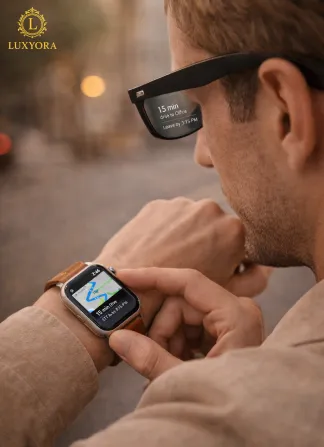
Glasses try to remove even that. Notifications, navigation, translation, and calendar cues are delivered closer to your line of sight, hands-free, with fewer dramatic gestures. Whether the world embraces this depends on comfort, aesthetics, battery life, and a very serious conversation about privacy. But directionally, it’s clear: the interface is rising from wrist to face.
This is where timekeeping becomes less about a dial and more about context. Not “what time is it?” but “how long until my car arrives?” “Is this meeting running over?” “Do I have time to stop?” The future of wearing time is, frankly, wearing decisions.
4) E-Textiles: When Time Moves Into the Fabric
The most fashion-forward future isn’t on the wrist, finger, or face; it’s in the clothes themselves.
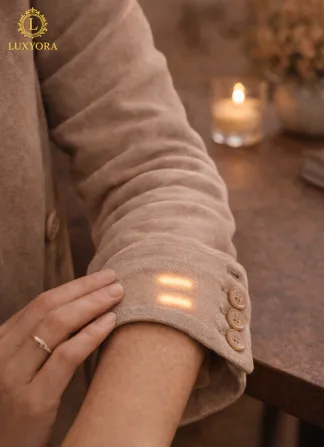
Electronic textiles and smart clothing have been developing for years, and the ambition is seductive: sensors embedded into garments, fabrics that can measure movement, temperature, or biometrics, and clothing that behaves like a soft interface. Imagine a coat cuff that subtly signals an incoming call, or a sleeve that gives a gentle haptic cue when it’s time to leave for the airport.
In this world, time doesn’t sit atop the outfit as an accessory. It’s built into the outfit as a feature like tailoring, but with intelligence.
This is where luxury can genuinely lead. Because if wearables are going to merge with fashion, they have to be comfortable, durable, repairable, washable, and genuinely attractive. “Tech, but make it elegant” stops being a slogan and becomes a requirement.
5) Patches, Pods, and the Skin as Interface
Another future is already here, quietly, in medical and wellness spaces: skin-worn patches and sensors. These don’t look like watches at all. They look like minimal design, thin, light, and clinical-adjacent. Their job isn’t to tell time in hours and minutes; it’s to track time in trends and changes.
This matters because it hints at the next evolution: wearables that prioritize continuous insight over visible display. The most advanced device may be the one you forget you’re wearing until it tells you something useful.
If the wristwatch was once a public statement, these new forms are intimate. Less “look at my watch,” more “this helps me live better.”
6) The Luxury Question: What Will Feel Expensive?
Here’s a glamorous truth: luxury isn’t just materials. It’s experience.
In the future, what will feel truly premium is not necessarily the most complex device, but the most seamless one. The one that respects your attention, holds your data responsibly, and fits your style without screaming for credit.
Luxury will be defined by:
- Discretion (less screen, more subtle cues)
- Longevity (repairable hardware, sustainable materials, meaningful lifecycle)
- Trust (clear privacy practices and user control)
- Design seriousness (beauty that isn’t an afterthought)
Wearing time is moving toward a world where craftsmanship and code sit at the same table. The winners will be the brands that can do both: build things that feel human, not just smart.
So, What Comes After Traditional Watches?
Not a single replacement but an ecosystem.
Traditional watches will remain the emotional center: jewelry with soul, objects with history, heirlooms with weight. Around them, a new cast of characters will take over the practical parts of time: rings that track your rhythm, glasses that deliver context, textiles that make your outfit quietly intelligent, and skin-worn sensors that turn time into insight.
The future isn’t the end of the watch. It’s the expansion of what “wearing time” can mean.
Luxyora Philosophy: The future of time isn’t louder screens, it’s quieter elegance: wear what keeps you present, and let luxury be the technology you don’t have to think about.
References:
- Doherty, C., Liu, T., McKenzie, J., & others. (2025). Privacy in consumer wearable technologies: A living systematic review of privacy policy practices. JMIR (via PubMed Central). (PMC)
- Kan, C. W., & Lam, Y. L. (2021). Future trend in wearable electronics in the textile industry. Applied Sciences, 11(9), 3914. (DNB)
- McCann, J., & Bryson, D. (Eds.). (2023). Smart clothes and wearable technology (2nd ed.). Woodhead Publishing / Elsevier. (ScienceDirect)
- Meta Platforms’ smart glasses launch coverage. (2025, September 17). Meta launches smart glasses with built-in display, reaching for “superintelligence” (Reuters). (Reuters)
- Samsung Electronics. (2025). Galaxy Ring: Smart ring overview and features (Product information). (Samsung India)
- Wu, X., & Li, L. (2019). An introduction to wearable technology and smart textiles & apparel: Terminology, statistics, evolution and challenges. In Smart and Functional Soft Materials. IntechOpen. (PolyU Scholars Hub)
- Apple Inc. (2023). Introducing Apple Vision Pro: Apple’s first spatial computer (Newsroom release). (Apple)
- Apple Inc. (2025). Apple Vision Pro: Widgets and clock-related experiences (Product information & user guide). (Apple)