How Proper Fit Changes the Way Clothes Look | Luxyora
Impulse buying has a very specific aesthetic: a shiny bag on your arm, a dopamine sparkle in your eyes, and three days later, an outfit still wearing its tags like a tiny confession. We’ve all been there. Fashion is designed to seduce: the “limited drop,” the countdown timer, the influencer try-on haul that makes a cardigan feel like a personality upgrade. But the most chic wardrobe isn’t the biggest, it’s the one where every piece belongs.
Impulse clothing purchases don’t happen because you “lack willpower.” They happen because your brain is responding exactly as modern retail intends: urgency + emotion + ease. Research on impulse buying defines it as a sudden urge to buy immediately, often triggered by the moment rather than by a plan (Iyer et al., 2020). So let’s make you harder to hack without killing the fun of fashion.
Fit is Silhouette - Your Outfit’s First Impression
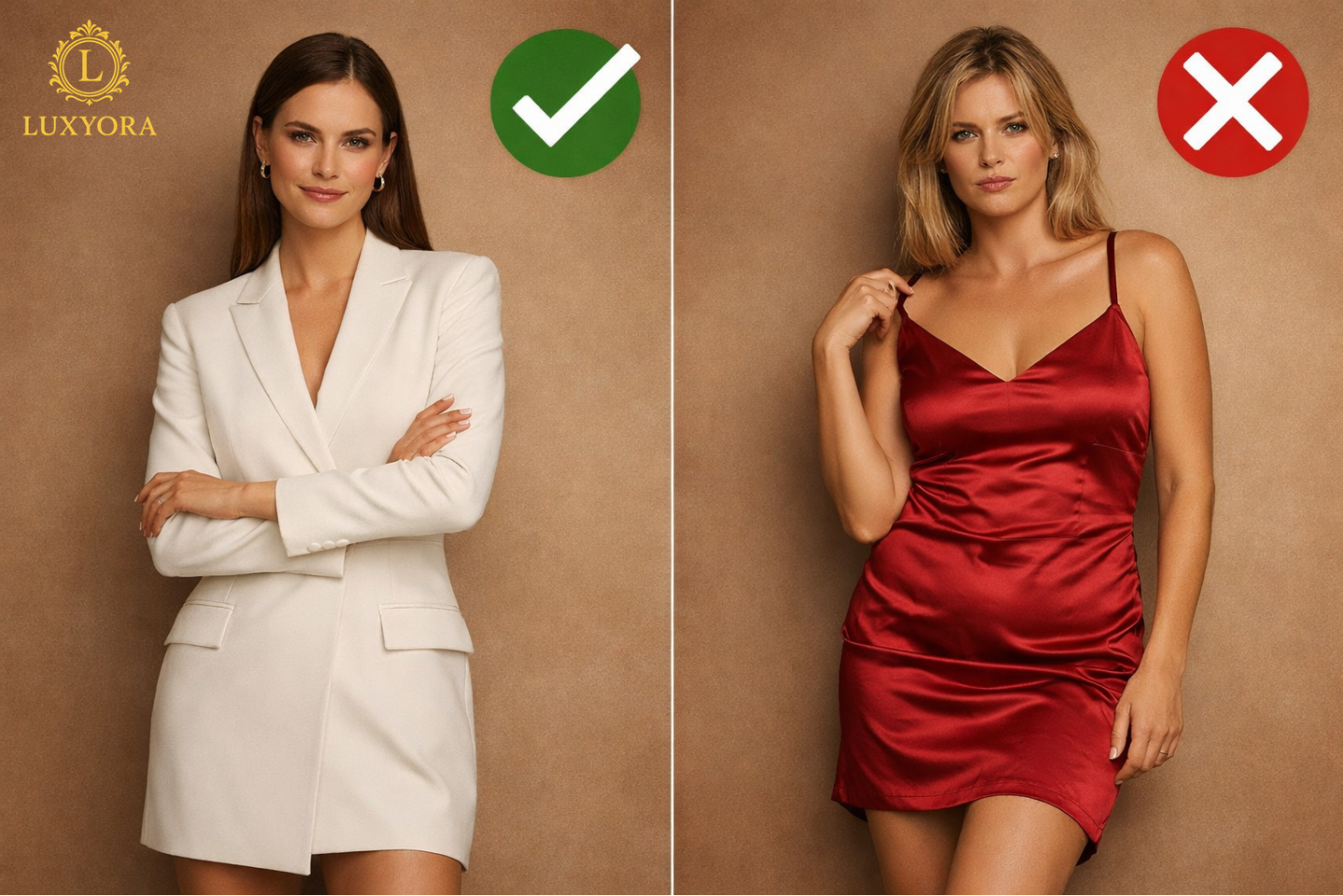
When people say, “That looks so good on you,” they’re often responding to silhouette: the outline your clothing creates from a few feet away. Fit controls that outline. A coat that’s too wide at the shoulders drops and collapses; a coat that’s too tight pulls and wrinkles. A waistline that lands at the wrong point can shorten the torso or make the hips look wider; the right placement creates balance and that coveted “clean line.”
Fit changes more than proportions, it changes presence. And sometimes the reason an outfit looks right has nothing to do with fashion trends and everything to do with wearing what truly suits you. Read more about How to choose clothes that actually suit your body type.
Fashion psychology research also backs up what stylists have known forever: dress shapes how we read someone’s status, aesthetic, and even perceived confidence. Clothing isn’t just decoration; it’s information.
The “Expensive” Look is Mostly Tailoring and Tension (or Lack of it)
Luxury has a specific visual language: smoothness, intention, and ease. Not “ease,” as in casual ease, meaning the garment has enough room to move without strain. In fit terms, ease allowance is the built-in space between your body and the garment. When it’s right, fabric drapes; when it’s wrong, fabric fights.
Recent research even quantifies how fit changes body perception: variations in garment ease can influence how wearers perceive their body scale (basically, how “broad,” “slim,” or “balanced” they feel), and those perceptions differ across body shapes and genders.
Translation? Fit isn’t vanity, it’s visual engineering
Proportion is the Secret Handshake of Style
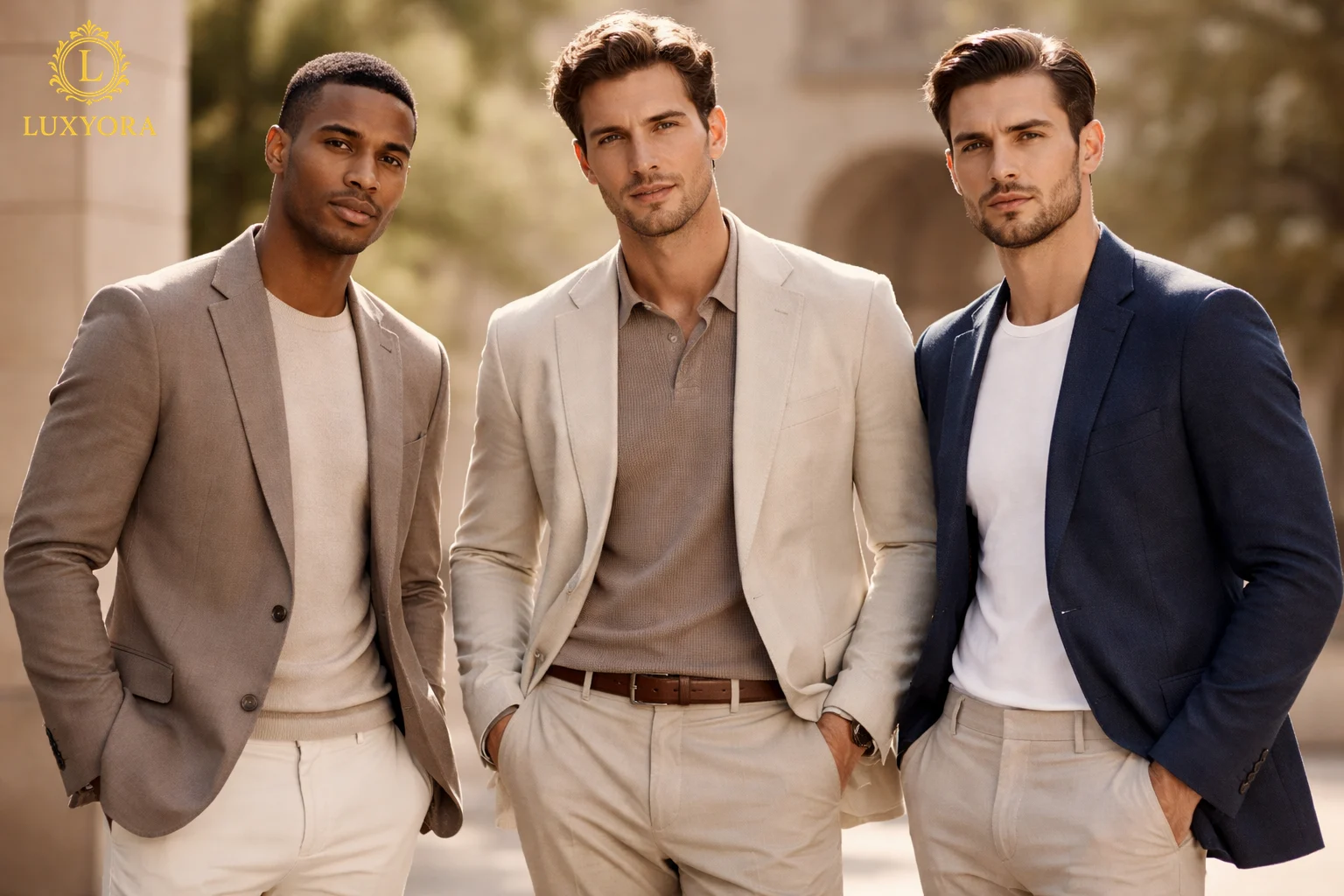
Proper fit also controls proportion: where the garment ends, where it begins, and how those lines divide the body.
- Shoulder seams are the north star of structure. If they droop past your shoulder point, the whole top half can look sleepy and oversized (unless that’s the vibe, in which case it should look deliberate).
- Sleeve length is a tiny detail that changes everything. A sleeve that hits at the wrist bone reads crisp; one that puddles reads sloppy; one that’s slightly cropped reads modern and styled.
- Hem placement shapes the leg line. Cropped trousers that hit at the narrowest part of the ankle look sharp; those that land at the widest part can visually “cut” the leg.
- Rise and waist determine whether denim elongates you or leaves you constantly adjusting in public (a personal nightmare).
This is why two people can wear the “same” outfit and look completely different: fit edits the body’s lines like a photographer edits light.
Fit Changes how Fabric Behaves - Especially in Motion
On a hanger, fabric is theoretical. On a body, fabric becomes physics.
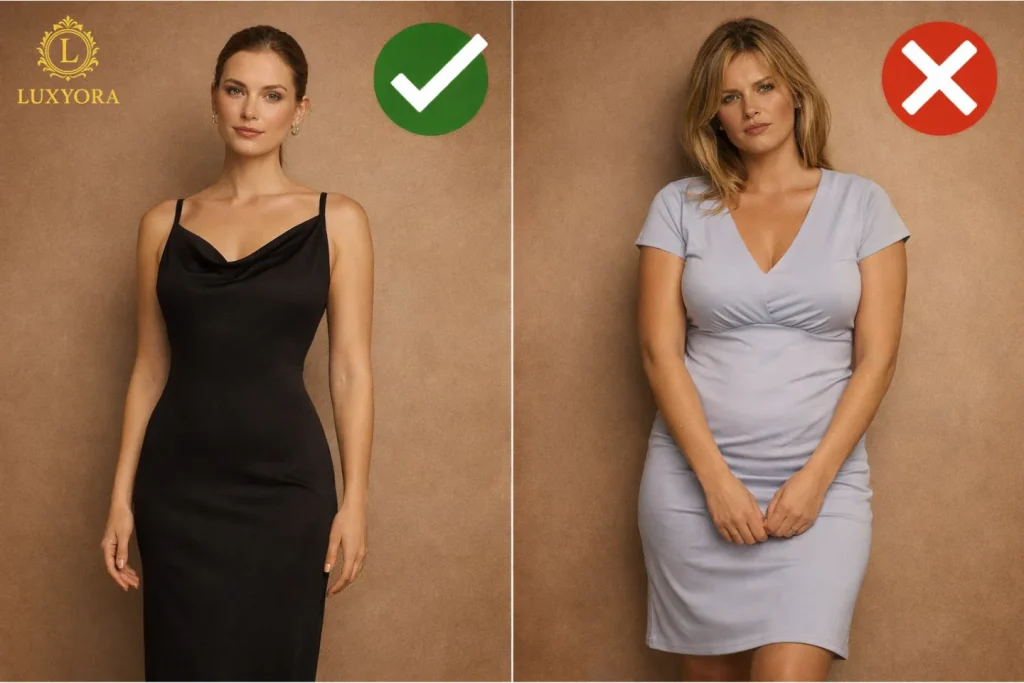
A stiff cotton poplin shirt needs space to hold its crisp shape; otherwise, it pulls at the bust or back buttons. A bias-cut slip dress is designed to skim; if it’s too big, it loses its liquid elegance and starts to sag. Knitwear is forgiving, but a too-snug knit can cling in ways that feel more “gym compression” than “French-girl chic.”
And then there’s movement walking, sitting, reaching for your coffee. If your clothes restrict you, you wear that discomfort on your face and in your posture. Fit affects confidence because fit affects freedom. Studies on fit factors and self-evaluation link a better fit with stronger confidence in clothing decisions and psychological comfort.
The Fit Checklist: What “Proper” Actually Means
Proper fit doesn’t mean tight. It means balanced front to back, side to side, standing still, and moving.
A quick mirror audit:
- No pulling lines across the bust, hips, thighs, or buttons.
- No twisting seams (often a sign the garment isn’t aligned to your shape).
- Shoulders sit where your shoulders are.
- You can sit comfortably without the waistband digging in or the hem riding up dramatically.
- The garment hangs evenly, especially coats, blazers, and dresses.
Garment construction and fit education materials emphasize that fit is the “most obvious factor” in the overall effect of clothing, and that it’s assessed through alignment, balance, and careful inspection during the try-on process.
Tailoring: The Fastest Way to Upgrade Your Wardrobe (and Your Life)
If you want one fashion move that makes almost everything look better, it’s this: befriend a tailor.
Tailoring doesn’t have to mean bespoke suits or couture-level budgets. Small alterations, such as shortening sleeves, nipping a waist, hemming trousers, and adjusting straps, can change the entire mood of a garment. And it’s not just aesthetic: alterations extend a piece’s wearable life, which matters in a world where fashion is being asked (rightfully) to become more sustainable. Books and industry guides on tailoring and alterations underscore how refining fit transforms the way garments sit, move, and last in a wardrobe.
Proper fit has a way of making clothing look intentional, effortless, and instantly more refined. But sometimes what appears to be a style issue is simply a small detail sitting in the wrong place. Discover the Common clothing fit mistakes and how to fix them.
Fit is also an Industry Problem and a Tech Frontier
If you’ve ever ordered three sizes online and returned two, you’ve participated in “bracketing,” the retail workaround for inconsistent sizing. Brands know fit is a major friction point, and tech is racing to keep up: digital sizing systems, virtual try-on, and data-driven fit tools are all aimed at reducing returns and improving satisfaction.
Even fashion media is openly tracking how AI and fit technology are being tested to solve the “clothes that don’t fit” crisis.
But here’s the chic truth: until sizing becomes universal (don’t hold your breath), personal fit strategy wins. Know what you like to skim, what you prefer structured, and what you always tailor.
The Real Glow-Up: When Fit Aligns with Identity
A great fit is not about chasing an ideal body. It’s about making clothes serve your body today, not “after I…” anything. When clothing fits, it stops distracting you. You stand taller. You move differently. You stop tugging at hems and start living your life like it’s your runway.
Because the most stylish people aren’t wearing the most expensive clothes, they’re wearing the ones that look like they were made for them.
Luxyora Philosophy: True luxury is clothing that honors your shape, your movement, and your self-respect because when fit is right, confidence becomes the signature.
References:
- Batool, R., Saleem, M. A., & colleagues. (2024). A systematic literature review and analysis of try-on technologies in online apparel shopping. ScienceDirect. (ScienceDirect)
- Hester, N., & Gray, K. (2023). Dress is a fundamental component of person perception. Proceedings/Article available via PubMed Central. (PMC)
- Hossain, M. J., & colleagues. (2025). I bought it and I feel good! An examination of fit factors in confident clothing decisions. ScienceDirect. (ScienceDirect)
- Hatch, K., & colleagues. (2024). Using advances in technology to develop sizing systems for improved fit in apparel. International Journal of Fashion Design, Technology and Education. (Taylor & Francis Online)
- Li, J. (2024). Tailoring garment fit for personalized body image enhancement: Insights from digital fitting research. Publications (MDPI), 19(2), 49. (MDPI)
- McKinsey & Company. (2022/2023). The State of Fashion 2023: Holding onto growth as global clouds gather (report PDF). (McKinsey & Company)
- Shoaib, M. (2023, July 24). Gender-neutral fashion has a sizing problem. Vogue. (Vogue)
- Vogue. (2025, November 4). Can AI stop brands from making clothes that don’t fit? Vogue. (Vogue)
- Watkins, A. (2022). Classic tailoring techniques: A construction guide for women’s wear. Bloomsbury Publishing. (Bloomsbury)
- Lewallen, C. B. (2021). Clothing alterations and repairs: Maintaining a sustainable wardrobe. Bloomsbury Publishing. (blackwells.co.uk)