Undertone : What is Undertone
In the beauty industry, the term ‘undertone’ frequently appears but can be confusing for many. Whether you’re selecting foundation, lipstick, or hair dye, knowing your undertone can significantly enhance your appearance. It’s more than just a makeup industry jargon; it’s an essential idea that guides you in picking shades that naturally suit your skin tone.
This helpful guide gently explains everything you need to know about undertones in a friendly and easy-to-understand way. By the end, you’ll feel confident in identifying your undertone and, with that knowledge, you’ll be able to improve your beauty routine effortlessly.
What Is Undertone?
Undertone refers to the subtle hue beneath the surface of your skin. Unlike your skin tone, which can change due to sun exposure, tanning, or skin conditions, your undertone remains constant throughout your life.
Skin Tone vs Undertone
- Skin Tone: The visible color of your skin (fair, medium, deep)
- Undertone: The underlying hue (cool, warm, neutral)
For example, two people may have the same skin tone but completely different undertones, which is why the same foundation shade can look perfect on one person and off on another.
By understanding undertones, you can select makeup, hair colours, and wardrobe shades that naturally complement your subtle undertone and highlight your best features.
The Three Main Types of Undertones
Understanding the three primary undertones is the first step in mastering your beauty choices
1. Cool Undertones
Cool undertones have hints of pink, red, or blue beneath the skin.
Characteristics:
- Skin may appear rosy or slightly flushed
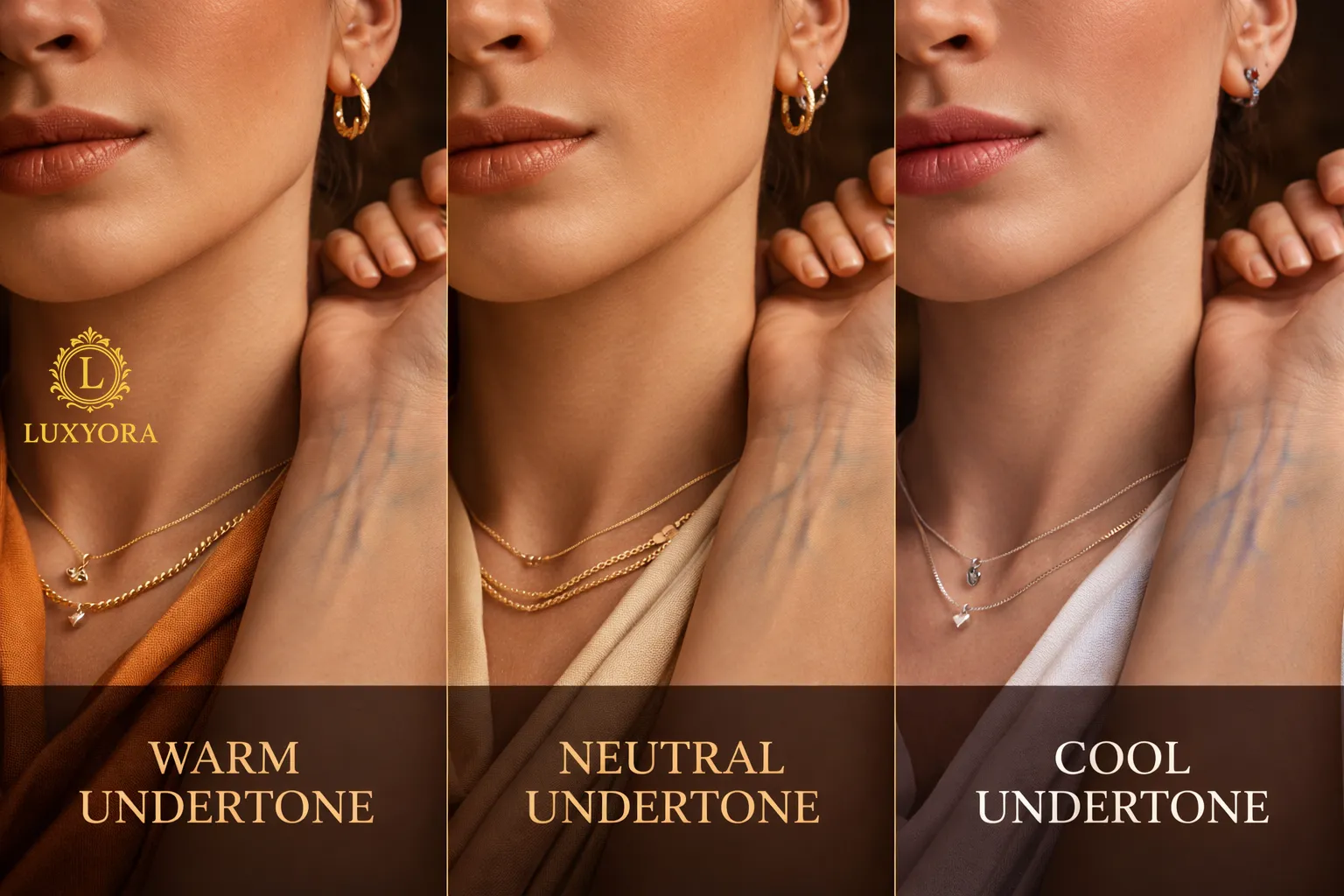
- Veins often look blue or purple
- Silver jewelry tends to complement better than gold
Best suited for:
- Blue-based reds
- Berry shades
- Cool-toned foundations
2. Warm Undertones
Warm undertones feature golden, yellow, or peachy hues.
Characteristics:
- Skin appears golden or yellowish
- Veins may look greenish
- Gold jewelry enhances the complexion
Best suited for:
- Coral and orange-based shades
- Warm browns and golds
- Yellow-based foundations
3. Neutral Undertones
Neutral undertones are a balanced mix of both cool and warm hues.
Characteristics:
- No obvious pink or yellow dominance
- Veins may appear both blue and green
- Both gold and silver jewelry look flattering
Best suited for:
- A wide range of colors
- Flexible makeup choices
Why Undertone Matters in Beauty
Understanding undertone is not just a technical detail; it’s a game-changer.
Foundation Matching
Ever bought a foundation that looked perfect in the bottle but wrong on your face? That’s often an undertone mismatch.
Example Scenario:
You have a warm undertone, but choose a cool-toned foundation. The result? Your face may look ashy or pinker than your neck.
Makeup Harmony
Your undertone influences how colors appear on your skin.
- A warm-toned person wearing cool lipstick might look washed out
- A cool-toned person wearing warm orange blush may look unnatural
Clothing and Style Choices
Undertones also affect how clothing colors look on you.
- Cool undertones shine in jewel tones (emerald, sapphire)
- Warm undertones glow in earthy tones (mustard, olive)
How to Identify Your Undertone
Determining your undertone doesn’t require professional tools. Here are simple methods you can try at home.
1. The Vein Test
Look at the veins on your wrist under natural light.
- Blue or purple veins → Cool undertone
- Green veins → Warm undertone
- Both → Neutral undertone
2. The Jewelry Test
Try both gold and silver jewelry.
- Silver looks better → Cool
- Gold looks better → Warm
- Both suit you → Neutral
3. The White Paper Test
Hold a white piece of paper next to your face.
- Skin looks pink or rosy → Cool
- Skin looks yellow or golden → Warm
- No big difference → Neutral
4. Sun Reaction Test
Observe how your skin reacts to the sun.
- Burns easily → Cool undertone
- Tans easily → Warm undertone
- Burns then tans → Neutral undertone
Undertones and Foundation Selection
Choosing the right foundation becomes much easier once you know your undertone.
Practical Tip
Always swatch foundation on your jawline, not your hand, and check it in natural light.
Example Scenario
You’re shopping for foundation online. You see labels like:
- “Cool Ivory”
- “Warm Beige”
- “Neutral Sand”
Knowing your undertone helps you pick the right shade instead of guessing.
Undertones in Makeup Products
Undertone affects more than just the foundation.
Lipstick
- Cool undertones → Blue-based reds, plum, berry
- Warm undertones → Coral, peach, orange-red
- Neutral undertones → Most shades work
Blush
- Cool → Pink and rose
- Warm → Peach and coral
- Neutral → Soft mauves
Eyeshadow
- Cool → Grays, silvers, purples
- Warm → Golds, bronzes, oranges
- Neutral → Mix of both
Undertone and Hair Color Choices
Hair color can either enhance or clash with your undertone.
Best Matches
- Cool undertones → Ash blonde, platinum, cool brown
- Warm undertones → Golden blonde, honey, caramel
- Neutral undertones → Versatile, most shades work
Real-Life Example
A person with a warm undertone choosing ash blonde hair may look dull because the cool shade cancels out their natural warmth.
Common Mistakes When Identifying Undertone
Even though it sounds simple, many people get it wrong.
Mistake 1: Confusing Skin Tone with Undertone
A fair person can have a warm undertone, and a deep-skinned person can have a cool undertone.
Mistake 2: Relying Only on One Test
Always use multiple methods for accuracy.
Mistake 3: Ignoring Lighting
Artificial lighting can distort your perception. Always check in natural daylight.
Undertones Across Different Skin Types
Undertones exist across all skin tones from very fair to deep complexions.
Inclusive Beauty Insight
Modern beauty brands now offer a wide range of undertone-specific shades, making it easier for everyone to find their perfect match.
Advanced Understanding: Olive Undertones
Some people fall outside the basic three categories.
What Is Olive Undertone?
- A mix of green and yellow hues
- Often appears slightly grayish or muted
Tip: Olive undertones may struggle to find foundation matches, as many products lean too pink or too yellow.
How Undertone Impacts Overall Appearance
Glow vs Dullness
When you wear colors that match your undertone:
- Your skin looks radiant
- Your features stand out naturally
When mismatched:
- Skin appears dull or uneven
- Makeup looks “off”
Practical Daily Tips for Using Undertone Knowledge
Tip 1: Build a Capsule Makeup Kit
Choose products that align with your undertone for everyday use.
Tip 2: Test Before Buying
Always test shades whenever possible, especially foundation and concealer.
Tip 3: Adjust Seasonally
While undertone doesn’t change, your skin tone might. Keep different shades for summer and winter.
Tip 4: Use Undertone in Wardrobe Planning
Create a wardrobe palette that complements your undertone for effortless styling.
Final Thoughts
Understanding undertone is like unlocking a secret code in the beauty world. Once you grasp it, everything from makeup shopping to styling becomes easier and more intuitive. Instead of following trends unquestioningly, you’ll make choices that enhance your natural beauty.
Whether you’re a beginner or a beauty enthusiast, mastering undertones empowers you to look and feel your best every day.
References
Byrdie. (2022). How to determine your skin undertone.
Cleveland Clinic. (2023). Skin tone and undertone basics.
L’Oréal Paris. (2021). How to find your undertone and foundation match.
Makeup Artists & Hair Stylists Guild. (2020). Color theory in beauty applications.
Prota, G. (2018). Human skin pigmentation: Biological and cosmetic implications. Springer.
Taaffe, M., & Green, M. (2019). Cosmetic dermatology and color science. Journal of Aesthetic Studies, 12(3), 145–158.
Vashi, N. A. (2020). Dermatology for skin of color. Elsevier.