Bharat Tex 2026 Closes With a Paris Deal and a Blueprint for the Next Decade
Editor’s Note: LUXYORA is proud to be an official media partner of Bharat Tex 2026. This article forms part of our independent editorial coverage of the event, with no payment exchanged for publication.
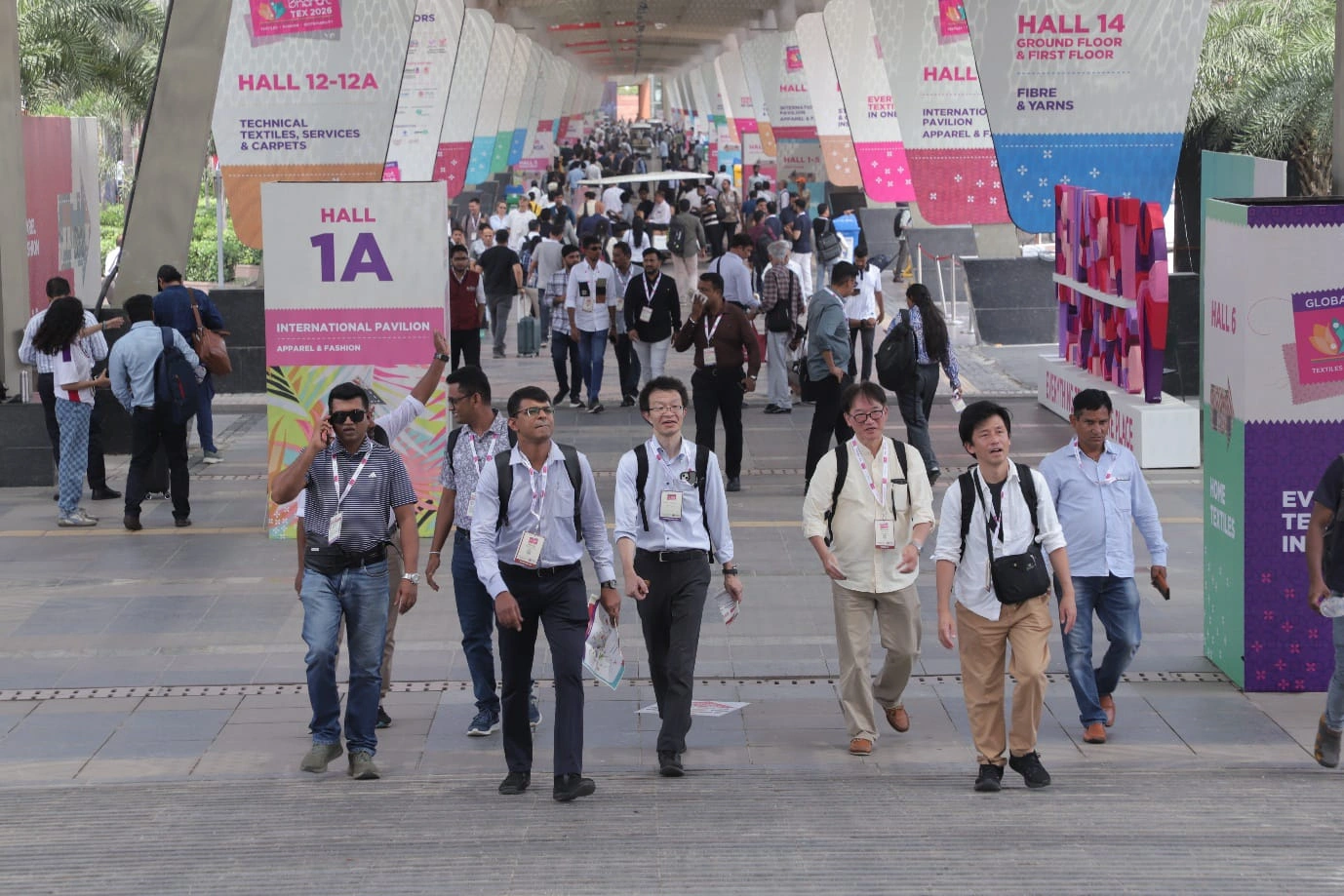
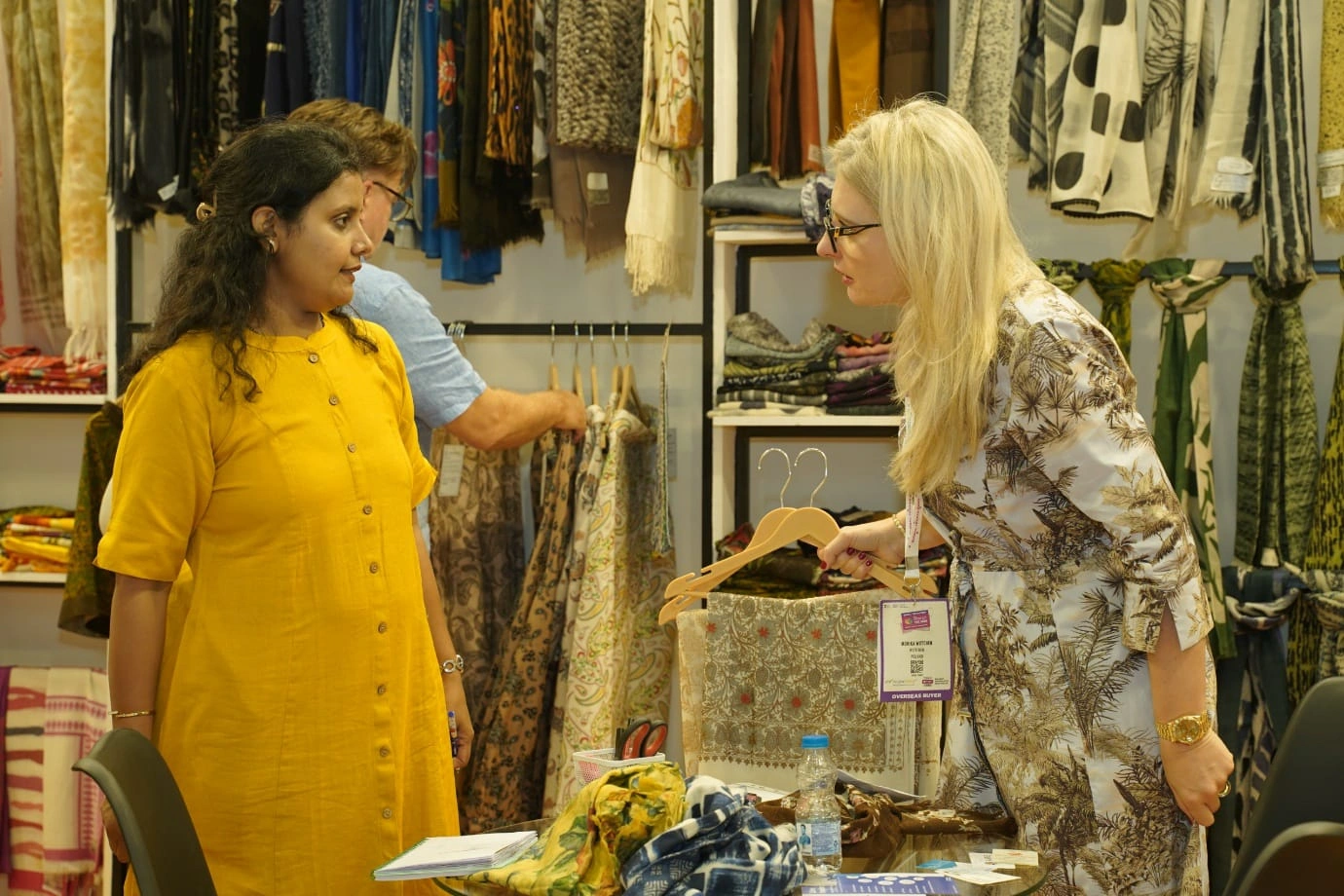
Bharat Tex 2026 wound down at New Delhi’s Bharat Mandapam on 17 July after four days that pulled in 1,647 exhibitors and nearly 95,000 business visitors, according to organisers, the Bharat Tex Trade Federation. The event also drew 6,090 international buyers from 138 countries. Backed by India’s Ministry of Textiles, it logged more than 28,500 B2B meetings and catalysed close to INR 14,300 crore (approximately £1.10 billion) in investment commitments, with serious business enquiries put at around $2.8 billion.
Knowledge exchange remained central to Bharat Tex 2026, with more than 100 sessions bringing together over 600 policymakers, industry executives, academics and international experts. The topics ranged from global trade and responsible sourcing to sustainability, circularity, artificial intelligence, technical textiles and investment opportunities. The programme also featured the Sanrachna Hackathon at the TBD Pavilion, where emerging innovators presented technical textile solutions developed by India’s next generation of talent.
A Paris Signature: Première Vision Paris Formalises India Deal
A Letter of Intent between the Bharat Tex Trade Federation and Première Vision Paris was signed during Bharat Tex 2026. The Paris-based trade event is recognised across the fashion industry as a major sourcing marketplace where brands connect with textile manufacturers well before seasonal production begins. An Indian trade body signing directly with that platform gives manufacturers a route into European sourcing conversations that previously ran through agents and intermediaries.
The agreement covers market access, sustainable sourcing, design intelligence and buyer-seller engagement between India and the European Union. Organisers named manufacturers, exporters and MSMEs specifically as the intended beneficiaries. Design intelligence sharing, under the deal’s terms, is meant to give Indian mills and workshops sight of European buyer requirements earlier in the sourcing calendar.
CXO Blueprint 2030: CMAI's Five-Point Roadmap
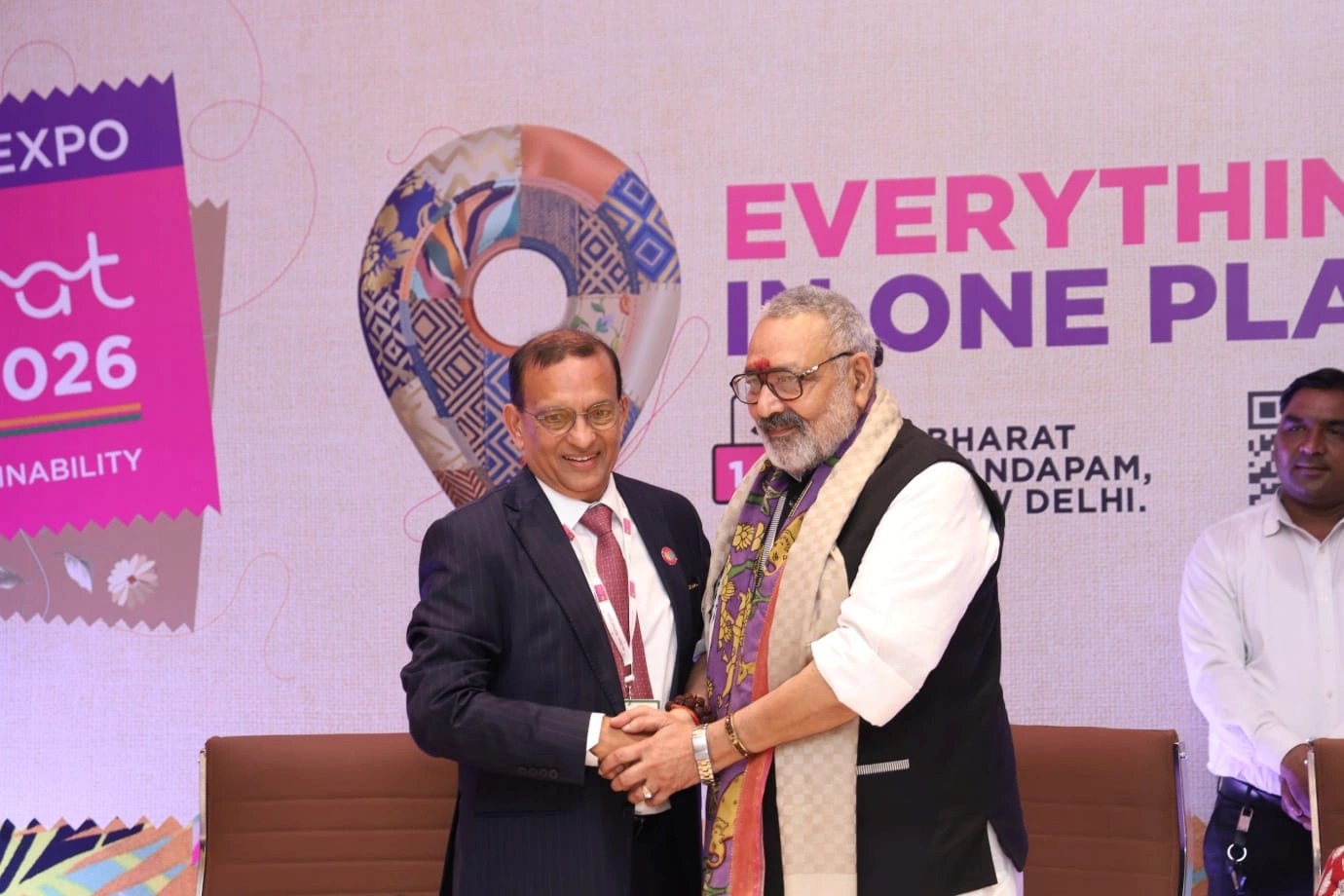
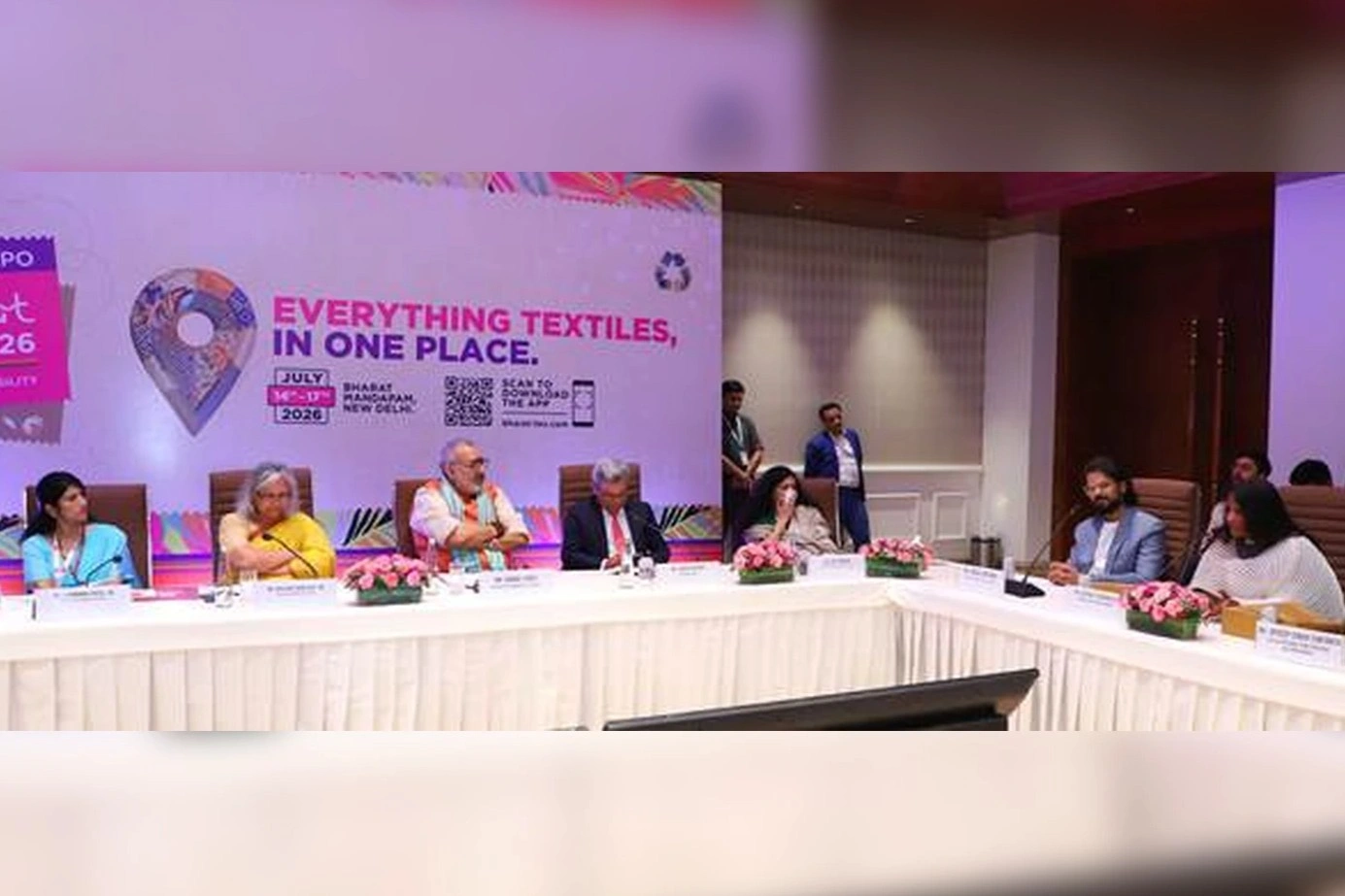
One figure from this week’s release is doing most of the talking: $9.4 billion, the value the Clothing Manufacturers Association of India (CMAI) and the Global Alliance for Textile Sustainability (GATS) say could be unlocked by recovering textile waste through a genuinely circular ecosystem. On 16 July, Union Textiles Minister Giriraj Singh unveiled the India Textiles & Apparel CXO Blueprint 2030 during a session at the Sustainability & Circularity Impact Pavilion.
Although India is the world’s sixth-largest textile exporter with an estimated 4.1 per cent share of global trade, export values have hovered around $40 billion for six consecutive years. The sector, which supports roughly 45 million jobs, has therefore grown more slowly than the wider global market. The report sets a target of $100 billion in exports by 2030, with the domestic market projected to reach $250 billion over the same period.
Five priorities anchor the roadmap: circularity, end-to-end traceability, resource-efficient manufacturing, product diversification and the adoption of AI and automation across the value chain. “Sustainability is no longer an aspiration; it is becoming central to business competitiveness,” said Naveen Sainani, CMAI’s ESG Committee Chairman, adding that MSMEs are the group with the most ground to make up.
Parvinder Singh, Director at GATS, put India’s position more bluntly. “India has one of the world’s strongest textile manufacturing ecosystems,” he said, pointing to stronger collaboration and knowledge sharing between enterprises as the report’s central ask.
Brands of India Pavilion Puts Sabyasachi Beside Calvin Klein
CMAI’s Brands of India Pavilion brought together more than 70 Indian apparel brands across the show’s four days and, for the first time, included a dedicated showcase for India’s intimate and innerwear segment, with brands from Mumbai and Delhi presenting new product lines. Sabyasachi and Tarun Tahiliani exhibited within touching distance of Tommy Hilfiger, Calvin Klein, Ralph Lauren, US Polo Assn and Reebok, a pavilion layout that put India’s couture houses and its commercial apparel sector under the same roof as the international labels that source from both.
Marks & Spencer, H&M, and IKEA Join Sustainability Discussions
Day 3’s sustainability programme drew attendance from brands that source at a serious scale. The Better Cotton Initiative roundtable brought together Eva Benavidez Clayton, the organisation’s Senior Director of Demand and Engagement, alongside sustainability leads from PDS and Shahi Exports, plus Dilip Kumar, Traceability Manager at Marks and Spencer, and Srinivasan Krishnamurthy of IKEA Group. The panel’s stated focus was traceability and closer collaboration between brands, manufacturers and suppliers on sourcing. Another discussion, “Wheat Straw to Wardrobes,” featured H&M Material Program Lead Dr Ravinder Tuteja, who explored the potential of next-generation fibres made from agricultural waste.
Designers Rahul Mishra and Vaishali Shadangule joined industry leaders in a discussion on “Indian Brands, Global Ambitions: Redefining Retail Growth Beyond Borders,” highlighting India’s handlooms, handicrafts and traditional weaving as competitive strengths in global fashion.
Karnataka Leads Bharat Tex 2026 Investment Tally
Karnataka closed the show with the single largest state signing: 12 MoUs (Memorandums of Understanding) worth ₹2,821 crore (approximately £217 million), with the potential to generate more than 11,020 direct jobs, most of it tied to the PM MITRA (Pradhan Mantri Mega Integrated Textile Region and Apparel) Park under development at Kalaburagi, one of seven approved sites under the Ministry of Textiles scheme. Bihar announced investment commitments worth ₹1,476 crore (about £114 million), with the projects expected to create more than 40,500 jobs. Andhra Pradesh also announced investment commitments worth ₹4,100 crore (about £316 million). RE&UP’s investment proposal, valued at ₹4,800 crore (approximately £370 million), ranked among the event’s largest single commitments. Together, the commitments span spinning, technical textiles, apparel manufacturing and packaging.
The Première Vision Letter of Intent still needs European buyers to place actual orders through it before its impact shows up in shipment volumes. The CXO Blueprint’s five priorities need enterprises willing to fund them past the pilot stage. Bharat Tex has not yet confirmed dates for its 2027 edition.