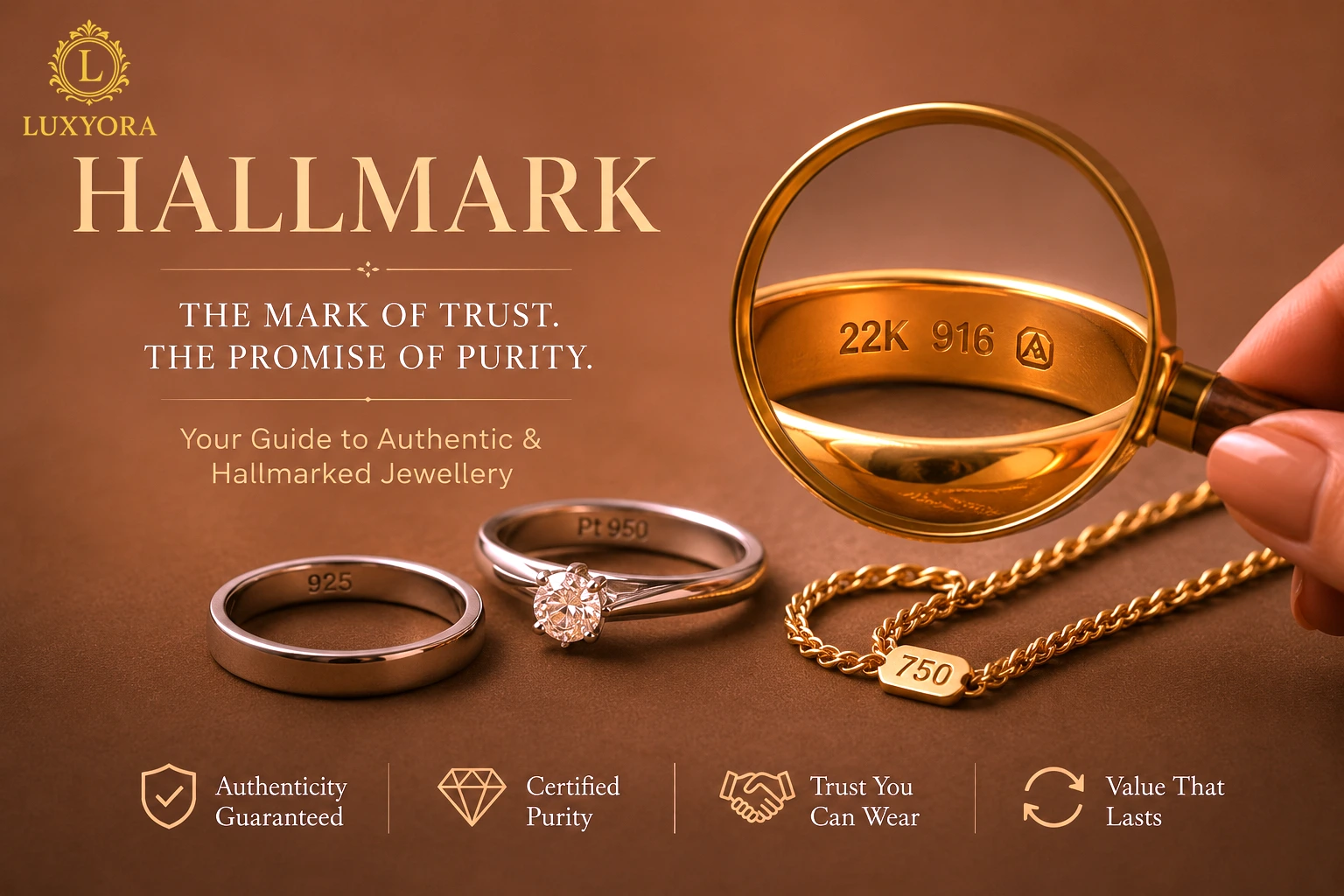
HALLMARK : What is a Hallmark?
Jewellery is more than just an accessory. It is often a symbol of personal style, financial investment, emotional value, and cultural heritage. Whether purchasing a gold necklace, a platinum engagement ring, or a silver bracelet, one term that frequently appears in the jewellery industry is Hallmark. Understanding what a hallmark means can help consumers make informed buying decisions, avoid counterfeit products, and ensure they receive genuine precious metals.
In today’s jewellery market, authenticity and transparency have become increasingly important. With rising precious metal prices and growing consumer awareness, hallmarking serves as a trusted system that protects both buyers and sellers. This guide explores everything you need to know about hallmarks, including their history, purpose, and importance, as well as how to read them correctly.
What Is a Hallmark?
A hallmark is an official mark or series of marks stamped on precious metal jewellery and other items made from gold, silver, platinum, or palladium. These marks certify that the metal meets specific purity standards established by recognized authorities.
The primary purpose of hallmarking is to verify that the jewellery contains the amount of precious metal claimed by the seller. In many countries, hallmarking is regulated by government-authorized assay offices or certification bodies.
A hallmark typically contains information such as:
- Metal type (gold, silver, platinum, etc.)
- Purity level
- Assay office identification
- Manufacturer or sponsor mark
- Year mark (in some countries)
Hallmarking acts as a guarantee of authenticity, providing consumers with confidence in their jewellery purchases.
What Does a Hallmark Really Mean in Jewellery?
When people hear the term hallmark, they often assume it simply refers to gold purity. However, a hallmark represents much more than purity alone.
A hallmark indicates that the jewellery has undergone independent testing and verification by an authorized institution. This means the metal content has been scientifically assessed rather than relying solely on the manufacturer’s claim.
For example, if a gold ring carries a hallmark indicating 750 purity, it means the item contains 75% pure gold and 25% other metals. The hallmark confirms that this purity level has been tested and certified.
A genuine hallmark signifies:
- Authentic precious metal content
- Compliance with industry standards
- Protection against fraud
- Improved resale value
- Greater consumer confidence
In essence, a hallmark serves as an official quality assurance seal for precious metal jewellery.
The History of Hallmarking and Its Influence on Modern Jewellery
The practice of hallmarking dates back several centuries and has played a crucial role in establishing trust within the jewellery trade.
Early Origins
The earliest hallmarking systems emerged in Europe during the Middle Ages. Precious metal items were tested by goldsmith guilds to ensure they met established quality standards.
One of the oldest hallmarking systems originated in England during the 14th century. Gold and silver articles were inspected and marked by official assay offices to prevent fraudulent practices.
Expansion Across the World
Over time, hallmarking spread throughout Europe and eventually became a recognized standard in many countries worldwide.
Governments realized that hallmarking protected consumers while promoting fair trade practices. As jewellery markets expanded internationally, standardized hallmarking systems became increasingly important.
Modern Influence
Today, hallmarking influences nearly every aspect of the fine jewellery industry.
Modern hallmarking systems:
- Enhance consumer trust
- Reduce counterfeit jewellery sales
- Support international trade
- Encourage quality manufacturing
- Promote transparency in precious metal transactions
Without hallmarking, consumers would face significantly greater risks when purchasing valuable jewellery items.
Hallmarked Jewellery Explained: Why Authenticity Matters in Fashion
Fashion jewellery trends constantly evolve, but authenticity remains timeless. Hallmarked jewellery offers advantages that extend beyond simple metal verification.
Protection Against Counterfeits
Counterfeit jewellery remains a significant concern globally. Some sellers may falsely advertise jewellery as pure gold or platinum when it contains lower-quality metals.
A hallmark helps consumers distinguish genuine products from misleading alternatives.
Long-Term Value
Authentic precious metal jewellery generally retains value better than imitation jewellery.
Hallmarked pieces often:
- Have stronger resale potential
- Command higher market prices
- Maintain investment value
- Appeal to future buyers
Consumer Confidence
Knowing that an item has been independently tested provides peace of mind. Consumers can shop with greater confidence, especially when making significant purchases.
Fashion Meets Trust
Modern consumers increasingly prioritize ethical and transparent purchases. Hallmarked jewellery aligns perfectly with this trend by providing verifiable proof of quality and authenticity.
Buying Fine Jewellery? Here's Why Hallmarks Should Never Be Ignored
Ignoring hallmarks during a jewellery purchase can lead to costly mistakes.
Ensures Accurate Pricing
Precious metals are priced according to purity levels. A hallmark confirms that the jewellery contains the stated amount of precious metal.
Without a hallmark, buyers may unknowingly overpay for lower-quality products.
Simplifies Insurance Claims
Many insurance providers require proof of authenticity and value when covering jewellery items. Hallmarked jewellery often simplifies valuation and documentation processes.
Supports Future Resale
When selling jewellery in the future, buyers typically prefer hallmarked items because authenticity has already been verified.
Prevents Fraud
Hallmarking provides an additional layer of protection against dishonest sellers and counterfeit products.
Practical Example
Imagine purchasing a gold bracelet advertised as 22K gold. If the bracelet lacks a hallmark, there is no independent verification of its purity. However, a hallmarked bracelet confirms that the item meets established purity standards, reducing the risk of deception.
Hallmark vs Purity: Understanding the Difference Before You Buy
One of the most common misconceptions among jewellery buyers is confusing hallmarking with purity.
Although related, they are not the same thing.
What Is Purity?
Purity refers to the percentage of precious metal present in an item.
Examples include:
- 24K Gold = 99.9% pure gold
- 22K Gold = 91.6% pure gold
- 18K Gold = 75% pure gold
- 14K Gold = 58.5% pure gold
What Is a Hallmark?
A hallmark is the certification mark that confirms the stated purity has been independently verified.
Key Difference
Purity | Hallmark |
Indicates metal content | Confirms verified metal content |
Represents composition | Represents certification |
Can be claimed by seller | Verified by authorized authority |
Measures quality level | Provides authenticity assurance |
In simple terms, purity tells you what the metal should contain, while a hallmark confirms it actually contains that amount.
Gold, Silver and Platinum Hallmarks Decoded
Understanding hallmark symbols can help consumers make smarter purchasing decisions.
Gold Hallmarks
Gold jewellery commonly uses numerical purity markings.
Common gold hallmarks include:
Hallmark | Purity | Karat |
999 | 99.9% | 24K |
916 | 91.6% | 22K |
875 | 87.5% | 21K |
750 | 75% | 18K |
585 | 58.5% | 14K |
375 | 37.5% | 9K |
Silver Hallmarks
Silver hallmarks are generally expressed as parts per thousand.
Common silver marks include:
Hallmark | Purity |
999 | Fine Silver |
958 | Britannia Silver |
925 | Sterling Silver |
900 | Coin Silver |
Platinum Hallmarks
Platinum jewellery typically features higher purity levels.
Common platinum hallmarks include:
Hallmark | Purity |
999 | 99.9% Platinum |
950 | 95% Platinum |
900 | 90% Platinum |
850 | 85% Platinum |
Additional Marks
Depending on the country, hallmarks may also include:
- Assay office symbols
- Manufacturer identification
- Date letters
- Certification logos
Understanding these marks helps consumers verify authenticity quickly.
How to Check Jewellery Hallmarks Correctly
Before purchasing jewellery, follow these steps:
Step 1: Locate the Hallmark
Check common areas such as:
- Ring bands
- Bracelet clasps
- Necklace clasps
- Pendant backs
- Earring posts
Step 2: Use Magnification
Hallmarks are often very small. A jeweller’s loupe or magnifying glass can help reveal details.
Step 3: Verify Purity Numbers
Ensure the hallmark matches the advertised purity level.
Step 4: Request Documentation
Ask for:
- Purchase invoice
- Hallmark certificate (if applicable)
- Authenticity documentation
Step 5: Buy from Reputable Sellers
Established jewellers are more likely to comply with hallmarking regulations and provide genuine products.
Common Hallmarking Myths Debunked
Myth 1: Hallmarks Only Matter for Gold
False. Silver, platinum, and other precious metals can also be hallmarked.
Myth 2: A Hallmark Guarantees Design Quality
False. Hallmarks certify metal purity, not craftsmanship or design excellence.
Myth 3: Higher Purity Always Means Better Jewellery
Not necessarily. Lower-karat gold often provides greater durability for everyday wear.
Myth 4: Every Jewellery Item Must Be Hallmarked
Regulations vary by country, and some items may be exempt based on weight or category.
Future Trends in Jewellery Hallmarking
Technology continues to transform the jewellery industry.
Emerging trends include:
Digital Verification
Consumers increasingly verify authenticity through online databases and digital certificates.
Blockchain Tracking
Some luxury brands are exploring blockchain technology to trace jewellery from sourcing to sale.
Enhanced Consumer Transparency
Modern buyers demand greater visibility into product origins, ethical sourcing, and manufacturing processes.
Smart Authentication Systems
Future hallmarking systems may integrate QR codes and digital tracking tools to provide instant authenticity verification.
Conclusion
Hallmarking remains one of the most important safeguards in the jewellery industry. Whether purchasing gold, silver, or platinum jewellery, understanding hallmarks empowers consumers to make informed decisions and avoid costly mistakes.
A hallmark is far more than a small stamp hidden inside a ring or bracelet. It represents trust, authenticity, quality assurance, and consumer protection. By learning how to identify and interpret hallmarks, buyers can confidently invest in fine jewellery that retains both beauty and value.
The next time you shop for precious metal jewellery, remember that purity tells part of the story but the hallmark confirms the truth behind it.
References
Assay Office London. (2023). A guide to hallmarking precious metals. London Assay Office.
British Hallmarking Council. (2022). Hallmarking and consumer protection in precious metals. Retrieved from British Hallmarking Council publications.
CIBJO – The World Jewellery Confederation. (2023). Jewellery industry standards and precious metal guidelines. Milan, Italy.
International Organization for Standardization. (2021). Precious metals—Fineness of gold alloys (ISO standards). Geneva, Switzerland: ISO.
Jewellers Vigilance Committee. (2021). Understanding jewellery markings and precious metal standards. New York, NY.
National Association of Jewellers. (2022). Consumer guide to jewellery hallmarks and precious metal purity. Birmingham, UK.
World Gold Council. (2024). Gold jewellery standards and purity measurements. London, UK.
World Platinum Investment Council. (2023). Platinum jewellery guide: Purity, authenticity and hallmarks. London, UK.
Silver Institute. (2022). Sterling silver standards and hallmarking practices. Washington, DC.
Bureau of Indian Standards. (2024). Hallmarking of gold and silver jewellery: Consumer awareness guide. New Delhi, India.