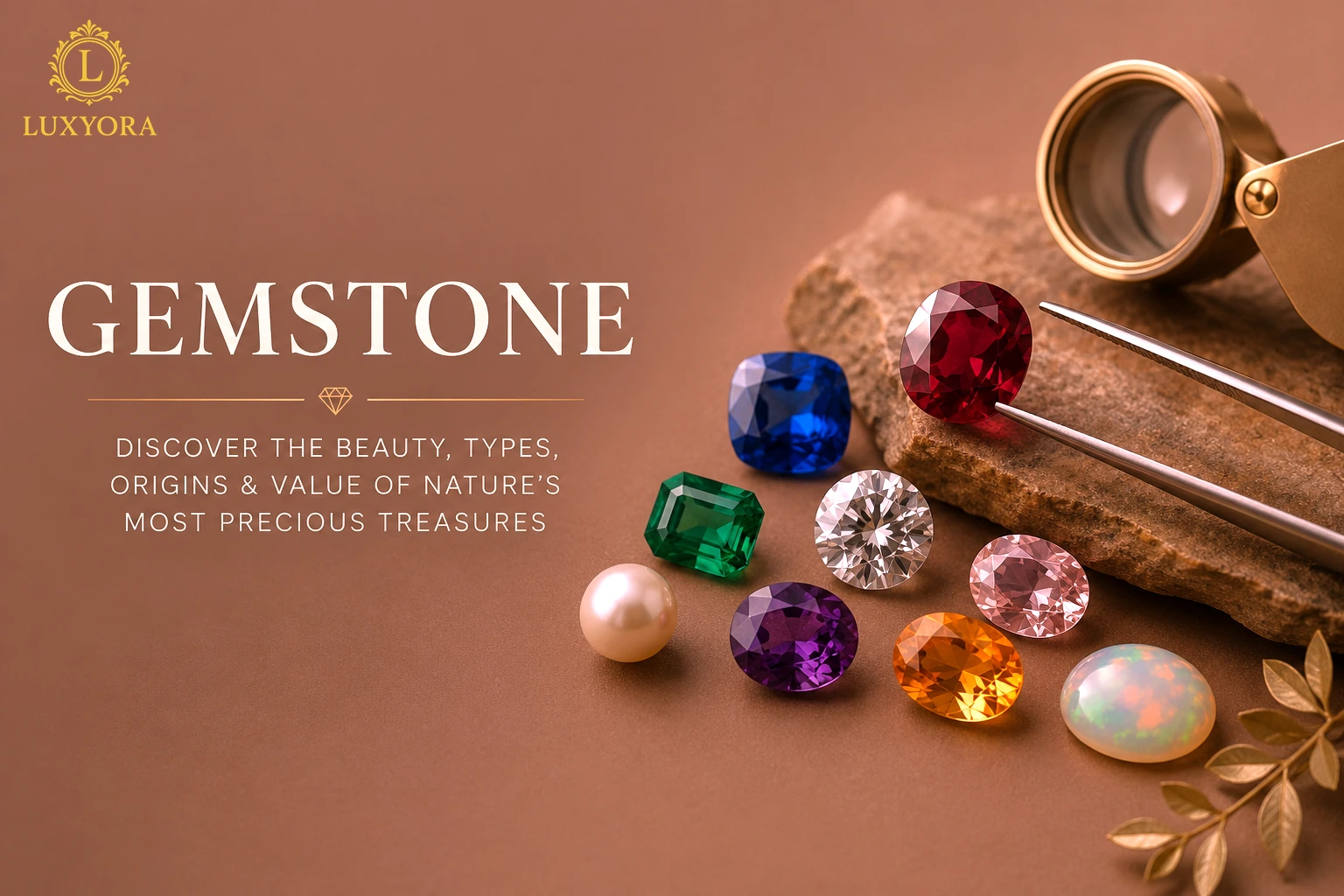
GEMSTONE : What Is A Gemstone?
Gemstones have fascinated humanity for thousands of years. From royal crowns and ceremonial jewelry to modern luxury accessories, these natural treasures continue to captivate people across cultures and generations. Whether admired for their beauty, rarity, symbolism, or investment value, gemstones occupy a unique place in both the jewelry industry and global luxury markets.
Today, the gemstone industry combines geology, craftsmanship, technology, and fashion. Consumers are increasingly interested in understanding gemstone quality, authenticity, sourcing, and value before making a purchase. This guide explores everything you need to know about gemstones, including their types, classifications, colors, origins, transparency levels, and practical buying considerations.
What Are Gemstones?
A gemstone is a naturally occurring mineral, rock, or organic material that has been cut and polished for use in jewelry, decorative objects, or collectibles. To qualify as a gemstone, a material typically possesses three important characteristics:
Beauty
The gemstone should display attractive visual qualities such as color, brilliance, transparency, luster, or unique optical effects.
Durability
A gemstone must be durable enough to withstand everyday wear and handling without significant damage.
Rarity
The rarity of a gemstone often contributes to its value and desirability in the marketplace.
While most gemstones originate from minerals formed deep within the Earth, some gemstones are organic. Examples include pearls, amber, and coral, which are derived from biological processes rather than geological ones.
The History and Importance of Gemstones
Gemstones have been treasured for centuries. Ancient civilizations used gemstones for religious rituals, protection, healing beliefs, currency, and status symbols. Egyptian pharaohs adorned themselves with lapis lazuli and turquoise, while ancient Indian kingdoms prized diamonds and rubies.
Today, gemstones play a major role in:
- Fine jewelry manufacturing
- Luxury fashion accessories
- Investment portfolios
- Collecting and auctions
- Cultural and ceremonial traditions
- Birthstone and anniversary jewelry
The global gemstone market continues to grow due to increasing consumer demand, ethical sourcing initiatives, and technological advancements in gemstone identification and certification.
Different Types of Gemstones
Gemstones can be categorized in several ways. One of the most common classifications divides them into precious and semi-precious gemstones.
Precious Gemstones
Historically, four gemstones have been considered precious due to their rarity, beauty, and enduring demand.
Diamond
Known for exceptional brilliance and hardness, diamonds are the most durable natural gemstone and remain highly sought after for engagement rings and luxury jewelry.
Ruby
A red variety of corundum, ruby is celebrated for its vibrant color and rarity.
Sapphire
Another variety of corundum, sapphire is available in many colors but is most famous for its rich blue hue.
Emerald
A member of the beryl family, emerald is valued for its distinctive green color and historical significance.
Semi-Precious Gemstones
All other gemstones traditionally fall into the semi-precious category, although many can be equally rare and valuable.
Examples include:
- Amethyst
- Aquamarine
- Citrine
- Garnet
- Peridot
- Tanzanite
- Tourmaline
- Topaz
- Opal
- Spinel
- Moonstone
- Zircon
Modern gemologists often avoid the term “semi-precious” because it can be misleading. Some so-called semi-precious stones are rarer and more valuable than certain precious gemstones.
Gemstone Names by Colour, Type & Origin
Understanding gemstone classifications by color, type, and geographic origin can help buyers make informed decisions.
Gemstone Names by Colour
Red Gemstones
- Ruby
- Red Spinel
- Red Garnet
- Red Tourmaline
Blue Gemstones
- Sapphire
- Aquamarine
- Blue Topaz
- Tanzanite
- Blue Zircon
Green Gemstones
- Emerald
- Peridot
- Green Tourmaline
- Tsavorite Garnet
Yellow Gemstones
- Citrine
- Yellow Sapphire
- Heliodor
- Yellow Diamond
Purple Gemstones
- Amethyst
- Purple Sapphire
- Fluorite
Pink Gemstones
- Pink Sapphire
- Morganite
- Pink Tourmaline
- Kunzite
Black Gemstones
- Black Diamond
- Onyx
- Black Spinel
- Obsidian
White and Colorless Gemstones
- Diamond
- White Sapphire
- Zircon
- Quartz
Gemstone Names by Type
Mineral Gemstones
The majority of gemstones belong to this category.
Examples:
- Diamond
- Sapphire
- Ruby
- Emerald
- Garnet
Rock Gemstones
Some gemstones are composed of multiple minerals.
Examples:
Organic Gemstones
Organic gemstones originate from living organisms.
Examples:
Gemstone Names by Origin
Certain regions are famous for producing specific gemstones.
Myanmar (Burma)
Sri Lanka
Colombia
Brazil
- Aquamarine
- Topaz
- Tourmaline
Tanzania
Madagascar
Australia
Origin can significantly influence gemstone desirability and pricing because some locations are known for producing superior quality stones.
Transparent, Opaque and Everything In Between: Understanding Gemstone Appearance
One of the most important aspects of gemstone evaluation is transparency.
Transparent Gemstones
Transparent gemstones allow light to pass through with minimal obstruction, creating brilliance and sparkle.
Examples:
- Diamond
- Sapphire
- Emerald
- Aquamarine
Transparent stones are often faceted to maximize light reflection.
Translucent Gemstones
Translucent gemstones allow some light to pass through but scatter it internally.
Examples:
These stones often display soft visual effects and unique optical phenomena.
Opaque Gemstones
Opaque gemstones do not allow light to pass through.
Examples:
- Turquoise
- Lapis Lazuli
- Malachite
- Jasper
Their beauty comes primarily from color, patterns, and surface polish rather than brilliance.
Special Optical Effects
Some gemstones display remarkable visual phenomena.
Chatoyancy
Creates a cat’s-eye effect.
Examples:
- Cat’s Eye Chrysoberyl
- Cat’s Eye Quartz
Asterism
Produces a star-shaped pattern.
Examples:
Play-of-Color
Displays flashes of multiple colors.
Example:
Factors That Determine Gemstone Value
Several factors influence gemstone pricing and desirability.
Color
Color is often the most important value factor. Gemologists evaluate:
Highly saturated colors generally command premium prices.
Clarity
Clarity refers to internal inclusions and surface blemishes.
While diamonds emphasize clarity, some gemstones such as emeralds commonly contain natural inclusions.
Cut
The cut determines how effectively a gemstone reflects light.
A well-cut gemstone exhibits:
- Better brilliance
- Improved symmetry
- Enhanced visual appeal
Carat Weight
Larger gemstones are generally rarer and more valuable, assuming quality remains high.
Origin
Gemstones from renowned mining regions often achieve higher market values.
Treatment Status
Untreated gemstones are typically more valuable than treated stones because they preserve natural characteristics.
Natural, Treated, and Laboratory-Grown Gemstones
Natural Gemstones
Natural gemstones form entirely through geological processes without human intervention.
Treated Gemstones
Many gemstones undergo treatments to enhance:
Common treatments include:
- Heat treatment
- Fracture filling
- Dyeing
Irradiation
Laboratory-Grown Gemstones
Laboratory-created gemstones possess the same chemical and physical properties as natural stones but are produced in controlled environments.
Popular examples include:
- Lab-grown diamonds
- Lab-created sapphires
- Lab-created rubies
These alternatives often offer excellent value and sustainability advantages.
Practical Tips for Buying Gemstones
Always Request Certification
A reputable gemological laboratory report verifies authenticity and disclosed treatments.
Understand Your Purpose
Consider whether the gemstone is intended for:
- Daily wear
- Special occasions
- Investment
- Collection
Compare Similar Stones
Review multiple gemstones before making a purchase to understand market pricing.
Ask About Treatments
Transparent disclosure is essential when evaluating value.
Verify Return Policies
Reliable jewelers provide inspection periods and clear return procedures.
Example Situations and Real-World Scenarios
Scenario 1 – Engagement Ring Selection
A buyer seeks a durable gemstone for everyday wear. Sapphire may be an excellent choice because of its hardness, beauty, and affordability compared to a diamond of similar size.
Scenario 2 – Investment Purchase
An investor purchases a certified, untreated Burmese ruby due to its rarity and historical appreciation in the luxury market.
Scenario 3 – Budget-Conscious Jewelry Buyer
A customer wants the appearance of a diamond while staying within budget. A laboratory-grown diamond provides similar visual performance at a lower cost.
Scenario 4 – Collecting Unique Gemstones
A collector chooses tanzanite due to its limited geographic source and striking violet-blue color.
Caring for Your Gemstones
Proper maintenance preserves gemstone beauty and longevity.
Cleaning Tips
- Use mild soap and warm water when appropriate.
- Avoid harsh chemicals.
- Use soft brushes for delicate settings.
Storage Tips
- Store gemstones separately.
- Use soft-lined jewelry boxes.
- Prevent harder stones from scratching softer ones.
Professional Inspection
Annual inspections help identify loose settings or wear before damage occurs.
Future Trends in the Gemstone Industry
The gemstone market is evolving rapidly due to changing consumer preferences.
Emerging trends include:
- Ethical gemstone sourcing
- Sustainable mining practices
- Laboratory-grown gemstones
- Blockchain-based gemstone traceability
- Digital gemstone certification
- Increased demand for colored gemstones
Consumers increasingly prioritize transparency, sustainability, and verified provenance when purchasing gemstones.
Conclusion
Gemstones represent a fascinating intersection of nature, science, art, and luxury. From diamonds and rubies to opals and tanzanites, each gemstone tells a unique geological story shaped over millions of years. Understanding gemstone types, colors, origins, transparency levels, and value factors enables buyers and enthusiasts to make informed decisions.
Whether you’re purchasing jewelry, building a collection, investing in rare stones, or simply exploring the world of gems, knowledge is your most valuable asset. As technology and sustainability continue to reshape the gemstone industry, informed consumers will be better positioned to appreciate both the beauty and value these remarkable natural treasures provide.
References
CIBJO. (2023). The Blue Books: Gemstones. World Jewellery Confederation.
Fritsch, E., & Rondeau, B. (2021). Gemstones. Encyclopedia of Geology (2nd ed.). Elsevier.
GIA. (2024). Gem Encyclopedia. Gemological Institute of America.
Groat, L. A. (2019). Gems and Gemstones: Timeless Natural Beauty of the Mineral World. Firefly Books.
Hughes, R. W. (2022). Ruby & Sapphire: A Collector’s Guide. Lotus Publishing.
International Colored Gemstone Association. (2023). Colored Gemstone Industry Reports.
Keller, P. C. (2021). Gemstones and Their Origins. Geoscience Press.
Nassau, K. (2019). Gemstone Enhancement: History, Science and State of the Art. Butterworth-Heinemann.
Shigley, J. E., Breeding, C. M., & Eaton-Magaña, S. (2020). Laboratory-Grown Diamonds and Their Impact on the Gem Market. Gems & Gemology, 56(3), 320–345.
Webster, R., & Read, P. G. (2021). Gems: Their Sources, Descriptions and Identification (7th ed.). Butterworth-Heinemann.