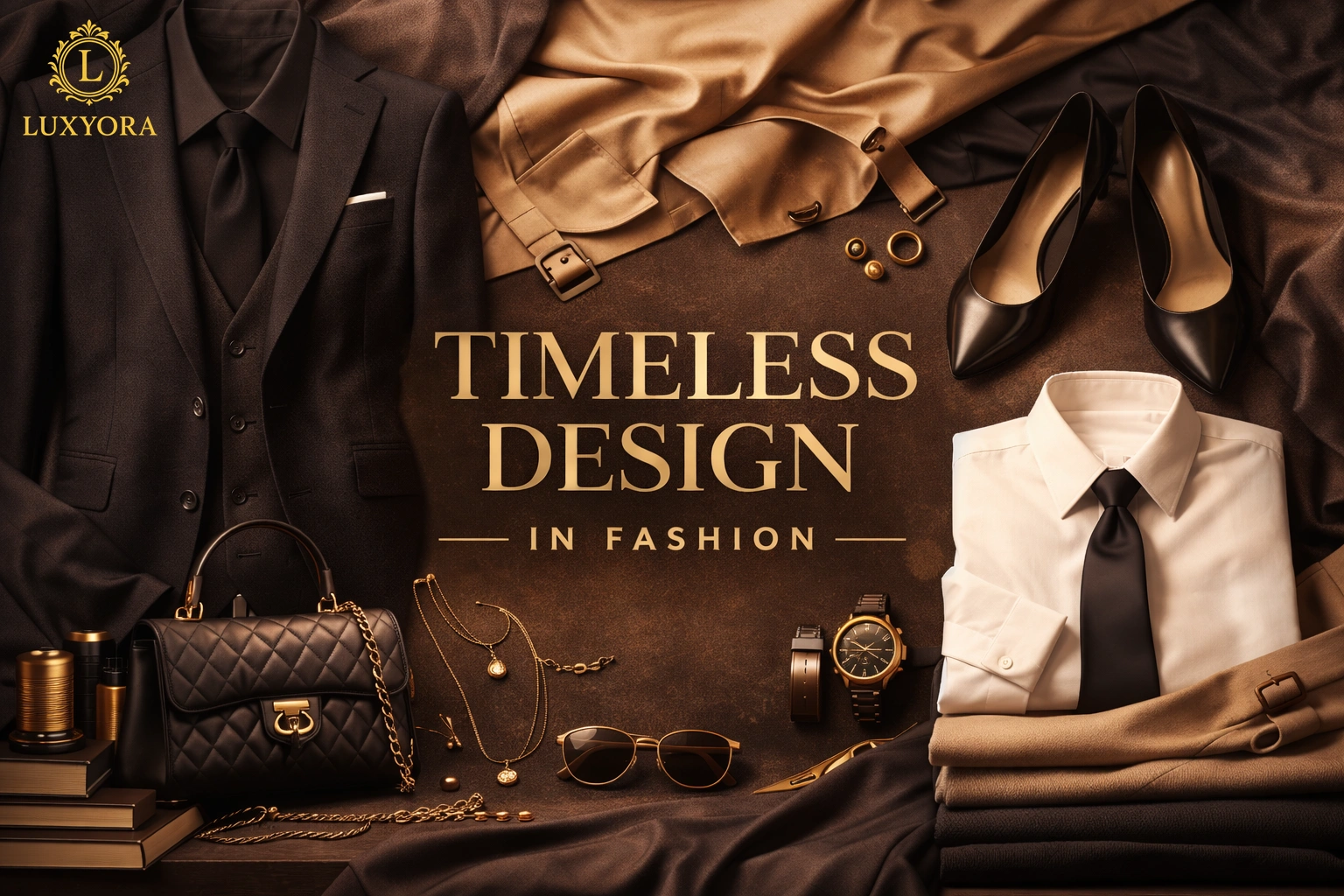
Timeless Design : What is Timeless Design
In an industry famous for seasonal change, micro-trends, and constant “newness,” the phrase timeless design serves as a compass. In fashion, timeless design refers to garments and accessories that remain relevant, wearable, and desirable over many years, not because they ignore modern taste, but because they are built on enduring design logic: balanced proportions, functional versatility, quality materials, and strong construction.
Timeless design is not the same as “boring” or “plain.” It is the discipline of creating clothing that holds up aesthetically and physically, pieces that still feel right after multiple trend cycles. In today’s market, timeless design is also closely tied to
sustainable fashion, because the longer something is loved and worn, the less frequently it needs to be replaced.
That connection between style, durability and clothing life has become an important topic in consumer research and circular- economy thinking.
What “Timeless Design” Means in Fashion
A practical definition:
Timeless fashion design is the intentional creation of clothing that stays attractive and useful across seasons and years, driven by fit, function, proportion, and quality rather than short-lived trend cues.
This idea has two sides:
Common top notes include:
1. Aesthetic longevity (style durability): the design doesn’t feel “dated” quickly.
2. Physical longevity (durability): the garment survives real-life wear, laundering, movement, and repairs.
Modern discussions also add a third dimension:
3. Emotional longevity: the wearer forms an attachment (meaning, identity, memory), so they choose to keep and care for it.
Why Timeless Design Has Become a Big Industry Term
Between 2018 and 2026, fashion conversations increasingly connected timelessness to sustainability and circularity:
1. Research has highlighted that “style durability” can extend how long clothing is worn, reducing overall consumption pressure.
2. Circular economy frameworks argue that products must be designed for longer use, including better durability, care, reuse, repair, and recirculation
models.
3. Brands and retailers have begun publicly framing longevity as a design goal (e.g., ranges built to “stand the test of time,” emphasizing durability and recyclability choices).
Today, “timeless design” isn’t only a styling preference but also a strategy: for brand value, for customer loyalty, and for reducing waste and emissions associated with high turnover.
Core Principles of Timeless Fashion Design
1) Proportion and Silhouette That Flatter Beyond Trends
Timeless pieces tend to rely on classic proportions; they balance the body rather than chase extremes. Think of silhouette decisions that consistently work: a well-cut blazer, a clean straight-leg pair of trousers, a simple A-line skirt, a structured coat. When a design avoids ultra-specific trend markers, it becomes easier to wear across eras.
Keyword cluster: classic silhouettes, balanced proportions, seasonless design, wardrobe staples.
2) Versatility and Styling Range
A timeless garment earns its place by fitting many contexts: office, casual, evening, and travel. That versatility is why capsule and “fewer-better” wardrobes are often built on timeless design principles that mix and match smoothly.
Design signals of versatility:
- neutral or easily paired colour palette
- minimal but intentional detailing
- adaptable layering potential
- fabric that transitions across seasons
3) Material Integrity and Craftsmanship
Timeless design is closely tied to quality. A design that looks refined for years needs fabric that keeps its appearance, shape retention, colourfastness, and resistance to pilling or seam failure.
Guidance on longevity emphasizes good-quality materials, durable workmanship, and construction choices that help clothing last longer in active use.
Keyword cluster: premium materials, craftsmanship, garment construction, durability, quality finishing.
4) Construction That Supports Repair and Maintenance
Timeless design doesn’t pretend clothes won’t age; it plans for it. Design-for-longevity guidance highlights improving wear life through clear care communication and supporting longer use through practices such as repair advice and services.
Timeless-friendly construction often includes:
- strong seams and reinforcement at stress points
- replaceable elements (buttons, elastics, zippers)
- fabrics and finishes that clean well
- patterns that allow tailoring/alteration
5) “Emotional Durability”: Designing Meaning, Not Just Product
Circular fashion discussions stress that making things merely “tougher” is not enough; people keep items longer when they value them. A 2021 discussion of circular design in fashion explicitly points to emotional durability, valuing products
for “timelessness, rarity, history, and meaning.”
In practice, emotional durability can come from:
- a signature fit that makes the wearer feel confident
- storytelling and transparency (why it’s made, how it’s made)
- personalization or modular elements
- heritage cues used with restraint
Timeless vs. Trendy: The Real Difference
A useful industry distinction is trend dependence.
- Trendy design is strongly tied to a time-specific signal (micro-trend print, hyper-specific cut, novelty embellishment).
- Timeless design stays wearable even when those signals fade, because it isn’t anchored to a single trend moment.
This is where the research term style durability helps: it separates “looking current” from “staying valuable.” A garment can be inexpensive yet classic, or expensive yet highly trend-bound.
Timeless Design and Sustainability: A Practical Link
Timeless design supports sustainability by reducing use-phase impacts. If a garment remains in use longer, the environmental “cost” of its production is spread across more wearings. Design-for-longevity guidance even notes that extending garment life can significantly reduce environmental impacts, and outlines durability and psychological longevity as key levers.
The circular economy approach in fashion also emphasises keeping products in circulation through reuse, repair, resale, rental, and remaking, and frames durability and care as integral to the system.
A real-world sign of this shift is retailers’ increasing emphasis on longevity and circular design choices (e.g., reducing material mixing to improve recyclability and reinforcing durability).
How Designers Build Timelessness: A Mini Framework
If you’re evaluating or creating a “timeless” piece, use this checklist:
1. Silhouette test: Would the outline still feel appropriate five years from now?
2. Styling test: Can it be worn at least 3–5 different ways?
3. Fabric test: Will it hold color/shape after repeated use and care?
4. Construction test: Are seams, closures, and stress points built for real life?
5. Repair test: Can it be repaired, altered, or refreshed easily?
6. Emotional test: Does it create confidence, meaning, or attachment that encourages long-term keeping?
Timeless design is rarely an accident; it’s a series of deliberate decisions that favour longevity, versatility, and value.
References
Button, T. (2018). A life less throwaway: The lost art of buying for life. Pan Macmillan. (ZERRIN)
Coscieme, L., et al. (2022). A framework of circular business models for fashion and textiles. Journal of Fashion Marketing and Management. (Taylor & Francis Online)
Ellen MacArthur Foundation. (2019, September 15). Fashion and the circular economy (Deep dive)(ellenmacarthurfoundation.org)
Ellen MacArthur Foundation. (2021, December 2). The circular design for fashion book: A journey towards the future of design. (ellenmacarthurfoundation.org)
Edwards-Dujardin, H. (2024). Timeless: A fashion anthology. Hardie Grant Books(winchesterbookgallery.com)
Redress Design Award. (2022, October 10). Design for longevity (Resource guide(redressdesignaward.com)
Smith, H. E. (2024). Trendy or classic? Increasing sustainability by increasing
preference for style durability. Journal of Sustainability Marketing.
(luminousinsights.net)
Vezzoli, C., Conti, G. M., Macrì, L., & Motta, M. (2022). Designing sustainable clothing systems: The design for environmentally sustainable textile clothes and its product-service systems. FrancoAngeli. (series.francoangeli.it)
Wood, Z. (2024, June 24). John Lewis clothing range aims to “minimise waste and maximise longevity.” The Guardian. (The Guardian)
NIFD. (2026, January 19). What makes a design timeless in fashion. ( nifd )