How to Store Your Handbags to Keep Them Looking New | Luxyora
A beautiful handbag is a little piece of design you get to live with, touch daily, carry everywhere, and set down beside you like a loyal companion. And yet, the fastest way to make even the most exquisite bag look tired isn’t “overuse.” It’s bad storage: crushed corners, warped handles, dulled hardware, mystery smells, and that dreaded color transfer that appears overnight like a plot twist.
The good news is that keeping handbags looking new isn’t complicated; it’s just specific. Luxury materials (leather, suede, coated canvas, satin, exotic finishes) love consistency: stable temperature, moderate humidity, gentle light, breathable protection, and a shape that isn’t fighting gravity.
Think of handbag storage as skincare for your accessories. You don’t need a museum vault. You need a system that respects craftsmanship while still fitting into real life.
1) The Non-Negotiables: Light, Humidity, and Airflow
If you do nothing else, do these three things:
Keep them out of sunlight (and harsh indoor light)
Direct light can fade dyes, dry leather, and age materials faster than you’d like. Store bags in a shaded closet or a closed cabinet if possible, especially for bright colors and delicate finishes.
Aim for stable, moderate humidity
Leather and natural materials don’t love extremes. Too damp, and you risk mold and odor. Too dry, and leather can stiffen or crack over time. The sweet spot is a comfortable home environment, not basements, not attics, not near radiators, not beside damp external walls.
Prioritize airflow
Air circulation helps prevent musty smells and mold. If bags are jammed tightly together, they can trap moisture and create pressure marks. Give them breathing room like you would a great coat.
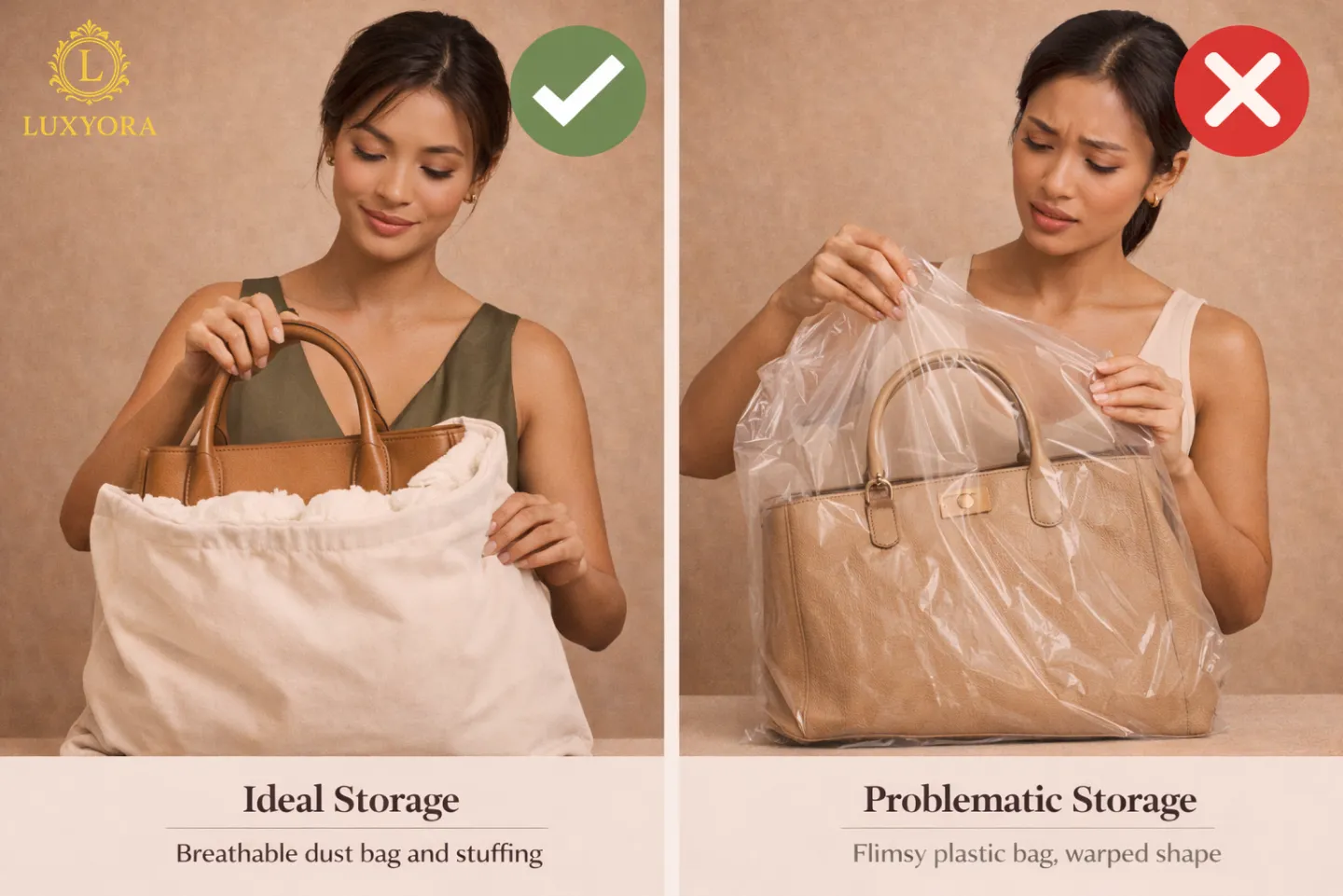
2) Dust Bags Are Not Decorative. They’re Protective
Those soft dust bags aren’t a luxury “extra.” They’re storage insurance.
Use breathable covers:
Cotton dust bags, soft fabric covers, or even a clean pillowcase if you’re improvising. Breathable fabric helps prevent moisture buildup while still shielding from dust.
Avoid plastic for long-term storage:
It can trap moisture and increase the risk of mold in fluctuating conditions. If you need to use plastic temporarily (for example, to protect during a move), please do so with caution and make sure the bag is completely dry and not sealed in a humid space.
Bonus tip: If you store bags in dust bags, label the bottom corner with a small tag so you don’t “forget” what you own.
3) The Shape Secret: Stuffing Done Right
A bag that collapses in storage is a bag that will eventually look “used,” even if it’s barely worn.
What to stuff with
- Acid-free tissue paper is ideal
- Clean, plain paper works in a pinch
- Avoid newspapers directly against interiors (ink can transfer)
- Avoid overstuffing (you’re supporting, not stretching)
How much stuffing?
- Structured bags: enough to support sides and corners
- Soft bags (hobos, slouchy totes): gentle stuffing to prevent deep creases
- Small bags: light fill so they don’t buckle or cave in
The goal is to keep the silhouette calm and intact, as if it’s resting rather than collapsing.
4) Shelf Storage vs Hanging: Choose What’s Kindest to the Bag
Best for most bags: Upright on a shelf
A shelf is usually the safest option because it doesn’t strain handles. Store bags upright, not squeezed, and keep heavier bags on lower shelves.
Hanging: only for specific situations
Hanging can distort straps or pull at attachment points over time, especially with heavier bags or thin straps. If you choose to hang:
- do it only for lighter bags
- use padded hangers or wide hooks
- avoid sharp metal hooks that can dent leather
- never hang a bag by delicate chain straps for long periods
If your bag is precious, gravity should not be its long-term stylist.
5) Handle and Strap Care: The “Quiet Damage” Zone
Handles age first because they carry the load and bend in predictable stress points.
- Don’t let handles press against shelf edges (it can crease or flatten them)
- Tuck long straps inside the bag when possible
- Separate chain straps from leather using a soft cloth layer so chains don’t imprint dents into leather panels
- Avoid wrapping straps tightly; tight bends can create permanent creases
This is also where “too tight in the closet” becomes a real problem. If a strap is forced sideways for months, it won’t magically bounce back.
The way a handbag feels throughout the day often comes down to one overlooked detail that deserves a closer look in The Pros and Cons of Different Handbag Straps.
6) Never Store a Dirty Bag (Yes, Even if You’re Tired)
Storage locks in whatever is currently on the bag: skin oils, makeup powder, perfume, spilled coffee vapors, and city dust. Before putting a bag away for weeks or months:
- Empty it (check pockets like you’re on a treasure hunt)
- Shake out debris
- Wipe the exterior gently with a soft cloth
- Let it air out for a short time before covering
If your bag needs conditioning, could you do it sparingly and correctly for the material? Over-conditioning can be a problem too, especially for leathers that don’t want heavy oils.
7) Humidity Control: The Small Tools That Make a Big Difference
If you live in a humid climate or your closet runs warm, add a bit of protection.
- Use silica gel packs near bags (not directly against delicate leather surfaces)
- Replace or recharge them regularly
- Keep closets ventilated and avoid damp corners
- Don’t store bags near bathrooms or laundry areas if you can avoid it
If you ever smell mustiness, take it seriously. Air out the bag, remove it from enclosed storage, and address the environment before the problem settles in.
8) Material-Specific Storage Tips (Because Not All Bags Behave the Same)
Suede and nubuck
These are more sensitive to humidity and scuffing. Store in breathable covers, avoid rubbing against other bags, and keep them away from oils and creams unless the product is made specifically for suede/nubuck.
Patent leather
Patent can develop sticky surfaces or imprinting if pressed against other materials. Store with a soft cloth barrier so it doesn’t touch textured leather or colored fabric for long periods.
Coated canvas
Coated canvas is durable, but it can still warp or crease if crushed. Store upright and lightly stuffed.
Light-colored leather
Light leather is more vulnerable to color transfer. Keep it away from dark textiles and avoid storage where it’s pressed against colored linings or dyed dust bags.
A beautiful leather handbag is an investment, but the way you care for it determines how gracefully it ages. Discover the essentials in How to Clean and Care for Leather Handbags.
9) The “No Pressure Marks” Rule: Give Bags Space Like They’re Couture
Bags stored too closely develop dents, rubbed corners, and flattened silhouettes. Leave a little gap between bags, especially structured ones. If shelf space is limited, consider:
- shelf dividers
- acrylic or fabric separators
- storing rarely used bags in boxes (breathable storage) with tissue support
The big idea: pressure is the enemy of shape.
10) Rotation: Your Bag’s Secret Anti-Aging Routine
Even luxury bags benefit from rest.
If you carry the same bag daily:
- rotate weekly to reduce handle strain
- let leather “recover” from daily flexing
- air out the interior between uses
And if you’re storing seasonal bags:
- do a quick mid-season check (especially in humid months)
- re-stuff if needed
- ensure no straps have shifted into a crease position
A five-minute check twice a year prevents a long list of regrets later.
11) Storage Checklist: Your “Looks New” Formula
Before storage:
- Clean and dry the bag
- Empty everything
- Lightly stuff to support the shape
- Protect hardware from scratching (soft cloth if needed)
During storage:
- Breathable dust bag or cover
- Upright on a shelf with space
- Away from direct light and heat
- Moderate humidity, decent airflow
Every few months:
- Check for odor, dampness, and strap creases
- Refresh silica packs if you use them
- Re-adjust stuffing if the shape is shifting
Luxyora Philosophy: A handbag stays luxurious when it’s treated like an object of design, not just an object of use. Store it with intention, and it will return the favor season after season.
References:
- Canada Conservation Institute. (n.d.). Caring for leather, skin and fur: Preventive conservation guidelines. Government of Canada.(Click Here)
- National Park Service. (2018). Safe plastics and fabrics for exhibit and storage (Conserve O Gram 18/2) (PDF). U.S. Department of the Interior.(Click Here)
- Museum of Western Australia. (n.d.). Leather: Storage and care. Western Australian Museum Manual.(Click Here)
- The Spruce. (2025, November 10). Clever ways to store handbags and purses. Dotdash Meredith.(Click Here)
- Rebag. (n.d.). Handbag 101: Proper stuffing techniques. The Vault.(Click Here)
- Italian Shoe Factory. (2026, February 5). How to store luxury handbags: Expert tips to preserve your investment. Italian Shoe Factory.(Click Here)
- The Leather Restorators. (2025). How to store luxury handbags when not in use. The Leather Restorators.(Click Here)
- Gilroy, D.-J. (2023). Fashion bags and accessories: Creative design and production. Laurence King Publishing.