Best Shoes for Working Out at Home | Luxyora
Home workouts have a certain glamour to them: the playlist is curated, the lighting is kind, and you can go from burpees to espresso in under sixty seconds. But there’s one detail that quietly decides whether your living-room training feels smooth and sculpting or loud, wobbly, and slightly regretful: your shoes.
Because “home workout” isn’t one workout. It’s yoga on a mat, strength training on hardwood, HIIT on carpet, dance cardio on tile, and the occasional treadmill cameo. The best shoes for working out at home are the ones that match your movement and your floor’s support when you need structure, flexible when you need flow, and stable enough that your ankles don’t spend the session negotiating.
Let’s get you into the right pair.
Start With Your Workout Personality
Before you shop, do a quick audit of what you actually do at home (not what your aspirational self pinned on a vision board).
If you lift weights (or do lots of strength work)
Think: squats, deadlifts, lunges, kettlebells, dumbbell circuits.
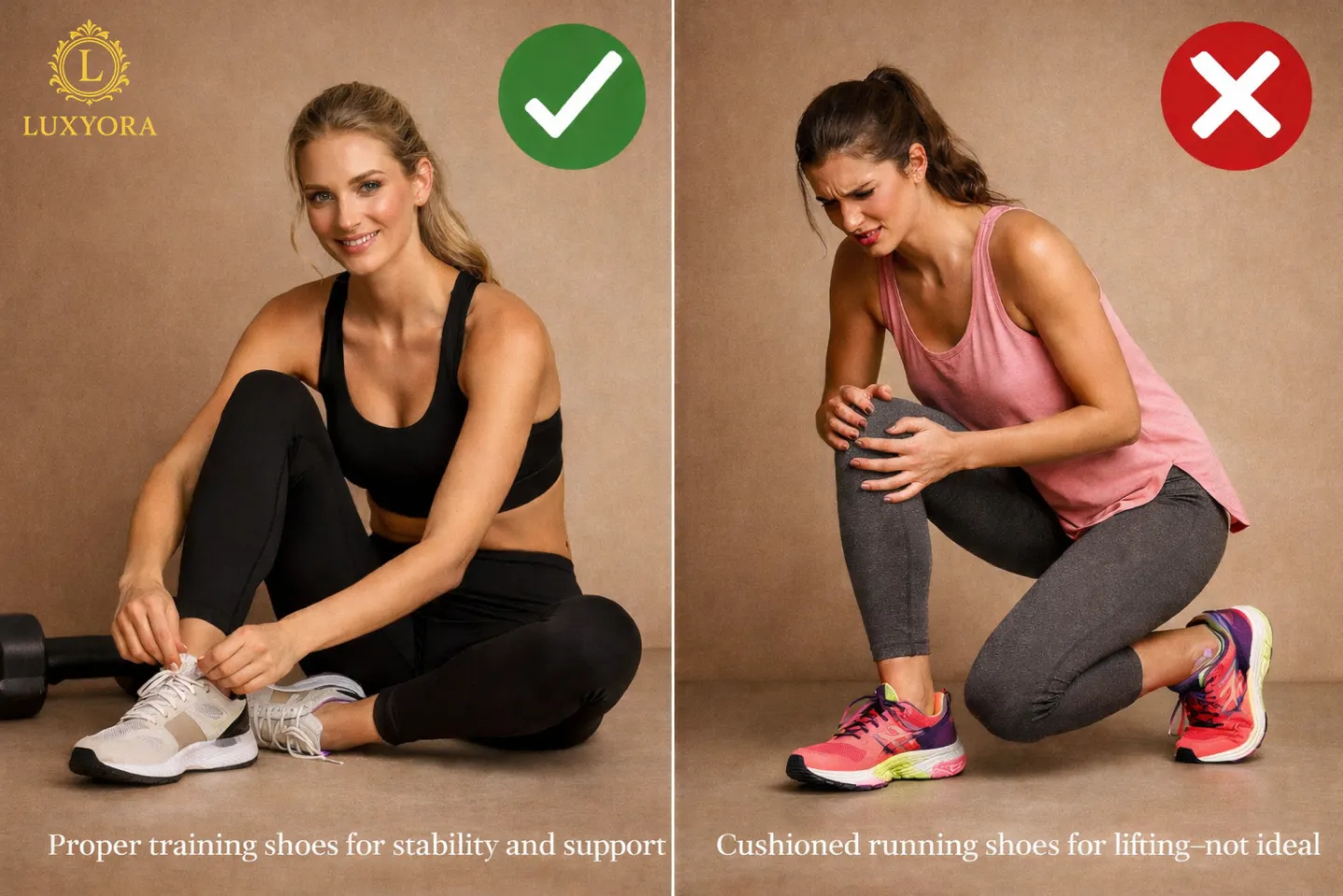
Your priority is stability. A squishy, high-cushion running shoe can feel like lifting on a mattress, pretty, but not exactly grounded. Studies looking at lifting barefoot versus in shoes suggest footwear can change the mechanics and “work” of the movement, even when performance outcomes don’t magically improve. The takeaway: for strength work, you want a firm, steady platform that helps you feel connected to the floor.
Look for:
- A flat or low heel-to-toe drop (less “tippy” feeling)
- A firm midsole (minimal compression)
- A wide toe box (so your toes can spread for balance)
- A secure upper (no sliding during lateral moves)
If you do HIIT, cardio circuits, or agility-style training
Think: jump squats, mountain climbers, skaters, lateral hops, fast feet.
You need a cross-trainer vibe: stable enough for strength intervals, but springy and flexible enough for quick transitions. This is where “training shoes” shine, built for multi-directional movement rather than straight-line cruising.
Look for:
- Grippy outsole (especially if you train on wood or tile)
- Lateral support (sidewalls or a broader base)
- Moderate cushioning (your joints will thank you mid-jump)
- Flex grooves in the forefoot (for quick toe-offs)
If your workouts are yoga, Pilates, barre, or mobility-focused
Honestly? You may not need shoes at all. Many people prefer barefoot for better proprioception (your body’s sense of position), especially during controlled movements.
That said, if your floors are cold, slippery, or you want a little polish and protection, consider studio shoes or minimalist trainers. Research on minimalist footwear and barefoot-style training suggests these approaches may influence foot strength and structure over time, but they also come with a real-world rule: transition gradually. Your feet deserve a slow introduction, not a surprise debut.
Look for:
- Minimalist, flexible soles (ground feel without bulk)
- Roomy toe box
- Lightweight build
- Or, skip shoes and choose grippy socks for traction
The Floor Matters More Than You Think
The same shoe can feel divine on rubber gym flooring and chaotic on glossy tile. Home surfaces are unpredictable, so match your outsole to your reality:
- Hardwood / tile: prioritize rubber grip and lateral stability
- Carpet: go for moderate cushioning and a stable base (carpet can “grab” and twist)
- Concrete garage gym: your feet will appreciate more cushioning, especially for cardio
- Rubber mats: you can wear almost anything, lucky you
If you do high-impact moves on hard floors, a touch more cushioning can reduce the harshness. If you lift heavy, keep cushioning lower and firmness higher.
A Luxury-Grade Checklist: What “Good” Really Looks Like
Here’s how to spot a truly excellent home-training shoe, no matter the logo on the tongue.
1) Fit that feels tailored
Your heel should feel held, not hugged aggressively. Your toes should have room to spread. If you feel pressure at the sides of the forefoot, that’s not “break-in potential,” that’s a future complaint.
2) A stable base
A wider platform helps with balance during strength moves and lateral drills. Stability features can also influence comfort perceptions; research on shoe features and comfort points to cushioning, stability, and flexibility as key factors people respond to.
3) The right cushioning for your impact level
More jumping = more cushioning. More lifting = less cushioning. You’re not being difficult; you’re being biomechanically sensible.
4) Flex where you need it, structure where you don’t
A training shoe should bend at the forefoot, not fold in half at the midfoot like a soft croissant.
5) Traction that doesn’t “stick” too much
You want grip, but not so much that your foot gets trapped during pivots. Smooth, controlled movement is the goal.
The best shoes for home workouts aren’t always the ones with the most cushioning or the boldest features. Often, the real difference comes from how well they work with the unique shape and movement of your feet. Discover more in How to Choose the Right Shoes for Your Foot Type.
The Three-Shoe Wardrobe That Makes Home Workouts Effortless
If you want the “capsule wardrobe” approach, minimal pairs, maximum payoff, this trio covers almost everything:
- A stable trainer for strength days
Firm, grounded, wide base, minimal squish. - A versatile cross-trainer for HIIT and mixed sessions
Supportive sides, grippy outsole, moderate cushioning. - A minimalist or studio option for mobility and low-impact days
Flexible, light, foot-friendly, plus it looks chic by the door.
Yes, you can do it all in one shoe, but the three-pair strategy is how home workouts start to feel like a curated ritual instead of a compromise.
A Few Quiet Red Flags (So You Don’t Waste Money)
- Your toes can’t spread comfortably
- The shoe feels unstable during lunges
- You “bottom out” during jumps (too little cushioning for your routine)
- The outsole slips on your floors
- You feel foot fatigue fast when doing low-impact work (consider a gradual transition if going minimalist)
Luxyora Philosophy:Luxury is choosing pieces that elevate how you move, not just how you look. When your shoes support your body with intention, every rep becomes a little more graceful and every workout feels like self-respect in motion.
References:
- Curtis, R., Willems, C., Paoletti, P., & others. (2021). Daily activity in minimal footwear increases foot strength. Scientific Reports.
- Hébert-Losier, K., Knighton, H., Finlayson, S., & Peterson, B. (2024). Biomechanics and subjective measures of recreational male runners in three shoes running outdoors: A randomised crossover study. Sports Biomechanics.
- Mohammadi, M. M., & Nourani, A. (2025). Testing the effects of footwear on biomechanics of human body: A review. Heliyon.
- Nike. (2025, July 29). The simple guide to finding the right training shoe for you. Nike.com.
- Rodríguez-Longobardo, C., & colleagues. (2025). Effects of barefoot and minimalist footwear strength-oriented training on foot structure and function in athletic populations: A systematic review. Sports Medicine.
- Ridge, S. T., Olsen, M. T., & Bruening, D. A. (2019). Walking in minimalist shoes is effective for strengthening foot muscles. Medicine & Science in Sports & Exercise, 51(1), 104–113.
- Valenzuela, K. A., & colleagues. (2021). Footwear affects conventional and sumo deadlift performance. Sports (Basel).