Handbag Storage Hacks: Maximizing Space and Minimizing Damage | Luxyora
A luxury handbag collection is a little like a fragrance wardrobe: it’s personal, it’s emotional, and somehow it multiplies when you’re not looking. One day, you’re proudly owning “just three good bags,” and the next, you’re playing closet Tetris with a tote that’s allergic to being squished and a delicate shoulder bag that’s developed the faintest crease of protest.
The good news: storing handbags beautifully doesn’t require a walk-in closet or museum-grade vault. It requires smart space planning and preventive care, the kind that keeps leather supple, hardware shiny, shapes structured, and interiors pristine. Think of this as your elegant, low-effort system for keeping bags safe and easy to reach, so you actually wear them instead of forgetting them behind winter scarves.
Let’s make your storage look luxe, feel organised, and quietly extend the life of every piece you love.
The Two Enemies of Handbags: Pressure and Moisture
Most storage damage comes from two sources:
- Pressure: crushed corners, warped bases, collapsed silhouettes, bent handles, and imprinted chain marks.
- Moisture (and unstable climate): mildew odours, mould spots, sticky finishes, leather drying or cracking, metal tarnish.
Your mission is to reduce pressure points and maintain a stable environment. That’s the whole game.
The Perfect “Before You Store It” Routine (5 Minutes, Max)
If you only do one thing, do this because storing a bag while it’s dirty or damp is like putting skincare on over makeup and hoping for miracles.
- Empty everything (including receipts and mystery mints).
- Shake out crumbs and wipe the lining with a soft cloth.
- Spot-clean light marks on the exterior (gentle, material-appropriate).
- Let it breathe for an hour if it’s been out in humidity, rain, or intense heat.
- Check hardware for fingerprints and lightly buff with a clean microfiber cloth.
This tiny ritual prevents “stored-in stains” and keeps odours from settling in.
Space-Smart Storage Setups That Actually Work
1) The Shelf-and-Cubby Method (The Gold Standard)
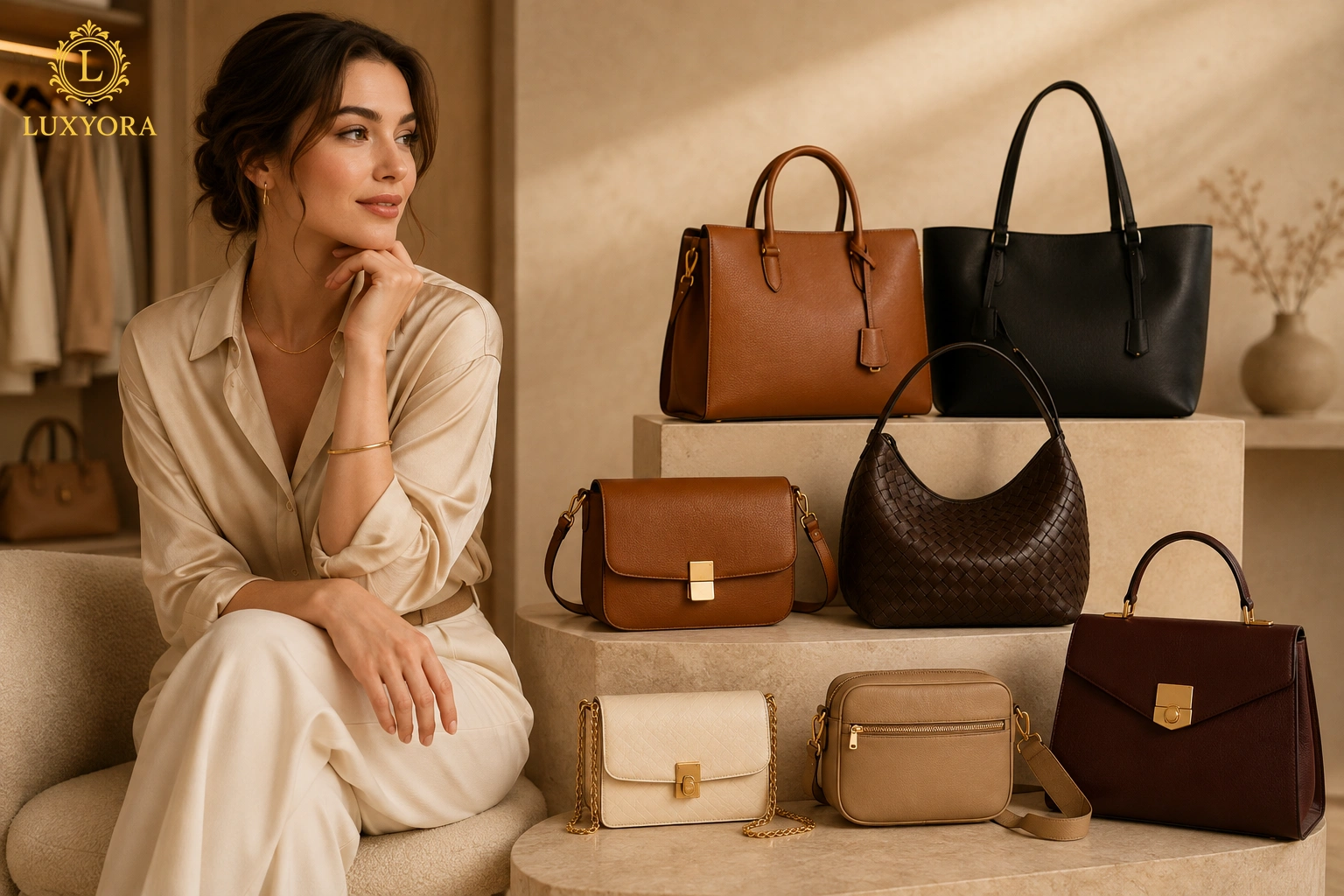
If you want your collection to look like a curated boutique, shelves are the way to go. They evenly support the bag’s base, reduce pressure on the straps, and make selection effortless.
How to do it in a regular closet:
- Use adjustable shelves to customise height for each bag size.
- Add shelf dividers so bags don’t lean into each other.
- Leave a little breathing room between bags; crowding encourages scuffs and colour transfer.
Space hack: Use vertical shelf risers to create a second “tier” without stacking bags on top of bags.
2) The Boxed Beauty Method (Best for Special Bags)
If your bag came with a box, it’s often sized to protect it. Boxing is ideal for seasonal storage or delicate materials.
Do it right:
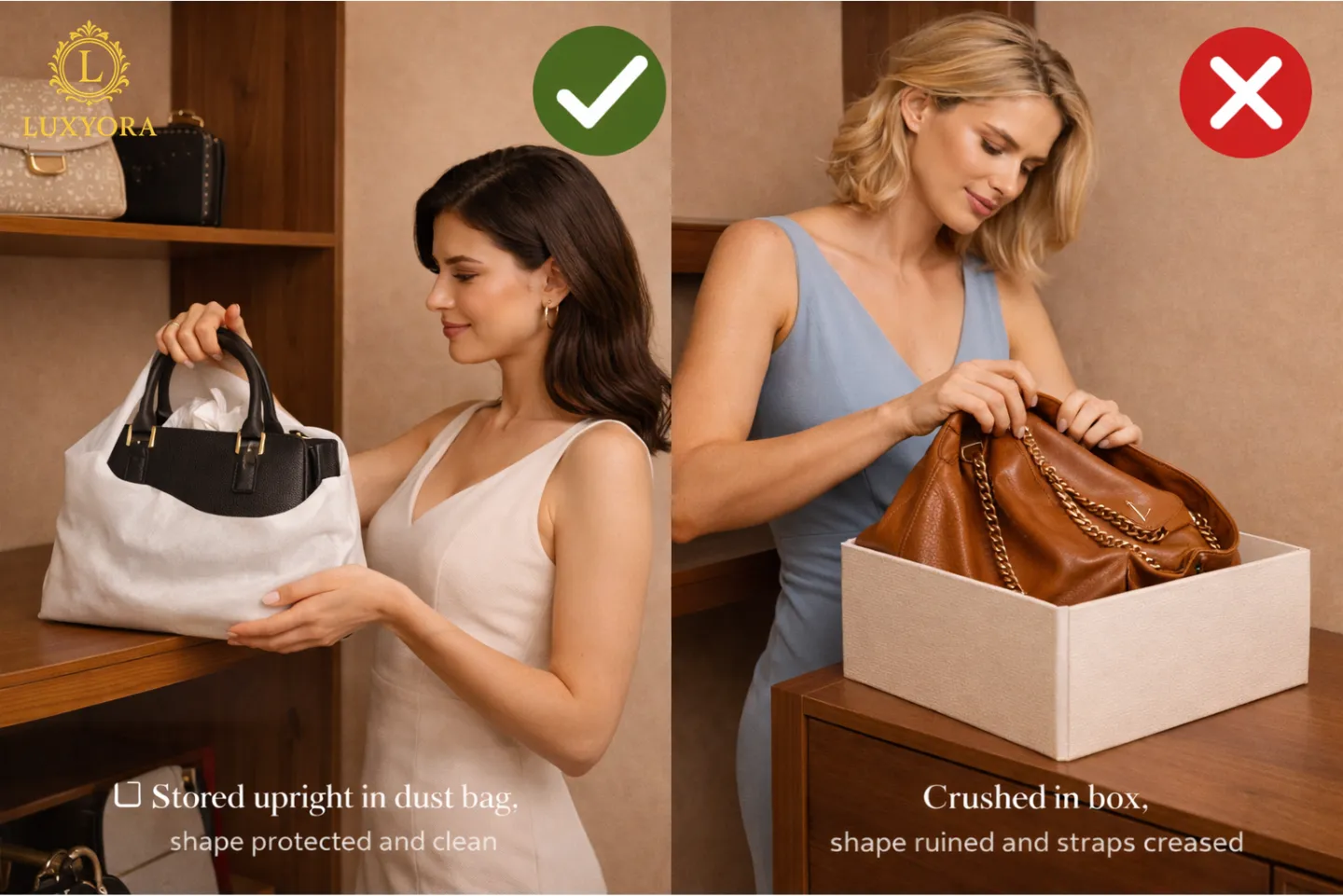
- Put the bag in a breathable dust bag first.
- Avoid fully airtight storage if you live in a humid climate; stale air plus moisture is not your friend.
- Label boxes discreetly (a simple code or photo label inside the lid) so you’re not rummaging.
Space hack: Uniform storage boxes make shelves look streamlined and stackable, instantly calm.
3) The “Display, But Make It Safe” Method
Yes, displaying bags can look stunning, especially if they’re design objects. But light exposure and dust can quietly dull materials over time.
Display safely by:
- Keeping them away from direct sunlight and heat sources.
- Rotating what’s out on display.
- Using stands that support the base (not hooks that stress straps).
Every handbag deserves a place in your wardrobe that protects its structure, finish, and craftsmanship. Uncover the essentials in How to Store Your Handbags to Keep Them Looking New.
Space hack: A narrow bookcase with dividers can become a chic handbag gallery without eating your closet.
The Big Debate: To Hang or Not to Hang?
Hanging bags by their straps is tempting when you’re short on space, but it’s risky for many styles.
Generally avoid hanging:
- Heavy totes (straps can stretch)
- Chain-strap bags (chains can imprint or distort leather)
- Soft leather styles that can slump under their own weight
If you must hang:
- Use wide, padded hooks (never thin metal hooks).
- Hang only lightweight bags and rotate frequently.
- Never hang bags with delicate handles long-term.
A supported base is almost always kinder than a suspended weight.
Shape-Saving Secrets: Stuffing Without Stretching
A bag’s silhouette is part of its luxury, so preserving its shape matters.
What to stuff with:
- Acid-free tissue paper (gentle, non-bleeding)
- Clean, soft fabric (like cotton tees) for larger cavities
- Purpose-made bag pillows/shapers for structured styles
What to avoid:
- Newspaper or colored paper (ink transfer risk)
- Overstuffing (can stretch leather and strain closures)
- Anything scented (fragrance can linger and sometimes react with materials)
Pro tip: Stuff the body, then add a little support under flaps so they don’t crease.
Protecting Hardware Like a Collector
Hardware damage is sneaky: chain marks, clasp imprints, scratches from buckles rubbing the exterior.
Do this:
- Wrap chains in soft tissue or clean bubble wrap before placing them inside the bag.
- Keep metal components from resting against leather panels.
- If the bag came with felt protectors, use them especially for front plaques and clasps.
This is the difference between a bag that ages gracefully and one that collects dents like souvenirs.
Climate Control: Your Bags Want “Steady and Dry-ish”
You don’t need a lab. You need stability.
Best practice basics:
- Store bags in a cool, dry, well-ventilated space.
- Avoid attics and basements if they swing between damp and dry.
- Keep bags away from radiators, vents, and windows.
If you live in a humid climate:
- Add silica gel packs (and replace/reactivate them regularly).
- Consider a small closet dehumidifier or dry cabinet for high-value pieces.
- Air out bags periodically so the interior
The goal isn’t perfection. It’s consistency.
Material-Specific Storage Moves
Leather
- Keep away from intense light and heat (prevents drying and fading).
- Store supported so it doesn’t slouch into permanent creases.
- Condition lightly if recommended by the maker, especially before long storage.
Every crease, polish, and patina tells a story, but knowing how to protect that story is an art in itself. Explore the essentials in How to Clean and Care for Leather Handbags.
Suede and Nubuck
- Avoid tight dust bags that compress the nap.
- Use a soft brush before storage to keep the texture fresh.
- Keep away from moisture, like gossip you don’t want.
Patent and Coated Finishes
- Avoid storing pressed against other materials (imprint risk).
- Give extra breathing room, as pressure marks can become permanent.
Fabric and Canvas
- Make sure it’s completely dry before storing.
- Keep in breathable covers to prevent mildew odours.
Organizing for Real Life: So You Actually Use Your Bags
The most elegant storage system is one you’ll maintain.
The “Frequency Zones” Method
- Front and centre: bags you use weekly
- Middle shelf: bags you use monthly
- Top shelf / boxed: special-occasion or seasonal bags
The “Bag Wardrobe” Rotation Trick
Set a simple rhythm:
- Swap your everyday bag every 1–2 weeks
- Rotate straps and handles to prevent stress in one spot
- Give bags a rest day to air out (especially after humid weather)
Your collection stays healthier, and your outfits feel fresher with zero extra effort.
Small Closet? Big Collection? Try These Space Hacks
- Use shelf dividers to stop leaning and scuffing.
- Store vertically (bags standing, not piled) whenever possible.
- Nest smartly: place a mini bag inside a tote only if both are protected (dust bag or soft barrier) and nothing gets compressed.
- Use bag organisers inside larger bags so interiors don’t collapse.
- Under-shelf baskets can hold dust bags, shapers, and care cloths neatly.
Luxury storage is not about perfection; it’s about removing the most common risks while keeping your life easy.
Luxyora Philosophy: Luxury is the quiet confidence of care when what you own is protected with intention; it lasts longer, looks better, and feels even more yours.
References:
- Aunts & Uncles. (n.d.). Proper storage of leather bags – Tips for long-lasting enjoyment.
- Dignard, C., & Mason, J. (n.d.). Caring for leather, skin and fur: Preventive conservation guidelines for collections. Canadian Conservation Institute, Government of Canada.
- Museum WA. (n.d.). Temperature and relative humidity. Western Australian Museum—Development Services.
- Museums Galleries Scotland. (2024, April 26). Temperature and humidity in museums.
- myGemma. (n.d.). Handbag storage guide: Securing your personal treasure.
- Rebag. (n.d.). Handbag 101: How to properly store your handbags.
- SelfStorage.com. (2025, October 16). A complete guide to storage for handbags.
- Tsuchiya Kaban. (n.d.). Leather care lesson 3: How to store leather bags.