How to Prevent Shoe Odour | Luxyora
Shoe odour is the uninvited plus-one of a busy life. You can be dressed to perfection, a silky slip skirt, clean white sneakers, hair doing that effortless thing, yet in one tiny moment (a commute, a workout, a long day in closed-toe shoes) and suddenly your footwear is broadcasting a scent story you did not approve.
Here’s the good news: shoe odour isn’t a mystery, and it’s not a moral failing. It’s chemistry + biology + microclimate. Your feet sweat (they have many sweat glands). That moisture gets trapped in warm footwear, and bacteria flourish. The result? A classic “smelly feet” situation that health authorities explicitly link to sweat and bacteria thriving in damp conditions.
This guide is your luxury-level, low-drama system to prevent shoe odour before it starts.
Why shoes smell in the first place (the science, but make it chic)
Sweat itself doesn’t smell. The smell happens when bacteria interact with sweat and skin debris inside a warm, humid shoe environment. Studies on footwear “microclimate” show that ventilation and moisture conditions influence bacterial growth on the foot, meaning the shoe environment can literally encourage (or discourage) the smell cycle.
So prevention is about two things:
- Reduce moisture, and
- Reduce bacteria/overgrowth, while keeping your shoes breathable and dry between wears.
The Anti-Odour Routine: 8 habits that actually work
1) Rotate shoes (your easiest upgrade)
If you wear the same pair every day, you’re basically giving yesterday’s moisture a starring role in tomorrow’s outfit. Dermatologists recommend avoiding wearing the same shoes two days in a row so they can fully dry.
The move: Have at least two everyday pairs in rotation. If you’re on your feet a lot or sweat heavily, make it three.
2) Dry shoes properly (because “airing out” is not a vibe; it’s a method)
Odour prevention is largely moisture management. The NHS recommends letting shoes dry out before wearing them again.
Do this:
- Remove insoles if possible (they trap moisture)
- Loosen laces, open the tongue, and let air circulate
- Dry in a ventilated room (avoid direct heat that can warp materials)
Fast fix: Stuff with plain paper (not glossy) to pull moisture out, swap once if it gets damp.
3) Wash your feet daily, and dry between the toes
This is the foundation. NHS guidance recommends washing feet daily and drying thoroughly, especially between toes, because dampness is where problems thrive.
Luxury tip: Treat it like skincare. Clean, dry, moisturise just not between toes, where you want it dry.
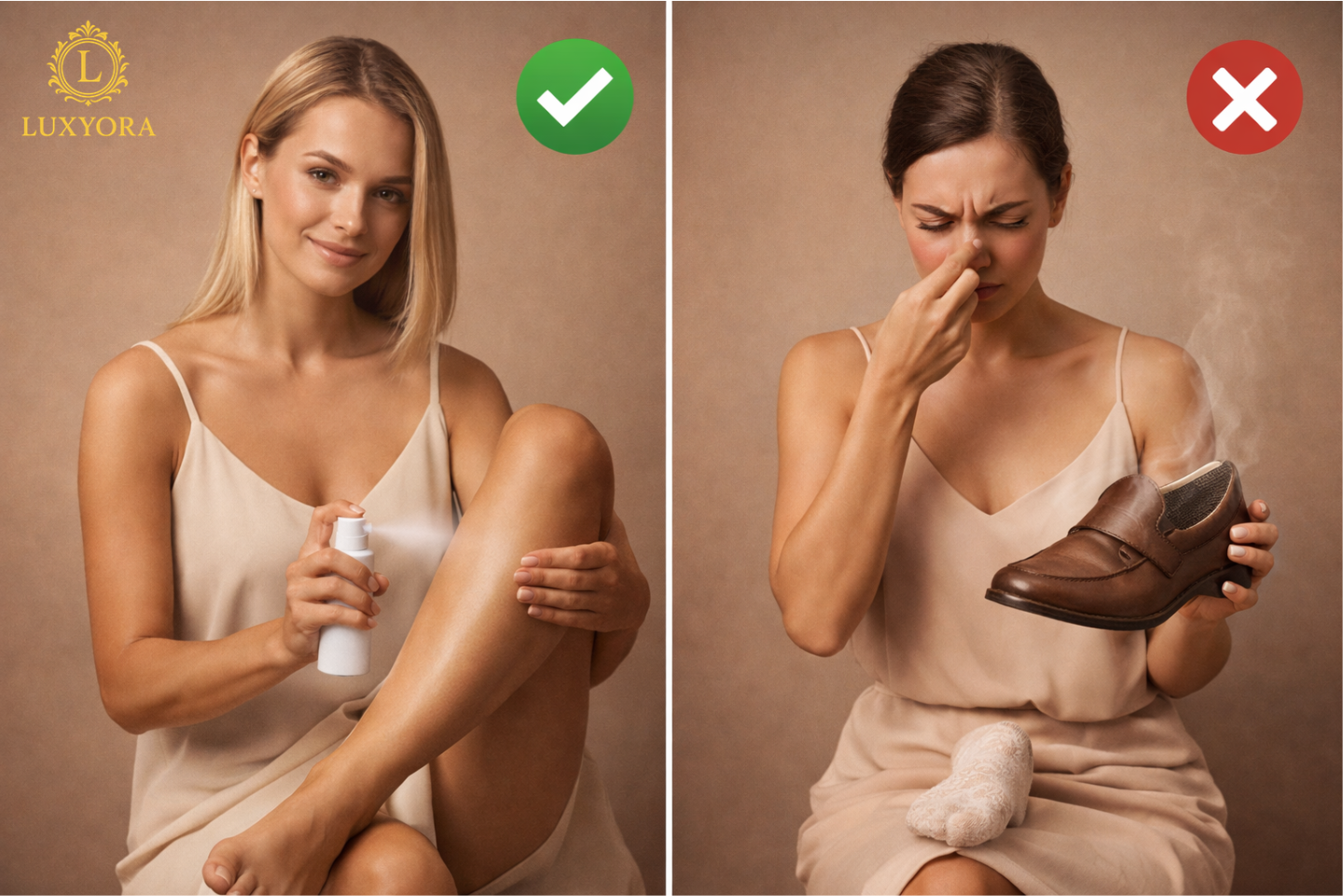
4) Use an antiperspirant (yes, on your feet)
If sweat is the fuel, antiperspirant is the throttle. The NHS explicitly lists antiperspirant as a helpful tool for smelly feet. Dermatology guidance for hyperhidrosis (excess sweating) also emphasises changing shoes and socks often and letting shoes dry.
How to use: Apply at night to clean, dry feet (that’s when sweat glands are calmer). If you’re very sweaty, look for products designed for feet.
5) Choose socks like you choose skincare: based on function
Socks aren’t an afterthought. They’re your first moisture barrier.
- Change socks daily (or mid-day if they get damp)
- Opt for breathable, moisture-wicking options
- Natural fabrics can help; NHS advice mentions breathable/natural fabrics like cotton and leather as helpful.
If you’re a heavy sweater, consider technical sports socks for day-to-day life, quietly one of the most effective upgrades.
6) Pick shoes with ventilation (your feet want airflow, not captivity)
Closed, non-breathable shoes trap humidity. Research on footwear microclimate suggests ventilation is a key factor influencing bacterial growth.
What to look for:
- Breathable uppers (mesh, perforated leather)
- Moisture-wicking linings
- Removable insoles (so you can clean/replace)
And if you can, slip your shoes off occasionally during the day, dermatologists recommend it to help prevent odour and irritation.
7) Clean the inside of your shoes (the part everyone forgets)
Even if your feet are clean, the inside of your shoes collects sweat, oils, and skin cells, basically a buffet. If your insoles are removable, wash or replace them regularly.
Easy deodorising routine (weekly):
- Take insoles out
- Lightly wipe the inside with a cloth dampened with rubbing alcohol (test first on delicate linings)
- Let dry fully overnight
If you notice redness, scaling, itching, or peeling, the odour may be linked to an infection (like athlete’s foot), and you should treat the underlying issue rather than masking the smell.
8) When it’s more than “odour”: know the red flags
Sometimes odour is a symptom of a skin condition rather than a simple humidity issue. Clinical reviews link pitted keratolysis to moisture and sweating, noting that controlling dampness with antiperspirants, breathable shoes, and proper drying is key.
See a clinician if:
- Odour is sudden and severe
- There’s pain, pits/erosions on the soles, intense itch, or persistent peeling
- You’ve tried hygiene + drying + rotation and it’s not improving
The “always fresh” checklist (save this)
- Rotate shoes (don’t wear the same pair 2 days in a row)
- Wash feet daily, dry thoroughly, including between toes
- Use foot antiperspirant if sweaty
- Wear breathable shoes + fresh socks
- Remove insoles and air out shoes after wear
Luxyora Philosophy: True luxury is feeling confident up close, not just from across the room. Care for the details, and your style stays effortless everywhere you go.
References:
- American Academy of Dermatology Association. (n.d.). Hyperhidrosis: 6 tips dermatologists give their patients. (Accessed February 9, 2026). (American Academy of Dermatology)
- Keenan, W. F., Jr. (2019). Unpleasant foot odor and skin changes. American Family Physician, 99(10), 651–652. (AAFP)
- Miao, T., et al. (2021). Footwear microclimate and its effects on the microbial community of the foot. Microorganisms, 9(10). (PMC)
- National Health Service (NHS). (n.d.). Smelly feet. (Accessed February 9, 2026). (nhs.uk)
- Guy’s and St Thomas’ NHS Foundation Trust. (n.d.). Keeping your feet healthy. (Accessed February 9, 2026). (guysandstthomas.nhs.uk)
No amount of resoling or repair can restore alignment, balance, or form. When the shoe no longer supports your foot properly, it’s more than cosmetic—it’s biomechanical inefficiency.