How to Wear Statement Clothing Without Overdoing It | Luxyora
Statement clothing is the fashion equivalent of a perfectly timed one-liner: when it lands, it lands. A sculptural blazer, a wildly romantic sleeve, a neon heel, a print that looks like it escaped a gallery wall, these pieces are designed to be seen. The problem? When everything in your outfit is yelling for attention, the result isn’t “editorial,” it’s “confusing.”
The goal is not to mute your personality. It’s to give your statement piece the kind of clean, confident stage it deserves so you look intentional, not overwhelmed. Here’s how to do it with that polished, magazine-ready ease.
1) Pick your protagonist (yes, only one)
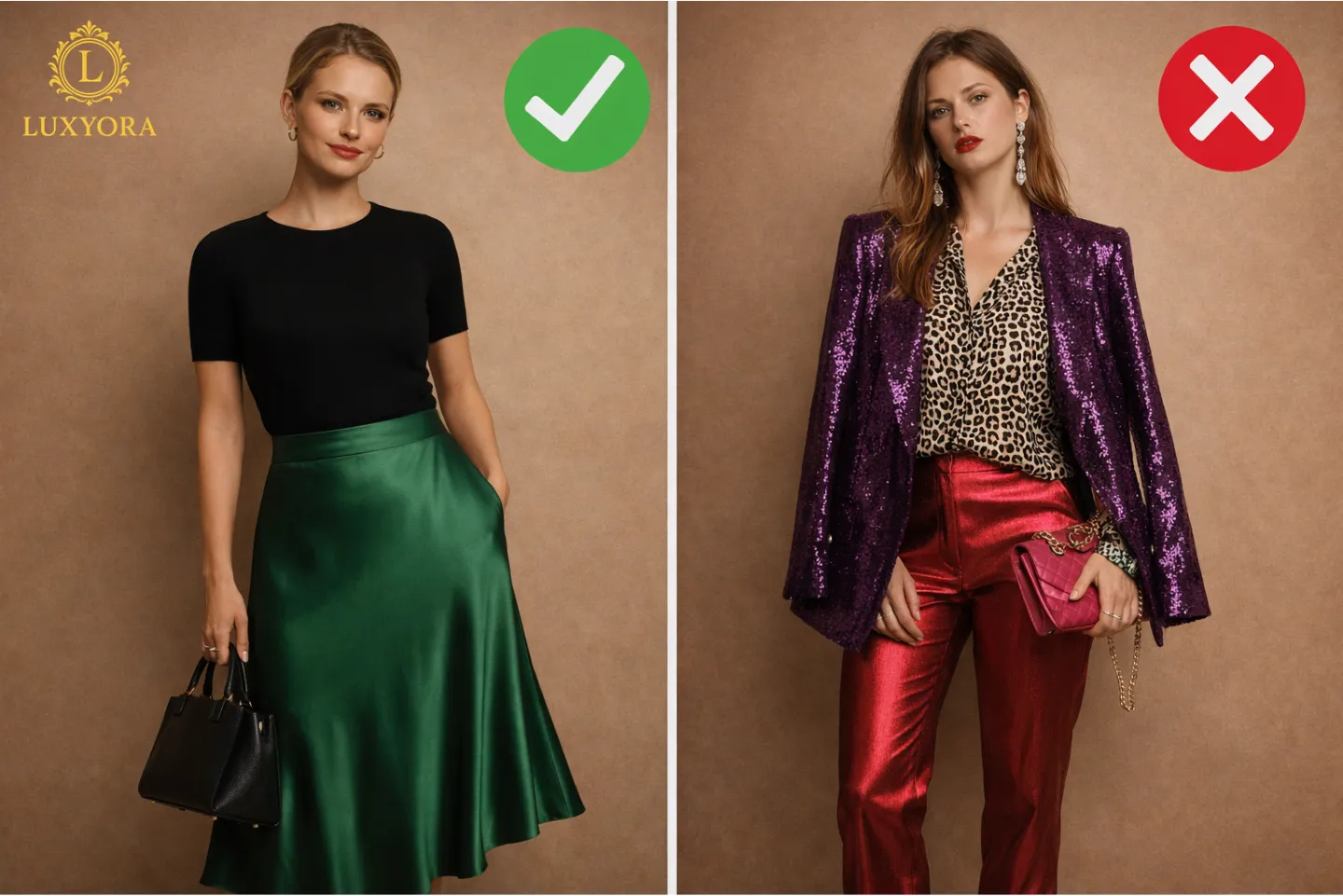
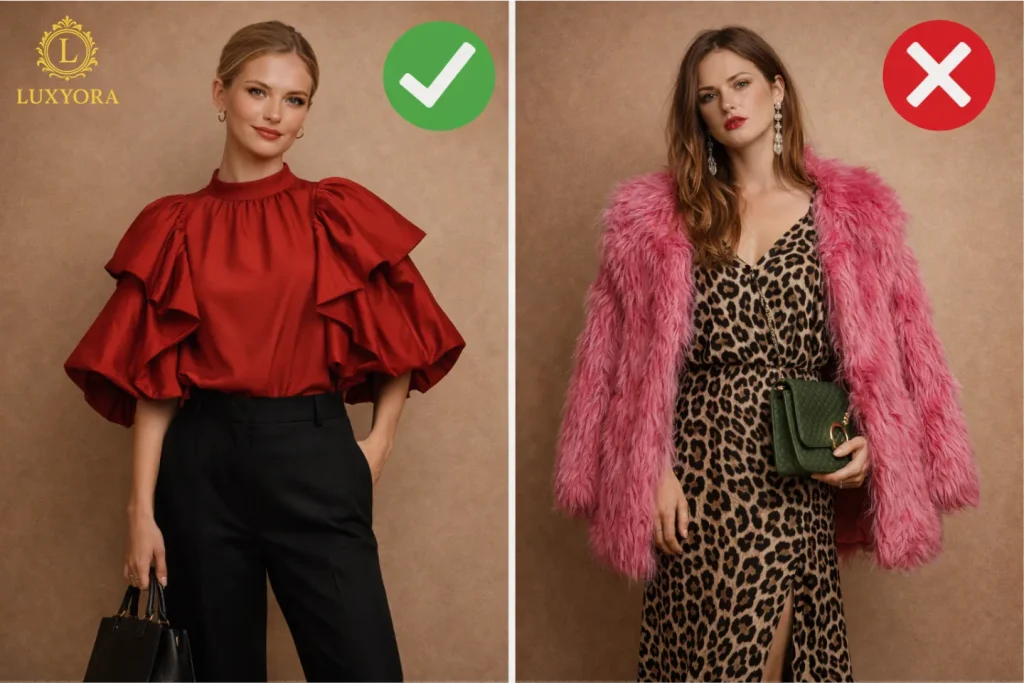
If you want the simplest rule that almost never fails: choose one hero item per outfit. That could be the statement coat, the dramatic skirt, the bold print, or the jewelry that could double as modern art. Everything else becomes the supporting cast: minimal, quiet, and well-fitting.
This idea shows up repeatedly in modern styling advice less because fashion is strict, more because the eye needs a focal point. Stylist Allison Bornstein talks about needing “more ideas” rather than more stuff, and her approach favors making outfits feel styled through intentional choices and simple formulas.
Try this: if your statement is loud (pattern, shine, volume), keep the rest sleek: a clean tee, tailored trousers, simple boots.
2) Balance volume like a pro (the silhouette matters more than the trend)
Volume is where many statements seem to go off the rails. Big sleeve + wide-leg pants + giant bag can feel like you’re wearing a mood board. The fix is easy: pair one exaggerated shape with one streamlined shape.
- Oversized blazer → slim knit tank + straight pants
- Full skirt → fitted top + sleek shoes
- Wide-leg trousers → clean bodysuit or tucked-in tee
The outfit reads “fashion” because it’s deliberate, not because it’s maximal.
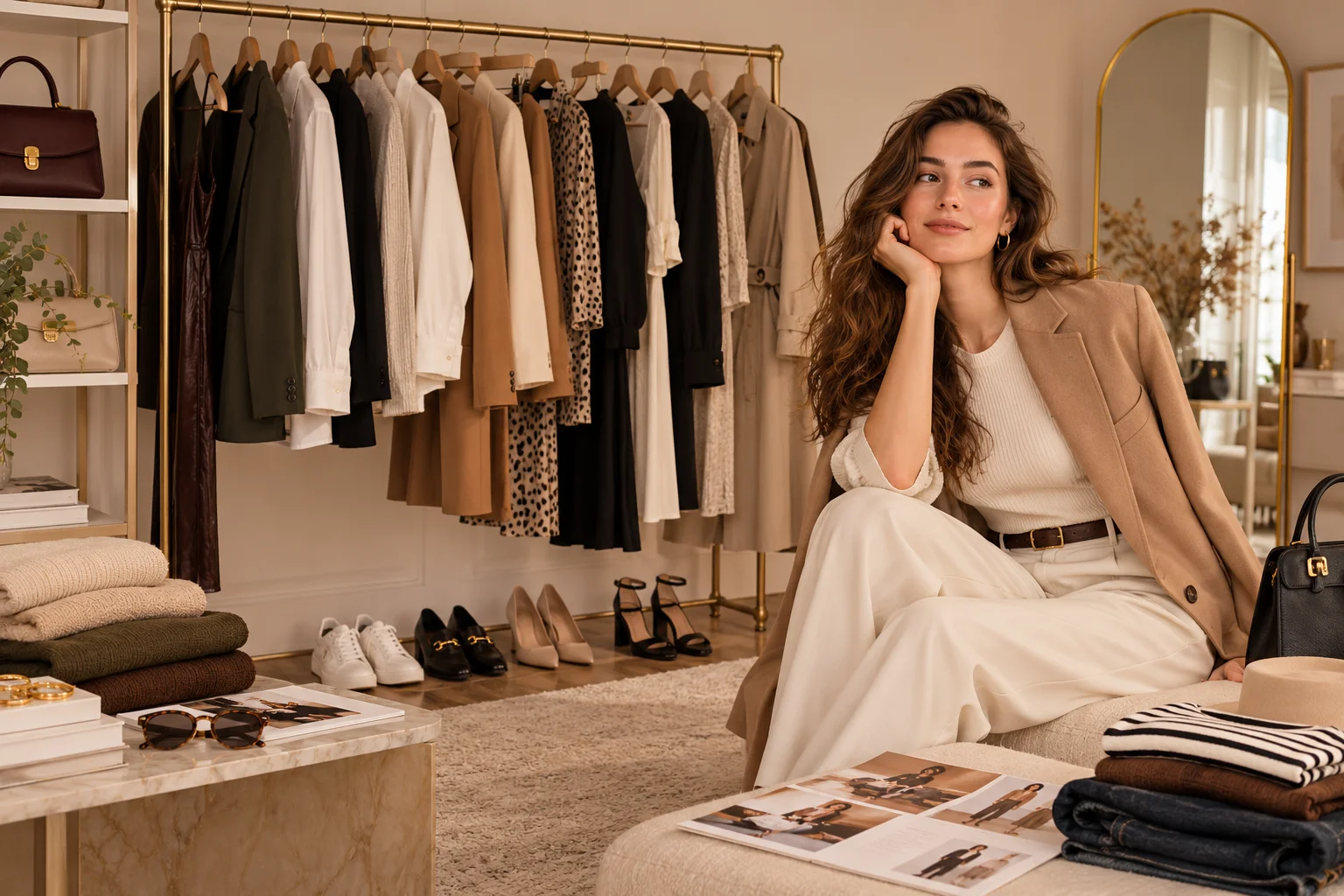
3) Build a neutral “frame” around the statement
Neutral doesn’t have to mean boring. It means controlled. A strong statement piece pops harder and looks more expensive when the base is calm: black, cream, camel, navy, chocolate, grey, denim.
This is the same reason minimalist wardrobes can suddenly look exciting when they add one maximalist element, especially in accessories. Bolder jewelry can change the feel of simple outfits precisely because the backdrop is restrained.
Style trick: repeat a small color from your statement piece somewhere else (shoe, bag, lip). It looks cohesive, not chaotic.
4) Use the “distance test” to decide if you’re doing too much
Before you leave, stand a few steps back from a mirror (or take a quick photo). Ask:
- Where does my eye go first?
- Does it know where to rest?
- Can I describe this outfit in one sentence?
If the answer is “my eye goes everywhere,” edit one thing, usually an accessory. Photos are brutally helpful because they show what your brain filters out in real time (like competing focal points or mismatched proportions). Bornstein’s styling strategies often include outfit photos and formulas for exactly this reason: they make styling choices easier to spot and repeat.
5) Print mixing: treat it like a recipe, not a gamble
Mixing prints can look wildly chic… or wildly accidental. If you want it to look intentional, borrow a structured approach like the ones taught by Tan France. MasterClass summarizes his guidance around mixing prints with clear best practices (think: keep a shared color, vary scale, and anchor with neutrals).
A safe formula that looks fashion-y:
- Print A (larger scale) + Print B (smaller scale)
- Shared color between both
- Neutral shoe or bag
And if you’re new to mixing prints, don’t start with two complicated patterns. Start with stripes + florals, or micro-check + animal print, then keep everything else simple.
6) Don’t ignore the “polish layer”: grooming + garment care
Statement pieces are unforgiving in the best way: they reveal the details. If your blouse is wrinkled or your knit is pilled, the statement doesn’t read “luxury,” it reads “late.”
Polish isn’t vanity, it’s visual clarity. And it’s backed by research: studies in social perception note that dress influences how people infer status, aesthetics, and social categories, meaning clothing presentation shapes impressions.
So yes: steam it, lint-roll it, check the seams, clean the shoes. Your outfit will look more elevated even if the clothes are simple.
Great statement style rarely feels crowded. The art is in creating enough balance that one standout piece can do all the talking. Read more about How to make simple clothes look polished.
7) Match the statement to the setting (context is style’s secret weapon)
A sequined skirt at brunch can be iconic if the rest is grounded (simple tee, minimal sandals, clean hair). A giant hat at a business event can feel costume-y. The point isn’t “dress appropriately” in a boring way; it’s edited for context so the statement feels witty rather than random.
When in doubt, use the “two notches” rule:
- If the statement piece is two notches dressier, pull everything else down (denim jacket, flats, plain knit).
- If the statement piece is two notches bolder, quiet everything else (monochrome base, minimal jewelry).
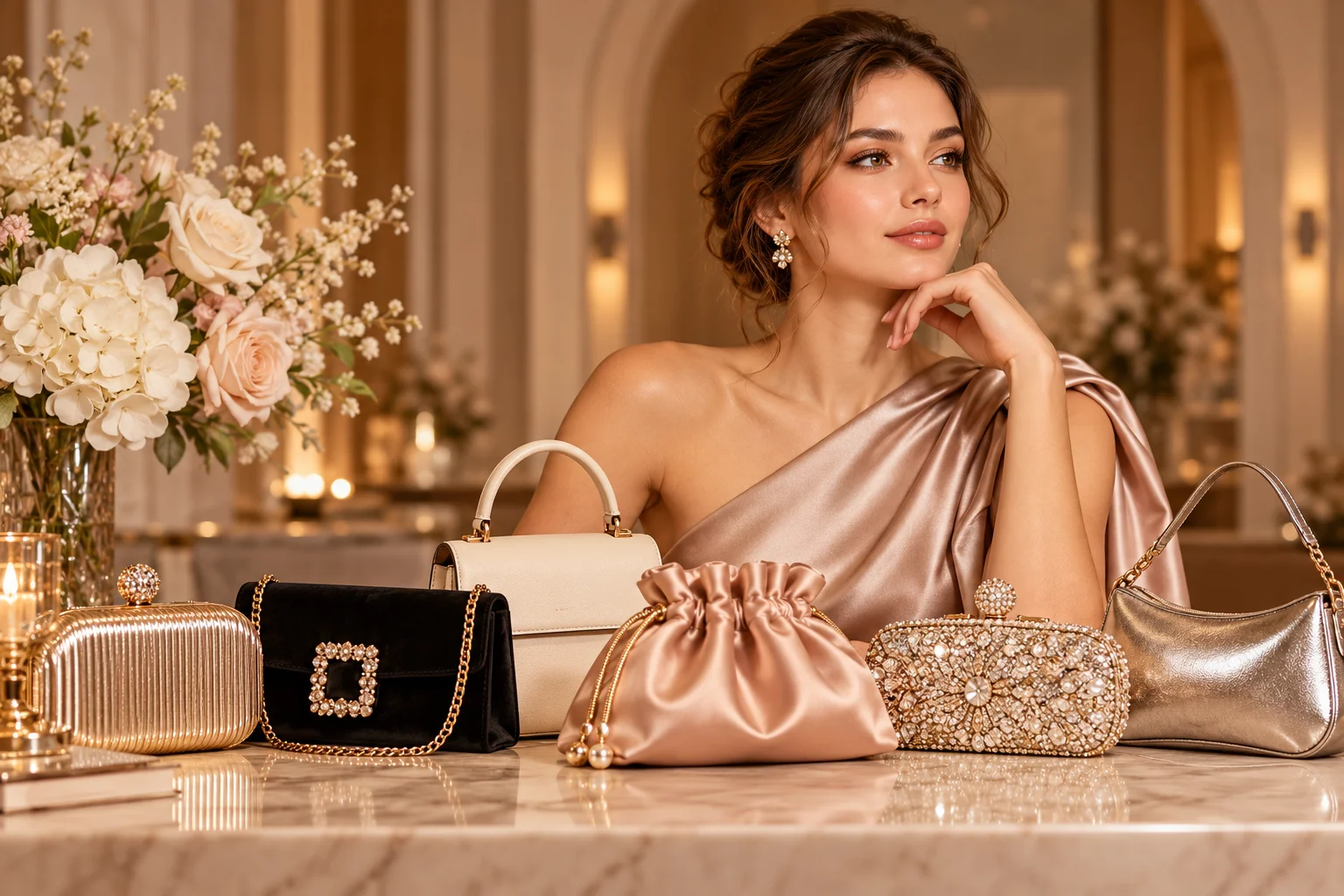
8) Treat accessories like seasoning
Accessories are where people accidentally double (or triple) the drama. If your clothing is already the statement, your accessories should whisper. If your outfit is minimal, your accessories can be the headline.
A simple cheat code:
- Statement earrings? Skip the statement necklace.
- Statement shoes? Keep the bag structured and quiet.
- Statement dress? Minimal hair, minimal jewelry, clean makeup.
This isn’t about rules, it’s about readability. Your outfit should have one clear message.
Statement clothing doesn’t always speak through volume. Sometimes the strongest style choices are the ones that reveal something without saying everything and leave people with an impression they can’t quite explain. Discover What the clothes you wear quietly say about you.
9) Build your “statement uniform” so it becomes effortless
The most stylish people aren’t constantly reinventing themselves; they’re repeating what works with tiny variations. Build a go-to formula where the statement rotates, and the base stays reliable:
- Statement top + tailored trousers + sleek shoe
- Statement skirt + fitted tee + blazer
- Statement coat + all-black base + minimal jewelry
That’s how statement dressing becomes a lifestyle, not a special occasion.
Luxyora Philosophy: A statement piece should never wear you; it should introduce you. Style is restraint with intention: when you edit with confidence, your boldest choices become your most effortless.
References:
- Bornstein, A. (2023). Wear it well: Reclaim your closet and rediscover the joy of getting dressed. Chronicle Books. (Vogue)
- France, T. (2021). Tan France’s tips for wearing and mixing prints. MasterClass. (MasterClass)
- Hester, N., & Hehman, E. (2023). Dress is a fundamental component of person perception. Trends in Cognitive Sciences. (PMC)
- Vogue India. (2025). I swore by minimalism until maximalist jewellery changed my mind. Vogue India. (Vogue India)
- Who What Wear. (2022). Allison Bornstein’s stylist tips to find your personal style. Who What Wear. (Who What Wear)