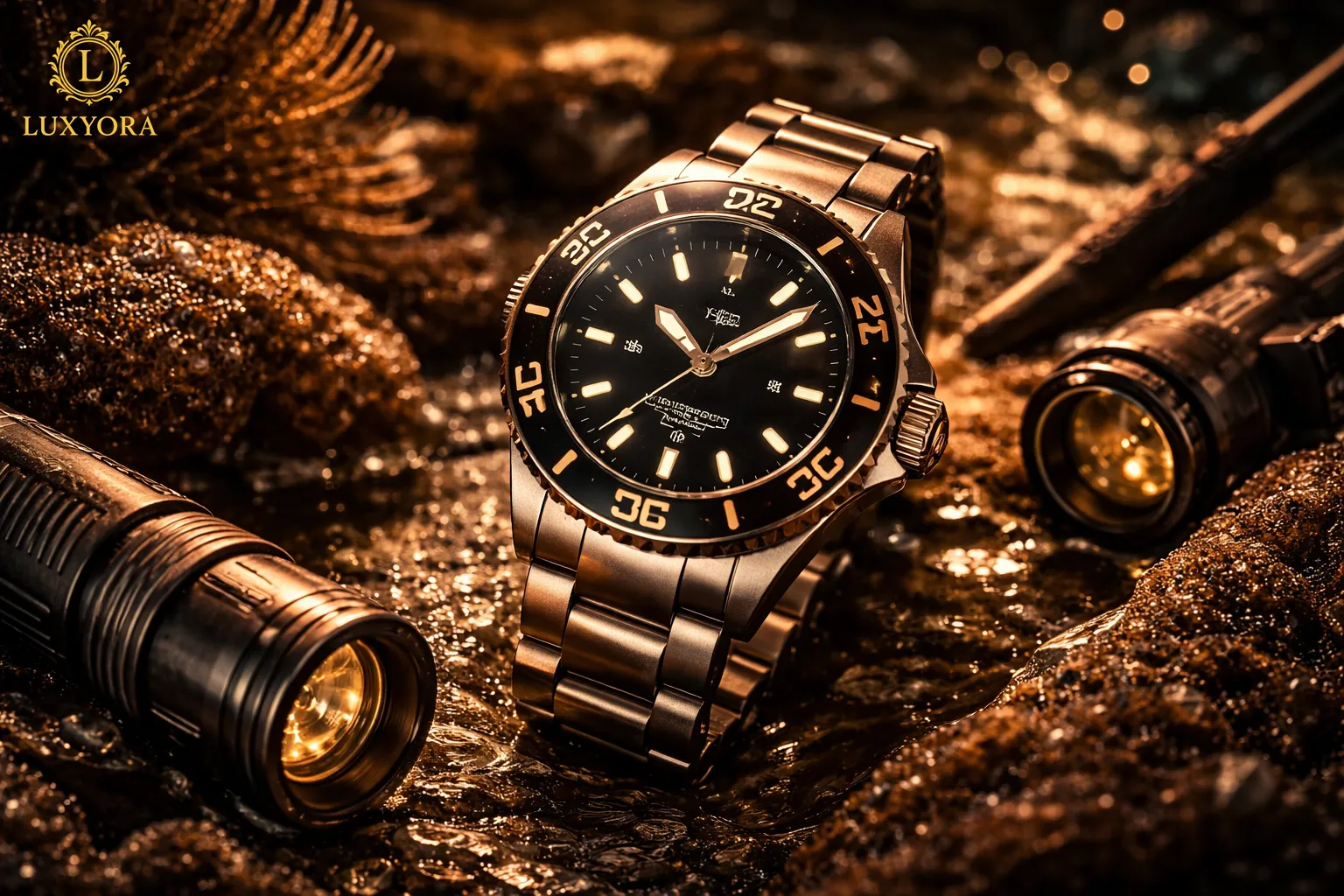
Dive Watch : What is a Dive Watch
A dive watch is more than just a sturdy timekeeper; it’s a specially crafted tool meant for underwater adventures. It’s designed to handle pressure, be easy to read, and keep you safe. Whether you’re a professional diver, a hobbyist, or just someone who loves durable and fashionable watches, dive watches truly stand out in the world of horology.
In this helpful guide, we’re excited to explore what makes a dive watch truly special, how it functions, its rich history, key features, practical uses, and tips for picking the perfect one for your needs.
What Is a Dive Watch?
A dive watch is a wristwatch specifically engineered for underwater diving. It is designed to withstand water pressure, provide visibility in low-light conditions, and help divers accurately track time during a dive.
Unlike typical water-resistant watches, dive watches adhere to rigorous international standards like ISO 6425, ensuring performance in extreme underwater environments.
Key Purpose:
- Track elapsed dive time
- Ensure diver safety
- Withstand high pressure and harsh environments
A Brief History of Dive Watches
Dive watches emerged in the early 20th century when underwater exploration became more popular.
Early Innovations
- In the 1920s, waterproof cases were introduced.
- By the 1950s, dive watches became essential tools for military and commercial divers.
The Golden Era (1950s-1970s)
During this period:
Luminous dials enhanced visibility
Modern Evolution
Today’s dive watches combine:
- Advanced materials like ceramic and titanium
- Digital and smart features
- Enhanced durability and aesthetics
Dive watches are defined by a set of critical features that ensure performance underwater.
Key Characteristics of a Dive Watch:
- Water Resistance: A true dive watch must withstand at least 200 meters (20 ATM) of water pressure.
Practical Tip: If you plan recreational diving, a 200m rating is sufficient. For professional diving, consider 300m+.
- Unidirectional Rotating Bezel: Allows divers to track elapsed time underwater easily, preventing overextension of air supply.
- Luminous Markers: High-visibility dials with glow-in-the-dark markers for readability in low-light environments.
Example Scenario: You’re diving at a depth of 20 meters, and sunlight fades quickly. The luminous dial ensures you can still read the time clearly.
- Durable Build: Crafted with corrosion-resistant materials like stainless steel, titanium, or ceramic, often paired with rubber or metal straps.
- Helium Escape Valve (in professional models): A feature that prevents internal pressure buildup during deep dives.
How Dive Watches Work Underwater
Dive watches are designed to handle extreme underwater conditions through:
Pressure Resistance
As depth increases, pressure builds. Dive watches use reinforced cases and seals to withstand this.
Time Tracking
The rotating bezel helps divers monitor:
- Dive duration
- Decompression stops
Example Scenario:
A diver sets the bezel marker at the minute hand before descending. This helps track how long they’ve been underwater.
Dive Watches vs Regular Watches
Feature | Dive Watch | Regular Watch |
Water Resistance | 200m+ | 30-50m |
Bezel | Rotating | Fixed |
Lume | Strong | Minimal |
Durability | High | Moderate |
Purpose | Professional use | Everyday wear |
Types of Dive Watches
1. Analog Dive Watches
Classic and widely preferred, featuring:
- Mechanical or automatic movement
- Traditional dial
2. Digital Dive Watches
Offer:
- Depth sensors
- Dive logs
- Alarms
3. Smart Dive Watches
Modern options with:
- GPS
- Fitness tracking
- Bluetooth connectivity
Practical Uses Beyond Diving
Dive watches are not just for divers; they are versatile everyday tools.
1. Outdoor Activities
2. Travel
Durable and reliable across different environments.
3. Style Statement
Dive watches are popular fashion accessories due to their bold design.
Beyond their utilitarian purpose, divers’ watches have transcended their origins to become icons of versatility and elegance. Today, they are as likely to be worn with a wetsuit as they are with a tailored suit. Their robust design and enduring aesthetics make them a favorite among collectors, explorers, and those who value precision craftsmanship.
The dive watch is more than an instrument; it’s a testament to humanity’s spirit of exploration, resilience, and timeless style.
How to Choose the Right Dive Watch
Selecting the right dive watch depends on your needs and lifestyle.
1. Determine Your Purpose
- Recreational diver → 200m water resistance
- Professional diver → 300m+ with helium valve
- Casual user → Focus on design and durability
2. Consider Movement Type
- Quartz: Accurate and low maintenance
- Automatic: Traditional and mechanical appeal
3. Evaluate Build Quality
4. Check Comfort and Fit
A dive watch should:
- Fit securely on the wrist
- Be comfortable for long wear
5. Budget Considerations
Dive watches range widely:
- Entry-level: Affordable quartz models
- Mid-range: Automatic watches with solid features
- Luxury: Premium craftsmanship and heritage
Maintenance Tips for Dive Watches
Proper care ensures longevity.
1. Rinse After Saltwater Use
Salt can corrode metal parts. Rinse with fresh water.
2. Regular Servicing
Mechanical watches should be serviced every 3-5 years.
3. Check Seals
Water resistance depends on intact seals that are inspected regularly.
Common Mistakes to Avoid
1. Assuming All Watches Are Dive-Ready
Not all “water-resistant” watches are suitable for diving.
2. Ignoring Maintenance
Even the best dive watches need care.
3. Misusing the Bezel
Incorrect use can lead to inaccurate dive tracking.
Future Trends in Dive Watches
The dive watch industry continues to evolve with:
Sustainability
Brands are using:
- Recycled materials
- Eco-friendly manufacturing
Smart Integration
Hybrid models combining:
- Traditional design
- Digital functionality
Advanced Materials
Ceramic and carbon composites for:
- Lightweight durability
- Scratch resistance
Why Dive Watches Remain Popular
Despite modern dive computers, dive watches remain relevant because:
- They are reliable backups
- Require no battery (automatic models)
- Offer timeless design and craftsmanship
Final Thoughts
A dive watch is a perfect blend of function, durability, and style. Whether you’re exploring the ocean depths or navigating everyday life, it’s a tool you can rely on. From professional divers to watch collectors, dive watches continue to captivate users with their versatility and rugged charm.
Choosing the right dive watch involves understanding your needs, evaluating features, and appreciating the craftsmanship behind these remarkable timepieces.
References
Blythe, T. (2019). Wristwatch Annual 2019: The Catalog of Producers, Prices, Models, and Specifications. Abbeville Press.
Donzé, P. Y. (2020). The Business of Luxury Watches: The Swiss Industry and Its Competitors. Routledge.
Friedberg, A. (2018). Watch Buying Guide: How to Buy a Watch. WatchTime Publications.
ISO. (2018). ISO 6425: Diving watches. International Organization for Standardization.
Maddox, M. (2021). A Man and His Watch: Iconic Watches and Stories from the Men Who Wore Them. Artisan Books.
WatchTime. (2022). Dive watch trends and innovations in modern horology. WatchTime Magazine.