Will the Next Generation Care About Mechanical Watches? | Luxyora
If you’ve ever watched someone under 30 fall down a rabbit hole of “tiny gold watch” videos at 1 a.m., you already know the answer isn’t a simple yes or no. The next generation isn’t ignoring mechanical watches; they’re editing the category. They’re deciding what counts, what feels worth it, and what belongs in a life that already runs on screens, subscriptions, and constant upgrades.
So the real question becomes: will they care about mechanical watches the way older collectors did, loyal to heritage, reverent about tradition, obsessed with “the rules”? Probably not.
Will they care in their own way, styling-first, story-forward, sustainability-aware, and often pre-owned? Very likely.
Time Isn’t the Point Anymore (And That’s Okay)
No one needs a mechanical watch to tell time. Time is everywhere: phones, laptops, car dashboards, kitchen appliances, earbuds. Mechanical watches survive because they’ve moved beyond utility. They’re wearable crafts. Personal symbols. Daily rituals you can touch.
That shift actually works in a younger buyer’s favor. When you’re not buying something out of need, you buy it because it makes you feel something. And mechanical watches, when done right, feel like permanence in an era that loves “new.”
At some point, watches stopped being about keeping track of time and started becoming something far more personal. The real shift isn’t in the devices themselves, but in what we now expect from them. That idea unfolds in Do Watches Still Matter in a World Where Time Is Everywhere?
What Younger Buyers Actually Want: A Mood, Not a Manual
The next generation’s relationship with luxury is more visual, more emotional, and less interested in gatekeeping. They’re not necessarily asking, “Is this historically important?” They’re asking:
- Does it look good with my wardrobe?
- Does it say something about me without being loud?
- Can I wear it daily without babying it?
- Do I trust the brand or the resale market enough to buy it?
This is why slimmer dress watches and classic silhouettes can suddenly feel “fresh” again. They read as intentional, not techy. They fit the minimal-luxe mood. And they don’t scream for attention; they signal taste.
Pre-Owned Isn’t a Compromise, It’s the Entrance
Here’s one of the biggest reasons mechanical watches aren’t going anywhere: pre-owned culture.
Younger shoppers are used to buying secondhand across fashion and luxury. With watches, pre-owned does more than save money. It unlocks discontinued references, rare dials, and designs that feel more personal than whatever is currently in the boutique window.
Recent watch industry research highlights how strongly younger consumers are leaning toward pre-owned. That matters because mechanical watches hold their relevance when there’s a vibrant second life: buy, sell, trade, upgrade, repeat. It turns the category into a living ecosystem, not a one-time purchase.
The “Heirloom Era” is back, just with better styling
There’s also a quiet emotional undercurrent: younger people are drawn to objects that last.
Not because they’re all suddenly traditional but because a long-lasting object feels like relief. A mechanical watch offers a different kind of value: it can be serviced, maintained, and worn for decades. It’s one of the few luxury purchases that can genuinely outlive trends if the design is strong.
And let’s be honest: there’s something delicious about wearing a tiny machine on your wrist in a world where everything else is software.
But the Next Generation Will Be Pickier
Yes, they’ll care, but they’ll be ruthless about which watches deserve their attention.
Mechanical watches that feel bloated, overly loud, or stuck in a “look how expensive I am” energy may struggle to appeal to younger buyers who prefer confidence over spectacle. The next generation is also more likely to ask uncomfortable questions: How is it made? Who profits? What’s the resale reality? Can I service it easily? Does it fit my life?
In other words, they’ll reward brands that pair heritage with modern relevance:
- transparent servicing and support
- strong design language (not trend-chasing)
- cultural presence that feels organic
- credibility in the pre-owned market
Mechanical watches carry heritage, patience, and engineering that unfolds over time, but whether those values resonate with tomorrow’s wearers is becoming an open question. The contrast in perspectives is explored in Mechanical Watches vs Smart Watches – Why Watch Lovers Are Split Between Them.
Smartwatches Won’t Kill Mechanical Watches, They’ll Segment Them
Smartwatches have already taken over the “daily utility” lane for many people. Fitness tracking, notifications, safety features, those are real advantages. But that doesn’t replace what mechanical watches do emotionally.
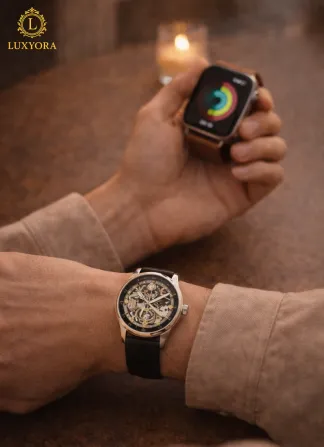
What happens instead is segmentation: a smartwatch for function, a mechanical watch for identity. Many people will own both. And for younger consumers, especially, that makes perfect sense. They already mix categories: designer with vintage, tech with craft, streetwear with tailoring. Watches are just joining the rest of the closet.
Rather than a takeover, the evolution of smartwatches seems to be drawing a clearer line between what we wear for precision, and what we wear for presence. The result isn’t competition, it’s quiet separation. Explore more in From Timekeeping to Data Tracking: The New Role of Smartwatches.
Social Media Made Watches Cooler But Also More Honest
The internet didn’t just make watches trendier; it made them more transparent.
Younger buyers can now learn quickly: which pieces are overpriced hype, which brands have real finishing, what holds value, what’s hard to service, what’s “entry” without being disposable. They can see how watches wear on real wrists, with real outfits, in real lighting, an enormous upgrade from glossy perfection.
That visibility raises the bar. If a watch looks awkward on the wrist, feels too thick, or doesn’t live up to its price, the next generation will move on without guilt.
So… Will They Care?
Yes, but not because they “should.”
They’ll care because mechanical watches offer something increasingly rare: a beautiful object that doesn’t demand charging, updating, or replacing. A small, crafted anchor in a fast world. They’ll care because the pre-owned market makes entry easier and more expressive. They’ll care because watches are among the last accessories that can read as both personal and powerful without a logo.
But they will care selectively. They’ll pick watches that fit their aesthetic, their values, and their lifestyle. They’ll buy fewer “because tradition” pieces and more “because it feels like me” pieces.
The next generation may not reject mechanical watches outright, they may simply redefine what makes them meaningful. In a world increasingly shaped by algorithms, the appeal of pure craftsmanship feels like a different kind of statement altogether. Discover more in Why Mechanical Watches Still Matter in an AI-Driven World.
And honestly? That’s how mechanical watches stay alive: not as museum artifacts, but as modern companions.
Luxyora Philosophy: A mechanical watch will always matter to anyone who values craft over convenience, because the most luxurious time is the time you choose to wear with intention.
References:
- Deloitte. (2023). The Deloitte Swiss Watch Industry Study 2023: A calibre of its own. Deloitte Switzerland. (Watch & Jewelry Initiative 2030)
- Deloitte. (2025). Deloitte Swiss Watch Industry Study 2025 (consumer insights on pre-owned interest among younger buyers). Deloitte. (Deloitte)
- Federation of the Swiss Watch Industry FH. (2025). World watchmaking industry in 2024 (report covering 2024 exports and market context). FH. (fhs.swiss)
- McKinsey & Company. (2021). State of Fashion: Watches and jewellery (market shifts shaping watches & fine jewellery). McKinsey. (McKinsey & Company)
- Stone, G., & Pulvirent, S. (2018). The watch, thoroughly revised: The art and craft of watchmaking. Abrams. (McKinsey & Company)
- Financial Times. (2026). Watchmakers bet big on factories amid downturn (industry strategy, vertical integration, and investment context). Financial Times. (Financial Times)