How Clothing Signals Status Without Logos | Luxyora
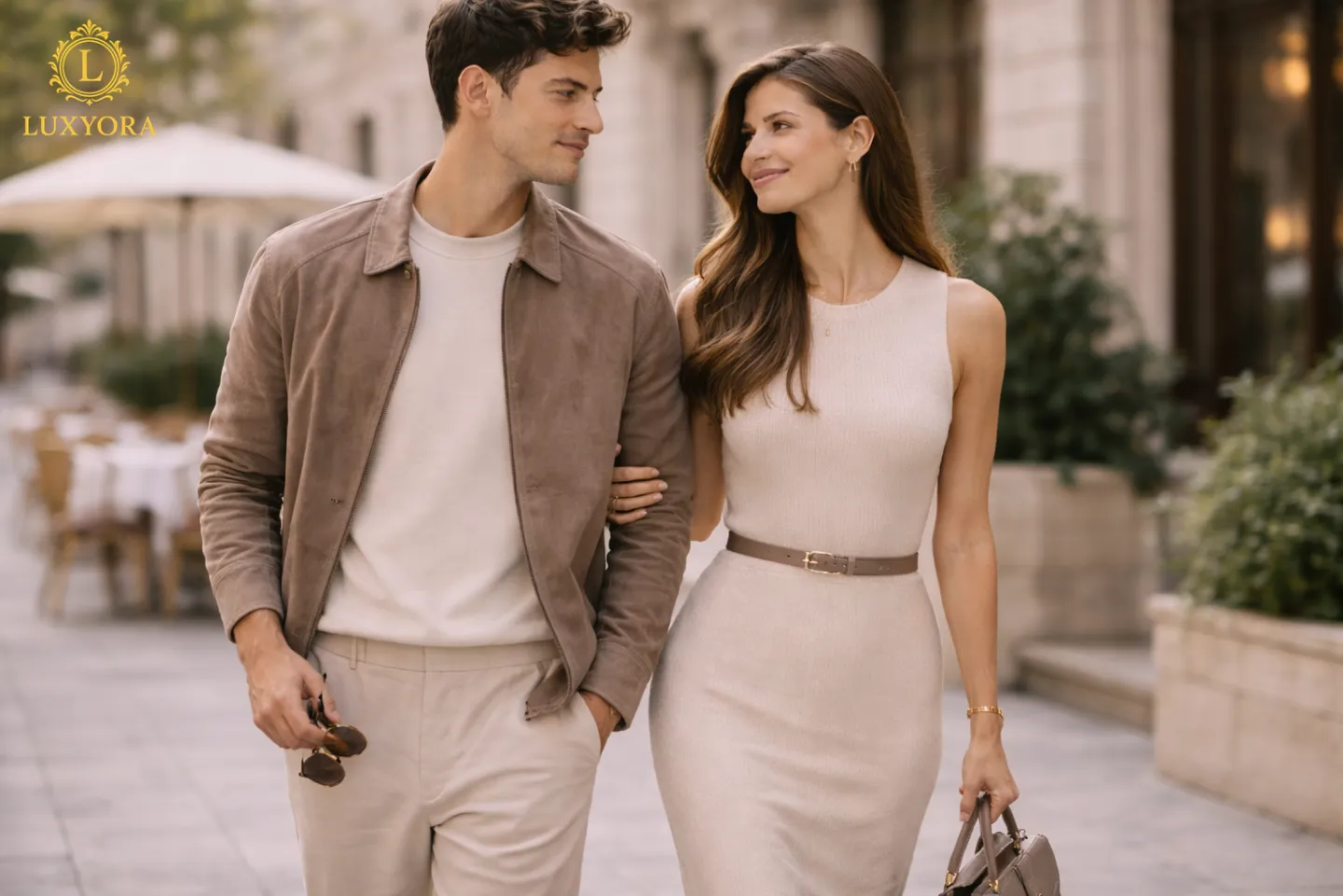
Forget the overt flash of double-G buckles and monogrammed scarves. A new era of status dressing has emerged, one that doesn’t need a label stitched into sight. In 2026, the most influential wardrobes speak softly yet unmistakably. They communicate luxury through presence, not prominence. They signal status through subtlety, not signage. This is the quiet language of modern style, one understood by those who recognize refinement without being told.
In a world oversaturated with logos and branding, the most arresting signals of status are the ones that don’t announce themselves.
1. Fit, Fabric, and the Unspoken Grammar of Confidence
The first indicator of non-logo status is fit. Clothing that hugs your frame in all the right places, whether it’s a softly draped cashmere top or a sharply tailored blazer, sends a message of confidence and self-awareness. But there’s a difference between fit and finish.
High-quality fabrics, natural fibers like silk, wool, and fine linen, carry themselves differently on the body. They don’t scream. They cohere: the way a garment bends at the elbow, holds a pleat, or moves when you walk signals attention to quality, experience, and discretion. In fashion psychology, these subtle cues contribute to immediate social perception, often before brand awareness even enters the equation.
This isn’t about conspicuous consumption. It’s about conspicuous refinement, the statement that your clothing is chosen with care, not impulse.
Luxury doesn’t always announce itself through labels. More often, it appears through proportion, silhouette, and the quiet precision that makes an outfit feel expensive without explanation. Explore How proper fit changes the way clothes look.
2. A Palette of Subtlety: Color as Status Code
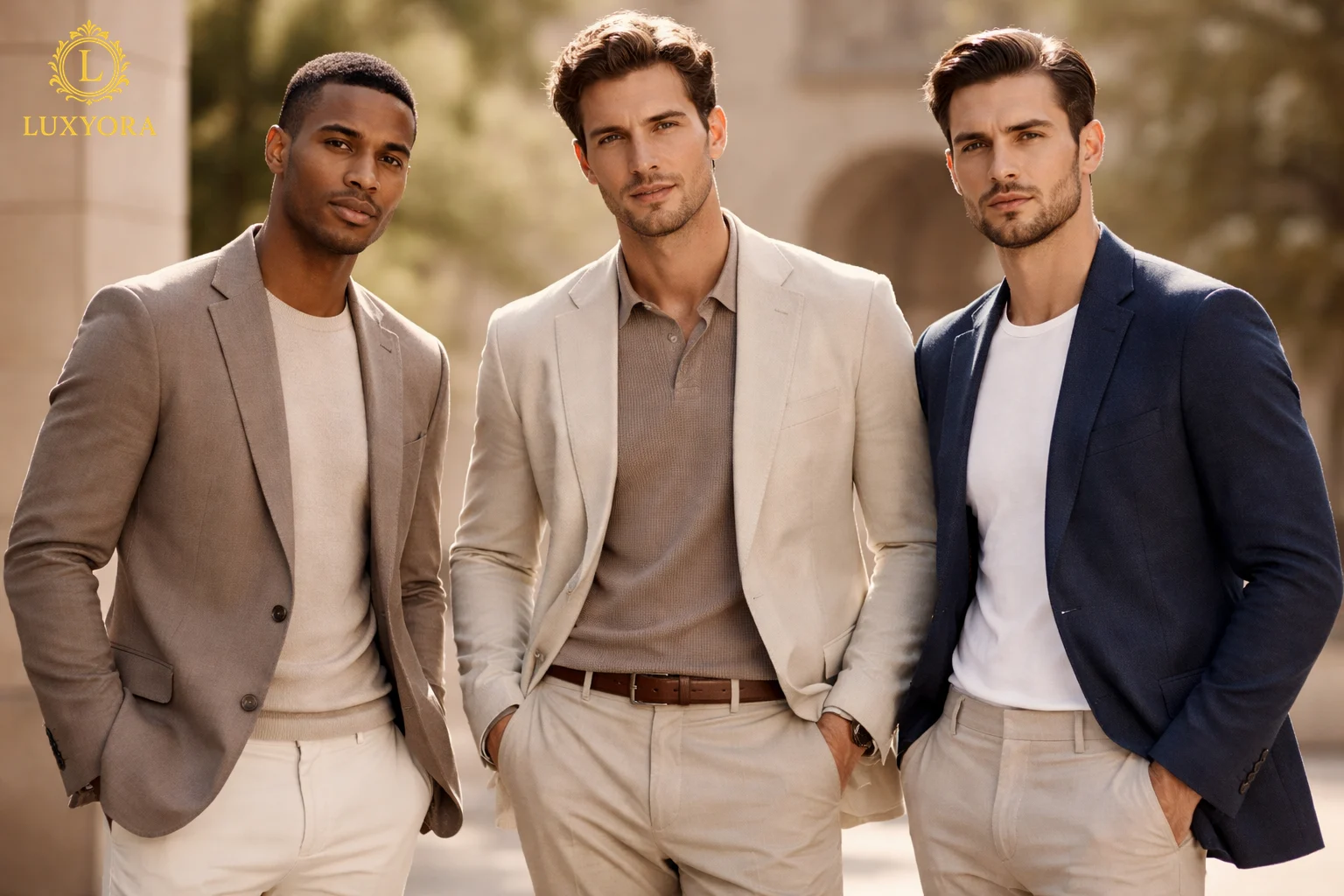
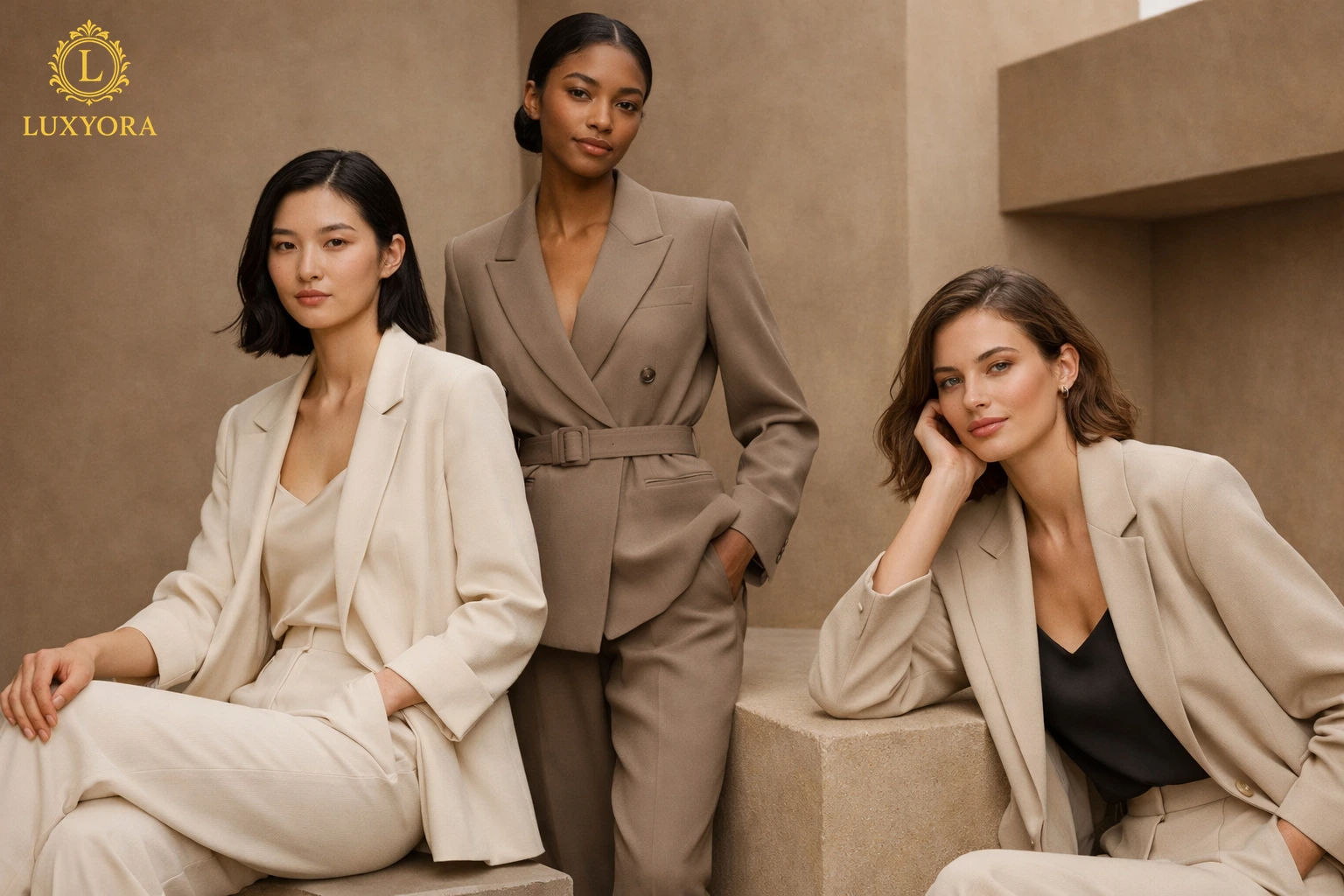
Color isn’t just aesthetic; it’s semiotic. Monochrome palettes, beiges, ivories, deep navies, and muted earth tones have become the vocabulary of effortless elegance. A suit in soft camel, or a sweater in warm taupe, tells a different story than neon or high-contrast prints. It says: I understand nuance. I don’t need to announce myself; I embody coherence.
Researchers in fashion and body language note that neutral, harmonious wardrobes often communicate stability, maturity, and intentionality, all hallmarks of high social capital. These hues are not conspicuous; they are considered.
3. The Status of Knowledge Over the Status of Brand
There’s an important distinction between being recognized and recognition without acknowledgment. The new visual vocabulary of status privileges the latter.
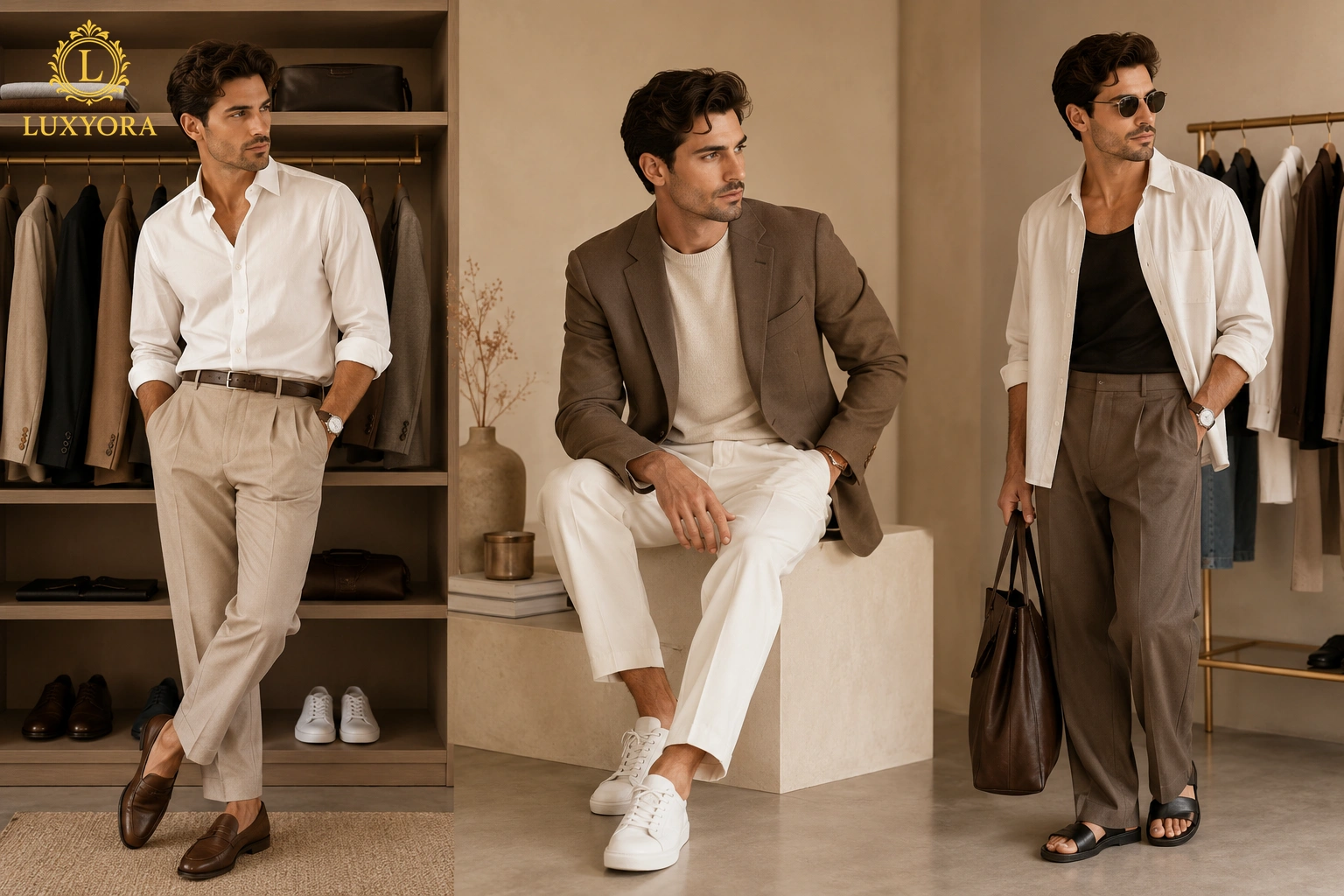
Instead of logos, it’s knowledge that signals status: an understanding of silhouettes, cuts, and proportions that transcend trends. This is why a perfectly tailored white shirt, a pair of well-crafted trousers, or an Italian leather belt without branding can mean more than a logo tee. These choices communicate an education in style, not taught by tags but learned through exposure.
Psychologists studying visual cognition have noted that observers often attribute higher competence and sophistication to individuals wearing well-fitting, harmonious outfits that lack overt branding. In other words, status is often perceived rather than proclaimed.
4. Craftsmanship as a Whispered Signal
Craftsmanship is another silent marker of status. Fine stitching, natural materials, and thoughtful design details are signals you feel before you consciously register them. They are the tactile equivalent of a well-articulated sentence in a conversation. And like language, they convey education, care, and intent.
Brands that emphasize artisanal methods, small ateliers in Florence, hand-stitched loafers from Madrid, and knitwear made on Italian midlands machines communicate value without needing bright labels. You wear quality; quality doesn’t wear you.
In a globalized fashion ecosystem where mass-produced prints are ubiquitous, these small signals stand out precisely because they go unsaid.
When clothing signals status without visible branding, the message tends to come from somewhere more subtle than labels. Knowing what gives garments that effect changes the way you shop entirely. Read more about What to look for when buying quality apparel.
5. Jewelry and Accessories: Strategic Accents, Not Statements
Accessories can loudly signify taste if chosen with restraint.
Think minimal gold jewelry, understated leather goods, a classic watch face, or a linen scarf. These are not heralds announcing wealth but accents that punctuate a look with quiet confidence. The status in these items is not their price tag; it’s the coherence they bring to a refined visual identity.
Subtle accessories also underscore a larger social truth: status is often recognized by contextual harmony rather than material excess.
6. Nonverbal Status: The Role of Posture, Poise & Movement
Clothing does not exist in isolation; it interacts with posture, attitude, and movement. This interplay forms a nonverbal equation that others read instantaneously. Elegant clothing can shape the way a body moves, just as a confident posture can elevate the clothing itself.
Research shows that people make rapid judgments based on posture and nonverbal behavior, and clothing influences both. So a status signal is not merely visual, it’s kinetic. It’s the quiet way a coat swings open as you walk, or the ease in the shoulders when a shirt fits just right.
The most powerful style statements aren’t always worn across the chest. Sometimes clothing communicates identity, confidence, and presence in ways that stay completely unspoken. Read more about What the clothes you wear quietly say about you.
7. The “Invisible” Signifiers of Cultural Capital
In the absence of logos, status becomes a matter of contextual literacy. It’s about knowing which stores to browse, which tailors to trust, which fabrics age gracefully, and which colors flatter without straining. It’s about understanding that a minimalist wardrobe can be more expressive than a maximalist one.
Cultural capital that blends education, exposure, lineage, and taste manifests visually when clothing is used strategically rather than ostentatiously.
Sociologists studying fashion and social stratification point out that individuals with high cultural capital often prefer subtle expression over conspicuous brand displays because their status is reinforced by knowledge, behavior, and contextual fluency rather than logos.
Luxyora Philosophy: Status without logos is a language of refinement, where clothing speaks through harmony, nuance, and intent, not through declaration. Elegance is quiet, not shouted.
References:
- Hester, N., & Hehman, E. (2023). Dress is a fundamental component of person perception. Perspectives on Psychological Science.(Click Here)
- Johnson, K. K. P., & Lennon, S. J. (2021). Fashion and identity: Understanding the psychological and social influences of clothes. Bloomsbury.
- Vinken, B. (2020). Sociology of fashion: Status, class, and style in a global age. Polity Press.