Why Minimalist Jewellery Is Harder to Design Than It Looks | Luxyora
Minimalist jewellery has a reputation for being “easy.” A thin band. A simple hoop. A clean pendant that whispers rather than shouts. People see the final piece and assume the design process was equally straightforward, like the jeweller simply decided to do… less.
But here’s the truth no one tells you until you’re holding a prototype under bright studio lights: minimalism is not the absence of design. It’s design with nowhere to hide.
When jewellery is pared back, every decision becomes louder. The curve of a hoop. The thickness of a shank. The way a chain catches light. The exact distance between stones. Minimalist pieces may look effortless, but they’re often the result of obsessive refinement because the smallest miscalculation reads instantly as “off.”
So why is minimalist jewellery so hard to design? Let’s get into the beautiful, exacting reasons.
1) It’s Personal Before It’s Precious
In maximal jewellery, the eye has plenty to explore: texture, stones, layers, and movement. In minimalist jewellery, the eye has one main event: the silhouette. That means tiny measurements matter more than you’d expect.
A ring that’s 0.3 mm too thick can feel clunky. A pendant that sits 4 mm too low can look slightly awkward. A hoop’s diameter can change the entire mood of the face. Minimalism forces designers to become fanatical about proportion, balance, and how a piece behaves on the body in real life, not just in a product shot.
Minimalist jewellery is basically the couture of micro-decisions.
2) Because it has to look intentional from every angle
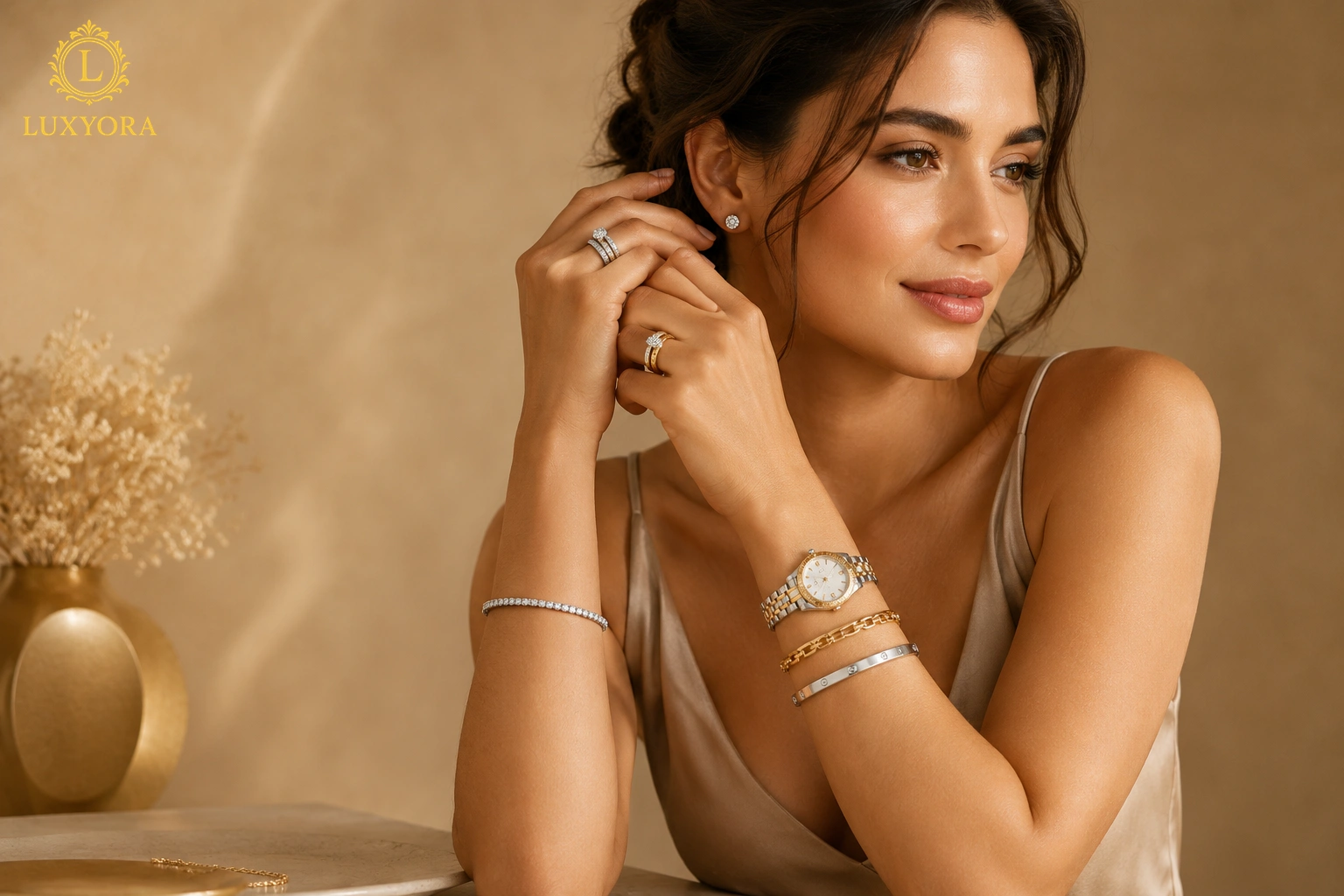
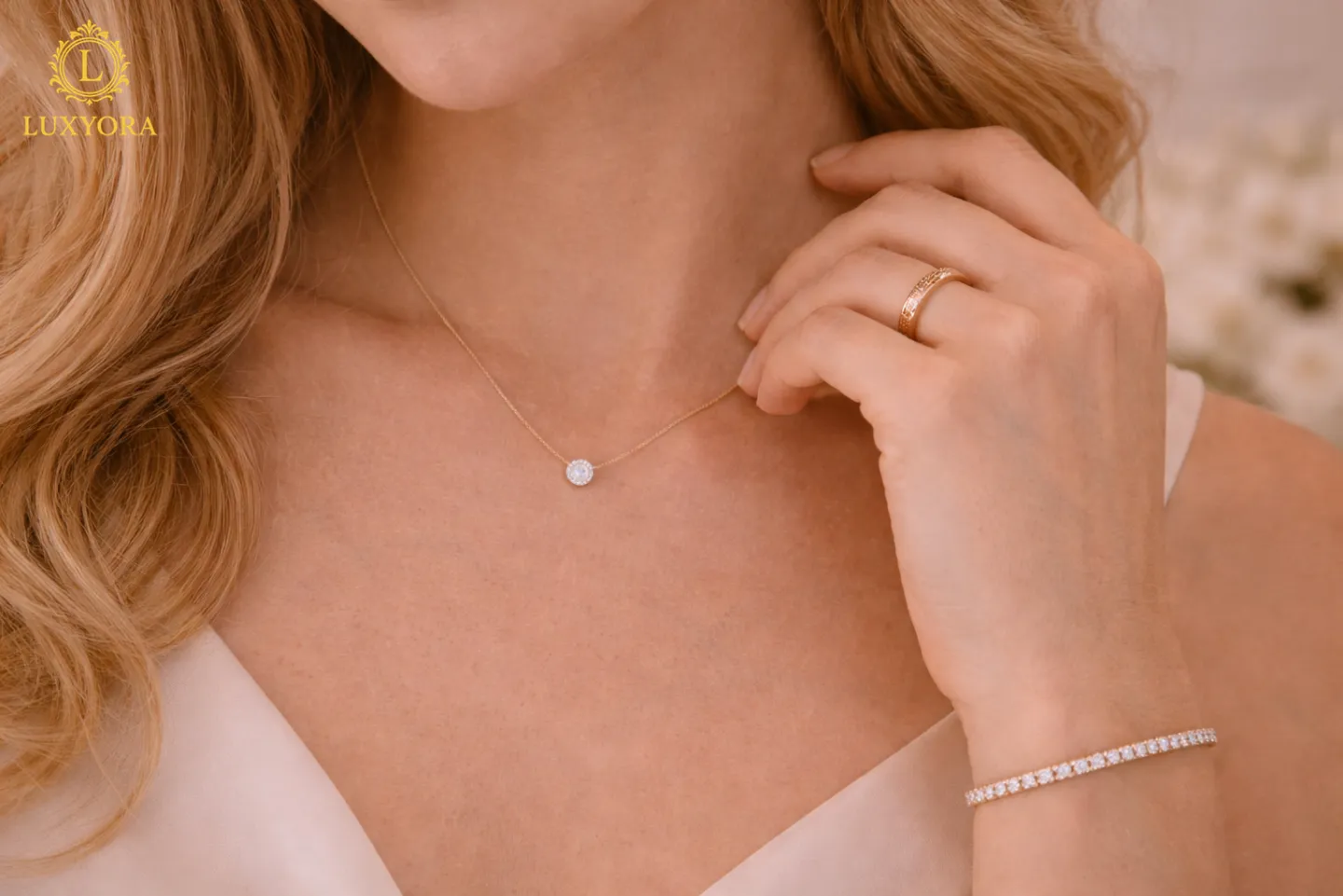
Minimal pieces get seen up close. On a hand that gestures. At a neckline on a video call. In the “accidental” zoom of a phone camera. And unlike a busy piece, a minimalist design can’t rely on sparkle density or visual noise to distract the eye.
That’s why the best minimal jewellery looks finished from every viewpoint: the back of the pendant, the underside of a ring, the clasp that doesn’t feel like an afterthought. When there’s only one line, it has to include the right line, front, side, and 3/4 views.
3) Because materials become the whole personality
Minimalist jewellery often leans on precious metals and restrained settings, which means the material itself has to carry the emotion.
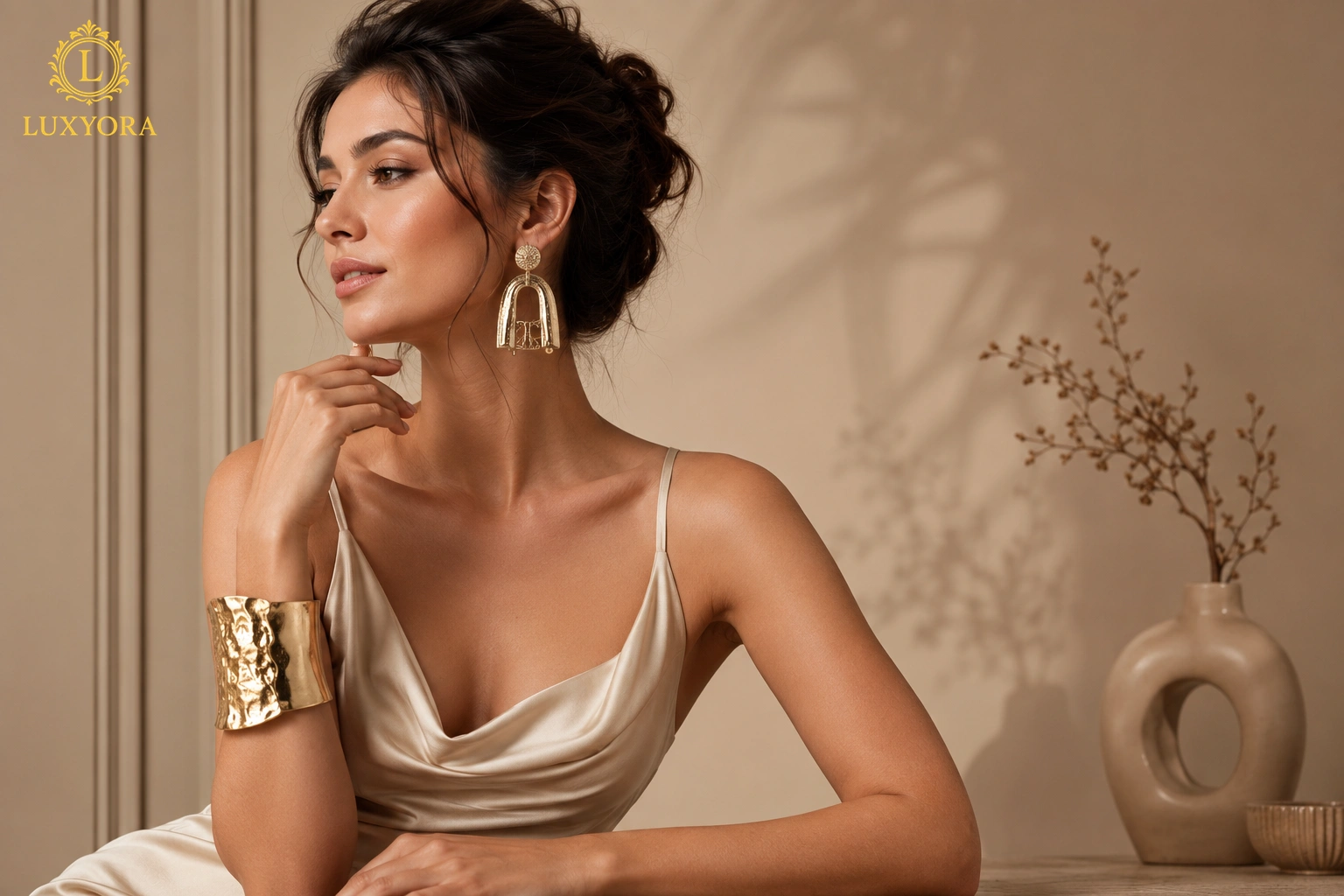
Yellow gold reads warm, nostalgic, and softly powerful. White gold and platinum read crisp, modern, and almost architectural. Rose gold reads romantic, sometimes too romantic if the design isn’t structured. Even the finish changes everything: high polish feels sharp and reflective; brushed finishes feel calm and tactile; satin finishes read quietly expensive.
In minimal design, you’re not just choosing a metal. You’re choosing a mood.
4) Because craftsmanship gets judged with zero mercy
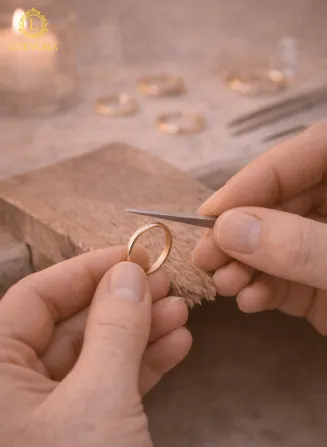
A minimalist piece is like a white shirt: it looks easy until the collar sits wrong. With minimal jewellery, imperfections are instantly visible: uneven symmetry, slightly wobbly edges, inconsistent polishing, and prongs that look bulky instead of refined.
That’s why minimal designs often demand higher manufacturing precision. Edges need to be clean but comfortable. Curves have to be smooth and consistent. Stone settings must look delicate while remaining secure. The quality bar is unforgiving because the design isn’t distracting you; it’s inviting you to inspect.
Minimalism is a spotlight. Craftsmanship is the performance.
5) Because “understated” still needs a signature
Minimalist jewellery is not meant to be generic. The best pieces have a point of view, a signature detail you feel more than you see.
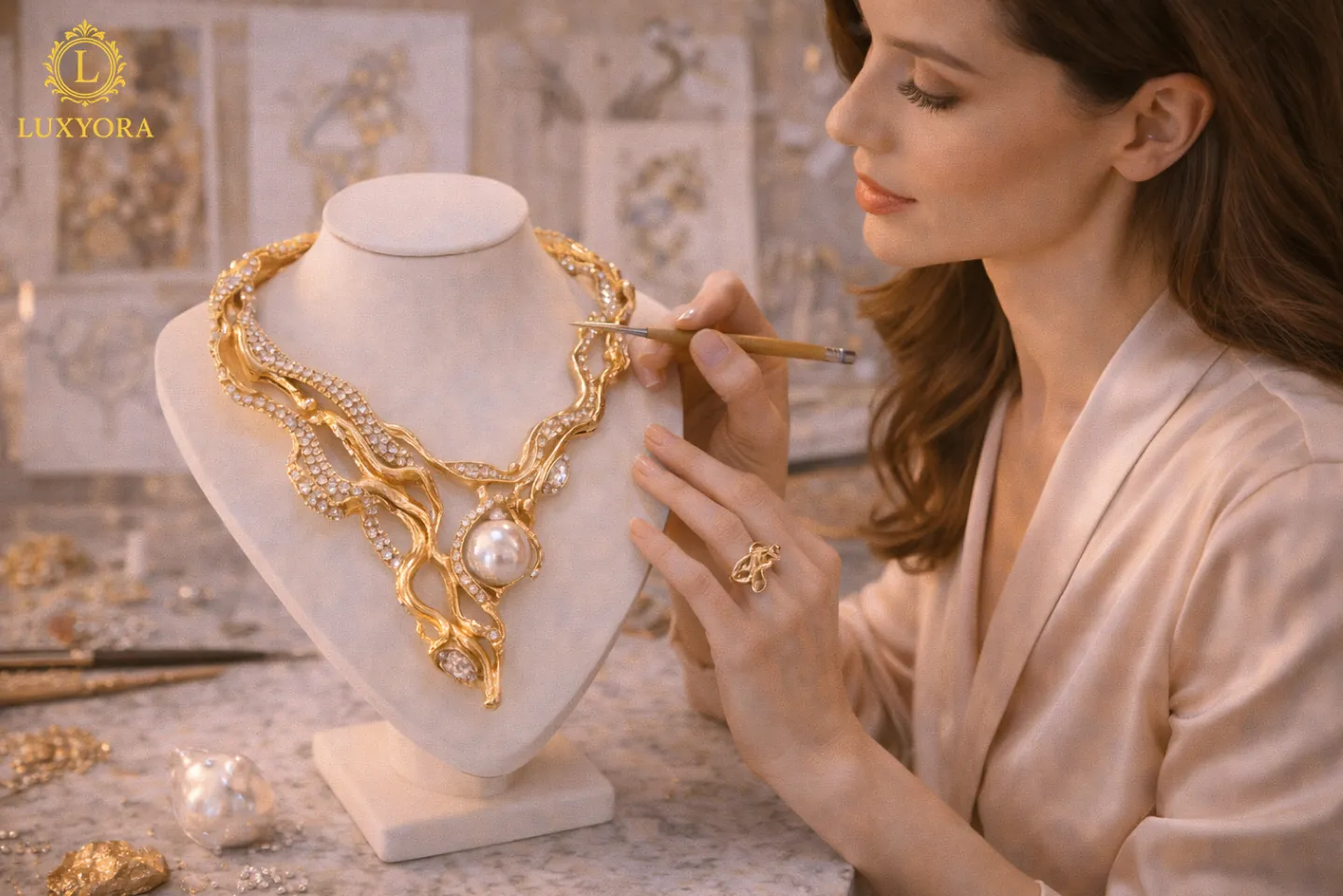
It might be a slightly flattened edge that catches light differently. A hidden curve that makes the ring sit perfectly. A clasp that feels like part of the design rather than hardware. A tension setting that gives a stone a floating quality. Minimalism lives in these subtle choices: the quiet twist that makes the piece memorable.
Designers often do more iterations on minimal pieces because the difference between “basic” and “iconic” can be one tiny, perfect decision.
The quieter the design, the louder the imagination behind it. Discover the places, stories, and moments that inspire the world’s finest jewellery designers in Where Do Jewellery Designers Find Their Best Ideas?.
6) Because comfort is non-negotiable when you’re meant to wear it daily
Minimal jewellery tends to be worn often, sometimes constantly. Which means it must feel good. Not “fine.” Not “you’ll get used to it.” Actually good.
That involves engineering: smooth interiors, thoughtful weight, balanced hang, and edges that don’t snag. A minimal ring that spins annoyingly or an earring that pulls the lobe down will be abandoned even if it looks gorgeous.
Luxury minimalism is comfort dressed as elegance.
7) Because it has to survive trend cycles without becoming boring
Minimalism can drift into sameness if designers aren’t careful. And yet, it also can’t chase trends too loudly without losing the “timeless” promise that minimal jewellery usually sells.
Designers have to walk a tightrope: the piece should feel current, but not temporary. That’s why minimalist jewellery often borrows from enduring forms circles, arcs, slender lines, organic curves and refines them with modern restraint. The goal is to make something that belongs to this moment, but still makes sense five years from now.
The simplest jewellery designs often outlast passing trends, but what gives certain pieces their timeless appeal? Discover the answer in Why Some Jewellery Designs Feel Timeless.
8) Because minimalism is a philosophy, not just an aesthetic
Minimal design is often tied to a deeper cultural desire: clarity, calm, and intentionality. People reach for minimalist jewellery when they want to feel pulled-together without performing for the room. It’s personal polish.
That puts pressure on designers. They’re not only designing an object, but they’re also designing a feeling: “I know who I am.” Minimalist jewellery becomes a quiet identity statement, which is why it can’t feel careless. It needs integrity.
9) Because the smallest detail can be the luxury signal
With minimal jewellery, luxury often comes down to things you don’t notice immediately, but you feel over time: how a clasp closes, how the metal wears, how the piece catches light without shouting, how it layers seamlessly, how it doesn’t irritate skin or snag fabric.
These details are rarely accidental. They’re designed. And they’re what separate a minimalist piece that feels “fine” from one that feels like it belongs in your life forever.
10) Because “less” takes longer
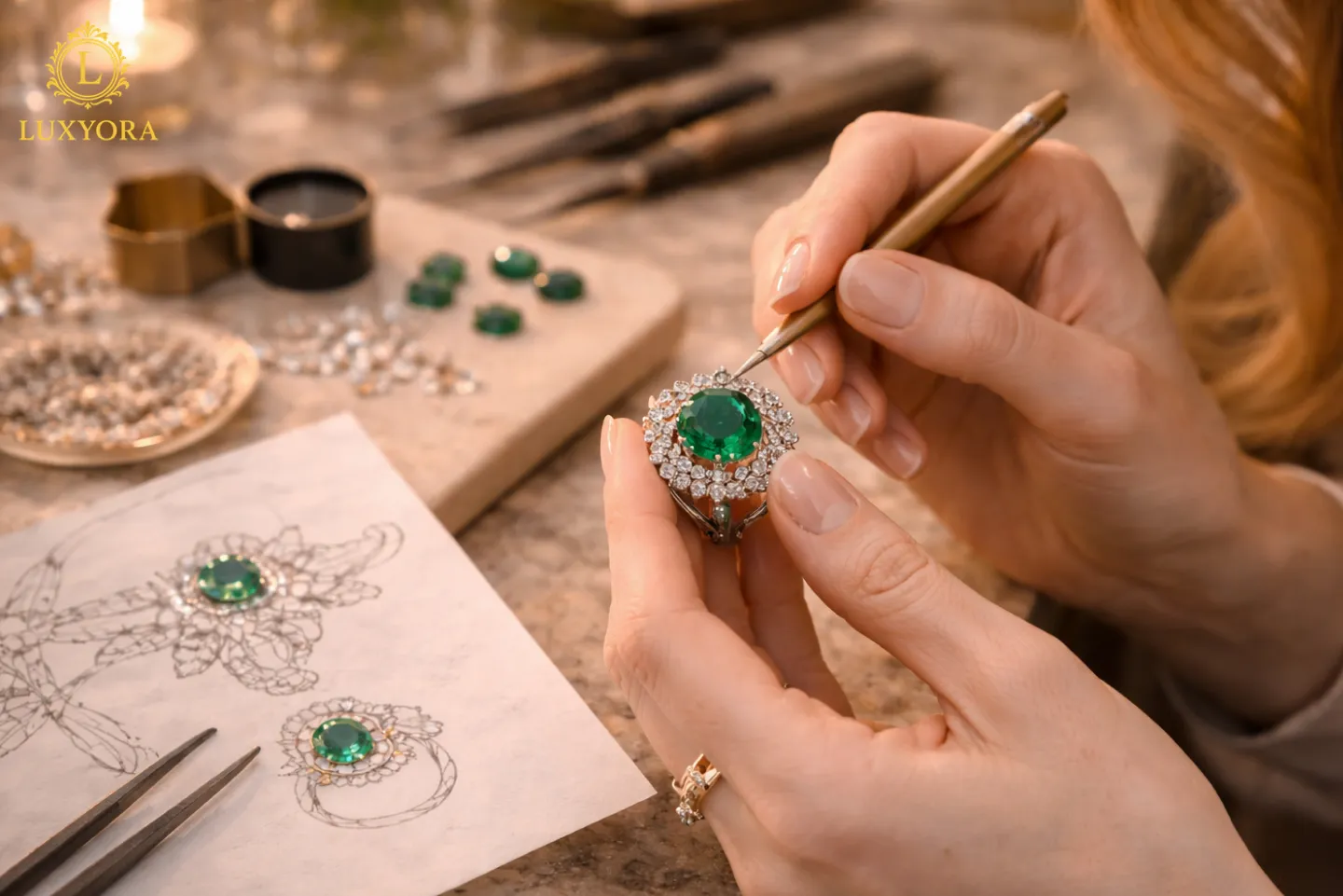
Minimalist jewellery is the art of editing. The designer removes anything that isn’t essential until only the strongest idea remains. That kind of restraint takes confidence and time. Many minimalist icons are born of multiple sketches, prototypes, and material tests, all in pursuit of one simple goal: to make them look like they were always meant to exist.
When minimalist jewellery feels effortless, it’s usually because someone worked very hard to make it so.
Every minimalist masterpiece begins as a simple sketch, but the journey from paper to precious metal is far more intricate than it appears. Discover how in How a Simple Sketch Becomes a Luxury Jewel.
Luxyora Philosophy: Minimalism is not the absence of luxury; it’s luxury distilled. When every line is deliberate, restraint becomes the most powerful form of brilliance.
References:
- Chayka, K. (2020). The longing for less: Living with minimalism. Bloomsbury Publishing.
- Grant, M. (2020). Coveted: Art and innovation in high jewelry. Phaidon Press.
- Lam, L. (2020). Mastering contemporary jewelry design: Inspiration, process, and finding your voice. Schiffer Publishing.
- Seijen ten Hoorn, L. (2023). Design for jewellery makers: Inspiration, development and creation. Search Press.
- McKinsey & Company. (2021, June 14). State of fashion: Watches and jewellery. McKinsey & Company.
- Responsible Jewellery Council. (2019). RJC code of practices (COP) 2019 (Version 1.2). Responsible Jewellery Council.