Where Do Jewellery Designers Find Their Best Ideas? | Luxyora
The myth is that inspiration strikes like lightning: one glamorous moment, one perfect sketch, one instant masterpiece. The reality is more delicious and far more wearable. Jewellery designers don’t “find” ideas so much as they collect them, like charms on a bracelet: tiny observations, half-remembered textures, architecture seen through a taxi window, a vintage clasp discovered in a market, the way candlelight turns diamonds into gossip.
In the digital age, when everything is mood-boarded and bookmarked, the best designers still rely on something wonderfully human: curiosity. Their strongest ideas usually come from living with open eyes, sensitive hands, and a slightly obsessive attention to detail. Here’s where those ideas tend to show up again and again behind the scenes of the pieces we end up calling “iconic.”
1) Nature, but make it high jewellery
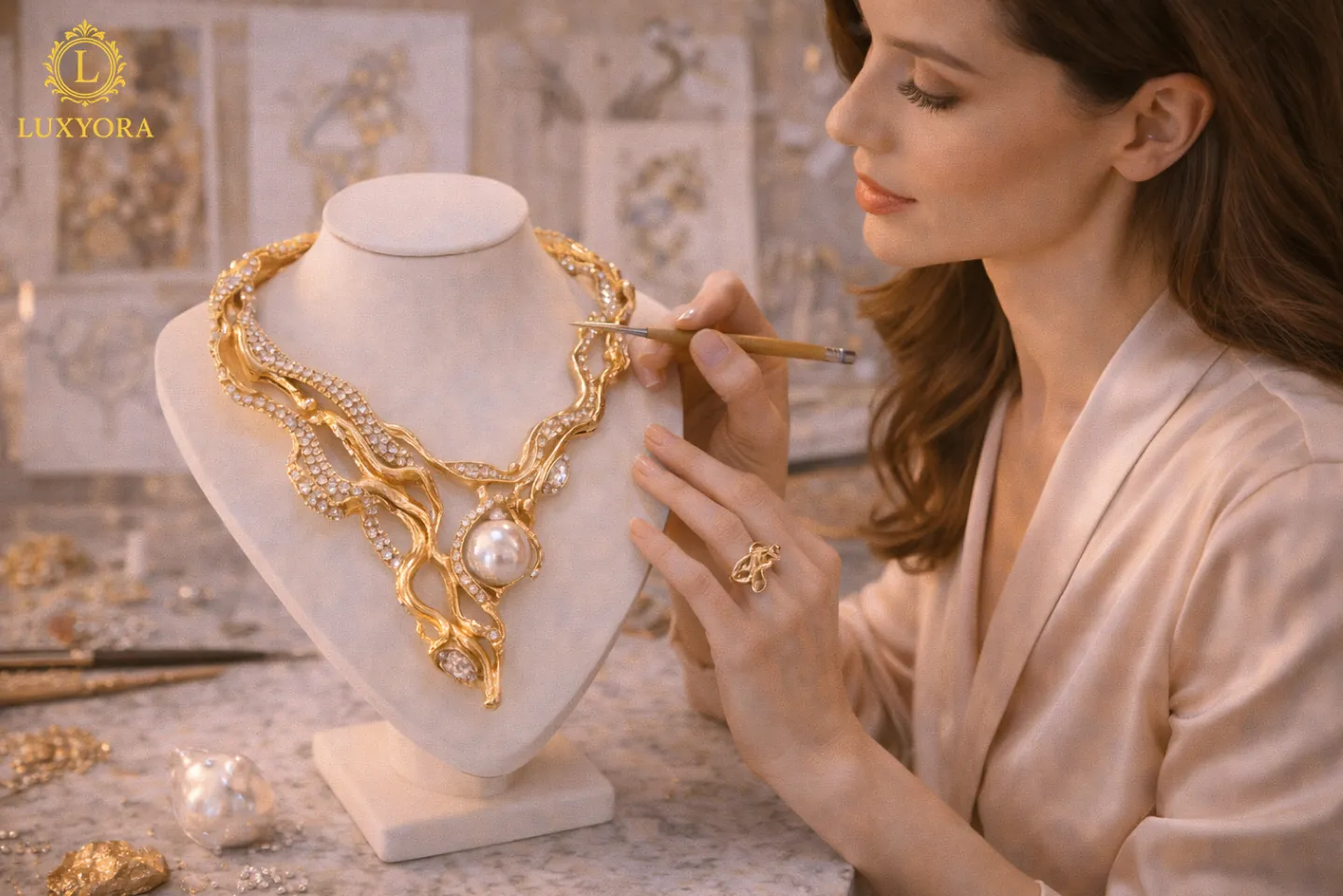
Nature is the eternal muse because it never repeats itself. Petals have veins; shells have spirals; leaves have geometry. A designer can borrow the curve of an orchid and translate it into a cuff that feels like it’s breathing. Or take the irregular rhythm of ocean foam and turn it into a scattering of pavé that looks effortless but took months of decisions.
What makes nature so fertile for ideas isn’t just beauty, it’s engineering. A feather is a lightweight structure. A honeycomb is precision. A vine is movement. When designers study natural forms, they’re not only collecting silhouettes; they’re learning how elegance is built.
2) Architecture and the seduction of structure
If nature is jewellery’s soft side, architecture is its sharp tailoring. Many designers are obsessed with buildings for one reason: structure makes emotion believable. The clean line of a modernist staircase becomes a baguette-diamond bar. A Gothic arch becomes a cathedral-like setting. Even a city grid can inspire repeating links, negative space, and that satisfying click of symmetry.
Architecture also teaches restraint, how to create impact without clutter. In jewellery, restraint is power. It’s the difference between “pretty” and “I can’t stop staring.”
3) Art, museums, and the slow burn of looking
Designers haunt museums the way sommeliers haunt vineyards. They go for color stories, proportions, symbolism, and mood. A Renaissance painting can inspire a gemstone palette, garnet, pearl, smoky topaz, while a contemporary sculpture can spark a new setting technique or the confidence to leave a stone slightly off-center (which, in the right hands, looks like attitude).
Even decorative arts, ceramics, textiles, glass feed jewellery design because they’re intimate objects too. They live close to the body or close to daily ritual. That shared intimacy is a shortcut to ideas that feel personal.
4) Vintage jewellery, archives, and the romance of “before”
If you want to understand how designers think, look at their relationship with the past: it’s not nostalgia, it’s research. Vintage jewellery is a masterclass in proportion, mechanism, and storytelling. A designer might fall in love with an antique clasp and rebuild it for modern wear. Or study Art Deco geometry to understand why a sharp line can feel sensual.
Archives are also where you find forgotten techniques and bold decisions we’ve collectively become too polite to make. The past gives permission. It reminds designers that jewellery can be daring, surreal, even slightly scandalous, while still being exquisitely made.
5) Culture, heritage, and the symbols we carry
Jewellery is one of the most symbolic design categories on earth. It has always held identity: protection, celebration, belonging, status, remembrance. That’s why designers often draw on cultural motifs, patterns, talismans, architecture, textiles, and myths, then translate them into something contemporary and wearable.
The most thoughtful work doesn’t “borrow” culture as decoration. It studies meaning, honors context, and treats symbolism like a language, not a trend. When designers do this well, the result feels timeless because it’s connected to something bigger than fashion.
6) Materials as muses: stones, metal, and the thrill of constraint
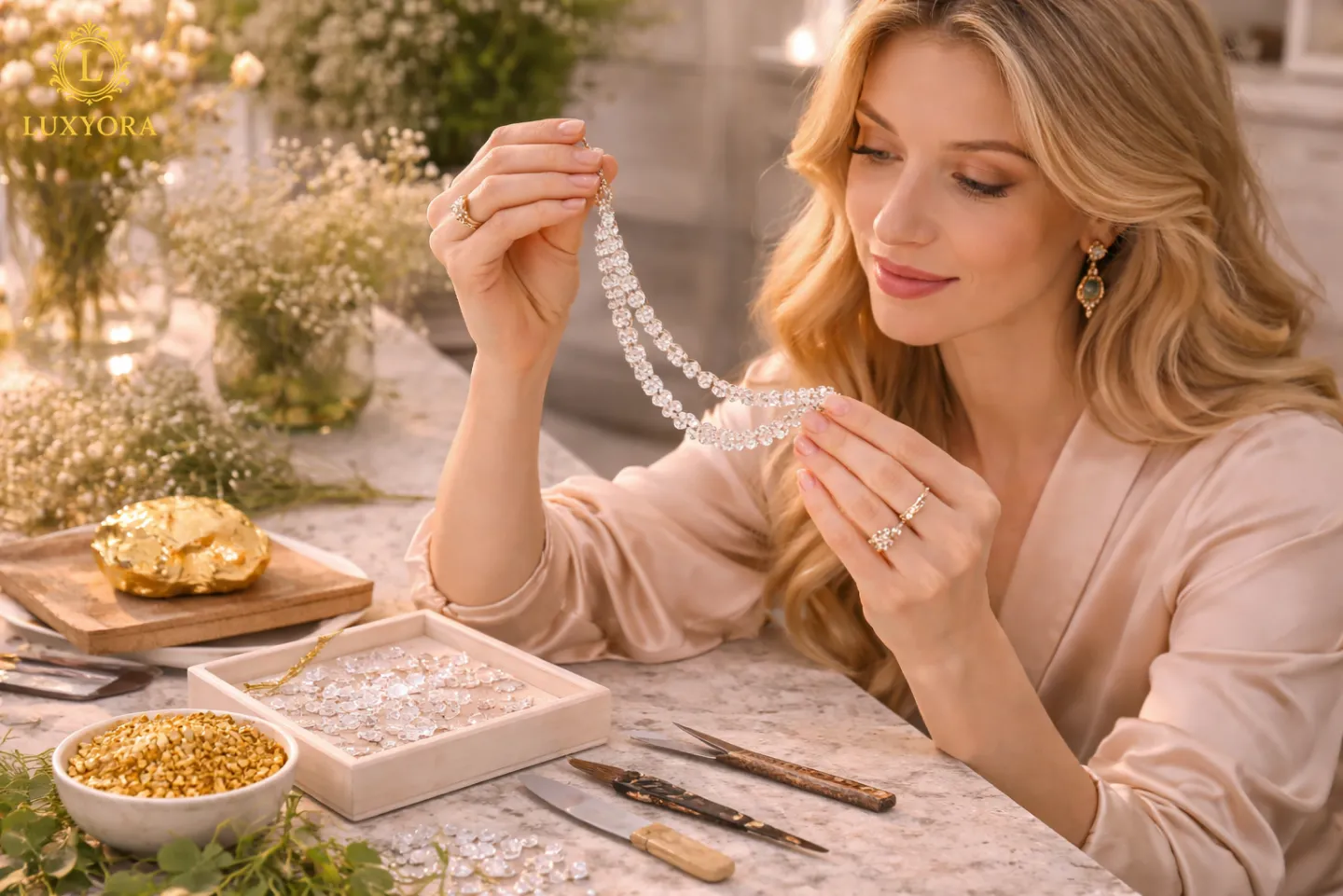
Sometimes the idea comes after the stone. A designer sees a tourmaline with a strange internal garden, a pearl that’s perfectly imperfect, a sapphire in an unusual cut, and the piece designs itself around that personality.
Constraints create creativity. A stone’s shape dictates a setting. A metal’s strength dictates scale. Sustainability goals can push designers to rethink sourcing and fabrication, leading to fresh forms and smarter construction. The material isn’t just the medium; it’s the co-author.
7) The body: movement, comfort, and real-life glamour
Jewellery isn’t a painting, it moves, it turns, it catches. The most elegant designers study how pieces behave on the body: where earrings swing, how necklaces sit at the collarbone, how a ring feels when your hand wraps around a coffee cup.
This is where the “magic” often happens: ideas born from function. A necklace designed for layered wear. A clasp reimagined to be as beautiful as the front. Earrings engineered to look weightless. When jewellery is comfortable, you wear it more. When you wear it more, it becomes part of your identity, and that’s the ultimate goal.
8) Clients, emotions, and the stories people bring
Designers don’t work in a vacuum. Some of the strongest ideas come directly from clients: a love story, an heirloom redesign, a milestone piece that needs to feel like a future memory.
Even in larger brands, designers think about the person behind the purchase. Who is she on a Tuesday? Who is he when he wants to feel bold? What does luxury mean to them, quiet precision, or visible sparkle? Designing for real lives forces ideas to become real objects, not just pretty sketches.
9) The market rewards “timeless” because it’s perceived value you can justify
Yes, designers scroll. They save. They screenshot. Digital platforms can accelerate trend awareness and broaden visual references. But the designers who last don’t simply chase what’s viral, they filter it through their own point of view.
Digital culture is best used as a weather report, not a compass. It tells you what people are craving: color, nostalgia, maximalism, minimalism, but the designer’s job is to translate that craving into something new, refined, and enduring.
10) The studio itself: rituals, mistakes, and creative cross-pollination
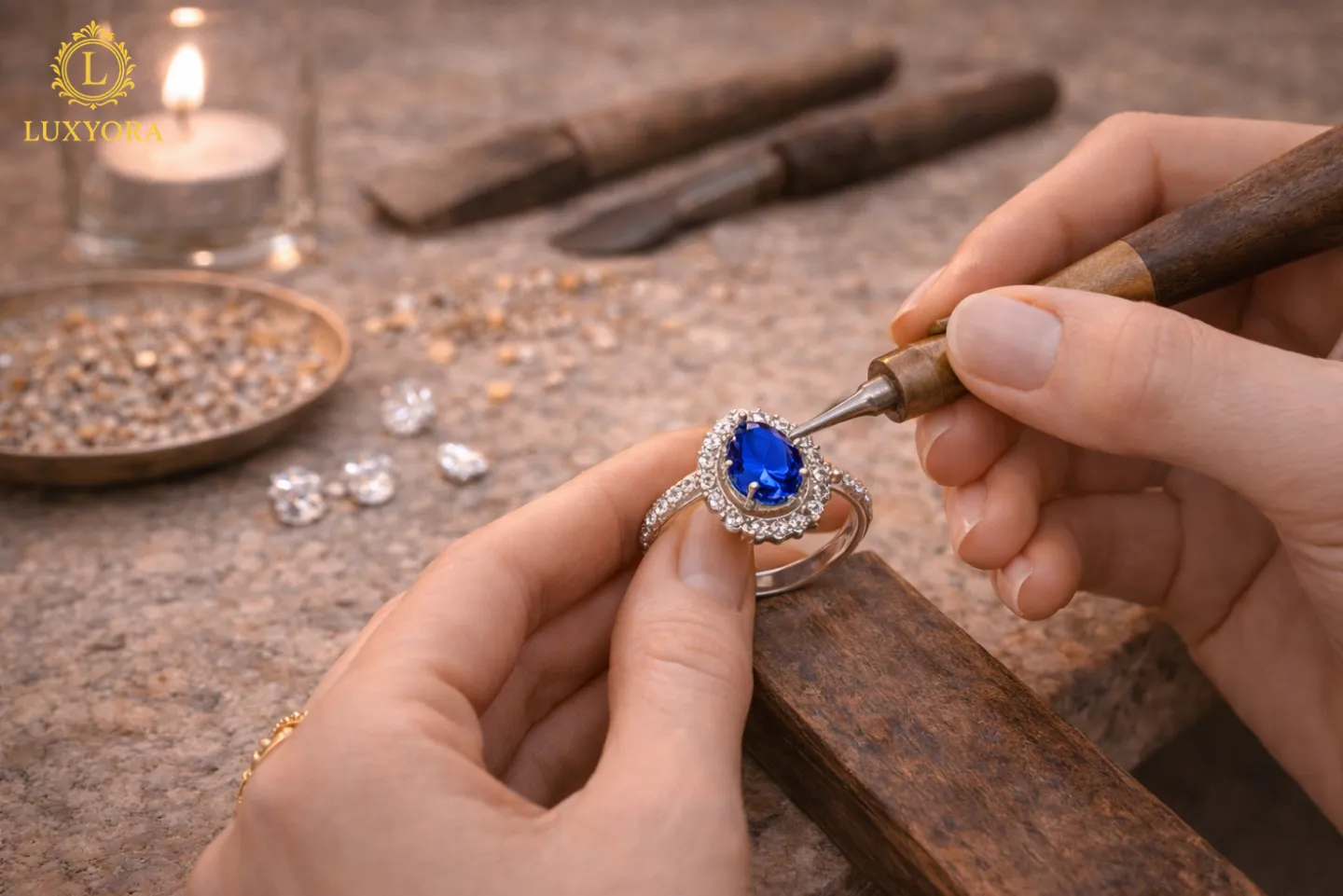
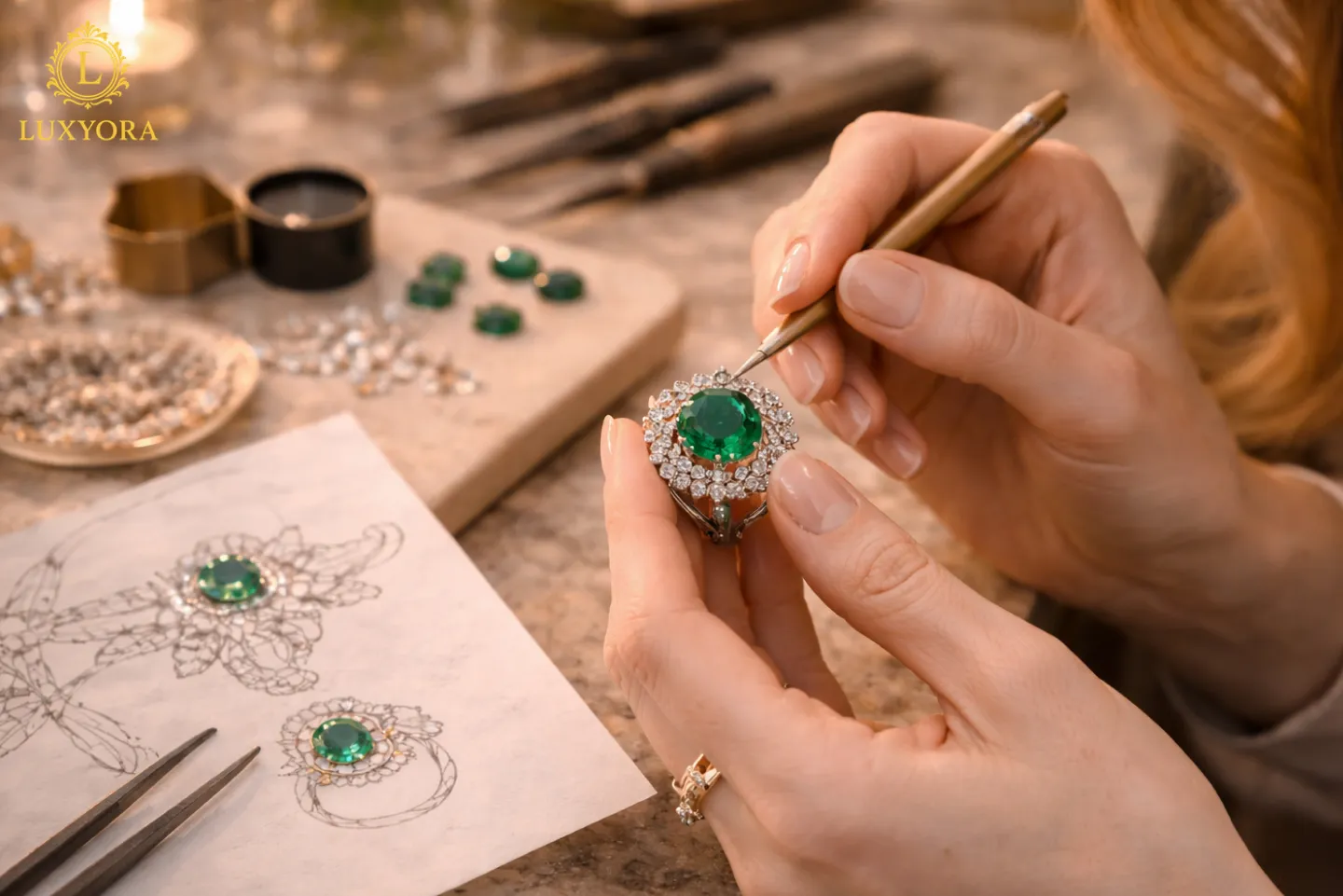
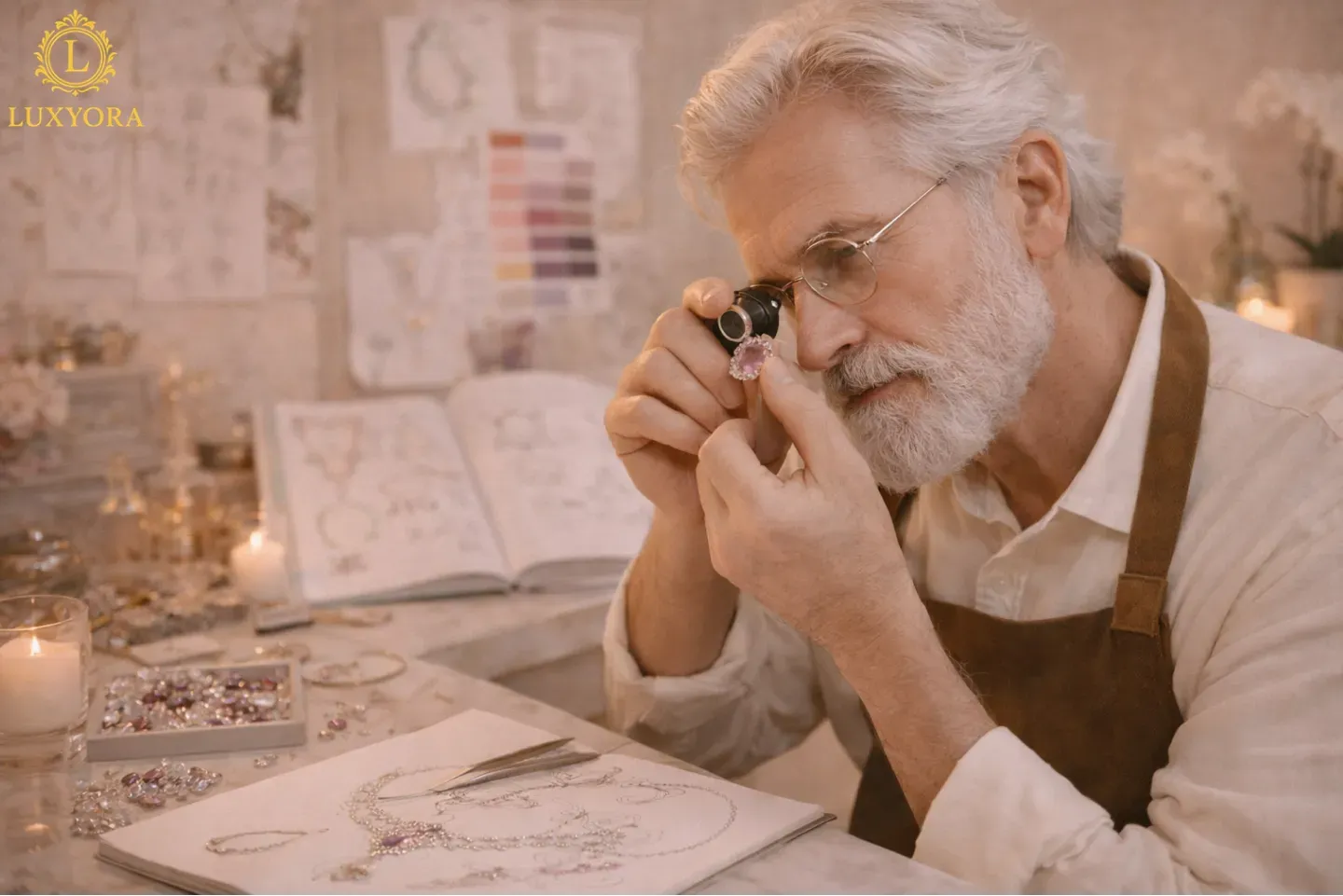
Finally, some ideas arrive the old-fashioned way: through process. Sketching daily. Prototyping. Letting a wax model “fail” into a better silhouette. Collaborating with artisans who know how a tiny adjustment can change everything. Often, the best idea is hidden inside the second-best one, waiting for the designer to keep going.
That’s the secret: great jewellery isn’t only inspired. It’s made patiently, through taste, iteration, and obsession.
Luxyora Philosophy: True luxury begins where inspiration becomes intention shaped by craft, guided by meaning, and finished with restraint. A brilliant piece doesn’t just sparkle; it remembers who you are.
References:
- Lam, L. (2020). Mastering contemporary jewelry design: Inspiration & process. Schiffer Publishing.
- McKinsey & Company. (2021, June 14). State of fashion: Watches and jewellery. McKinsey & Company.
- Natural Diamond Council. (2021). Jewellery trend report 2021. Natural Diamond Council.
- Natural Diamond Council. (2023). Diamond jewellery trend report 2023. Natural Diamond Council.
- Seijen ten Hoorn, L. (2021). Design for jewellery makers. Search Press.
- Tenuta, L., & colleagues. (2024). Sustainable materials for jewelry: Scenarios from a design and science perspective. Sustainability, 16(3), 1309.
- DeAcetis, J. (2022, January 26). Nature-inspired fine jewelry takes on a whole new meaning in 2022. Forbes.
- Homes & Gardens. (2024). My ritual: Jewelry designer Monica Vinader reveals how her home, nature and quiet practices spark her creativity. Homes & Gardens.