The Future of Vegan Leather : Hype or Reality? | Luxyora
Vegan leather has become fashion’s favorite promise: the look of luxury, minus the animal. It’s the material that shows up in product launches with soft lighting and big claims: “plant-based,” “bio,” “next-gen,” “the future.” And yet, if you’ve ever owned a “vegan leather” bag that cracked at the corners after a year, you’ve already met the tension at the heart of this trend.
So, is vegan leather the real future of handbags and accessories, or just a very stylish detour?
The truth is more interesting than either extreme. Vegan leather is both hype and reality, depending on what it’s made of, how it’s finished, and whether the industry is honest about the trade-offs.
First, let’s decode the word “vegan”
“Vegan leather” is an umbrella term, not a single material. It can mean:
- Plastic-based synthetics (usually polyurethane/PU, sometimes PVC)
- Plant-and-plastic hybrids (plant fibers or bio-fillers bonded to PU)
- Bio-based coatings (some fossil content swapped for plant-based inputs)
- Plastic-free biomaterials (still rare, but growing)
- Mycelium-based materials (mushroom-root structures, often with finishing steps)
All of these can be animal-free. Not all of them are environmentally gentle. The name “vegan” tells you what it isn’t, what it is.
The big elephant in the boutique: most vegan leather is still plastic
Here’s the part that often gets glossed over. The majority of “vegan leather” products on the market today rely on PU. PU can be softer and more flexible than PVC, and it avoids some of PVC’s more notorious concerns, but it’s still a polymer with end-of-life challenges. It’s typically not biodegradable, often difficult to recycle (especially when layered with fabrics, foams, glues, and coatings), and can shed fragments as it wears.
This matters because sustainability isn’t just about what a material looks like on day one; it’s about how it performs in year three, year five, and how it exits the planet when it’s done.
Durability is the Quiet Judge of Sustainability
In luxury, longevity is the love language. A bag isn’t “better” because it’s new; it’s better because it still looks good after a hundred outings.
Animal leather has a complicated footprint, but it’s also famously durable. Many PU-based vegan leathers, especially lower-cost versions, can have shorter lifespans, peeling, cracking, or stiffening with heat, friction, and time. If a bag needs to be replaced frequently, the “greener” story starts to wobble.
The future of vegan leather depends on solving this: performance that lasts. Not just runway-ready, but life-ready.
Mycelium: The Star of the Show with Real-World Growing Pains
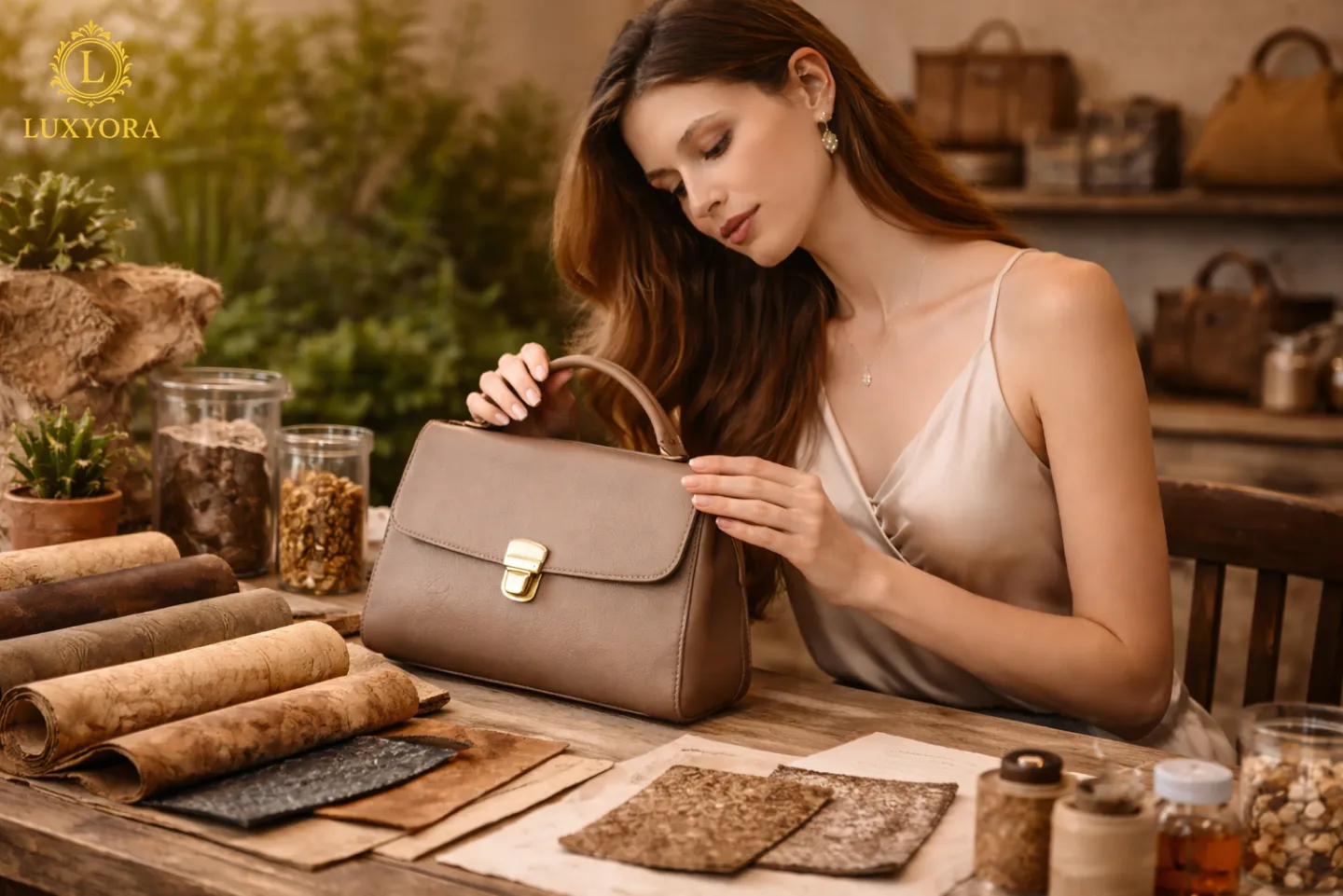
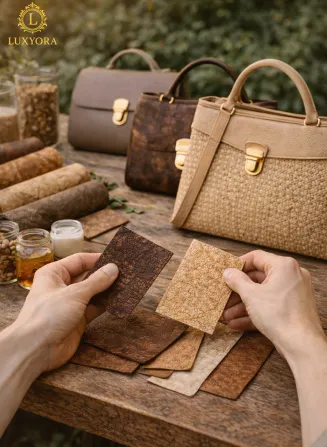
Mycelium-based materials are often presented as the most exciting chapter in next-gen leather. Brands and biomaterials companies have shown that mycelium can be engineered to mimic the hand-feel and grain of leather, and major fashion collaborations have helped push visibility.
But scaling is where romance meets reality. Producing consistent sheets, achieving reliable strength, preventing brittleness, and fitting into existing manufacturing systems is hard. The last few years have shown that even highly publicized biomaterials can face pauses, pivots, or slow rollouts when costs rise or performance isn’t yet dependable at volume.
The takeaway isn’t that mycelium failed; it’s that material innovation doesn’t behave like a trend cycle. It behaves like industrial engineering.
Plant-Based Leathers: Promising, but often Blended
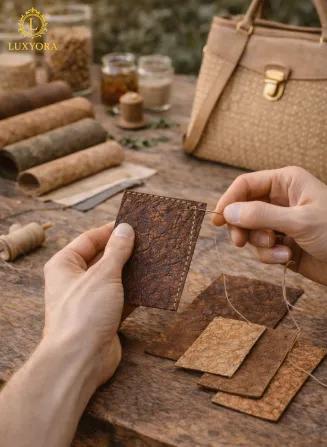
Cactus, apple, pineapple leaf fibers, these sound like the dream: renewable inputs, clever use of agricultural byproducts, and a lighter footprint narrative. Some of these materials can reduce reliance on virgin fossil inputs, which is meaningful progress.
But many “plant-based” leathers are not purely plant-based. They’re frequently plant content bound to PU to achieve durability, flexibility, and water resistance. That hybrid approach can still be a step forward, yet it complicates biodegradability and recycling. The future here depends on transparency: how much plant, how much plastic, and what that means for end-of-life.
Microplastics and Coatings: The Issue No One Wants in the Campaign Shot
Even if you never wash a handbag, coated materials can still degrade. Research has shown that PU-based synthetic leather can generate microplastic fibers and undergo chemical changes during environmental aging. More broadly, scientific reviews and European environmental assessments underscore that synthetic textiles and coated finishes contribute to microplastic pollution, prompting regulators and brands to pay closer attention to polymer-based materials.
This doesn’t mean all vegan leather is “bad.” It means the future will belong to materials that can answer tough questions about shedding, aging, and disposal.
The “Plastic-Free” Frontier is Real; Just not Mainstream Yet
A small but important category is emerging: materials designed to be leather-like without relying on conventional plastics. Some innovators describe formulations built from natural rubber, plant oils, waxes, minerals, and pigments, aiming to deliver performance without fossil-heavy polymers. These are still scaling up, still being tested across product categories, and still proving themselves in the wild. But they represent the most direct path from “vegan” to “circular-ready,” at least in principle.
Regulation and Circularity will Decide Who Wins
The most powerful force shaping vegan leather’s future might not be aesthetics; it might be policy and circular design.
The fashion industry is under rising pressure to reduce waste, extend product lifetimes, and design for circular systems. Circular economy frameworks emphasize keeping products in use longer, building repair models, and reducing reliance on landfills. Meanwhile, European chemical and microplastics regulations are tightening expectations around polymer use and disclosure.
This combination rewards materials that are:
- durable and repairable,
- simpler to disassemble,
- more recyclable or safely degradable,
- and honestly labeled.
So… Hype or Reality?
Vegan leather is absolutely real. It’s also uneven.
Right now, the market includes everything from smart, better-than-before synthetics to genuinely innovative biomaterials, with plenty of “green-sounding” marketing in between. The next decade won’t be about whether vegan leather exists. It will be about which versions earn a place in luxury by proving three things:
- They perform beautifully over time.
- They reduce harm in measurable ways.
- They fit into a circular future without hiding behind vague language.
When that happens, vegan leather won’t need hype. It will have receipts stitched into every seam.
Luxyora Philosophy: The future of luxury isn’t defined by what a material claims to be, but by how honestly it’s made and how gracefully it lasts.
References:
- Ali, A., Wang, Y., & others. (2024). Micro- and nanoplastics produced from textile finishes: A review. Polymers, 16(??). (PubMed Central article).
- Ellen MacArthur Foundation. (2017/2018). A new textiles economy: Redesigning fashion’s future. Ellen MacArthur Foundation.
- European Commission. (2023). Commission Regulation (EU) 2023/2055 restricting microplastics intentionally added to products under REACH. European Commission.
- European Environment Agency. (2022). Microplastics from textiles: Towards a circular economy for textiles in Europe. European Environment Agency.
- Gündoğan, P. (2024). Life cycle assessment of leather and leather-like materials (Master’s thesis). KTH Royal Institute of Technology.
- MycoWorks. (2021). Introducing Sylvania by Hermès (Fine Mycelium collaboration overview). MycoWorks.
- Niinimäki, K., Peters, G., Dahlbo, H., Perry, P., Rissanen, T., & Gwilt, A. (2020). The environmental price of fast fashion. Nature Reviews Earth & Environment, 1(4), 189–200.
- Shi, Y., Huang, H., Zheng, L., Tian, Y., Gong, Z., Wang, J., Li, W., & Gao, S. (2023). Releases of microplastics and chemicals from nonwoven polyester fabric-based polyurethane synthetic leather by photoaging. Science of the Total Environment, 900, 165770.
- The Financial Times. (2025). The sustainable fabrics market collapse. Financial Times.
- UNEP. (2023). Microplastics: The long legacy left behind by plastic pollution. United Nations Environment Programme.