Choosing the Right Watch for Your Wrist Size | Luxyora
Finding the right watch size is a little like finding the right sunglasses: the “perfect one” isn’t just about numbers, it’s about how it sits, how it moves, and how effortlessly it becomes part of your silhouette. The truth is, a watch can look stunning in a product photo and still feel awkward on your wrist in real life. Too big, and it wears you. Too small, and it can disappear when you wanted presence.
The good news? Once you understand a few key measurements, and the styling tricks that make them work, you’ll never feel lost in the sizing conversation again.
Step One: Measure Your Wrist Like You Mean It
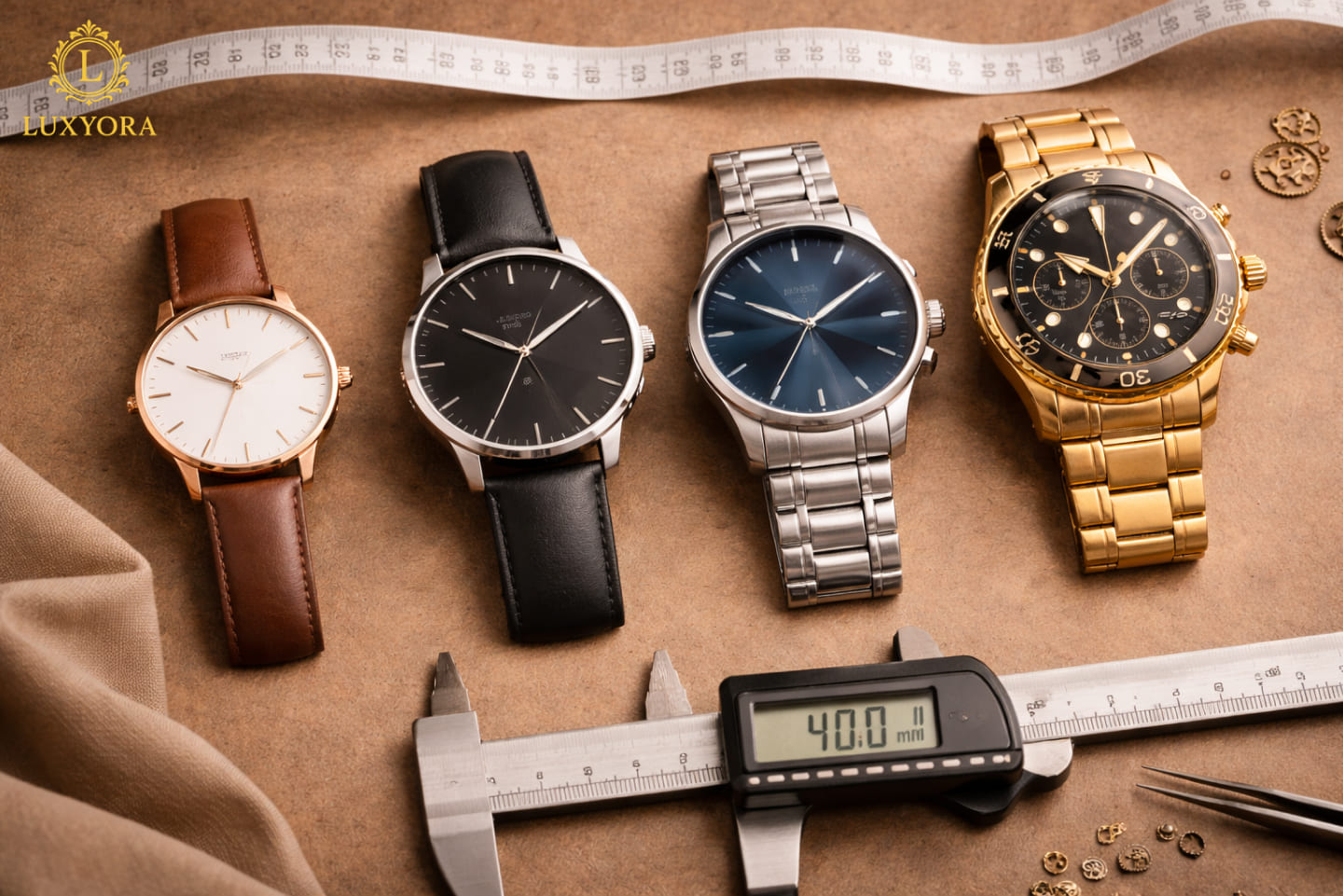
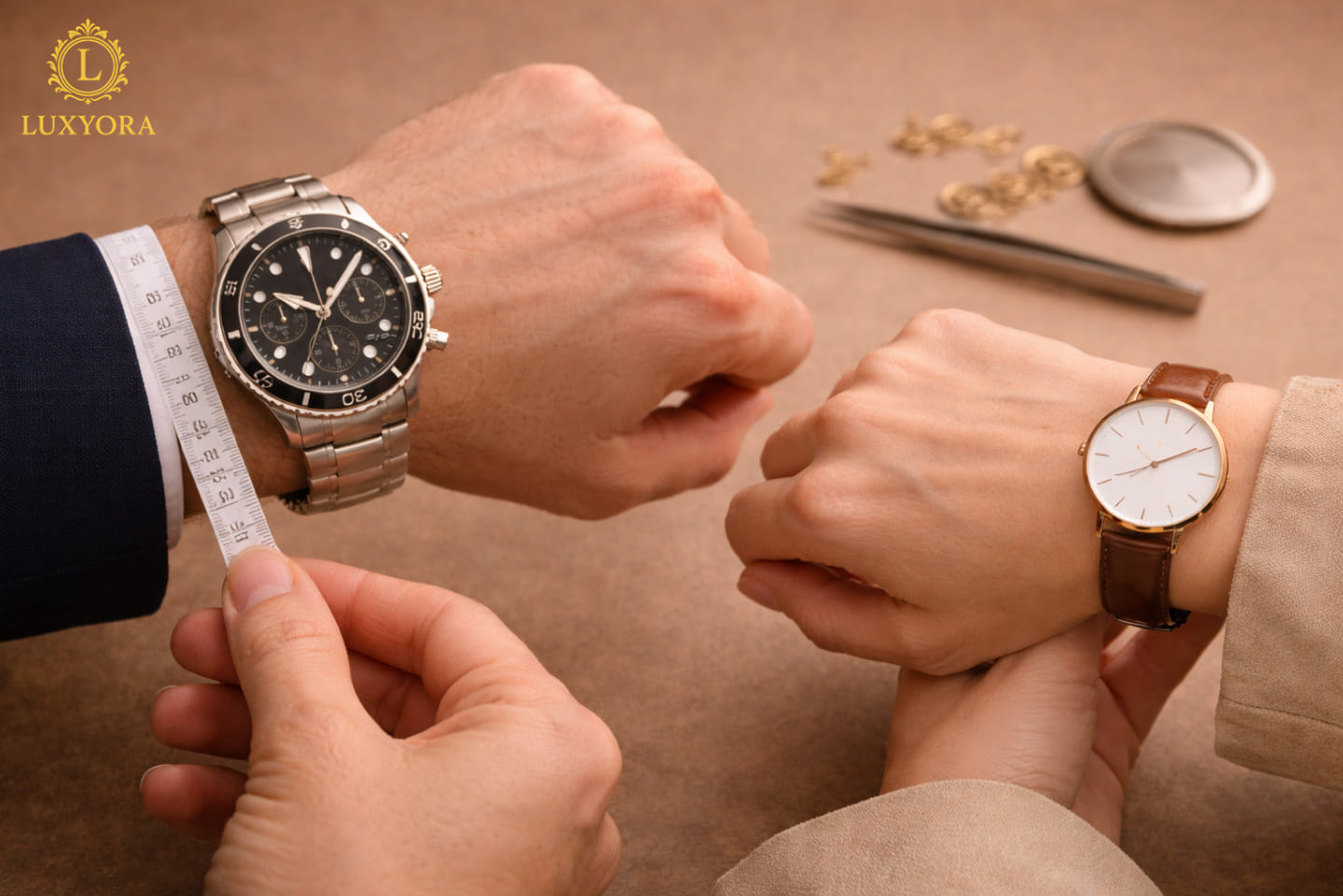
Before you fall in love with a case diameter, measure your wrist circumference. Use a soft measuring tape (or a strip of paper and a ruler) and wrap it snugly where you normally wear a watch, just above the wrist bone. Don’t squeeze, don’t leave it loose. You’re aiming for “comfortable contact.”
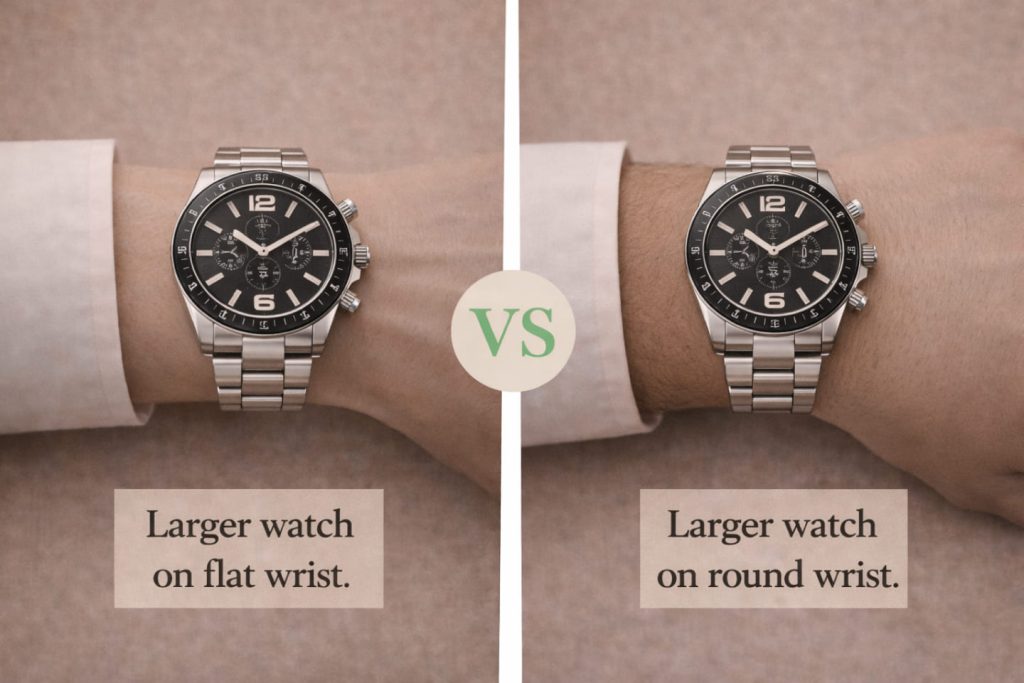
Now here’s the important part: wrist size isn’t only about circumference. Two people can have the same measurement and totally different watch fit. Why? Wrist shape.
- Flat wrists (wider top surface) can often handle slightly larger watches.
- Round wrists tend to make watches feel larger and can benefit from shorter lug-to-lug lengths.
Think of this as your fit foundation. The rest is styling.
Case Diameter: The Number Everyone Talks About (But Isn’t Everything)
Case diameter is the width of the watch case, usually measured in millimeters. It’s the first stat most people notice, and it’s useful but it can also be misleading.
A 40mm watch can wear elegant and compact on one design, and huge on another. That’s because diameter doesn’t account for thickness, lug length, bezel size, or case shape.
Still, as a general starting point:
- Smaller wrists often feel balanced with smaller to mid-size diameters.
- Medium wrists can comfortably wear a wide range.
- Larger wrists can carry more diameter, but still need the right proportions.
Use diameter as a first filter, not the final decision.
Lug-to-Lug: The Real Secret to “It Fits”
If you remember one measurement, make it this one.
Lug-to-lug is the distance from the tip of the top lug to the tip of the bottom lug (the parts where the strap attaches). This determines how much “wrist real estate” a watch occupies.
Some watches appear effortlessly balanced, while others seem larger, smaller, or entirely different than expected. The secret usually isn’t hidden in the photographs, it’s hidden in dimensions that shape the way a watch is experienced. Discover more in Understanding Watch Sizes: Case, Dial & Lug-to-Lug.
A quick rule that works beautifully in real life:
If the Lugs Extend Past the Edges of Your Wrist, the Watch will Look and Feel Oversized.
This is why some large dive watches wear surprisingly well (short lugs), and some modest-looking watches wear bigger than expected (long lugs). Lug-to-lug is the difference between “polished” and “trying too hard.”
Thickness: Comfort and Elegance Live Here
Thickness is the side profile. It determines how tall the watch sits off your wrist. And it matters for both comfort and style.
- A thinner watch tends to look dressier, feel lighter, and slide under cuffs more easily.
- A thicker watch often feels sportier, bolder, and more casual, but can snag sleeves and feel top-heavy if it’s not balanced.
If you spend a lot of time at a desk, thickness can also affect comfort. A taller case can create pressure points when your wrist rests against a surface. If you want all-day ease, a slimmer or mid-thickness case often feels “invisible” in the best way.
Case Shape: Not All Millimeters Are Equal
Round watches are the most forgiving, but shape changes everything.
- Square/rectangular watches can wear larger because they occupy more visual space.
- Tonneau (barrel-shaped) watches often feel dramatic and “present.”
- Integrated bracelet designs can wear bigger due to the continuous silhouette.
Some watch designs never rely on bold details to stand out they win through proportion, flow, and the kind of refinement that feels effortless at first glance. Lately, one silhouette in particular has been shaping that conversation. Discover why in Integrated Bracelet Watches – Sleek Case Designs Dominating the Market.
If you’re drawn to non-round cases, lug-to-lug and overall footprint become even more important than diameter.
Bezel and Dial: The Optical Illusion Factor
Two watches can both be 40mm, and look totally different on the wrist.
Why? Dial opening.
A watch with a thick bezel (like many dive watches) has a smaller visible dial, which can make it feel more compact. A watch with a thin bezel has a larger dial opening, making it feel bigger and more expressive.
This is why minimalist watches often wear larger than you’d expect.
As trends become louder and designs more complex, a quieter approach continues to hold its ground. The fascination with minimalist watches isn’t about having less, it’s about making every detail matter. The story continues in Minimalist Watches : Style Guide.
Strap and Bracelet Fit: Where “Size” Becomes Personal
Even a perfectly sized watch case can feel wrong if the strap or bracelet isn’t right.
Strap width affects balance. A very narrow strap can make the watch head look bigger. A proportional strap makes the watch feel integrated.
Bracelets add presence and weight. They can make a watch feel more substantial and great for everyday polish, but can also amplify top-heaviness if the case is thick.
Comfort tips that change everything:
- The watch should sit stable without sliding.
- You should be able to fit a finger under the strap, but it shouldn’t rotate freely.
- Bracelets should be sized to account for natural wrist swelling during warm days.
A good fit looks confident. A poor fit looks fidgety.
Match the Watch Style to the Wrist Size (Yes, It’s a Thing)
This isn’t about rules. It’s about harmony.
- Dress watches tend to look best when they’re slightly restrained: slim, refined, proportionate.
- Sports watches can be larger, but must still stay within your wrist’s boundaries.
- Vintage-inspired watches often run smaller and can look incredibly sophisticated on modern wardrobes.
- Statement pieces can be oversized on purpose, but only when the rest of the outfit supports that energy.
If your watch is your headline, keep the outfit quieter. If your outfit is the headline, keep the watch refined. Balance is always the luxury move.
The most polished wardrobes rarely rely on standout pieces alone they create harmony in quieter ways. And when it comes to watches, knowing what works together can change the entire mood of an outfit. Discover more in How to Match Watches with Outfits.
The Try-On Checklist: Your Final Reality Test
Before you commit, do this quick mirror check:
- Look at your wrist straight on: do the lugs stay within your wrist width?
- Tilt your wrist: does it feel stable, not top-heavy?
- Slide a sleeve over it: does it snag or fight the cuff?
- Wear it for ten minutes: any hot spots or pressure points?
- Step back in the mirror: does it look intentional or distracting?
The right size won’t just look good. It will feel like it belongs.
Luxyora Philosophy: The perfect watch size is the one that disappears into your life and reappears as confidence. When fit is right, style becomes effortless.
References:
- Baldassarre, T. (2023, February 15). Watch sizes vs. wrist sizes: What’s the right size for you? Teddy Baldassarre.
- Baldassarre, T. (2025, September 12). Lug-to-lug explained: The most important watch sizing. Teddy Baldassarre.
- Schmidt, R. (2018). The wristwatch handbook: A comprehensive guide to mechanical wristwatches. ACC Art Books.
- Weiss, Z. (2022, June 30). We need to talk about the numbers (measurements). Worn & Wound.
- Timex India. (2025). Watch size guide: Find the right fit for your wrist. Timex.