Perfume Notes Explained : Top, Middle & Base Notes for Beginners | Luxyora
Perfume is basically a wardrobe for your senses: you don’t just put it on, you let it style-shift throughout the day. One minute it’s sparkling and bright; the next, it’s creamy and romantic; and by evening, it’s warm, close, and quietly unforgettable. That’s not moodiness. That’s structure.
Most fragrances are built in layers called perfume notes, often described as top, middle (heart), and base, a “fragrance pyramid” that explains how a scent unfolds over time. These layers aren’t just poetic labels; they’re closely tied to volatility (how quickly aromatic molecules evaporate and reach your nose). In other words, why your perfume changes is the same reason a glass of champagne loses its bubbles: chemistry meets time.
If you’ve ever loved a perfume in the first five minutes… then wondered where that magic went… welcome. You’re about to become the person who tests fragrance like an editor.
The Fragrance Pyramid, in Real Life
Picture your scent as a three-act story:
- Top notes are the opening scene, bright, quick, and attention-grabbing.
- Middle (heart) notes are the main plot of what the fragrance is really
- Base notes are the ending you remember as smooth, lasting, and often the most “you.”
This isn’t a strict timetable (modern perfumery loves bending rules), but it’s a wildly useful way to understand what you’re smelling and why.
Top Notes: The First Impression (aka The “Sparkle”)
Top notes are what you smell immediately after spraying those first few minutes when everything feels crisp, fresh, and a little bit flirtatious. They’re made of lighter, more volatile materials, so they lift off the skin quickly and project into the air.
What top notes usually smell like
- Citrus: bergamot, lemon, grapefruit
- Aromatic herbs: lavender, basil, mint effects
- Light fruits: pear, apple facets
- Airy “fresh” notes: green, watery, ozonic vibes
Some brands describe top notes as evaporating relatively quickly (often within the early part of wear), which is why that initial burst can feel like a gorgeous teaser rather than the full experience.
Beginner tip: If you fall in love instantly with something in a store, don’t buy it yet. The top notes are the perfume’s opening line, not the relationship.
Middle Notes: The Heart (Where the Personality Lives)
Middle notes, also called heart notes, emerge as the top notes soften. This is the scent’s “main character energy”: fuller, rounder, and designed to carry the fragrance’s theme. Many explanations of the fragrance pyramid describe heart notes as the core body of the perfume, once the opening fades.
What middle notes usually smell like
- Florals: rose, jasmine, orange blossom, ylang-ylang
- Spices: cardamom, cinnamon, clove effects
- Soft aromatics: tea notes, lavender-vanilla blends
- Fruity-florals: peachy or berry facets that feel “blended,” not sharp
Beginner tip: Leave a perfume on the skin for 20-30 minutes before judging it. If you’re choosing a signature scent, the heart notes are what you’ll live with during the day.
Base Notes: The Dry-Down (aka The Part That Makes People Lean in)
Base notes are the slow reveal. These materials evaporate more slowly, last longer, and give a fragrance its depth and staying power. They also help anchor the whole composition so it doesn’t feel like it disappears in stages. Descriptions of base notes commonly emphasize their low volatility and long-lasting effect.
What base notes usually smell like
- Woods: sandalwood, cedar, vetiver
- Resins/amber accords: labdanum effects, benzoin
- Sweet warmth: vanilla, tonka
- Musks: clean, skin-like, powdery, or “warm laundry” styles
If you’ve ever hugged someone hours after they applied perfume and thought, Oh, that’s gorgeous you were meeting the base.
The perfumes we love often seem to transform throughout the day, shifting from bright and airy to soft and lingering. Explore the hidden structure behind these changes in Understanding Perfume Notes: Top, Middle & Base Notes Explained.
Beginner tip: Wear-test for at least 4-6 hours. The base notes are often the dealbreaker (or the reason you obsess).
Why Your Perfume Changes: The Science in a Chic Outfit
Fragrance perception begins with evaporation and diffusion, basically, scent molecules leaving the liquid, moving through the air, and reaching your nose. Scientific overviews of perfumery describe evaporation as a key part of how we experience perfume over time.
The pyramid is a simplified model, but it’s useful because it matches your experience: lighter components tend to appear early, while deeper components linger later. And because your skin (temperature, moisture, oils) influences evaporation, the same perfume can smell slightly different on different people.
How to Test Perfume Notes Like a Pro (Without Becoming Overwhelmed)
Here’s a beginner-friendly method to get started:
- Spray on skin (wrist or inner elbow). Paper strips are fine for narrowing down, but skin is where the truth is.
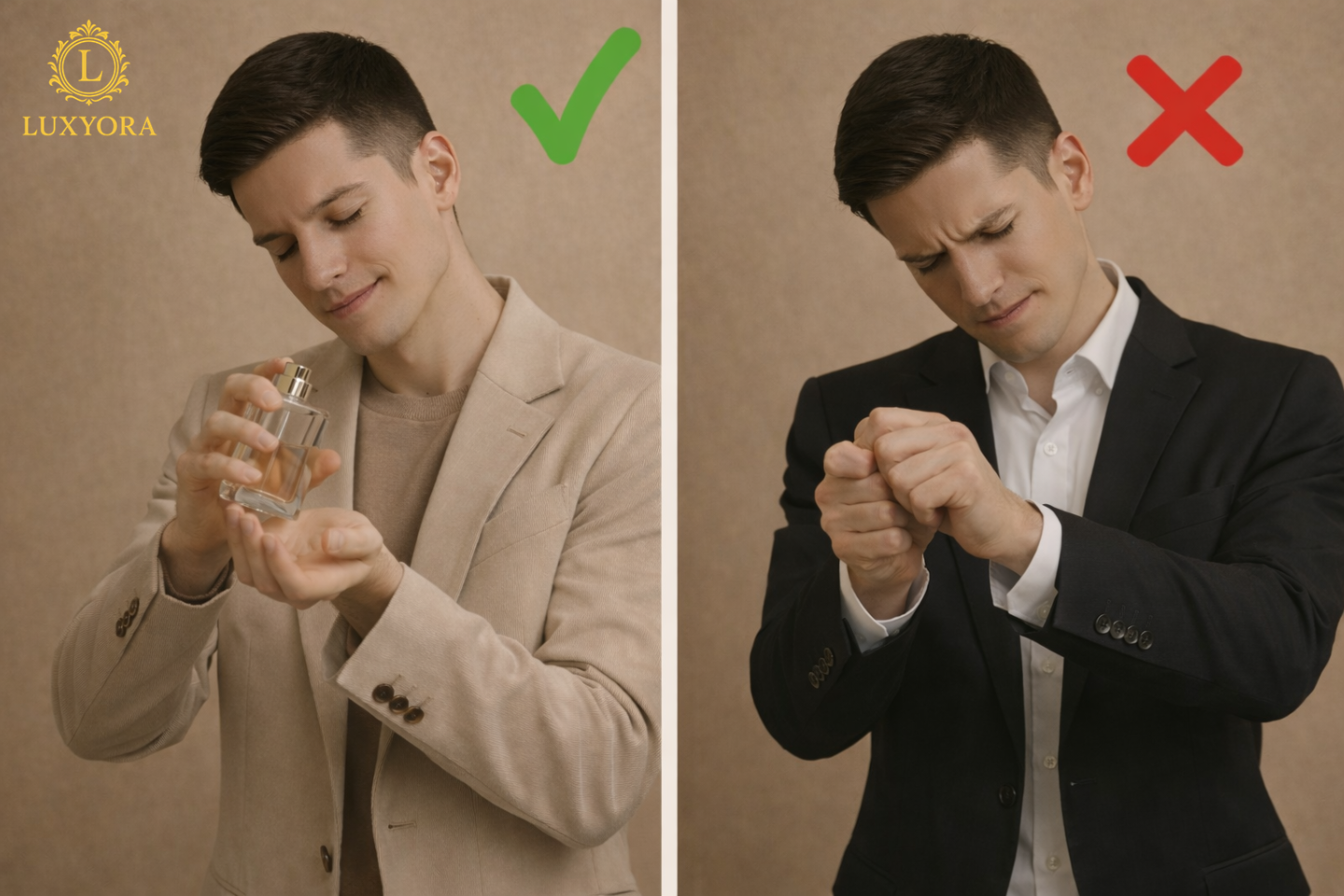
- Don’t rub your wrists together. It can muddle the opening and mess with how the scent develops.
- Smell in three chapters:
- 0-5 minutes: top notes
- 20-60 minutes: heart notes
- 3-6 hours: base notes
- Test only 3-4 scents at once. Your nose will blur them together after that.
- Try on a normal day. Perfume should fit your real life, not just your “luxury counter” fantasy.
A beginner’s cheat sheet: what you’re likely smelling
If you want to guess a perfume’s structure quickly:
- Smells like sparkling citrus or fresh herbs right away? That’s usually top.
- Turns into floral, spicy, or creamy after 20 minutes? That’s heart.
- Becomes woody, musky, ambery, or vanillic hours later? That’s the base.
And yes, some modern perfumes are built to “blur” transitions so the whole thing feels seamless. That’s not you imagining it; it’s intentional design
Luxyora Philosophy: A fragrance isn’t meant to stay the same; it’s meant to unfold. Wear scents that evolve with your day, and let your presence be the note that lingers.
References:
- Experimental Perfume Club. (2023, August 7). What are top, middle and base notes in perfume? Experimental Perfume Club
- González-Minero, F. J., & Bravo-Díaz, L. (2023). Pharmacy and fragrances: Traditional and current use of plants and their extracts. Cosmetics, 10(6), 157. MDPI. MDPI
- Rodrigues, A. E. (2021). Perfume and flavor engineering: A chemical engineering perspective. Molecules, 26(11), 3095. MDPI. MDPI+1
- Alpha Aromatics. (2023, February 7). A perfumer’s simplified guide to the fragrance pyramid. Alpha Aromatics
- Clive Christian. (n.d.). What are the top, heart and base notes in a perfume? (Accessed 2025-12-21). clivechristian.com