Mistakes First-Time Watch Buyers Make | Luxyora
Buying your first “real” watch is supposed to feel like a glow-up: the moment you stop borrowing time from your phone and start wearing it with intention. But first-time buyers often fall into the same traps, because watches are equal parts engineering, styling, and lifestyle math. And when you’re new, it’s easy to be seduced by a shiny dial and a famous name while missing the details that actually decide whether you’ll wear it daily or quietly resent it.
Here are the most common mistakes first-time watch buyers make, and how to avoid them with the kind of calm confidence that looks expensive.
1) Falling for the brand before the fit
A respected brand can be a wonderful starting point, but a logo won’t fix a watch that feels wrong on your wrist. Many beginners buy based on reputation and later realize the watch is too big, too thick, too heavy, or simply not comfortable for long days.
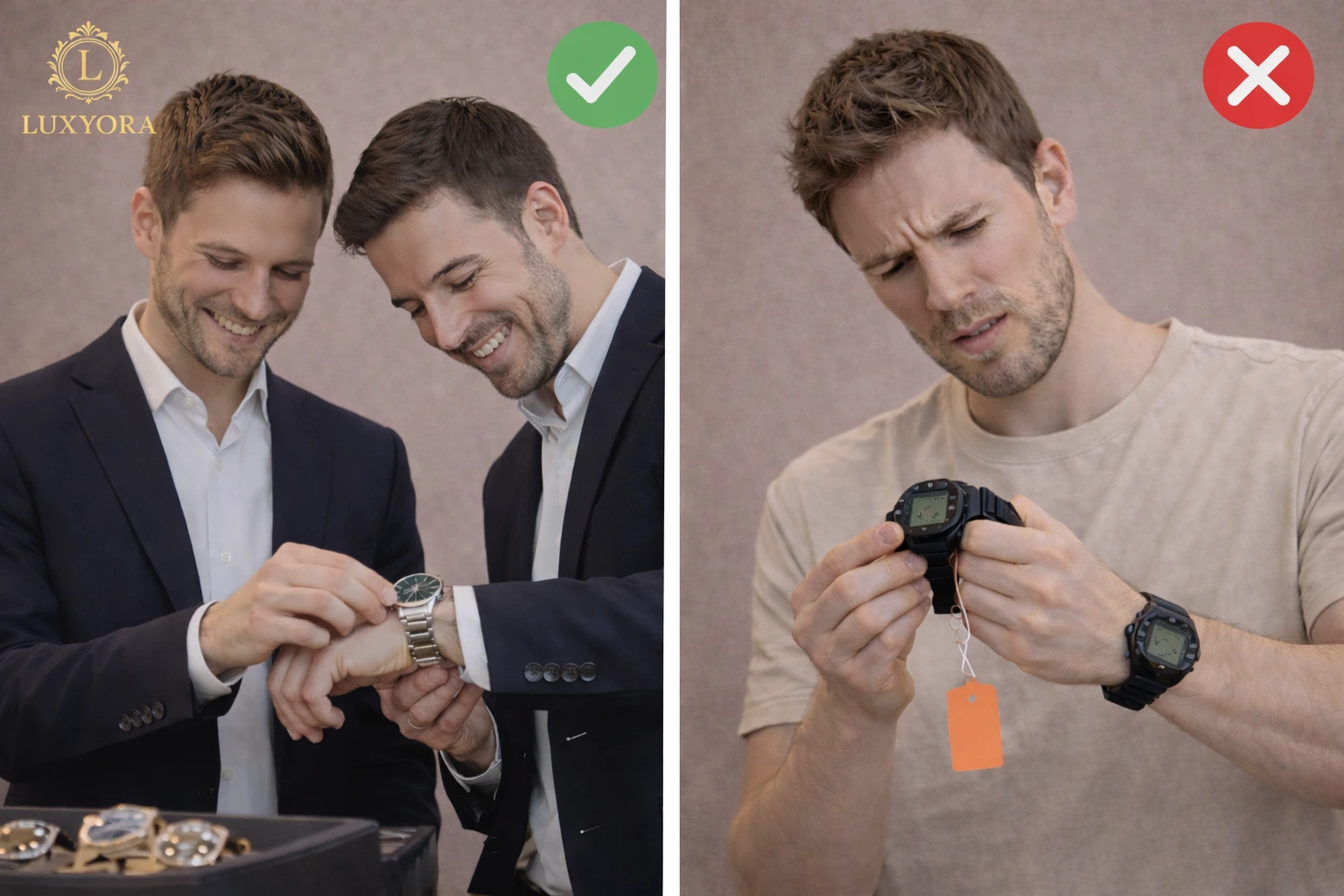
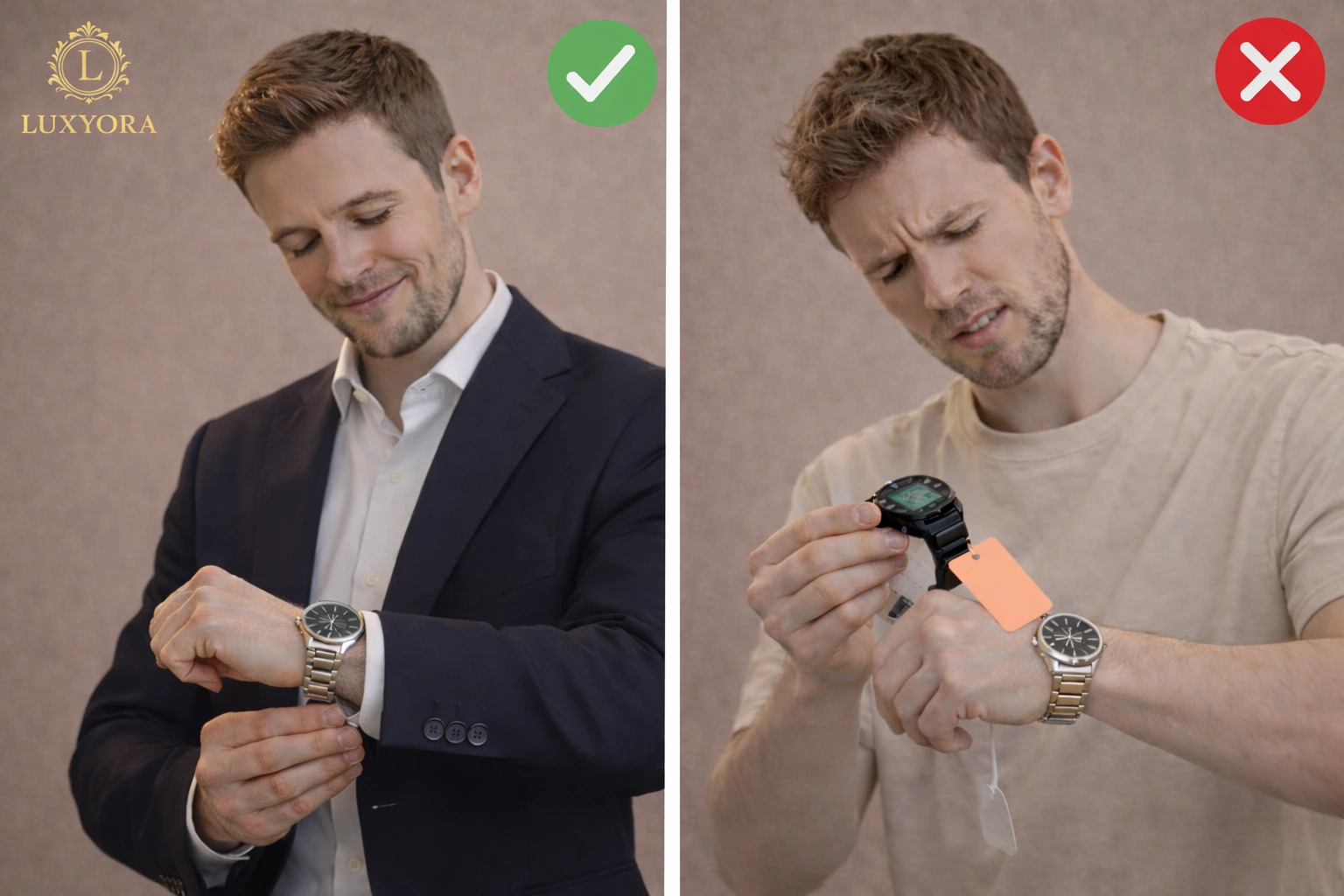
What to do instead: prioritize fit first, then brand. Try the watch on and do real-life movements, including but not limited to typing, posture, wrist bending, jacket cuffs, and even crossing your arms. A watch can look perfect in a photo and feel distracting in motion.
2) Thinking case diameter is the only size that matters
Case diameter gets all the attention, but it’s only one piece of the puzzle. The real wearability trio is diameter + thickness + lug-to-lug. Lug-to-lug (the tip-to-tip length of the lugs) often decides whether a watch sits elegantly or overhangs your wrist like it’s trying too hard.
A watch doesn’t need to look oversized or undersized to feel wrong, the smallest proportions often make the biggest difference once it’s on the wrist. There’s more to getting the fit right than most people realise. Explore Understanding Watch Sizes: Case, Dial & Lug-to-Lug.
What to do instead: learn to read lug-to-lug like a stylist reads seams. If you have a smaller wrist, lug-to-lug can matter more than the headline case size.
3) Ignoring thickness (until it starts catching every cuff)
Thickness is the most underrated comfort factor. A thicker watch can feel sporty and substantial, but it may also snag sweater cuffs, knock laptop edges, and feel bulky during long wear. Beginners often don’t notice this during a quick try-on, but then notice it constantly at home.
What to do instead: if you want “daily elegance,” pay attention to your profile. A slimmer case usually wears more smoothly and looks more refined under tailored sleeves.
4) Buying a watch for a fantasy lifestyle
This one is deliciously common: buying a dive watch when you don’t swim, a pilot watch when you don’t travel, or a heavy tool watch when your real life is mostly desks and dinners. There’s nothing wrong with buying for aesthetics, but you’ll be happiest when the watch fits your routine.
What to do instead: match the watch to your actual week. If you’re mostly in workwear and meetings, a clean, versatile piece wins. If you’re active or outdoors constantly, practicality matters more than polish.
5) Misunderstanding water resistance
Ratings are based on testing standards and pressure concepts. It is not a promise that any “50m” watch is carefree for every water scenario. Seals’ age, crowns matter, and hot showers are not the same as cold testing conditions.
What to do instead: treat water resistance as “capability with conditions.” If you truly want water confidence, look for appropriate ratings, a screw-down crown when applicable, and sensible care (including pressure testing after battery changes or servicing).
6) Skipping the “ownership costs” conversation
First-time buyers often budget for the purchase and forget life after. Mechanical watches are tiny machines and may need periodic servicing. Even quartz watches need battery replacements and, depending on usage, water-resistance checks.
What to do instead: when you pick the watch, also mentally pick the maintenance plan. Think of it like buying leather shoes: Their beauty lasts longer when you care for them properly.
7) Choosing the wrong movement for your patience level
New buyers sometimes choose a mechanical watch because it’s “more luxurious,” then get annoyed when it stops after sitting in a drawer, needs resetting, or runs a little differently than a phone-synced digital clock. Others choose quartz, then feel they missed out on the romance of mechanics.
For new buyers, the dial often gets all the attention while the real decision stays hidden underneath. Once you understand the movement, watch shopping starts to feel very different. Read Watch Movements Explained: Quartz vs Automatic vs Mechanical.
What to do instead: choose the movement that fits your personality. If you want set-it-and-forget-it ease, quartz is chic. If you love craftsmanship and ritual, an automatic or manual-wind watch will make you smile.
8) Buying without considering the strap and clasp
Bracelets and straps are where comfort becomes real. A stiff bracelet, sharp clasp edges, or a strap that doesn’t suit your climate can ruin the wearing experience. Even a great watch can end up being something you keep “saving for later”, and “later” never really comes.
What to do instead: pay attention to how the clasp sits, whether the bracelet articulates smoothly, and whether the strap material fits your lifestyle. Also, please check the lug width if you plan to swap straps; you’ll thank yourself in the future.
9) Falling into the grey market without understanding the trade-offs
A discount can be tempting, but first-time buyers sometimes purchase from unverified sources and run into issues: unclear warranty coverage, questionable provenance, or a stressful authenticity situation. Even when the watch is genuine, the buying experience may not protect you as well as an authorized channel does.
What to do instead: decide what matters more, price or peace of mind. If you go with pre-owned or grey-market, choose a seller with strong authentication practices and a clear warranty/return policy.
10) Expecting your first watch to be an “investment”
Watches can hold value, but buying your first watch primarily as a financial asset is a fast road to disappointment. Market hype shifts. Condition matters. Trends cool. Most first watches should be purchased for love and wearability.
What to do instead: buy a watch you’ll actually wear if it holds value, lovely. If it becomes part of your story, even better.
Luxyora Philosophy: Your first watch shouldn’t feel like a test; it should feel like alignment. Choose what fits your life, and luxury will follow you naturally.
References:
- Federation of the Swiss Watch Industry FH. (n.d.). Water-resistance of watches. Federation of the Swiss Watch Industry FH.
- International Organization for Standardization. (2010). ISO 22810:2010 Horology Water-resistant watches (Reviewed and confirmed 2021). ISO.
- Leitzeit. (2025). Gray market vs authorized dealer: The pros and cons of each. Leitzeit Blog.
- Monochrome Watches. (2025, December 6). The basics of mechanical watch maintenance. Monochrome Watches.
- Schmidt, R. (2018). The wristwatch handbook: A comprehensive guide to mechanical wristwatches. ACC Art Books.
- Teddy Baldassarre. (2025, September 12). Lug-to-lug explained: The most important watch sizing measurement. Teddy Baldassarre.