Why Stone Setting Is the Most Critical Step in Jewellery Making | Luxyora
A jewel can start out as a dream: the sketch is perfect, the metalwork is immaculate, the gemstone is honestly distractingly beautiful. And then comes the moment that decides whether it will live as a luxury piece… or become a heartbreak waiting to happen.
That moment is stone setting.
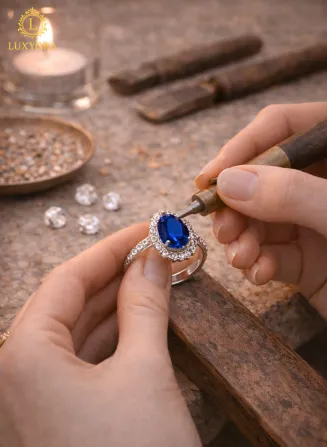
Setting is where jewellery stops being “a nice design” and becomes something you can actually wear, trust, and eventually pass down. It’s also where the biggest risks live: chipped corners, loosened prongs, a halo that catches on silk, a center stone that sits slightly crooked and haunts you forever in photos. Setting is the difference between sparkle that looks effortless and sparkle that feels anxious.
If you’ve ever wondered why master setters are treated like elite artisans (and why the best workshops protect them like secrets), this is it: stone setting is the most critical step because it controls security, beauty, durability, and value all at once.
1) Because the setting decides whether the stone survives real life
Gemstones are strong, but they’re not invincible, and they don’t all break the same way. Points, corners, thin edges, and exposed girdles are the danger zones. That’s why the “right” setting isn’t just about style; it’s about protection.
A pointed shape (think pear or marquise) needs smarter coverage at its vulnerable tip, and the wrong choice can turn a gorgeous design into a chip magnet. A bezel can act like armour; V-prongs can shield corners; prongs can be secure but demand maintenance and thoughtful proportions. The setter is the person who makes those choices real in metal, millimeter by millimeter.
2) Because setting controls brilliance (yes, even more than you think)
A stone doesn’t sparkle just because it’s a diamond or a sapphire. It sparkles because light enters, bounces, and returns to your eye. The setting decides how much light gets in, where shadows fall, and whether the gem looks like it’s floating or trapped.
Prongs tend to maximize openness and light, which can amplify brilliance. Bezels can slightly reduce edge light but boost contrast and “glow,” and they can make stones look bigger and bolder. Pavé is a universe of sparkle when executed well and a universe of tiny problems when it’s not.
In other words: the setting is the stone’s stage lighting. If it’s wrong, even a beautiful gem can look underwhelming.
3) Because precision is the luxury signal
Luxury jewellery has a certain “quiet confidence” up close. You don’t always know why it feels expensive; you just feel it. A huge part of that is setting precision:
- Stones sit level and aligned.
- Prongs match in size and shape.
- Pavé spacing looks like a clean constellation, not a busy crowd.
- Edges are smooth enough to touch without snagging.
- The piece looks intentional from every angle, not just front-on.
This level of finishing comes from expert setting, not just design. A setter’s work is microscopic, but the impact is immediate.
4) Because a poor setting is the fastest route to damage and repairs
Stone setting is where wear-and-tear begins. Every day, jewellery meets keyboards, door handles, handbags, coats, gym grips, and the general chaos of living. If a setting isn’t engineered for that reality, the piece will show it fast.
Prongs can catch and bend. Micro-pavé beads can loosen if the foundation metalwork isn’t right. Channels can distort if not properly supported. Even a beautifully made ring can fail if the setting work doesn’t balance delicacy with strength.
This is why reputable jewellery quality standards emphasize durability factors like stable prong proportions and metal choices that resist wear. The goal isn’t just to hold the stone today; it’s to hold it for years without drama.
5) Because it affects comfort more than most people realize
The best jewellery is the kind you forget you’re wearing until you catch it in the mirror and fall in love again. Setting influences comfort in ways most buyers never think about:
- High settings can knock and snag.
- Sharp prong tips can scratch.
- Rough pavé can “grate” against skin or knitwear.
- Poorly finished bezels can feel bulky or sharp at the edge.
- Earrings can pull if the setting adds unnecessary weight.
A master setter works for both beauty and wearability. That’s why the most luxurious pieces feel smooth, balanced, and easy, like they were always meant to live on the body.
6) Because setting determines whether the piece can be serviced and last decades
Luxury is not only about the day you buy it. It’s about what happens five, ten, twenty years later.
Stone setting affects how easily a piece can be cleaned, re-tipped, tightened, resized, or restored. A well-thought-out setting supports maintenance rather than complicating it. That matters because fine jewellery is meant to be kept, not replaced.
And if you’re building heirloom potential, setting is everything. Heirlooms survive because their stones stay put.
7) Because it shapes the story of value
Here’s the uncomfortable truth: a stone can be exceptional, but if the setting looks careless, the entire piece reads cheaper. Craftsmanship is a multiplier good setting elevates everything; bad setting undercuts it.
This is also why experienced buyers (and many jewellers) judge workmanship by the setting first. It’s the hardest place to fake luxury. You can’t “marketing” your way around uneven prongs or sloppy pavé.
8) Because setting is where human skill still outshines machines
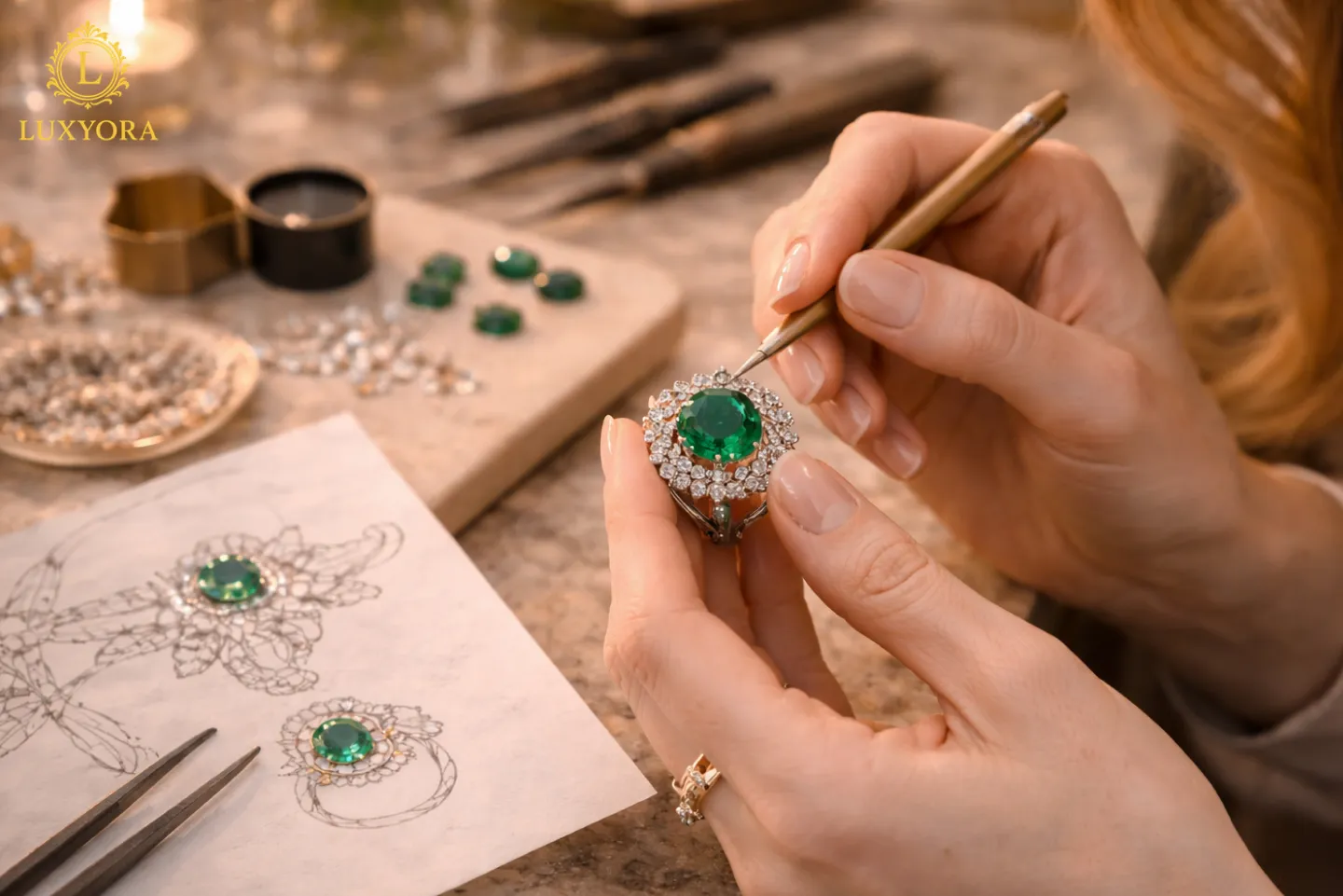
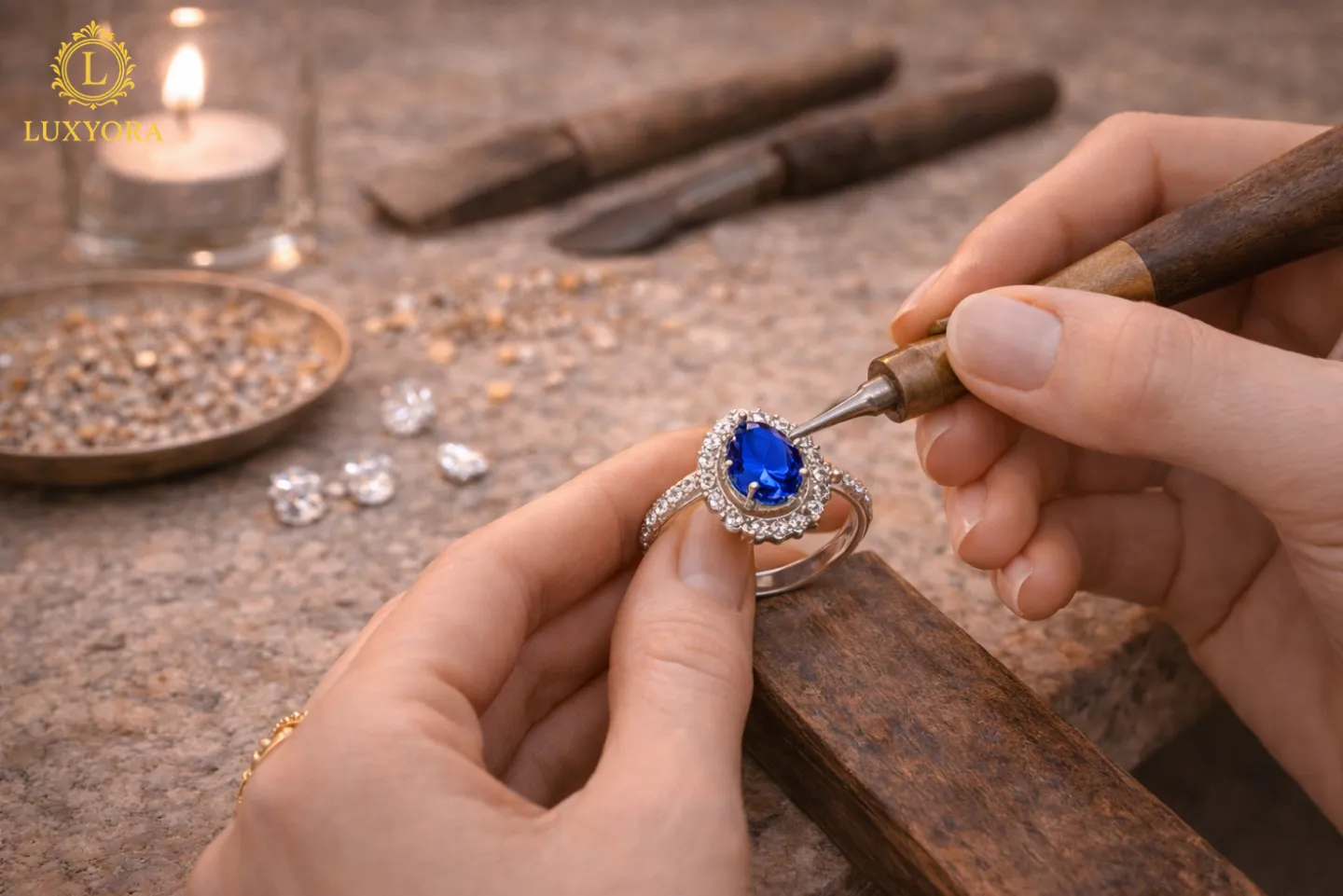
Technology can help with CAD and manufacturing, but stone setting, especially high-level work, remains deeply human. It’s tactile. It’s responsive. It’s about tiny adjustments based on how the stone behaves, how the metal moves, how light hits, how the piece feels.
That’s why setting is taught like a discipline, not a shortcut. And it’s why the best workshops treat setters like artists with engineering brains.
So, what makes a setting truly “luxury”?
A luxury setting is one that does four things at once:
- Protects the stone
- Maximizes beauty
- Feels comfortable and secure
- Lasts and can be maintained
When all four align, the piece doesn’t just sparkle. It earns trust.
Luxyora Philosophy: A gemstone is precious, but a setting is what makes it dependable. True luxury is when brilliance and security are inseparable.
References:
- Gemological Institute of America. (n.d.). Features of platinum prong settings (Quality Assurance Benchmarks). GIA.
- Gemological Institute of America. (2025, November 21). Guide to diamond shapes for engagement rings. GIA 4Cs.
- Hunt, M. (2022). Stonesetting for jewellery makers (New ed.). Search Press.
- The Gem Society. (2023, February 6). The nomenclature of jewelry: Gem settings. International Gem Society.
- CooksonGold. (2023). Glossary of stone setting terms. Cooksongold.com.