How to Build a Skincare Routine for Your Skin Type | Luxyora
A great skincare routine isn’t about owning a bathroom shelf that looks like a beauty boutique. It’s about knowing your skin type, choosing a few hardworking formulas, and using them with the kind of consistency that makes your complexion quietly (and confidently) show off.
The best part? Once you learn how to build a skincare routine for your skin type, everything gets easier. Your glow looks more natural, your makeup sits better, and your skin stops “mysteriously” reacting to every new trend.
Step 1: Figure out your skin type (and don’t overthink it)
Skin type is your baseline, generally oily, dry, combination, normal, or sensitive, and it tends to stay fairly stable. Skin conditions (acne, dehydration, dullness, redness) can be affected by stress, weather, hormones, and lifestyle. That’s why your routine should be stable, but flexible.
The simple “wash, wait, observe” test: cleanse gently, pat dry, apply nothing, and check your skin after 20-30 minutes.
- Feels tight/flaky? Likely dry
- Shiny all over? Likely oily
- Shiny T-zone, comfortable cheeks? combination
- Easily stings, flushes, reacts? sensitive (or sensitised)
- Balanced, comfortable? normal (lucky you)
Step 2: Nail the non-negotiable core routine (AM + PM)
Dermatologists repeatedly come back to the same essentials: cleanser, moisturiser, sunscreen, the “capsule wardrobe” of skincare. Add extras only when they earn their place.
Morning routine (the “protect” shift)
- Cleanse (or rinse): Use a gentle cleanser if you wake up oily, sweaty, or after nighttime activities. Otherwise, a water rinse can be enough for some skin types.
- Targeted step (optional): Think antioxidant serum (like vitamin C) or soothing hydrator (like niacinamide) if your skin likes it.
- Moisturise: Choose texture based on skin type (we’ll get to that).
- Sunscreen (SPF 30+): The final step. Daily. Year-round. It’s the single best anti-ageing “product” you’ll ever buy.
Night routine (the “repair” shift)
- Cleanse: Remove sunscreen/makeup thoroughly; double-cleanse if you wear heavy makeup or a water-resistant SPF.
- Treatment step (optional): Retinoid, exfoliant, azelaic acid. Choose one lane at a time.
- Moisturise: Lock in hydration and support the barrier.
Your skin doesn’t behave the same way at every hour of the day, so why should your routine? Discover more in Morning vs Night Skincare: What Should Change?
Step 3: Customise by skin type (this is where the magic happens)
If your skin is OILY
Your goal is balance, not stripping.
- Cleanser: Gel or foaming, gentle cleanser (over-cleansing can rebound into more oil).
- Moisturiser: Lightweight lotion or gel-cream.
- Best “extras”: Salicylic acid (BHA) a few times weekly; niacinamide for pore appearance and oil control.
- Pro tip: Mattifying isn’t the same as healthy; aim for comfortable, not squeaky.
If your skin is DRY
Your goal is nourishment and barrier support.
- Cleanser: Creamy, non-foaming cleanser.
- Moisturizer: Rich cream with humectants + occlusives (think glycerin + ceramides + petrolatum-style textures).
- Best “extras”: Gentle hydrating serum; consider “sandwiching” stronger actives with moisturiser if you use them.
- Pro tip: Apply moisturiser right after cleansing, while skin is slightly damp, to seal in water.
If your skin is COMBINATION
Your goal is strategic consistency.
- Cleanser: Gentle, middle-of-the-road formula (not too stripping, not too rich).
- Moisturiser: Lightweight lotion overall; dab richer cream on dry areas if needed.
- Best “extras”: BHA on T-zone only; hydrating serum on cheeks.
If your skin is SENSITIVE (or easily irritated)
Your goal is calm and minimalism.
- Cleanser: Fragrance-free, mild cleanser; cleanse only as needed.
- Moisturiser: Barrier-focused, fragrance-free moisturiser.
- Best “extras”: Very simple formulas; introduce one product at a time; patch test.
- Avoid: Frequent exfoliation, strong acids, too many actives at once.
Sensitive skin benefits from gentle cleansing, fragrance-free choices, and consistent moisturising.
Sensitive skin has a way of asking for a gentler approach and understanding those signals can transform your routine. Explore Skincare Tips for Sensitive Skin.
If you’re ACNE-PRONE (this can happen with any skin type)
Your goal is to unclog, calm, and protect the barrier.
- Core routine: Gentle cleanser, non-comedogenic moisturiser, daily SPF.
- Treatment lane: A topical retinoid and/or benzoyl peroxide are widely recommended options for acne management; start slowly and moisturise generously to reduce irritation.
- Pro tip: Don’t pile on five acne treatments at once. Irritation can look like “more acne.”
Managing acne-prone skin isn’t about chasing perfection, it’s about building habits that work for where your skin is now. Learn more in Tips for Managing Acne-Prone Skin at Any Age.
Step 4: Get the order right (so products actually work)
As a general rule: go from thinnest to thickest, and sunscreen always last in the morning.
A simple example:
- AM: Cleanse → (Serum) → Moisturizer → Sunscreen
- PM: Cleanse → (Retinoid or exfoliant) → Moisturizer
Step 5: Introduce products like a skincare editor (slow, intentional, unbothered)
If you want results and harmony, follow this:
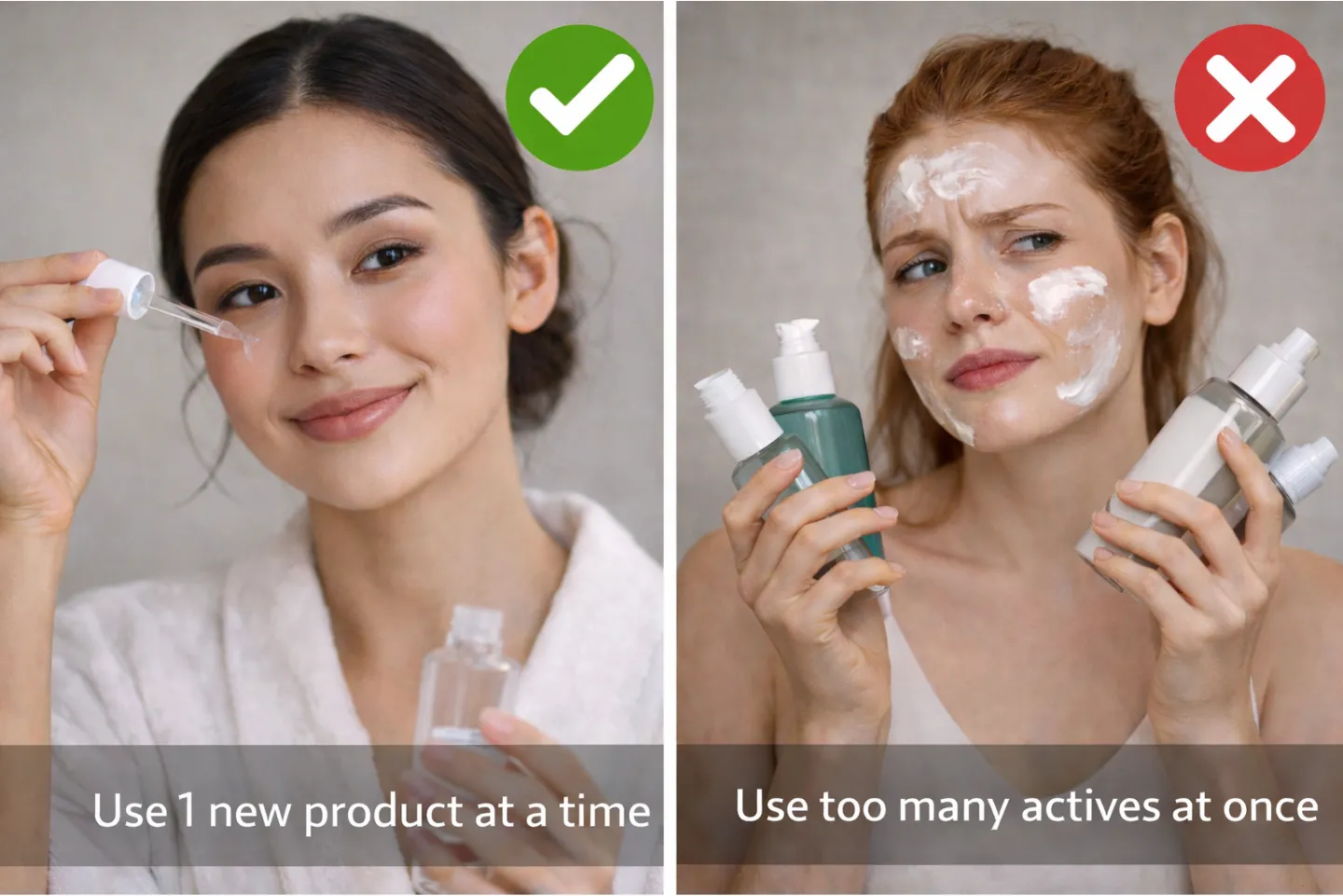
- Add one new product at a time
- Use it 2-3 nights per week to start (especially retinoids/acids)
- Give a product 2-6 weeks before judging it (unless you’re clearly reacting)
And yes: “more” isn’t automatically “better.” Even dermatologists have been publicly nudging people back to simpler routines, especially when social media pushes product overload.
Skincare Routine Do’s and Don’ts
Do
- Do build a skincare routine for your skin type around cleanser, moisturizer, and SPF.
- Do wear broad-spectrum SPF 30+ daily as the final AM step.
- Do moisturize even if you’re oily (choose a lighter texture).
- Do patch test if you have sensitive or reactive skin.
- Do keep your routine consistent; skin loves steady habits more than constant switching.
Don’t
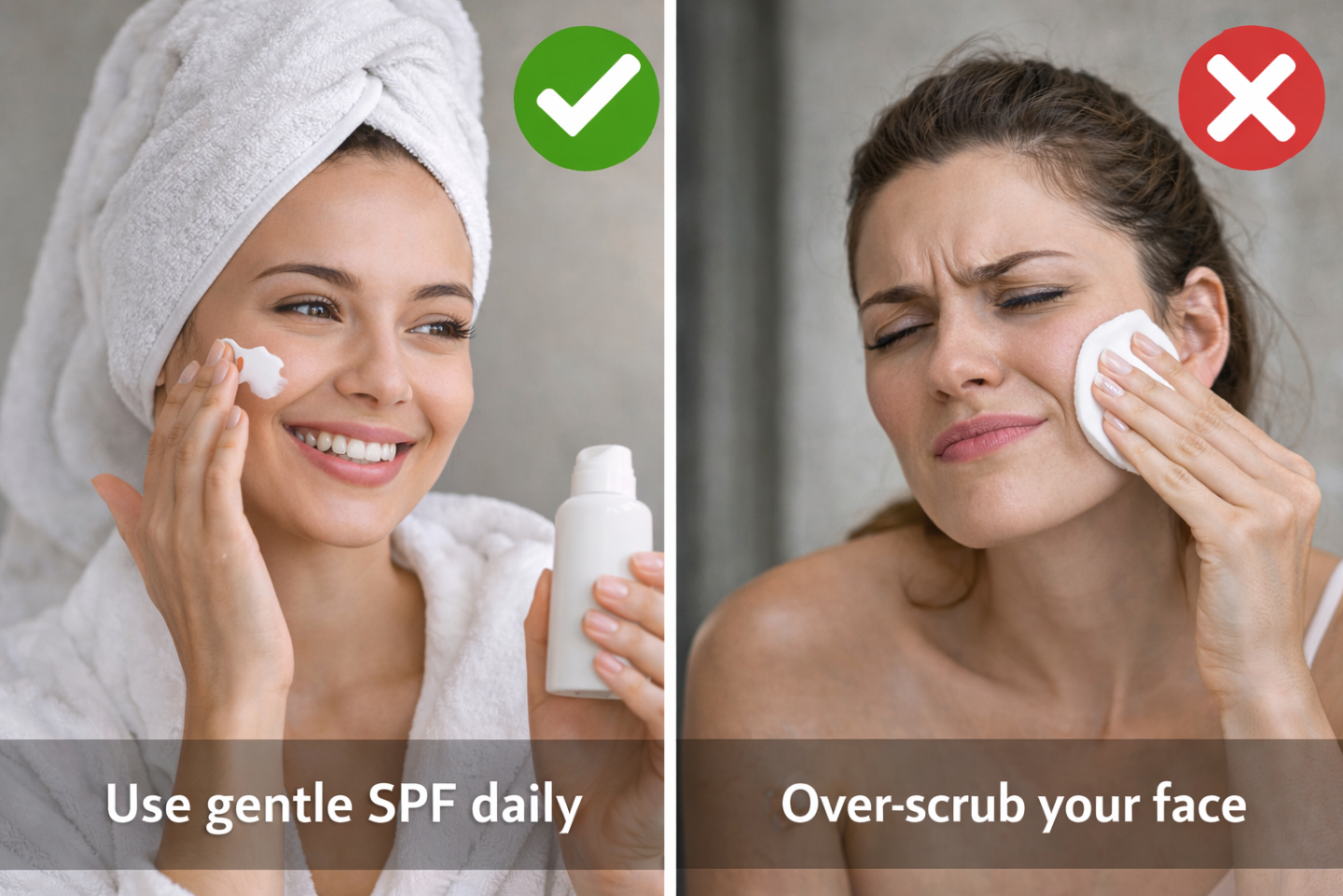
- Don’t strip your skin with harsh cleansers or over-wash; barrier damage is a drama magnet.
- Don’t stack multiple strong actives (retinoid + exfoliating acid + benzoyl peroxide all at once is asking for irritation).
- Don’t skip sunscreen when using exfoliants or retinoids.
- Don’t expect overnight miracles; healthy skin is built, not rushed.
- Don’t treat trends like prescriptions; your skin type sets the rules.
Healthy-looking skin may have less to do with trends and more to do with avoiding the mistakes that go unnoticed. Explore Common Skincare Mistakes and How to Fix Them.
Luxyora Philosophy: Beautiful skin isn’t a 12-step performance, it’s a daily relationship. Learn your skin type, honour its rhythms, and let consistency be your most luxurious ingredient.
References:
- American Academy of Dermatology Association. (n.d.). Basic skin care. https://www.aad.org/public/everyday-care/skin-care-basics/care
- American Academy of Dermatology Association. (2024, January 31). American Academy of Dermatology issues updated guidelines for acne management. https://www.aad.org/news/updated-guidelines-acne-management
- American Academy of Dermatology Association. (n.d.). Atopic dermatitis: Self-care. https://www.aad.org/public/diseases/eczema/types/atopic-dermatitis/self-care
- Frazier, W., & Bhardwaj, N. (2020). Atopic dermatitis: Diagnosis and treatment. American Family Physician, 101(10), 590–598. https://www.aafp.org/pubs/afp/issues/2020/0515/p590.html
- Mayo Clinic Staff. (2024, November 22). Skin care: 5 tips for healthy skin. Mayo Clinic. https://www.mayoclinic.org/healthy-lifestyle/adult-health/in-depth/skin-care/art-20048237
- Reynolds, R. V., et al. (2024). Guidelines of care for the management of acne vulgaris. Journal of the American Academy of Dermatology. https://www.jaad.org/article/S0190-9622%2823%2903389-3/fulltext
- Suozzi, K. (2025, September). Here’s what dermatologists are saying about your skin care routine: Keep it simple. Associated Press. https://apnews.com/article/16ce2a56462995c41054fdf147814d7e
- Verywell Health. (2025). Should you apply sunscreen before or after moisturizer? https://www.verywellhealth.com/sunscreen-before-or-after-moisturizer-11789927
- Wolff, K., Goldsmith, L. A., Katz, S. I., Gilchrest, B. A., Paller, A. S., & Leffell, D. J. (Eds.). (2019). Fitzpatrick’s dermatology in general medicine (9th ed.). McGraw Hill. https://accessmedicine.mhmedical.com/content.aspx?bookid=2570§ionid=210445087