Horology : What is Horology
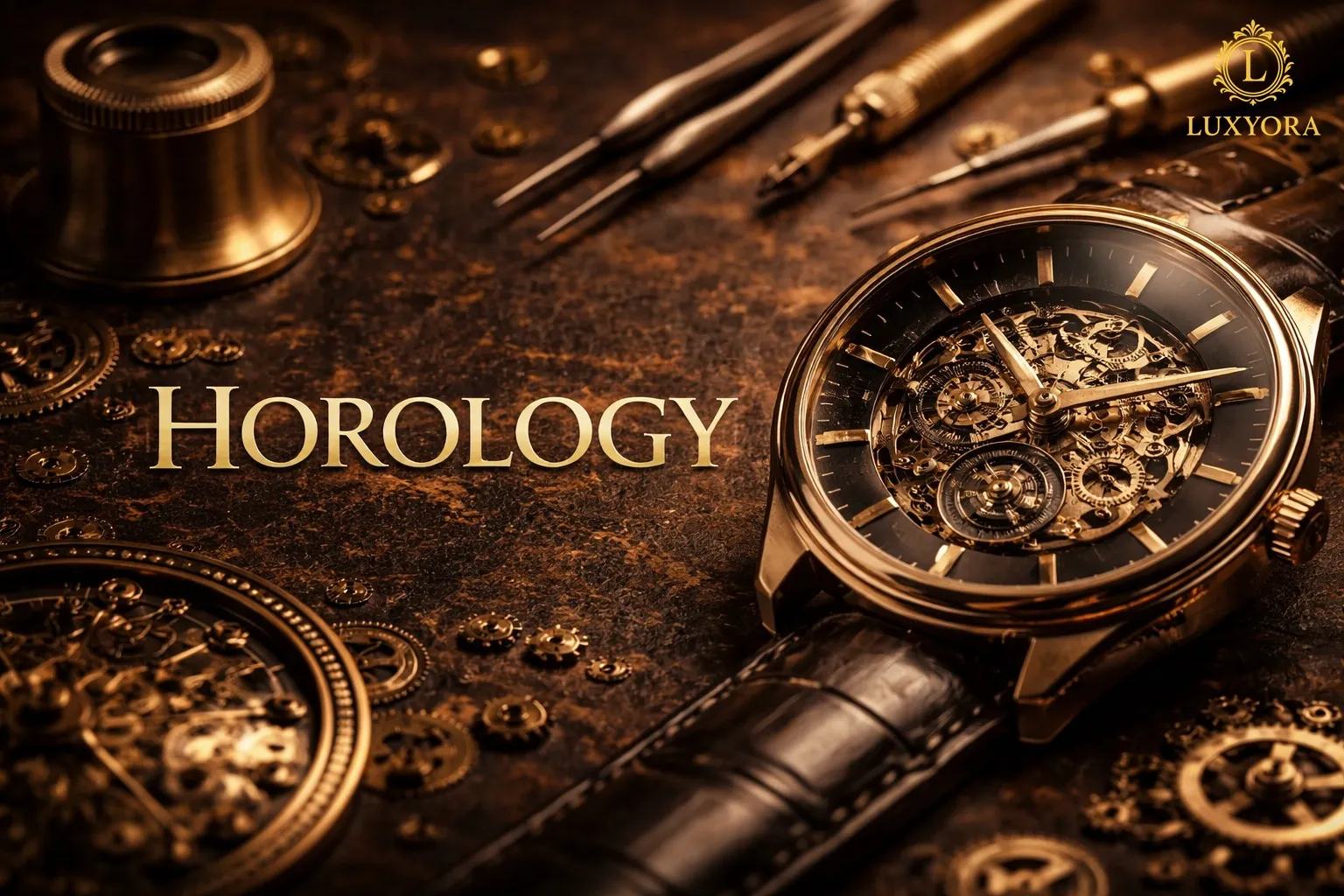
Horology may sound like a word reserved for hushed conversations in luxury boutiques, but at its heart, it is the art and science of measuring time, most notably through watches and clocks. It is a discipline where engineering meets elegance, transforming tiny gears, springs, and circuits into objects that are both functional and deeply symbolic.
Horology isn’t just about telling time. It’s about humanity’s enduring fascination with understanding, mastering, and honouring the passage of moments.
From Ancient Tools to Wristworn Wonders
The story of horology stretches back thousands of years. Early civilisations relied on sundials, water clocks, and hourglasses to track time’s movement. During the Renaissance, timekeeping evolved into intricate mechanical creations, often ornate and handcrafted, laying the foundation for modern watchmaking.
Over centuries, these mechanisms became smaller, more precise, and wearable, eventually giving rise to the wristwatch as we know it today.
Where Precision Meets Craftsmanship
At its core, horology is a study in precision. A traditional mechanical watch contains hundreds of microscopic components that work in harmony to measure time accurately. In luxury watchmaking, these movements are often:
- Hand-assembled
- Meticulously adjusted
- Individually polished and finished
This attention to detail elevates a watch from a tool into a work of mechanical art.
Modern horology encompasses both:
- Mechanical and automatic watches, powered by springs and motion
- Quartz watches, driven by battery-powered oscillation
Each represents a different philosophy of timekeeping, one rooted in tradition, the other in efficiency.
Innovation Without Abandoning Tradition
Today’s horological world is a dynamic blend of heritage and innovation. While traditional manufacturers continue to celebrate centuries-old techniques, contemporary
brands experiment boldly with:
- Carbon composites
- Ceramic cases
- Sapphire crystals
- Advanced alloys and lightweight materials
Even smartwatches, though digital by nature, belong to the broader horological landscape, proving that timekeeping continues to evolve alongside modern lifestyles.
Complications: Time with a Story
One of horology’s most captivating aspects is the concept of complications beyond a basic time display. These include:
- Chronographs
- Moon phase indicators
- Perpetual calendars
- Power reserve displays
Each complication adds both function and narrative, turning the watch face into a miniature storytelling canvas.
Wearable Art with Meaning
What makes horology truly enchanting is its ability to transform a practical necessity into something deeply personal. A watch can mark milestones, commemorate achievements, or become a lifelong companion passed down through generations.
Horology celebrates time not as something to race against, but as something to experience, appreciate, and honour one carefully measured second at a time.
For enthusiasts and newcomers alike, horology offers a window into human ingenuity, patience, and the timeless desire to give meaning to the moments that shape our lives.
References
- Donzé, P.-Y. (2018). The History of the Swiss Watch Industry. Springer.
- de Carle, D. (2020). Practical Watch Repairing (Updated ed.). Crowood Press.
- Meis, R. (2021). Watchmaking. TeNeues.
- Smith, R. (2023). The Watchmaker’s Apprentice. Thames & Hudson.
- Encyclopaedia Britannica. (2024). Horology.
- Fondation de la Haute Horlogerie. (2023). Introduction to fine watchmaking.
- WatchTime Magazine. (2025). Modern materials in luxury watchmaking.
- Grand View Research. (2026). Global luxury watch market trends.
- Swiss Watch Industry Federation. (2024). The evolution of mechanical and quartz movements.
- Smith, R. (2019). The evolution of modern horology. Journal of Timekeeping Arts,14(2), 45–57.
- Swiss Federation of Watchmaking. (2023). History of Swiss watchmaking. Geneva: SFH Publications.