Caviar Leather : What is Caviar Leather
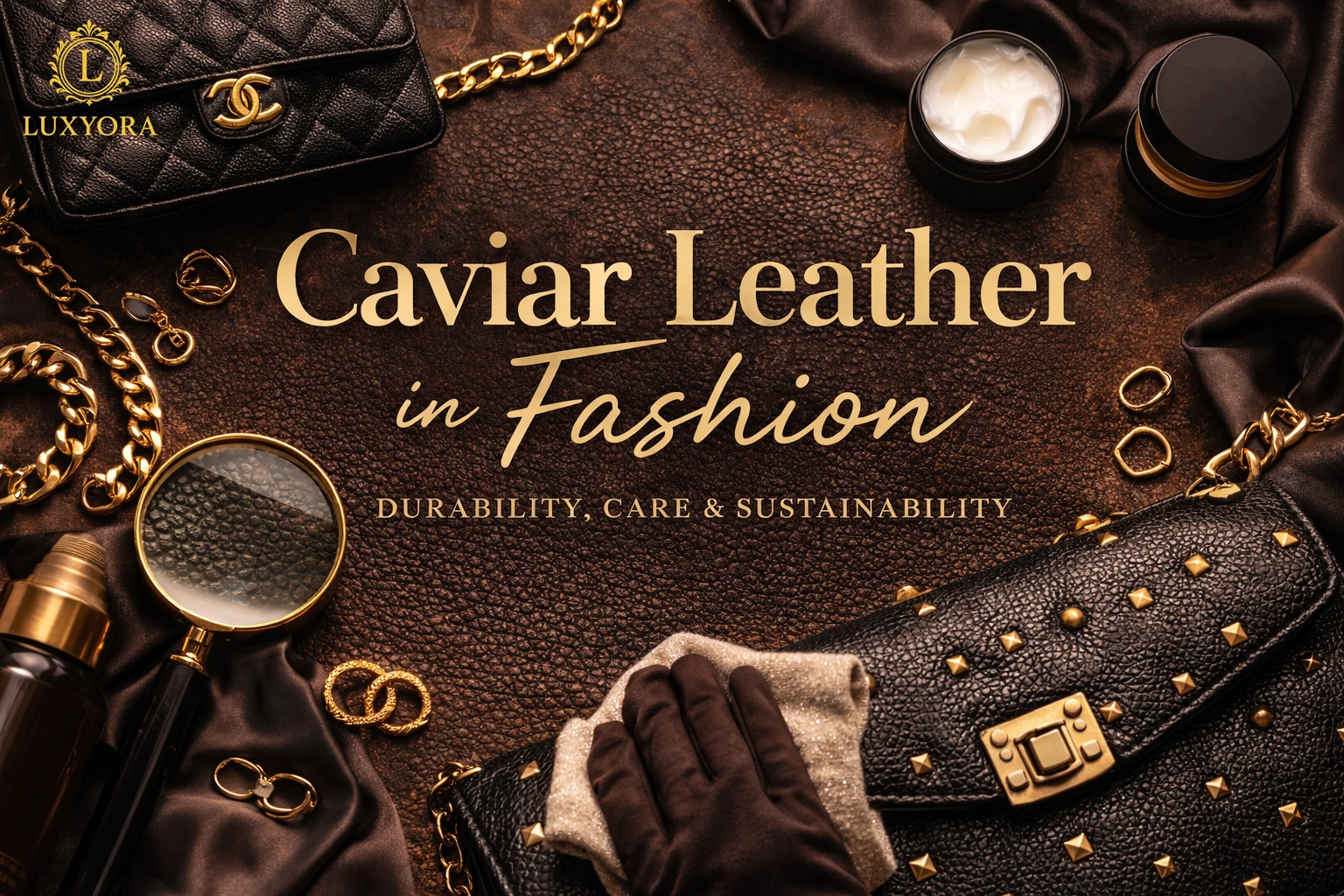
In the fashion world, caviar leather is an industry term for a durable, pebbled-grain leather most famously associated with Chanel handbags. The “caviar” name is a style reference: the surface resembles tiny, evenly raised beads, like fish roe, creating a textured, grained finish that reads instantly as “luxury,” while also offering practical benefits such as scratch resistance and shape retention.
Although it is often discussed as if it were a rare leather species, caviar leather is typically calfskin that has been treated/finished to produce a pronounced grain.
In other words, the key feature is not the animal sourcebut the surface texture and finishing system that make it look and perform as it does.
What Exactly Is “Caviar Leather”?
Definition (fashion + product language)
Caviar leather generally means:
- Calfskin base
- A visible, tactile pebbled grain
- A sturdier, slightly thicker “hand feel” than smooth luxury leathers like lambskin
- A reputation for everyday durability in high-wear accessories
- Designers and luxury buyers often use “caviar” as shorthand for a bag that will:
- Hold its silhouette longer
- Show fewer surface marks
- Keep its structured quilting looking crisp over time
How the Texture Is Created: Grain, Finishing, and Surface Engineering
To understand caviar leather, it helps to know the fashion manufacturing concept of finishing. In leather science, finish is applied to add protection and durability to the grain surface and/or to create specific surface effects, which is exactly what caviar’s pebbled look is: a controlled surface effect.
Why finishing matters in luxury
Leather finishing influences:
- Gloss level (matte vs. shine)
- Touch (dry, waxy, soft)
- Resistance (scuffs, dirt, moisture, abrasion)
- Color depth and uniformity
That’s why two bags can both be “calfskin,” yet behave completely differently: their finishing systems are designed for different use-cases.
Caviar Leather vs. Lambskin: The Classic Luxury Comparison
In luxury handbags, caviar leather is frequently compared with lambskin because they signal two different kinds of luxury:
Caviar leather
- Textured/pebbled
- More forgiving for daily wear
- Stronger “structure” aesthetic
- Lambskin
- Smooth and buttery-soft
- More prone to visible scratches
- A more “delicate” and glossy look
If you’re learning luxury materials, this comparison is important because it shows how fashion buyers evaluate leather not only by feel, but by lifestyle performance.
Why Caviar Leather Is a Luxury Favorite
1) Texture communicates value
Caviar leather’s grain photographs well and reads as premium because it adds depth and dimension—especially in quilting and structured silhouettes. That’s why it’s often described as one of the most recognizable luxury leathers in the market.
2) It supports “investment bag” behavior
Modern luxury consumers increasingly care about longevity, repair, and resale, not just logos. Because caviar leather is known for maintaining its shape and concealing wear, it naturally fits this made-to-last narrative.
3) It’s functionally practical for daily use
A pebbled surface is generally more forgiving than a smooth one because micro-scratches and small scuffs blend into the texture rather than standing out as clear lines.
How to Care for Caviar Leather (The Fashion-Professional Approach)
While every brand differs, the “best practice” care philosophy is consistent across leather goods:
Cleaning
- Dust regularly with a soft cloth.
- Use gentle leather cleaners sparingly; avoid harsh household cleaners.
Conditioning
Professional restoration guidance emphasizes cleaning first, then conditioning to restore oils and flexibility.
Even durable leathers benefit from occasional conditioning, especially if they’re exposed to dry heat or sun.
Storage
- Store away from direct sunlight and high humidity.
- Keep the bag supported to maintain shape.
Hardware + color transfer
Textured leathers can still absorb dye transfer from dark denim or garments. Many luxury guides warn that light-colored bags need extra care and mindful styling.
Authentication and Buying Notes: What Shoppers Should Know
Caviar leather is common in luxury resale discussions, so buyers often evaluate:
- Grain consistency (even pebbling; not overly plastic-looking)
- Stitching symmetry
- Edge paint quality
- Hardware engraving clarity
- Structure (does the bag collapse unusually?)
For collectors, coffee-table-style references can also build “material literacy,” helping them learn how iconic bags are described in terms of craftsmanship, history, and design cues.
Sustainability Context: Leather, Luxury, and the Pressure to Prove Impact
Luxury leather sits at the intersection of desirability and scrutiny. The industry’s sustainability conversation increasingly relies on Life Cycle Assessment (LCA) and supply chain standards.
What recent LCA work says
The Leather Working Group’s LCA summary reports that raw material sourcing and upstream processes are major drivers of leather’s environmental impact, and it emphasizes that improvements are needed across all stages.
What this means for “caviar leather” as a term
Caviar leather is fundamentally a finishing-and-texture story, which means sustainability can be influenced by:
- Tannery practices and chemical management
- Finishing chemistry choices (coatings, pigments, solvents)
- Repairability and long-term durability
In consumer terms: a long-lasting caviar leather bag that’s repaired and kept for years may align better with “buy less, buy better” values than a quickly replaced alternative, though the upstream impacts of animal-derived materials still matter.
Why the Term Matters in the Fashion Industry
“Caviar leather” is more than a marketing phrase. It functions as:
- A material shorthand in luxury merchandising
- A quality signal in resale listings
- A design choice affecting structure, wear, and styling
- A finishing category tied to performance and upkeep
If you can explain caviar leather clearly, you’ve learned a core luxury concept: fashion materials are evaluated not only by what they are, but by how they’re engineered to look, last, and live in the real world.
References
Assouline. (2025). Fashionphile: The book of iconic bags. Assouline. (ASSOULINE)
Covington, A. D., & Wise, W. R. (2019). Finishing. In Tanning chemistry: The science of leather (2nd ed., pp. 554–571). Royal Society of Chemistry. (Royal Society of Chemistry)
Farra, E. (2021, April 20). What makes an It bag in the 2020s? Sustainability, of course. Vogue. (Vogue)
Leather Working Group. (2024). Measuring the environmental impact of leather: Life cycle assessment report summary [PDF].
Taylor, J. (2022, June 15). The guide to Chanel leathers and materials. Madison Avenue Couture. (Madison Avenue Couture)
The Guardian (Jarrett, J., quoted). (2024, March 19). “Let’s give her a relaxing spa day”: How to restore a leather handbag at home. The Guardian. (The Guardian)
Woodhead Publishing. (2018). Leather and footwear sustainability: Manufacturing, supply chain, and product level issues. Woodhead Publishing. (Amazon India)
WWD. (2025, September 15). Fashionphile celebrate 25 iconic bags in new book. Women’s Wear Daily. (WWD)
-