Luxury Retail Trends 2026: Why Brands Are Leaning Towards Fewer Doors, Bigger Experiences
Hermès spent seventeen years sitting on a building at 166 New Bond Street. On June 16, 2026, the house opened a six-floor Maison spanning roughly 2,000 square metres across six historic listed buildings, complete with a café, a roof terrace and private rooms reserved for its most valued clients. To make room, Hermès closed both its old 155 New Bond Street store and its concession inside Selfridges, reportedly folding client profiles and purchase history from both into the new location.
US luxury retailers opened 46 per cent less store space in the first half of 2026 than in the same period the year before, according to JLL, which measured 123,000 square feet of new leasing against 227,000 a year earlier. Mono-brand openings are running 15 to 20 per cent below 2022 levels.
The stores that are still going up have grown considerably: average flagship size is up more than 30 per cent. Savills Global Luxury Retail Outlook 2026 found the same contraction playing out worldwide, with new store openings falling to their lowest level since 2020 and spending concentrating in a handful of what the report calls global alpha cities, among them London, Paris, Milan, New York, Tokyo and Hong Kong.
Read the square footage alongside the leasing figures, and a different story appears than pure retreat. The decade-long habit of putting a mono-brand door on every promising high street is going away. What’s replacing it: fewer, far larger spaces built for longer visits.
North America accounted for 27 per cent of global luxury openings in 2025, the first time the region has led the rankings since Savills began tracking the category in 2016. New York alone posted a 23 per cent jump, its first return to the top since 2019, even as overall US activity contracted around it.
Hermès and Louis Vuitton Are Turning Flagships Into Luxury Destinations
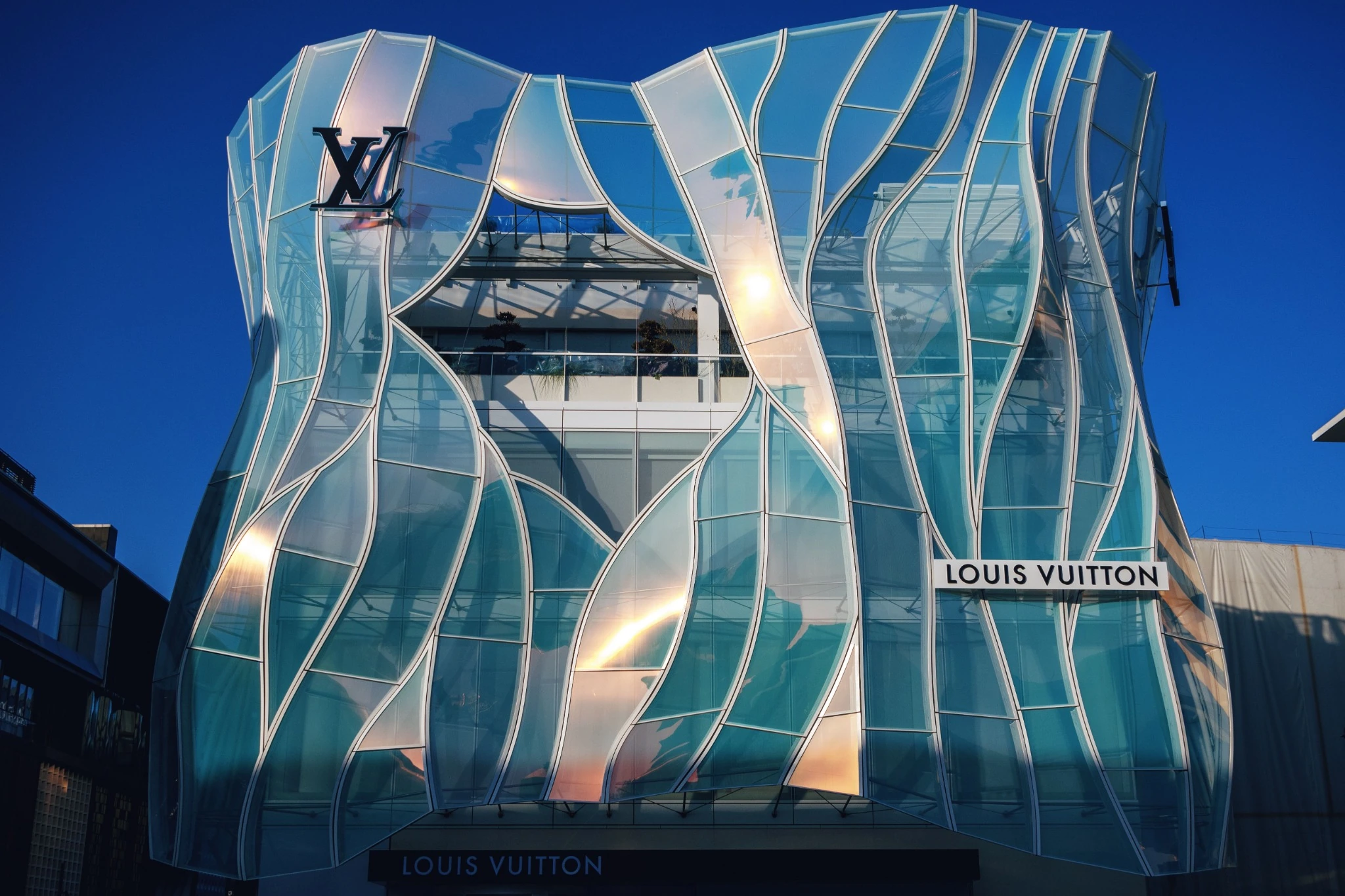
Four of the six floors in Hermès’ new Bond Street building hold retail; two are stock and back office, and it’s now the largest Hermès store in Europe. Louis Vuitton is chasing something similar in Hong Kong, where it’s preparing a roughly 40,000-square-foot space at K11 MUSEA called LV The Place Hong Kong, combining retail with an exhibition area, a café, a restaurant, and a lounge reserved for VIP clients. The project follows the template set by The Louis, the brand’s ship-shaped Shanghai store, which turned a three-floor building into a destination that draws visitors whether or not they buy anything. New World Development, which controls K11 MUSEA, has reportedly tied part of the rent to the store’s revenue rather than a fixed sum.
Chanel Beauty spent ten days in August turning Hong Kong’s Tai Hang neighbourhood into a scent-and-culture activation built around a single fragrance, threading music, flowers and café culture through the district instead of confining the launch to one counter. Kilian Paris introduced a portable refillable format designed to carry a fragrance ritual entirely outside the store.
Kith Brings the Destination Retail Model to London
Ronnie Fieg opened Kith’s first permanent UK store on Regent Street in November 2025, a 19,000-square-foot space combining Kith, Kith Women, Kith Kids and Kith Treats with his first independent restaurant, Ronnie’s. The building dates to the 1920s, and Fieg’s team preserved its original curved windowpane glass rather than replacing it, treating the store’s own architecture as part of the merchandise. “The best of everything we have to offer in one space,” is how Fieg described the ambition to Dezeen.
Ronnie’s relaunched its menu in July 2026 under a new head chef, and its centrepiece is now a flight of three mini burgers served at a six-seat bar that takes its own separate reservation. None of this is technically luxury retail. But it’s the same bet Hermès and Louis Vuitton are making, aimed at a younger, more streetwear-literate customer who wants a reason to linger that has nothing to do with the price tag.
How Independent Luxury Brands are Approaching Store Expansions
A smaller label reading these headlines could reasonably conclude the flagship game now belongs entirely to conglomerates, and in the narrowest sense it does. LVMH and Richemont brands accounted for roughly 30 per cent of total US luxury openings tracked by JLL this year. But the same data found independent and family-owned brands making up nearly half of new store openings in the US and Canada by count, averaging a modest 3,200 square feet.
Italian tailor Boglioli opened its first standalone London store on Bond Street this year, its third UK monobrand location, with its founder targeting turnover above the €20 million it recorded two years earlier.
Pop-ups, capsule collections and short-run activations let a young brand borrow a slice of the destination logic without signing a ten-year lease on a museum-sized space. Wholesale and concession deals inside an established department store carry lower fixed costs and put a new name in front of a shopper who already trusts the retailer around it.
Why Shoppers Still Prefer Physical Luxury Stores in 2026
Consumers are giving brands every reason to keep building this way. Euromonitor’s 2025 Voice of the Consumer survey found 52 per cent of high-income shoppers now prefer buying fashion in-store, up from 36 per cent in 2023, and physical stores still drive 81 per cent of luxury sales. EY’s research among aspirational luxury buyers earning six figures found 71 per cent purchase at brand-owned stores, and more than two-thirds describe themselves as extremely satisfied with the experience, against about half who say the same of brand websites. Nearly half cite the pampering itself as the draw.
Apparel and accessories still dominate US openings, accounting for 62.1 per cent of new stores tracked in the first half of 2026, roughly 59 of 95 locations. The sales figures inside that category complicate the picture: leather goods and shoe sales fell 5 to 7 per cent globally, a hangover from the steep post-2019 handbag price increases finally catching up with demand. Jewellery and watches made up 33.7 per cent of new US openings, with Cartier, Van Cleef & Arpels and Vacheron Constantin among the brands expanding, and the category is growing 4 to 6 per cent globally even as apparel slows. These openings cluster tightly around established luxury districts, and the stores themselves increasingly double as service venues, offering repair, restyling and pre-owned authentication alongside anything new.
Luxury Retail Model: Resale, Rental, and Repair
Selfridges is chasing the same younger, values-driven shopper through an entirely different door. Its Reselfridges programme aims to have 45 per cent of transactions come from resale, rental, repair and refill by 2030, and its rental service expanded online in 2025. Dr. Martens is testing another version of reinvention: a heritage-heavy redesign of its London flagship, led by new chief brand officer Carla Murphy, who joined last year and describes the label as being “in motion for its next chapter.”
References: