No products in the cart.

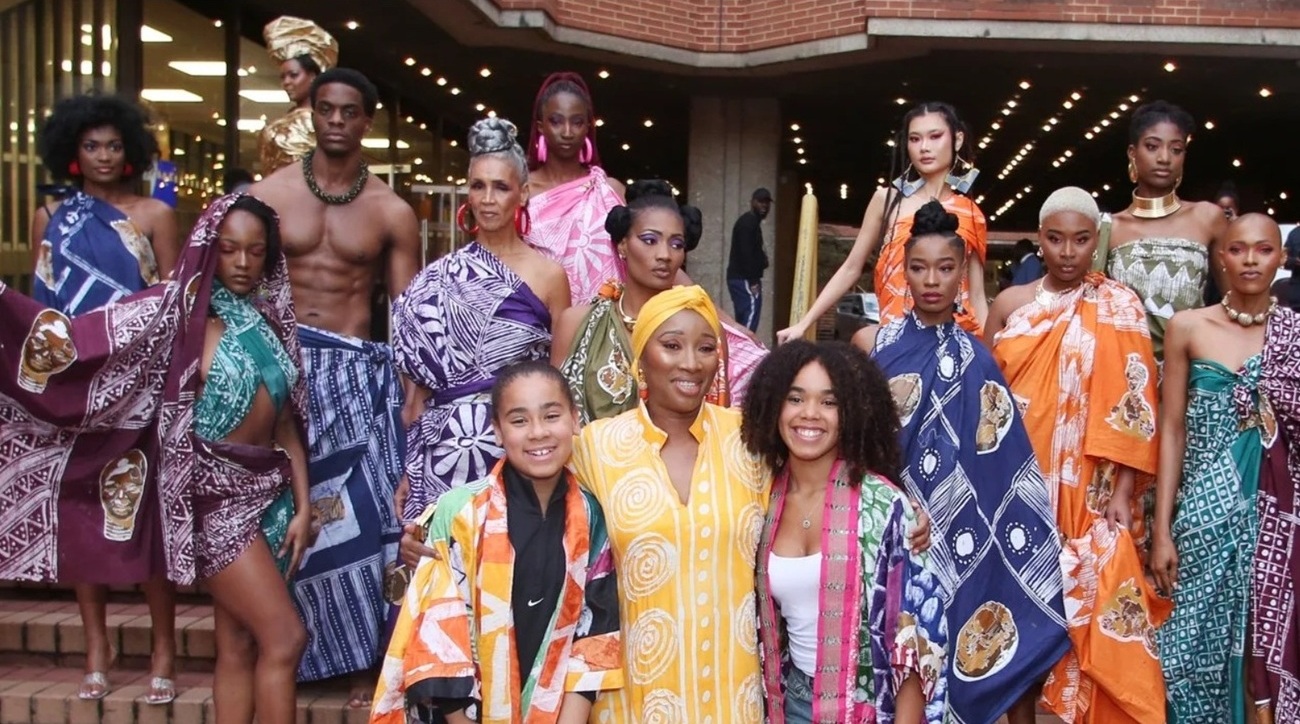
Africa Fashion Week London, commonly known as AFWL, is an annual London-based fashion platform that combines runway presentations, designer exhibitions, retail opportunities and professional education to promote African and African-heritage fashion. Created in 2011 by Queen Ronke Ademiluyi-Ogunwusi, it was established to increase the visibility, awareness and long-term sustainability of African and Black-owned fashion businesses. More than a seasonal catwalk, AFWL brings designers, textile makers, students, buyers, media professionals and consumers into a shared environment where creativity is connected with commerce and cultural knowledge. The British Council describes it as the world’s longest-running platform dedicated to African fashion, while the Mayor of London has recognised its role as a social enterprise encouraging trade and international engagement.
When Africa Fashion Week London began in 2011, designers working with African textiles and cultural references had comparatively few large-scale opportunities to present their work within the British fashion calendar. AFWL was created to provide a professionally organised setting in which those designers could show collections, meet audiences and develop relationships beyond their domestic markets.
Its purpose has remained broad but consistent: to support indigenous craftsmanship, encourage the responsible development of traditional textiles, create opportunities for emerging businesses and make African fashion more visible to international audiences. The platform presents African fashion not as a single visual category, but as an expansive creative field shaped by different countries, communities, techniques and personal histories.
AFWL reports that, across its first 15 seasons, it hosted more than 3,000 designers and exhibitors and welcomed more than 90,000 visitors. These figures encompass established labels, young designers, fashion students, artisans, buyers, journalists and members of the public attending its exhibitions and runway programmes.
The organisation’s current community-interest structure is associated with African Fashion Week Initiatives C.I.C., company number 14689569. Companies House records the organisation as an active community interest company limited by guarantee, incorporated on 27 February 2023. This structure reflects AFWL’s combination of cultural programming, professional development and commercial opportunity.
Queen Ronke Ademiluyi-Ogunwusi continues to lead the platform as its founder and chief executive officer. Her work spans fashion entrepreneurship, cultural advocacy, textile preservation, and programmes supporting designers and artisans.
AFWL’s official team includes co-founders Prince Kamari Ademiluyi and Prince Adebolu “CJ” Ademiluyi. Its wider leadership group brings together specialists in communications, law, exhibition production, styling, marketing and front-of-house management. Anna Marie Benedict serves as Press and Public Relations Director; Princess Bukola Okiji oversees project and legal responsibilities; and Jo Ojerinola leads exhibition and event activities.
Samson Soboye, a London-based designer, stylist and educator, serves as Head Stylist. The official team also includes Front-of-House Director Ruth Ifode, Creative Director Bola Obileye, Project Manager and Marketing Director Dami Tijani, and AFWL Ambassador Viola Edward. Together, the team reflects the multidisciplinary character of an event that must operate simultaneously as a fashion show, public exhibition, educational programme and trading environment.
AFWL’s history can also be traced through the London venues that have hosted it. The inaugural edition took place on 5 and 6 August 2011 at Gibson Hall in Bishopsgate. In 2013, the event moved to the Old Truman Brewery in East London, with an associated gala held at the Dorchester Hotel. The following year, the showcase was staged at Olympia London.
Over subsequent seasons, AFWL programmes have been held at venues including Spitalfields, Freemasons’ Hall, the Institute of Directors, and Kensington and Chelsea Town Hall. These settings have allowed the event to move between London’s creative districts, historic ceremonial spaces and established conference venues.
The choice of prominent London locations has helped place African fashion within highly visible cultural and commercial surroundings. Runway photography, exhibitions, and public shopping areas have enabled visitors to encounter the construction, textile work, and stories behind the clothes up close.
AFWL’s format is deliberately open to different stages of a designer’s career. Its application structure has included categories for students, emerging designers and more established independent labels. This breadth allows a recent graduate to appear within the same wider programme as a designer already developing international clients or retail partnerships.
Although its catwalks attract much of the public attention, AFWL has never functioned solely as a runway event. Exhibitor areas allow fashion, accessories, jewellery, beauty and lifestyle businesses to meet customers and present products directly. Panel discussions and professional sessions address subjects such as business development, digital technology, production, sustainability and international market access.
This combination is especially relevant for independent brands. A runway can create recognition, but a marketplace allows a designer to explain a product, understand customer responses and generate sales. AFWL’s developing “Shop the Runway” concept takes this relationship further by creating a clearer route between what audiences see during a show and what they can purchase or discuss with a designer afterwards.
Institutional organisations have also recognised the platform’s trade potential. The Nigerian Export Promotion Council has previously described AFWL as an important event for promoting and nurturing African fashion talent, while the Mayor of London’s event information has highlighted its role in connecting African designers with global communities through fashion, art and media.
Traditional textile knowledge is central to AFWL’s identity. One of its closely associated initiatives is the Adire Oodua Textile Hub in Ile-Ife, Nigeria. Founded in 2020 under the leadership of Queen Ronke Ademiluyi-Ogunwusi, the hub works to preserve and develop Yoruba textile traditions, particularly Adire and Aso-Oke, while supporting skills development, cultural tourism and sustainable textile production.
Adire is a Yoruba textile tradition in which cotton cloth is patterned through resist-dyeing before being coloured, historically with indigo. The term embraces several methods of folding, tying, stitching, painting or applying resist materials to create distinctive patterns. Far from being a static heritage object, Adire continues to be interpreted by contemporary designers in clothing, accessories, interiors and textile art.
AFWL has helped place this knowledge before international audiences through catwalk collections, workshops and collaborations. In 2024, the organisation renewed its relationship with the Africa Centre in London, presenting activities connected with the history and making of Adire. The collaboration continued into the Africa Centre’s 60th-anniversary period, including work involving the Adire Oodua Textile Hub.
These projects are important because they present traditional fabrics together with the people, skills and cultural contexts behind them. The textile is not treated simply as a decorative surface; it is introduced as the result of knowledge transferred through communities and generations.
Education has become another defining part of AFWL’s work. Its partnerships have connected African fashion with universities, business schools and international cultural organisations.
Henley Business School worked with AFWL and Parsons School of Design on the Fashion Futures programme in 2022. The six-day online course supported fashion entrepreneurs through sessions on business development, technology, and the commercial demands of running a creative enterprise. Forty-five participants took part in the programme.
AFWL has also developed relationships with British fashion education. In 2025, Manchester Fashion Institute students at Manchester Metropolitan University completed a live brief in collaboration with AFWL and the Adire Oodua Textile Hub. Students studied Adire, considered cultural appropriation, and explored ways to combine traditional knowledge with contemporary physical and digital design processes. Their work was developed with guidance from Samson Soboye and Anna Marie Benedict, and selected projects were presented during AFWL’s 2025 programme.
Winchester School of Art has also appeared in AFWL’s official designer programmes, while the University of Northampton has documented a relationship with the platform beginning with graduate participation in 2019. These connections allow students to encounter design traditions and business perspectives that may extend beyond the usual focus of Western fashion curricula.
AFWL’s collaboration with the British Council has strengthened its professional-development and international-market work. Through the Creative DNA programme, early-stage fashion enterprises receive business support, skills development, market exposure and opportunities to build networks.
At the 2025 edition, ten Creative DNA designers from six African countries participated in a dedicated runway, exhibition pavilion and programme of discussions. The initiative was designed to help designers make international connections and develop a clearer understanding of global markets while retaining the cultural character of their businesses.
The partnership illustrates AFWL’s development beyond conventional event production. Runway exposure remains valuable, but it is increasingly accompanied by guidance on pricing, positioning, production, communication and long-term business planning.
AFWL celebrated its 15th edition on 9 and 10 August 2025 at Space House on Kemble Street. The modernist central London building provided a new architectural setting for the event’s combination of catwalks, exhibitions and cultural programming.
The official 2025 programme featured designers and institutions including Adire Oodua, David Wej, Dimeji Ilori, House of Estree, Mary Martin London, Sarah Ajayi, Soboye, Manchester Fashion Institute and Winchester School of Art. The schedule also included an IN Official collaboration with Meta AI, demonstrating how the programme was beginning to examine the relationship between technology and fashion presentation.
Disney’s The Lion King collaborated with AFWL on an opening performance connected with the West End production, bringing music, theatre and fashion into the same programme. British Council Creative DNA designers were represented through their own showcase and exhibition presence.
Rather than being defined by a single fabric or national style, the edition demonstrated AFWL’s increasingly broad interpretation of African fashion. Tailoring, occasionwear, experimental design, heritage textiles, student work and technology-led presentations were all included within the official programme.
Africa Fashion Week London’s 16th-anniversary programme is scheduled to take place from 17 to 23 August 2026 under the theme “Design Beyond Borders.” According to the programme published by AFWL on 26 June 2026, the edition expands the event from its familiar runway-and-exhibition format into a week of press activity, workshops, professional discussions, designer support, shopping and live shows.
The programme is due to begin on Monday, 17 August, with a press conference at Tales House, 28 Cavendish Square. A DJ workshop led by Cuppy is also announced for the same day, although its venue was still listed as to be confirmed when the programme was published.
From Tuesday, 18 August, to Thursday, 20 August, AFWL plans to hold its Knowledge Exchange at the British Council headquarters at 1 Redman Place in Stratford. The programme includes panel discussions, designer surgeries and a seminar examining artificial intelligence in design. These sessions are intended to address the practical questions that accompany international growth, including business planning, technology and access to new markets.
The principal runway and exhibition programme is scheduled for Saturday, 22 August, at 8 Northumberland Avenue. Announced presentations include a New Talent Catwalk, a Next Generation Runway and an evening VIP showcase featuring appearances by Cuppy and Seyi Shay. Shopping and exhibition halls will operate alongside the shows.
On Sunday, 23 August, the venue is scheduled to host the launch of Shop the Runway, a showroom-led format intended to connect collections with buyers, stylists, media and consumers. It represents a practical extension of AFWL’s founding purpose: ensuring that visibility can develop into customer relationships and commercial opportunities.
The announced 2026 designer programme reflects a broad geographical range. Participants listed by AFWL include Joachim Garments and Thethana from Lesotho, Xufan from Ethiopia, Joan Jade from Uganda, PatCh Maoko from Zimbabwe, Ohana Swimwear from Kenya, Republic of Africa from Ghana and the Adire Oodua Textile Hub from Nigeria, alongside additional designers working across Africa and its diaspora.
Africa Fashion Week London’s significance lies in the structure it has built around fashion. It gives designers a stage, but it also gives them space to sell, learn, collaborate and explain the cultural foundations of their work. It introduces students to textile traditions, connects independent businesses with international audiences and invites the public to engage with African fashion as a living, evolving industry.
Its longevity has also created an archive of changing African fashion identities in London. Across more than a decade, AFWL has documented the movement of heritage fabrics into contemporary wardrobes, the growth of diaspora-led labels, the emergence of digitally minded designers and the increasing importance of responsible cultural storytelling.
The platform’s future direction is visible in its combination of textile preservation, creative technology, education and direct retail. Through that balance, Africa Fashion Week London continues to demonstrate that cultural heritage and commercial ambition need not exist separately. When designers are given the means to protect their stories, develop their businesses and reach wider markets, tradition becomes not a limitation, but a foundation for new design.
Africa Fashion Week London. (n.d.). About Africa Fashion Week London. Retrieved July 24, 2026.
Africa Fashion Week London. (n.d.). Africa Fashion Week London team. Retrieved July 24, 2026.
Africa Fashion Week London. (n.d.). AFWL 2024 designers. Retrieved July 24, 2026.
Africa Fashion Week London. (n.d.). AFWL 2025 designers. Retrieved July 24, 2026.
Africa Fashion Week London. (2026, June 26). AFWL 2026 programme: Design Beyond Borders.
British Council. (n.d.). Creative DNA: Supporting fashion businesses in Africa. Retrieved July 24, 2026.
British Council Arts. (2025). Creative DNA designers at Africa Fashion Week London.
Companies House. (n.d.). African Fashion Week Initiatives C.I.C., company number 14689569. Retrieved July 24, 2026.
Henley Business School. (n.d.). Fashion Futures Program 2022. Retrieved July 24, 2026.
Manchester Metropolitan University. (2025, September 26). Manchester Fashion Institute students showcase designs at Africa Fashion Week London.
Mayor of London. (n.d.). Africa Fashion Week London. Retrieved July 24, 2026.
Nigeria Export Promotion Council. (2018). Africa Fashion Week London.
The Africa Centre. (2024, August 28). The Africa Centre partners with Africa Fashion Week London.
Victoria and Albert Museum. (2024, April 17). Àdìrẹ: “Tied and dyed” indigo textiles.


Stay inspired with exclusive brand features, luxury insights, and the latest in fine fashion and beauty — directly in your inbox.