Gen Z and Fashion Brand Loyalty: Why Luxury, Trends, and Trust Are Being Rewritten
Gen Z is often described as fashion’s most elusive customer. They notice changes quickly, switch rapidly, and are hard to regain once lost. This goes beyond shorter attention spans or an appetite for the next trend. Young shoppers are more selective about where their money goes. Brands have to earn their loyalty.
Affordability Now Drives Every Gen Z Fashion Purchase
Money is the place to start, because for Gen Z right now, everything else follows. Seventy-three per cent of American Gen Z shoppers say they’ve changed how they spend because prices have gone up. Across the Atlantic, the story repeats itself: seven in ten UK Gen Z shoppers now put affordability first when buying clothes.
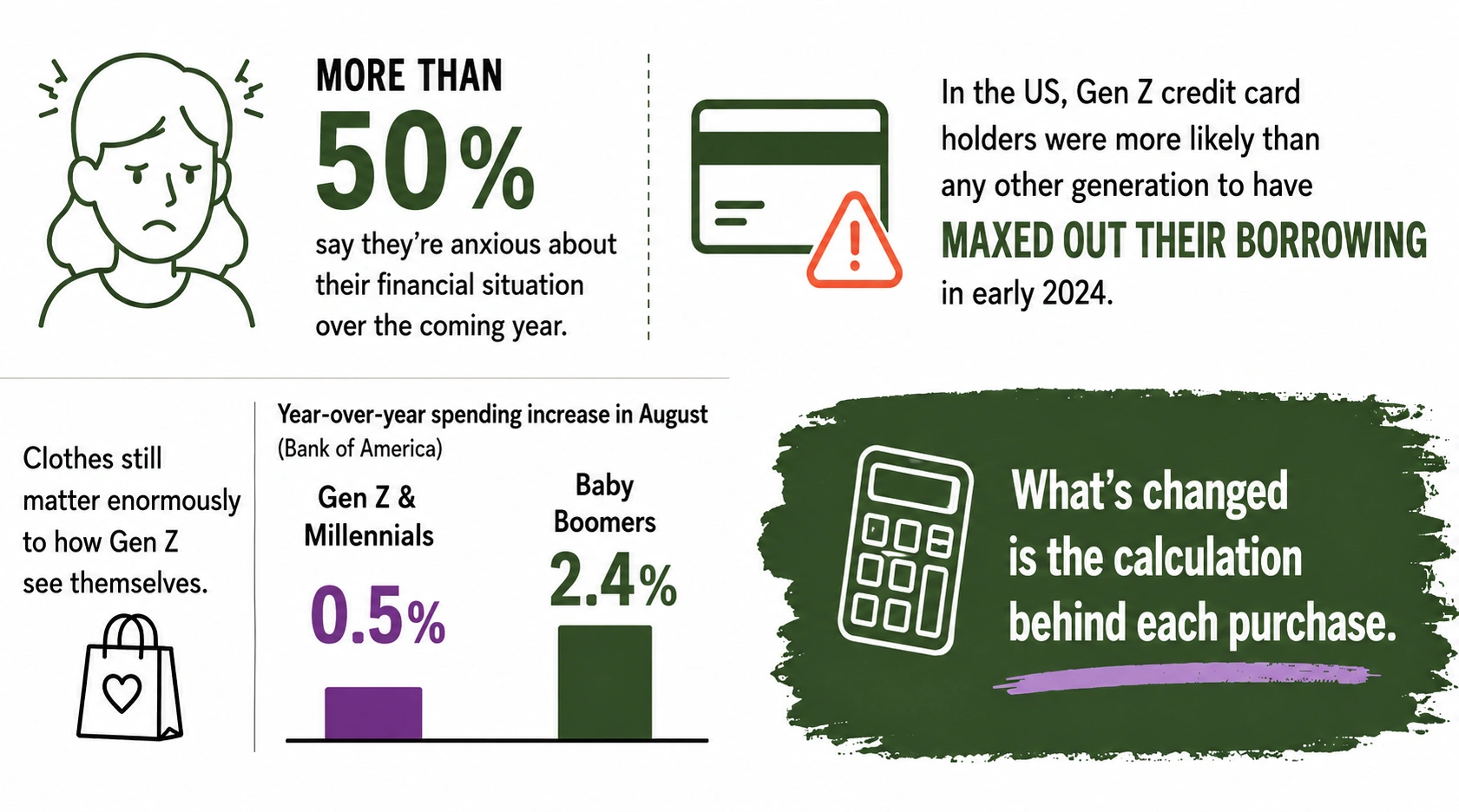
More than half say they’re anxious about their financial situation over the coming year. In the US, Gen Z credit card holders were more likely than any other generation to have maxed out their borrowing in early 2024. Clothes still matter enormously to how they see themselves. Gen Z and Millennial spending rose just 0.5% year-over-year in August, compared to a 2.4% increase for Baby Boomers, according to Bank of America. What’s changed is the calculation behind each purchase.
Private Label and e.l.f. Beauty: Gen Z’s Value-First Shopping Habits
Private label is a genuine preference these days. Numerator’s research suggests that by the middle of 2026, Gen Z will be spending a larger share of their household budget on private label products than Baby Boomers, Millennials, or Gen X. Ulta Beauty’s own line and Wild Fable are ahead of legacy brands in more shopping baskets. Circana names Gen Z, alongside Millennials and high-income shoppers, as a key driver of the category’s growth. This isn’t special-occasion buying; it’s self-gifting.
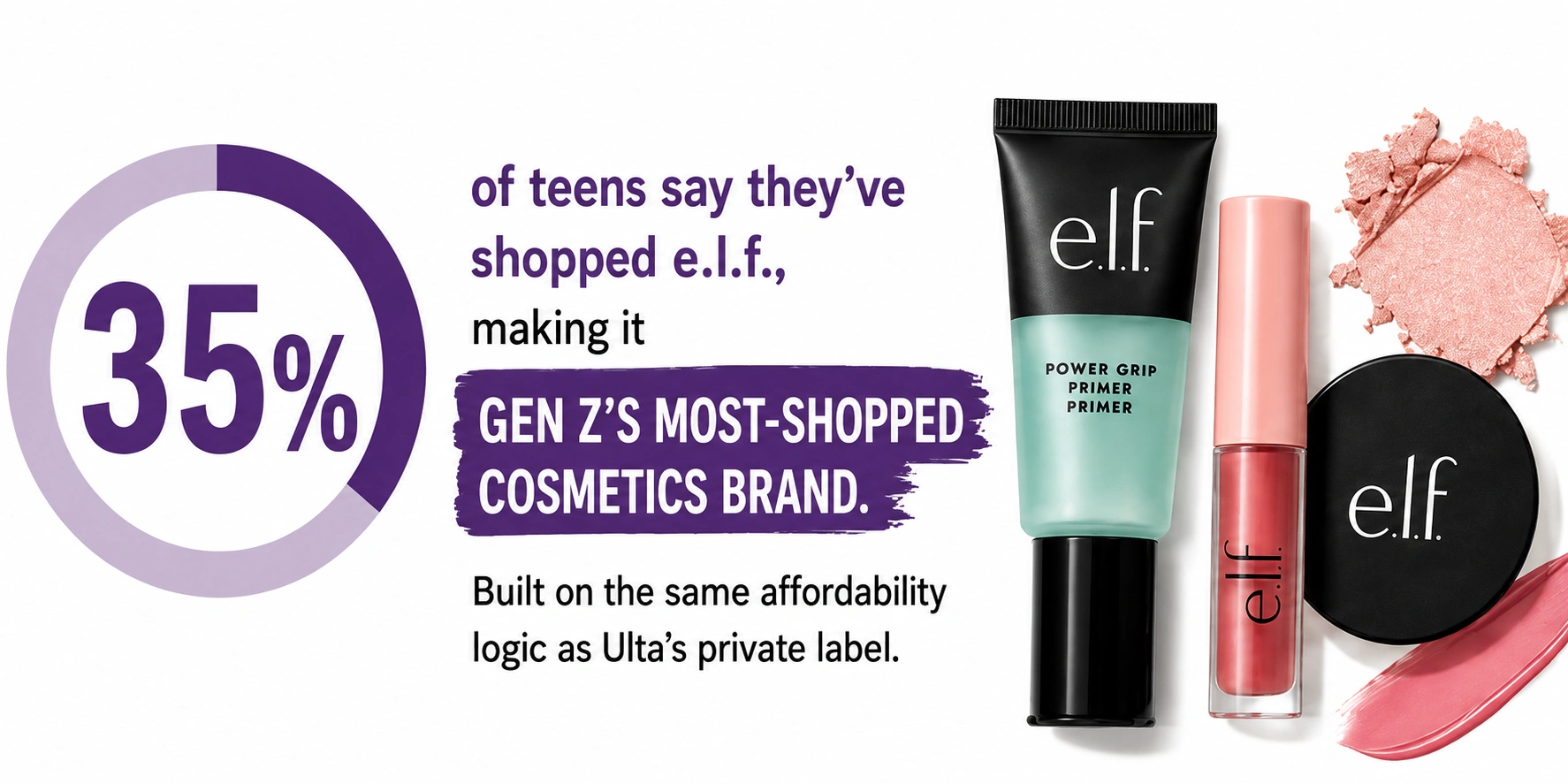
35% of teens say they’ve shopped e.l.f., making it Gen Z’s most-shopped cosmetics brand, built on the same affordability logic as Ulta’s private label.
“Loyal-ish” Gen Z’s Complicated Relationship With Brands
Loyalty, or what’s left of it, tells the more interesting half of the story. YPulse calls this generation “loyal-ish.” Ask a 13- to 39-year-old whether they have a favourite brand, and plenty will name one. Watch what they actually buy over the following twelve months, and the picture gets messier. On average, only 29% of a Gen Z wardrobe comes from a single brand. For shoppers over 50, a single brand makes up 52% of their wardrobe.
Half of young American consumers say they’d rather explore something new than return to what they know. The same restlessness shows up in fragrance, where Circana’s Anna Mayo says Gen Z is driving sales by cocktailing multiple scents into a rotating wardrobe; they don’t settle on one signature perfume. Piper Sandler found annual fragrance spending among teenage boys grew 44% in 2024.
The Power of Childhood Nostalgia
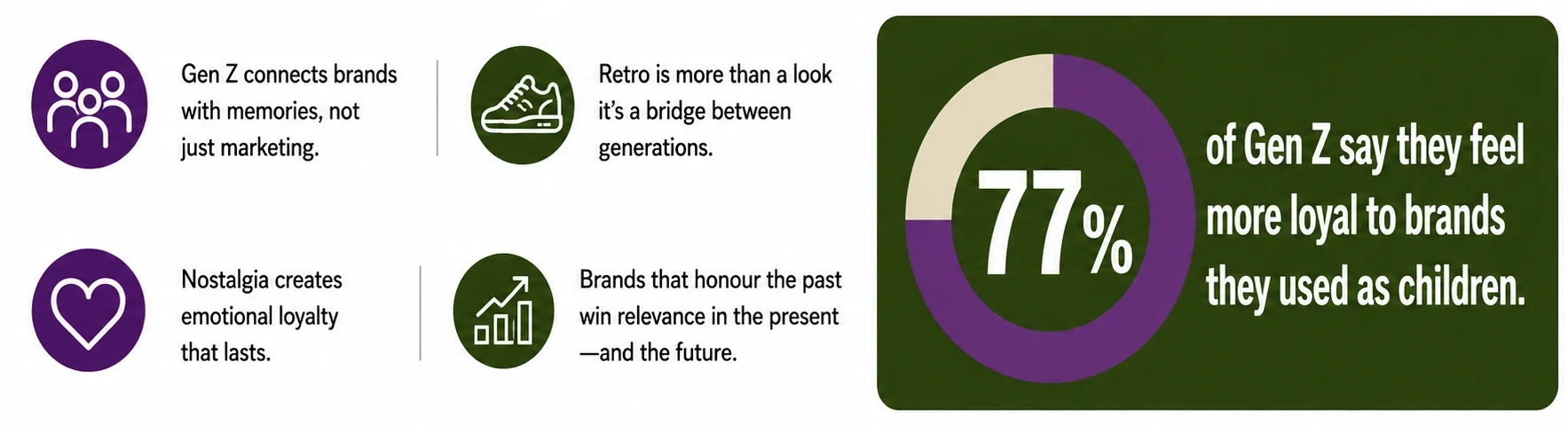
Seventy-seven per cent of Gen Z say they feel more loyal to brands they used as children. No one is devoted to a single label. The deepest loyalty this generation has left is nostalgia for their own past.
A pair of trainers can tell you all about Gen Z. Walk into a New Balance store today, and you’ll find teenagers queuing for a shoe their grandfathers wore to mow the lawn. The brand spent years reviving retro 70s, 80s, and 90s silhouettes, pairing them with streetwear names like Aimé Leon Dore and Joe Freshgoods. CivicScience’s research found something telling underneath the strategy. New Balance’s favourability skews heavily toward nostalgia, far more than rival Nike’s does. The brand is now actively building on that instinct to court a growing Gen Z customer base.
Resale Is Blooming, But Gen Z’s Loyalty to Platforms Isn’t
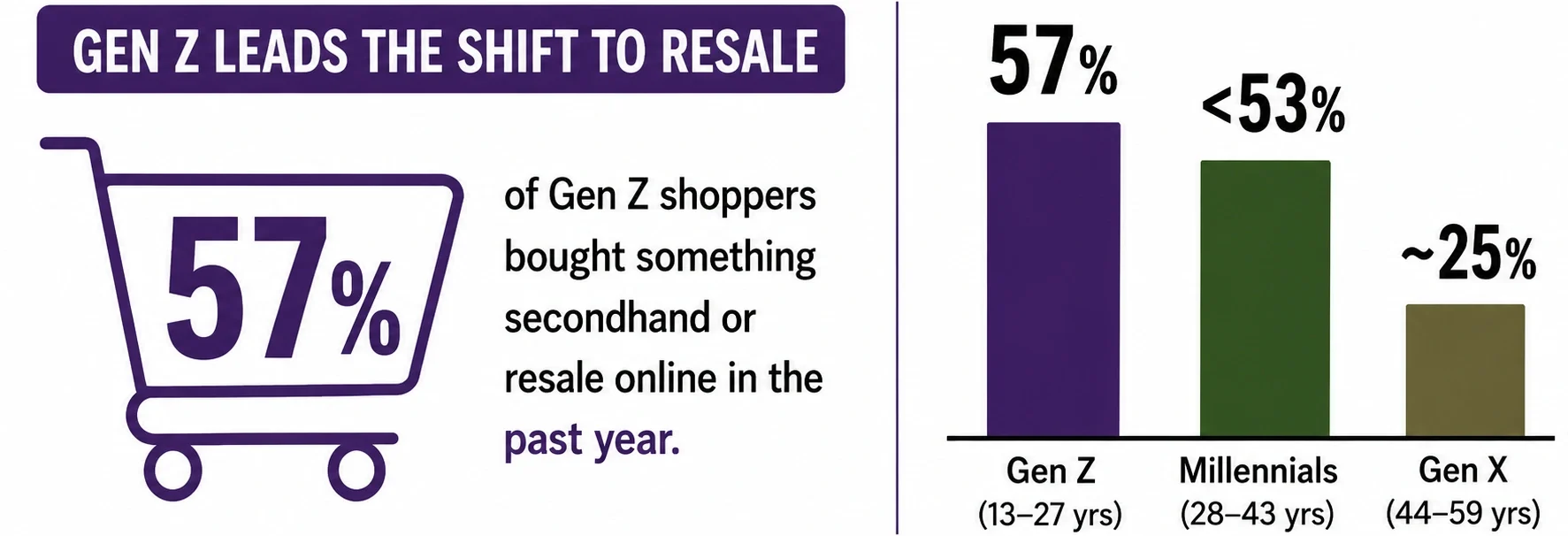
Where that loyalty does exist, it increasingly moves sideways into resale. More than 57% of Gen Z shoppers bought something secondhand or resale online in the past year. This lies comfortably ahead of Millennials, who stay under 53%, and miles beyond Gen X, at roughly a quarter.
ThredUp’s and Seels’ research clears the twist. Buying secondhand doesn’t automatically mean sticking with the platform you bought it from. The US secondhand apparel market is expected to grow to $78.8 billion by 2030. It is growing at nearly four times the pace of the wider clothing retail market.
Gen Z and Millennials are expected to drive more than 70% of the resale market’s growth through 2020, with new shoppers making up the majority of that spend.
Luxury’s Generational Divide
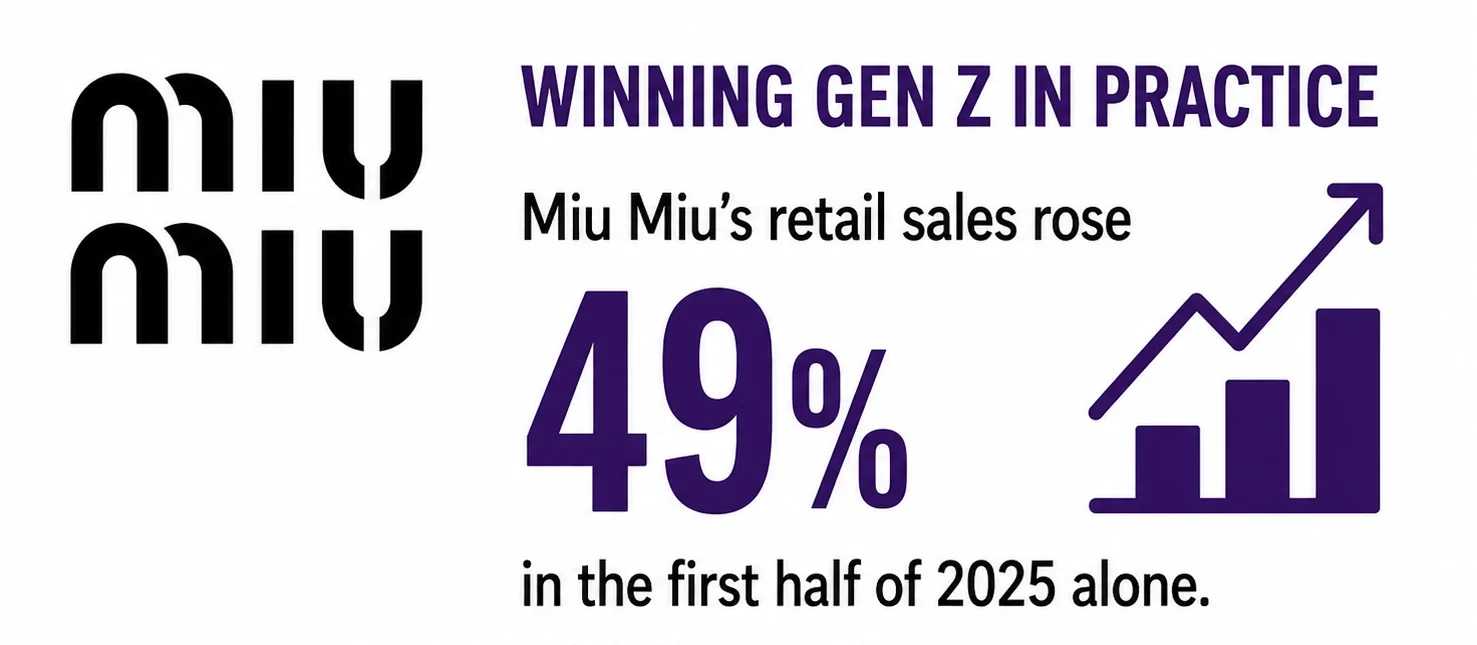
Luxury sits at the far end of all this, and it’s here that the generational split turns sharpest. Bain and Altagamma’s most recent luxury study describes Gen Z as more engaged with fashion than any generation before it and also more critical of it. The cohort prioritises individual identity over community and judges on cultural relevance. Miu Miu shows what winning that cohort actually looks like in practice. Its retail sales rose 49% in the first half of 2025 alone, driven partly by leather bag charms priced between $240 and $1,250. The pricing is small enough for a first-time luxury buyer to justify.
Achim Berg, founder of the industry think tank FashionSIGHTS, said brands like Miu Miu succeed because single pieces mirror the brand identity, letting Gen Z buy into the brand without purchasing a full look.
Loewe and Bottega Veneta have managed something similar. Gucci hasn’t. Data from Gen Z-focused researcher dcdx found the brand suffered the sharpest social media decline of any major luxury label over the past year.
Brands Don’t Get Gen Z’s Loyalty for Free
New Balance dug into its own archive and found a decades-old shoe worth reviving. Uniqlo took a different route: in-store repair services and sewing workshops, helping Gen Z shoppers who want to save money and reduce waste.
J.Crew, under chief executive Libby Wadle, went further still, relaunching its physical catalogue in 2024 after seven years out of print and rebuilding a “multi-generational” identity that helped the retailer head toward record sales. Pandora took a similar approach in jewellery, building its 2025 Talisman collection around ancient Roman coin motifs as part of a deliberate push to become a more fashion-forward name with younger shoppers.
American and British Gen Z shoppers are watching their budgets more carefully. They’re filling more of their wardrobes with private label, keeping only a loose emotional attachment to any single name. Gen Z are buying more secondhand and holding luxury houses to a cultural standard that has little to do with logos.
References: