Creative DNA
Creative DNA is a British Council fashion accelerator and creative-economy programme created to help emerging African designers and fashion entrepreneurs strengthen both their creative practice and the commercial foundations of their businesses. Rather than functioning as a fashion label, it operates as a professional development platform through which participants can access structured training, mentorship, market-testing opportunities and, in selected cohorts, competitive grants and international exposure. Launched in Kenya in 2020, Creative DNA has since supported more than 200 designers and fashion entrepreneurs while extending its reach through country programmes, regional partnerships and international showcases.
A Research-Led Beginning
Creative DNA grew from the British Council’s wider work within the Sub-Saharan African creative economy. Its early Kenyan model was organised around three connected areas: research and insight, policy and advocacy, and business support. This structure gave the programme a broader purpose than conventional designer promotion. It recognised that creative ability flourishes most successfully when it is accompanied by business knowledge, informed industry dialogue and a clearer understanding of the systems through which clothing, textiles and accessories are produced and sold.
The programme’s evidence base included a needs analysis of Kenya’s fashion sector prepared by Collective RW and consultant Jan Miller, together with research into Nairobi’s Uhuru Market conducted in collaboration with HEVA Fund. Work with Fashion Revolution Kenya also examined the fashion value chain, policy considerations and the potential of alternative fibres and raw materials within the local economy. These initiatives helped ground Creative DNA in the lived realities of designers, producers, retailers and makers, allowing its business-support activities to respond to the conditions surrounding fashion enterprises rather than imposing a single universal model.
Research was therefore not simply an introductory exercise. It helped create a framework for conversations among creative practitioners, industry organisations and other stakeholders. By connecting evidence with training and professional exchange, Creative DNA established an approach in which fashion entrepreneurship could be considered alongside manufacturing, materials, retail, intellectual property and market development.
How the Accelerator Works
At the centre of Creative DNA is an incubator designed to help early-stage fashion businesses progress from creative promise towards greater commercial discipline. Its programmes have combined African and UK expertise through hybrid workshops, mentoring, peer learning and practical market engagement. Training areas have included brand identity, customer definition, costing, cash-flow management, pricing, range planning, intellectual property, quality control, investment readiness and business-to-business and direct-to-consumer sales.
The Creative DNA Kenya 3.0 cohort illustrates this approach. Launched in 2023, it selected 20 fashion businesses for a six-week bootcamp delivered with practitioners including Silvia Tonui, Ann McCreath and representatives of Fashion Scout. Ten seed grants with a combined value of KSh3 million were made available through a competitive process. These grants were intended to help selected enterprises translate their learning into practical business development.
Pop-up retail and other market-testing opportunities have complemented the formal curriculum. For a young label, direct interaction with customers can reveal whether a price feels credible, whether a product range is clearly understood and how presentation influences purchasing decisions. Creative DNA’s blended model allows designers to consider these questions while receiving guidance from people with experience in fashion production, branding, retail and international markets.
Regional Growth with Local Character
Although Creative DNA began in Kenya, it was designed to adapt to different creative and commercial environments. The British Council’s principal programme information records expansion to Ethiopia, Senegal, Zimbabwe, Malawi and Uganda. A March 2026 announcement also identifies Nigeria among the countries in which Creative DNA has supported fashion entrepreneurs. Ghana and South Africa have meanwhile been represented through international residencies and pan-African presentations, demonstrating the wider regional reach of the network.
Ethiopia offers a particularly clear example of country-level adaptation. Creative DNA Ethiopia began in 2023 and is scheduled to operate until 2027. Delivered with partners including Creative Hub Ethiopia, iceAddis, Fashion Scout UK and Hub of Africa Fashion Week, it combines mentorship, financial literacy, branding, microgrants and market access. The programme connects contemporary enterprise development with Ethiopia’s established textile, weaving and garment traditions, while allowing participating designers to interpret that heritage through their own individual design languages.
This decentralised approach is one of Creative DNA’s defining qualities. Each participating country has its own retail environment, production capacity, craft traditions and customer expectations. Working with locally embedded organisations enables the programme to maintain a common focus on professional development while respecting the character of each fashion community.
A Community of Distinctive Businesses
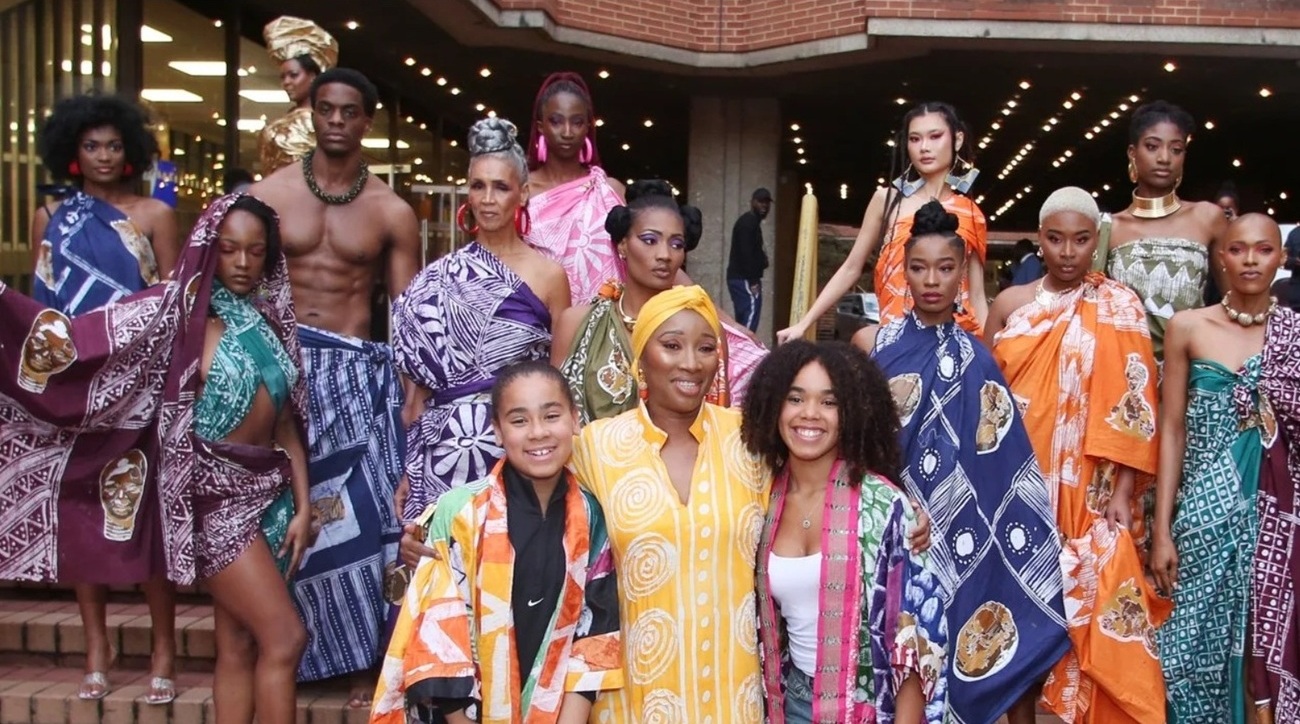
Creative DNA’s alumni and showcase participants demonstrate the breadth of African fashion enterprise. Its network extends across apparel, footwear, jewellery, leather goods, accessories and textile-led businesses. Kenyan names associated with the programme include Sevaria, Epica Jewellery, Kisero Leather and Atieno Yarns. Other participating businesses include Ethiopia’s Dagmawit and Xufan, Zimbabwe’s PatCh, Ghana’s Ometsey, Uganda’s Shwanda Kollection and Nigerian menswear label Henri Uduku.
What connects these enterprises is not a prescribed Creative DNA aesthetic. Their strength lies in the way each designer translates place, material knowledge and personal perspective into a recognisable proposition. At the 2025 Africa Fashion Week London showcase, Sevaria presented textural pieces incorporating sisal and cotton, while Epica Jewellery explored the relationship between beadwork, jewellery and the body. Kisero Leather showed carefully constructed accessories, Shwanda Kollection worked with recycled brass, and Dagmawit brought Ethiopian textile references into contemporary tailoring.
The result is a varied picture of African fashion in which cultural heritage remains active and evolving. Craft is not treated as a decorative addition applied for international audiences. Instead, it can become part of a business’s material identity, production method and relationship with the communities and makers surrounding it.
Sustainability as a Business Practice
Sustainability within Creative DNA is approached through design as well as enterprise management. Some participating businesses work with recycled or upcycled materials, while others draw on handweaving, crochet, beadwork, leatherwork and small-scale craft networks. The programme’s business curriculum adds another dimension by encouraging designers to examine production planning, quality, pricing and supply relationships.
In this context, sustainability is more than an aesthetic message. It is connected to whether an enterprise can produce consistently, maintain quality, value the work of its collaborators and grow without losing the identity that first made it distinctive. For independent labels whose appeal often depends on close relationships with makers and materials, financial and operational knowledge can be as important to long-term continuity as creative vision.
By combining market testing with financial literacy, Creative DNA helps participating entrepreneurs explain not only what they make, but also how their products can be positioned, produced and brought to customers as part of a durable business.
From Regional Platforms to London
International exposure has become one of Creative DNA’s most visible strands. In February 2023, the British Council and Fashion Scout brought seven designers representing Ethiopia, Ghana, Kenya, Senegal, South Africa, Uganda and Zimbabwe to London for a residency during London Fashion Week. The programme combined presentation, professional exchange, an installation and a digital publication, creating opportunities for the designers to meet UK-based creatives and industry contacts while introducing their work to new audiences.
The partnership with Africa Fashion Week London extended this pathway in 2025. Ten Creative DNA businesses were selected for a programme combining runway presentation, physical exhibition, industry discussion and technology. The delegation comprised Sevaria, Epica Jewellery, Kisero Leather, Ometsey, Henri Uduku, Black Fine & Fly, Rungano Rwedu, Dagmawit, Shwanda Kollection and Guzo Technologies.
Guzo Technologies introduced a digital dimension through TechStitch, an extended-reality fashion experience that allowed garments and creative ideas to be encountered through immersive technology. Its inclusion illustrated how digital presentation can complement physical collections and create additional possibilities for storytelling, buyer engagement and cross-border visibility.
A further Creative DNA collaboration was announced for Africa Fashion Week London 2026. The published programme includes several days of business activity and professional exchange at the British Council’s Stratford offices, involving designers from countries including Nigeria, Ghana, Rwanda, Ethiopia, Zimbabwe and Kenya. The emphasis extends beyond the runway to questions of supply chains, international trade and business development.
Creative DNA x Studio Smithfield
In 2026, Creative DNA developed a more reciprocal model of international exchange through Creative DNA x Studio Smithfield, a collaboration involving the British Council, Paul Smith’s Foundation and workspace provider Projekt. The initiative paired three Africa-based designers—Solome Asfaw of Ethiopia, Chido Kaseke of Zimbabwe and Bettydora Odhiambo of Kenya—with London-based designers Renata Brenha, Karoline Vitto and YAKU.
The first phase took place in Addis Ababa from 16 to 23 March 2026. Workshops and visits explored pattern cutting, handweaving, production, craft knowledge and digital innovation. At Mafi Fashion Academy and Lab, participants translated architectural and material observations into new forms. Visits to Ethiopian textile businesses including Sabahar and Muya offered further insight into weaving, production and the relationship between traditional skills and contemporary commercial operations.
The exchange was framed as peer-to-peer collaboration rather than one-directional instruction. Each participant brought a different understanding of craft, sustainability, technology and business. The published programme structure also included a residency at Studio Smithfield in London, professional mentorship, production support and connections with buyers, media and other industry networks.
This model reflects an important principle within Creative DNA’s continuing development: international exchange is most valuable when participants are recognised as collaborators with knowledge to contribute, rather than simply recipients of expertise.
A Complementary Digital Learning Route
Creative DNA sits within a wider British Council creative-economy ecosystem. One complementary resource is SoCreative, a free, self-paced online learning programme for aspiring and early-stage African creative entrepreneurs. Its courses introduce learners to the creative economy and cover subjects such as transforming an idea into a business, branding, marketing, finance, intellectual property, team building, business growth, capital and pitching.
Learners who complete the required material receive certificates and may become eligible to apply for additional support in participating countries. SoCreative should, however, be understood as a broader British Council learning platform rather than as a curriculum module belonging exclusively to Creative DNA. Together, the two initiatives illustrate how accessible digital learning and more intensive sector-specific acceleration can occupy complementary positions within a creative-enterprise support system.
Understanding the Evidence of Impact
The British Council’s evaluation of its Sub-Saharan Africa Arts programmes between 2021 and 2025 provides useful context for Creative DNA, although its headline percentages relate to the wider creative-economy portfolio rather than Creative DNA participants alone.
Across the evaluated programmes, 84 per cent of respondents reported increased turnover and 77 per cent recorded an increase in export value and/or sales. Ninety-six per cent of existing enterprises expanded production, while 59 per cent created between one and 20 roles. Nearly one quarter of respondents registered a business, and 73 per cent reported gaining knowledge or skills expected to support future economic benefit. Confidence in networking with UK and international creative enterprises increased from 67 per cent to 87 per cent between the second and fourth programme years.
Within that broader evaluation, Creative DNA appears as a case study of how incubation can connect business education with grants, networking, trade exhibitions and international presentation. The programme’s own reported reach—more than 200 supported designers and fashion entrepreneurs since its 2020 launch—provides the clearest current Creative DNA-specific indication of scale.
Why Creative DNA Matters
Creative DNA’s significance lies in the bridge it creates between imagination and infrastructure. A collection may begin with a material, a personal story or a cultural reference, but a sustainable fashion enterprise also requires coherent pricing, reliable production, legal awareness, financial control and realistic routes to market. Creative DNA recognises that these elements are not separate from creativity. They are among the foundations that allow creative work to continue.
Its evolution from a Kenyan pilot into a multi-country network, international showcase platform and reciprocal exchange model reflects a more expansive way of supporting African fashion. Participating designers are not presented simply as sources of visual inspiration. They are recognised as business owners, collaborators and cultural producers with the capacity to build enterprises and influence markets on their own terms.
By combining locally informed research, practical enterprise education, competitive financial support and carefully structured international connections, Creative DNA has established itself as an important platform for emerging African fashion businesses. Its most lasting contribution may be the professional confidence it cultivates: the belief that a strong creative identity and a disciplined commercial structure can exist together, allowing distinctive fashion enterprises to grow while remaining connected to the people, materials and stories that give them meaning.
References
Africa Fashion Week London. (2025, June 25). Africa Fashion Week London announces partnership with British Council Creative DNA.
Africa Fashion Week London. (2026). British Council Creative DNA at Africa Fashion Week London 2026.
African Media Agency. (2026, March 18). Africa and UK fashion designers unite in Addis Ababa for Creative DNA x Studio Smithfield.
British Council. (n.d.). Creative DNA. British Council Arts.
British Council. (n.d.). Creative DNA: East Africa Arts.
British Council. (2023). Creative DNA Kenya 3.0 fashion incubation programme.
British Council. (n.d.). Creative DNA Ethiopia.
British Council. (2025). Evaluation of the British Council Sub-Saharan Africa Arts programmes, 2021–2025.
British Council. (n.d.). SoCreative Africa learning programme.
Fashion Scout. (2023, February 26). Creative DNA: Africa.
Jennings, H. (2026, April 13). In Addis Ababa: Creative DNA x Studio Smithfield Ethiopia residency. Nataal.
Nataal. (2025, August 13). Creative DNA: London showcase.
Paul Smith’s Foundation. (2026, February 2). New project announcement: Creative DNA x Studio Smithfield.