How Artificial Intelligence Is Rewiring Fashion, From the Catwalk to the Checkout
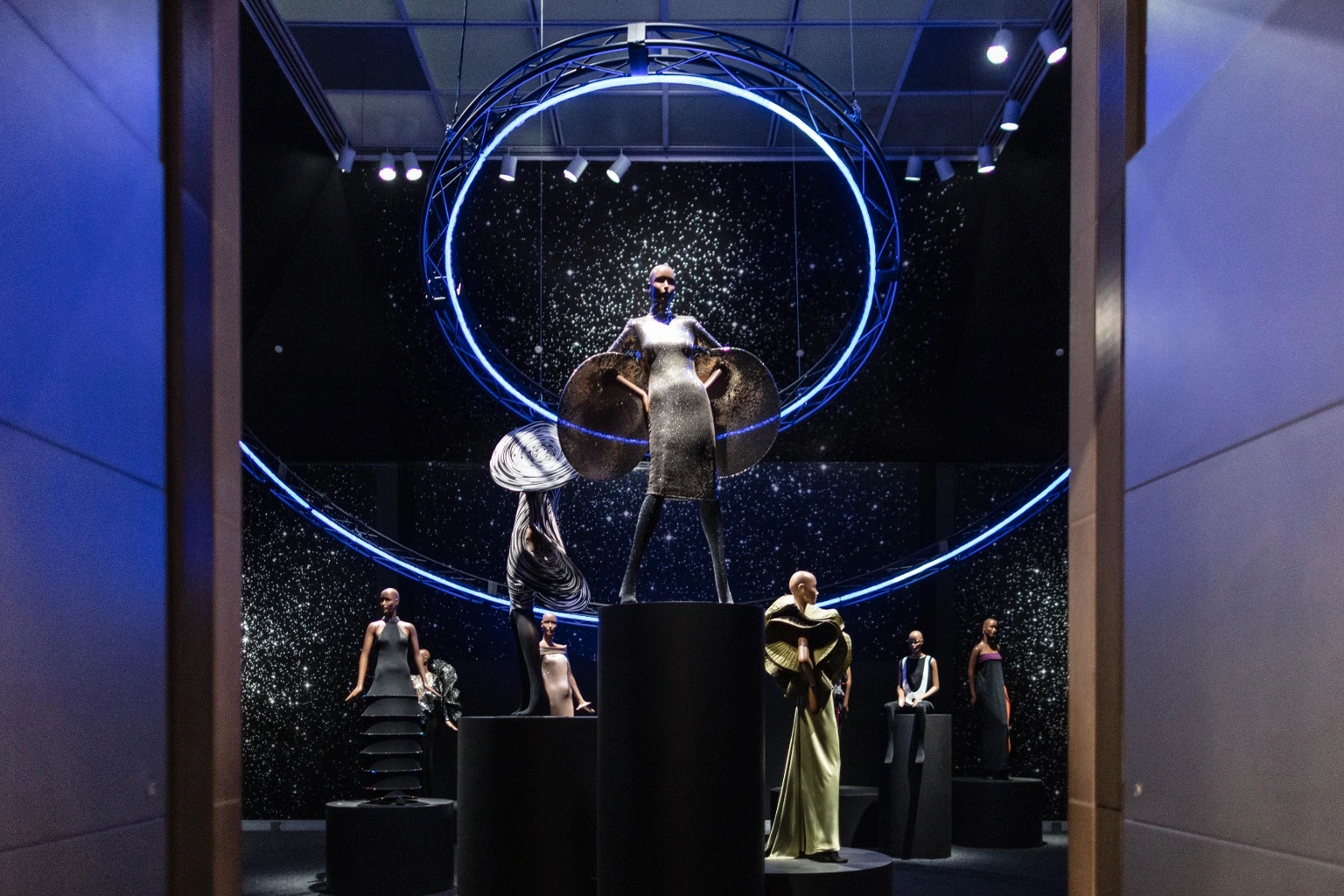
The inaugural Fashion AI Expo opened in Paris in March 2026, organised by Olga Gasnier and timed to overlap with Paris Fashion Week, bringing designers, technology firms and luxury executives into the same rooms. A month later, Tokyo launched its own AI-focused fashion week, built around a generative design competition run by the company OpenFashion. Artificial intelligence has now moved into nearly every stage of the fashion business, from the images used to sell a collection to the software predicting what shoppers will want next season.
AI Models and Virtual Influencers
Noonoouri has modelled for Dior, Versace and Marc Jacobs since her creator, German artist Joerg Zuber, launched her in 2018 with a stylised, almost doll-like design that never pretended to be human. Shudu, built by photographer Cameron-James Wilson and often described as fashion’s first digital supermodel, has worked with Fenty Beauty and Balmain using a hyperrealistic style that leans in the opposite direction.
Created by Aww Inc., Japan’s pink-haired virtual model Imma has featured in Vogue Japan and fronted campaigns for Dior and Valentino. Her imagery is designed to blend naturally into Tokyo’s street style scene rather than draw attention to its digital origins.
Each of the three has kept the same visual identity across years of campaigns. Creating a digital personality such as Noonoouri or Shudu requires a dedicated production team and continual creative development, unlike many AI-generated faces that appear briefly in a sponsored campaign before disappearing.
Style3D AI has said its tools, alongside Lalaland AI, have cut content production costs by more than 40 per cent for early adopters.
Heuritech Uses AI to Predict Fashion Trends
Heuritech was founded in Paris in 2013 by two machine learning PhDs and now analyses millions of social media images a month to track what people are actually wearing. Louis Vuitton and Dior are among the brands reported to use the platform, which says it can forecast trends with close to 90 per cent accuracy as far as two years in advance. WGSN remains the industry’s older benchmark, used by more than 6,500 brands for longer-range seasonal forecasts built on a mix of AI pattern recognition and human analysts.
WGSN produces curated, editorially shaped trend books. Heuritech produces raw statistical movement across colours, prints and silhouettes, tracking attributes down to how fast a particular dot size or plaid pattern is growing season over season. A forecaster’s read of the season increasingly comes from a dashboard instead of the front row.
AI Styling Apps Like Stitch Fix, Whering and Indyx Personalise Fashion
Stitch Fix built its business on pairing an algorithm with a human stylist, and its numbers show how hard that model has been to sustain. Stitch Fix reached a high of around 4.18 million active clients in the first quarter of fiscal 2022. By the third quarter of fiscal 2026, that figure had fallen to roughly 2.3 million, representing a decline of almost 45 per cent. Fiscal 2024 revenue dropped 16 per cent to 1.34 billion dollars, with a net loss of 118.9 million dollars. Facing that slide, the company put its resources into Vision, a feature rolled out in October 2025 that renders how a garment will actually look on a client before it ships, rather than leaving the guesswork to a printed style card.
Newer entrants have taken a different route into the same market. Whering and Indyx are built around cataloguing clothes a user already owns and generating outfit combinations from that existing wardrobe, with no clothing shipped and no fee attached to Whering’s free tier. Indyx layers a paid human styling option on top of its own wardrobe tools. Stitch Fix is still, fundamentally, in the business of selling new clothes with an algorithm attached. Whering and Indyx are in the business of getting more wear out of what a customer already owns.
Generative Design Reaches the Runway
Fashion AI Expo’s first edition opened with a runway presentation from Pierre Cardin before moving into sessions with designers, AI startups and luxury executives joining from Paris, Zurich, Dubai, Barcelona, Berlin, New York and Vienna. A month later, Tokyo AI Fashion Week launched its own generative design competition under the theme Future Utility, asking entrants to apply AI tools to workwear and disaster preparedness garments instead of eveningwear or typical runway spectacle.
At VivaTech in Paris in June, the Korean startup Rebuilder AI showed how it works with Asics, using 3D scans of gait and the brand’s archival shoe data to generate design proposals; a process that once took a designer a week and a half by hand can now produce an initial result within hours. LVMH’s innovation division and the try-on specialist Perfect Corp appeared on the same show floor, working through commercial contracts rather than one-off demonstrations built for press coverage.
The ethical questions around all of this got a formal hearing in June, when London College of Fashion held its third International Symposium on AI in Fashion, examining how generative tools capable of producing designs derived from copyrighted work challenge existing definitions of creative ownership, alongside concerns that biased training data can reproduce narrow standards of body type and beauty. The symposium’s sessions on copyright and authorship reflected ongoing disagreement rather than resolution, and none of the AI design tools currently in commercial use have settled the copyright question in any binding way.
AI Virtual Try-On Technology For Online Fashion Shopping
Perfect Corp has spent the past year pushing its virtual try-on technology well beyond the lipstick and foundation shades that first made the format popular. Its Fashion API now covers watches, bracelets, rings, earrings, necklaces, scarves, hats, shoes and bags, letting a shopper see how a piece sits on their own wrist or hand instead of on a stock model. At Shoptalk in March, the company introduced AI shopping agents designed to guide a customer through a purchase instead of simply recommending one, building on a YouCam app suite downloaded more than 1.1 billion times and used by over 800 brand partners.
For accessories, this matters more than it does for clothing, because the barrier to buying a watch or a handbag online has always been the inability to judge scale, weight, and material against a real body. A preview of how a chain-handle bag sits against a forearm, or how a watch face reads against a wrist, addresses hesitation that free returns policies have never fully solved.