Shoe Stretching : How to Stretch Tight Shoes | Luxyora
There’s a particular kind of heartbreak reserved for shoes that are almost perfect. The silhouette is immaculate, the craftsmanship is chef’s kiss, and then two steps into real life, your toes stage a protest. The good news: many tight shoes don’t need to be “endured.” They need to be stretched in the fashion equivalent of thoughtful tailoring, but for your feet.
Shoe stretching is about creating a few millimeters of relief in the right places, not turning a narrow shoe into a wide one through sheer optimism. When done correctly, it can transform a pair from “display-only” to “wear-anywhere” without warping the shape or ruining the finish. Done aggressively, it can crack leather, distort seams, and leave you with an expensive lesson.
Let’s do it the luxe way: gradual, precise, and respectful of materials.
Step 1: Know What Will (and Won’t) Stretch
Before you try any method, identify the upper material:
- Best candidates: smooth leather, suede, nubuck, canvas
- Stretch with caution: some textiles, soft unlined leather
- Poor candidates: patent leather, stiff synthetics, heavily coated materials (they may crease, split, or simply refuse)
Also: if shoes feel tight because the length is too short (toes hitting the front), stretching won’t fix that. Stretching helps most when the issue is width, pressure on a bunion area, tight instep, or a pinchy toe box.
Stretching a tight pair of shoes isn’t always a one-size-fits-all solution. The success of the process often depends on something many people overlook the material itself and how it responds over time. Discover more in A Guide to Shoe Materials: Leather, Suede, and More.
The realistic goal: minor stretching, often up to about half a size in width/feel, depending on construction and material.
Step 2: Pinpoint the Tight Spot Like a Stylist
You’ll get better results if you stretch exactly where it hurts.
- Put the shoes on and note the pressure points.
- Mark the tight area on the outside with a small piece of tape (or a washable pencil dot on the inside).
- Decide whether you need overall width or a targeted stretch (for bunions, toe corners, or instep).
The Best Methods to Stretch Tight Shoes (From Gentle to Strong)
1) The Shoe Stretcher Method (Most Precise, Most “Professional”)
If you want the cleanest result, this is it. A two-way stretcher expands width; spot “bunion plugs” target pressure points.
How to do it
- Lightly mist the inside with a shoe stretching spray (or use none for delicate finishes).
- Insert the stretcher and set it to gentle tension first.
- Leave it 8-12 hours (overnight is ideal).
- Remove, try the shoe, and repeat if needed, slowly increasing tension.
Why it works: controlled pressure, consistent shaping, minimal risk of damage when done gradually.
Best for: leather shoes, boots, many loafers, some pumps (depending on structure).
2) The Thick Sock Walk-Around (Low Risk, Surprisingly Effective)
This is the “let the shoe learn your foot” approach, particularly good for mild tightness.
How to do it
- Put on thick socks (or two thin pairs).
- Wear the shoes at home for 15-30 minutes.
- Flex your feet gently as you walk; don’t force a dramatic bend.
Upgrade it: a stretching spray inside the shoe can soften leather fibers for a more noticeable change.
Best for: leather, some suede (with care), sneakers, and boots.
3) Heat + Socks (Fast Results, Handle With Care)
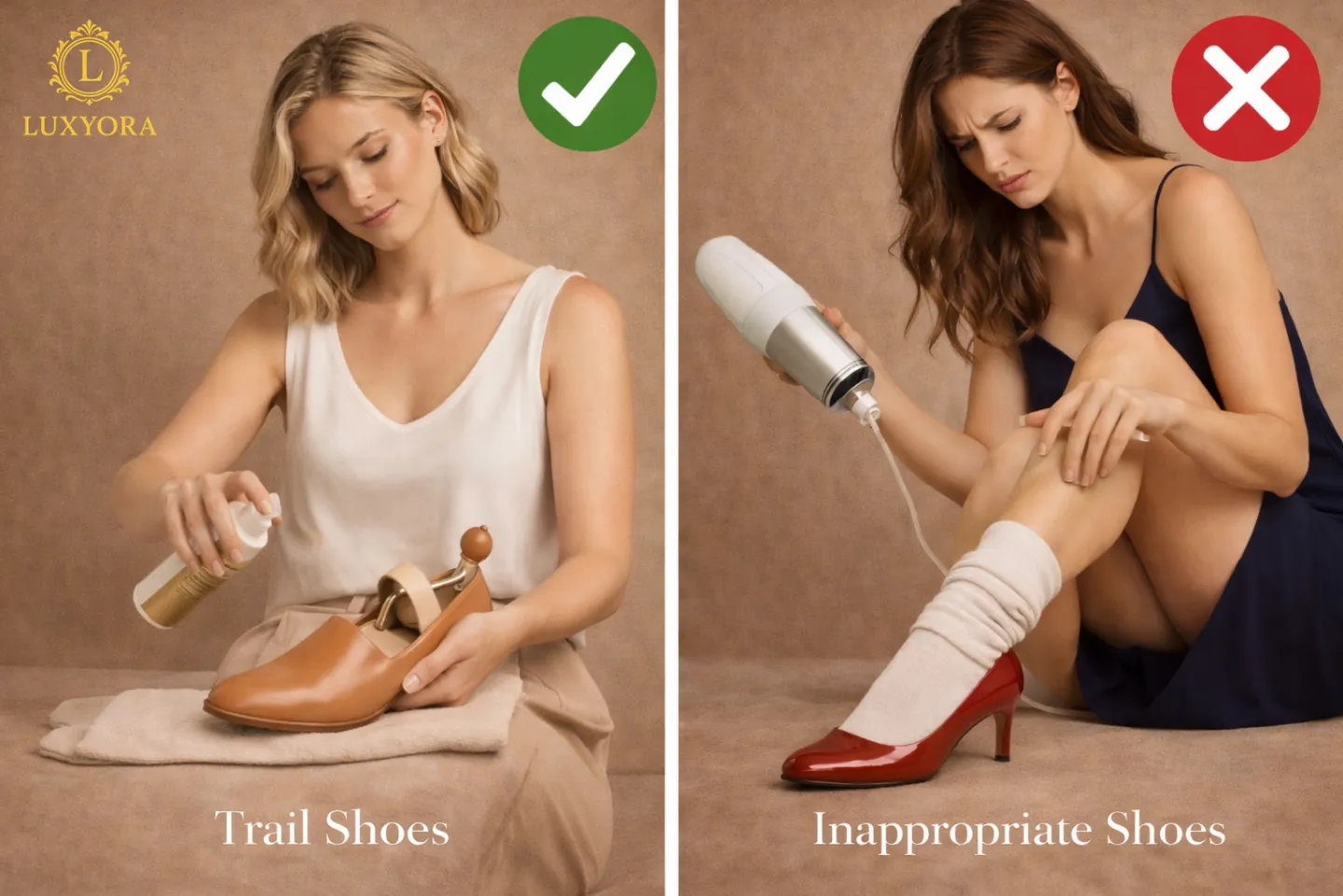
Heat can soften leather, helping it adapt, but overheating can dry it out or damage glue and finishes. Use this like you’d use a blowout tool: controlled, not chaotic.
How to do it
- Put on thick socks and wear the shoes.
- Warm the tight areas with a hair dryer on low/medium for short bursts (20-30 seconds at a time).
- Keep moving your feet as it warms.
- Let the shoes cool on your feet for a few minutes.
Aftercare is essential: condition leather after heat methods to restore moisture and prevent cracking.
Best for: smooth leather (not patent), some boots.
4) Stretching Spray (The “Softening” Shortcut)
Shoe stretch sprays are designed to relax fibers so the shoe gives slightly more, especially when paired with a stretcher or sock method.
How to do it
- Spray inside the tight area lightly (avoid soaking).
- Wear the shoes with socks or insert a stretcher.
- Repeat in short sessions over a few days.
Best for:leather, some suede/nubuck (check product suitability).
5) The Freezer Method (For Structure, Not Delicate Luxury)
This method uses expanding ice in sealed bags to widen shoes. It can work, but it’s not the most refined and isn’t ideal for delicate leathers, suede, or shoes with glued details you don’t want stressed.
How to do it
- Fill a zip bag with water, remove excess air, and seal tightly.
- Place it in the tight area (toe box or width).
- Freeze overnight.
- Thaw slightly before removing to avoid forcing it out.
Best for:sturdier sneakers, some casual leather shoes.
6) When to Visit a Cobbler (The True Luxury Move)
If the shoes are expensive, structured, or the tightness is very specific (e.g., bunion pain, instep pressure, delicate silhouettes), a cobbler can stretch them with professional equipment and precision. They can also advise when a shoe simply isn’t a safe candidate.
Go pro if:
- The shoe is designer, patent, or highly structured.
- You need a localized stretch without distortion.
- You’re feeling numbness, tingling, or sharp pain (not just snugness).
Material-Specific Notes (So You Don’t Ruin the Finish)
Smooth Leather
- Most stretch-friendly.
- Use stretcher + spray or socks + heat.
- Always condition after heat or repeated stretching.
Suede / Nubuck
- Stretchable, but sensitive.
- Avoid soaking.
- Use a suede-safe spray and a stretcher; brush nap afterward.
Patent Leather
- Avoid DIY stretching. It can crease or crack.
- If you must, consult a professional.
Sneakers / Canvas
- Sock method and gentle stretcher can help.
- Heat can work on some uppers, but avoid melting adhesives.
Aftercare: Lock In the Comfort
Once they fit:
- Wear them for short stretches over the next few days to “set” the shape.
- Use shoe trees (for leather) to keep structure.
- Condition leather periodically, especially if you use heat or sprays.
Making tight shoes wearable is satisfying, but preserving their comfort, structure, and appearance over time requires a different kind of attention. Some of the most effective practices begin after the perfect fit is achieved. Continue reading in Shoe Care Secrets: How to Make Your Favorites Last Longer.
Luxyora Philosophy: True luxury is comfort that looks effortless because the most beautiful shoes are the ones you can actually live in.
References:
- American Academy of Orthopaedic Surgeons. (n.d.). Tight shoes and foot problems. OrthoInfo.(Click Here)
- InStyle. (2020, November 30). How to stretch leather boots so they fit perfectly.(Click Here)
- Real Simple. (2020, August 18). 8 ways to stretch shoes so they fit better than ever.(Click Here)
- Foot Specialists of Birmingham. (2023, March 15). The side effects of wearing tight shoes.(Click Here)
- Care of Carl. (2022, November 10). Care of Carl’s definitive guide to shoe care.(Click Here)