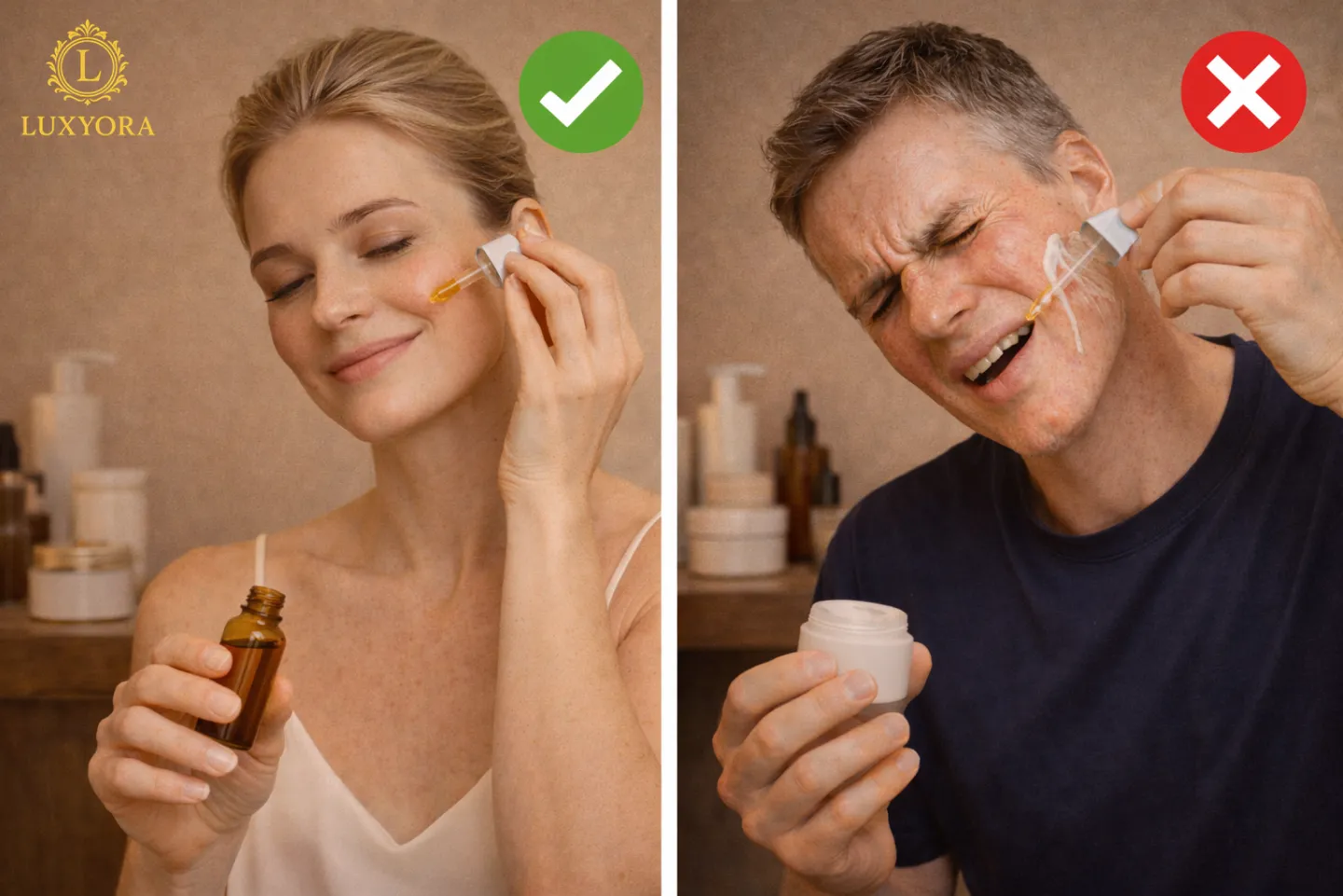
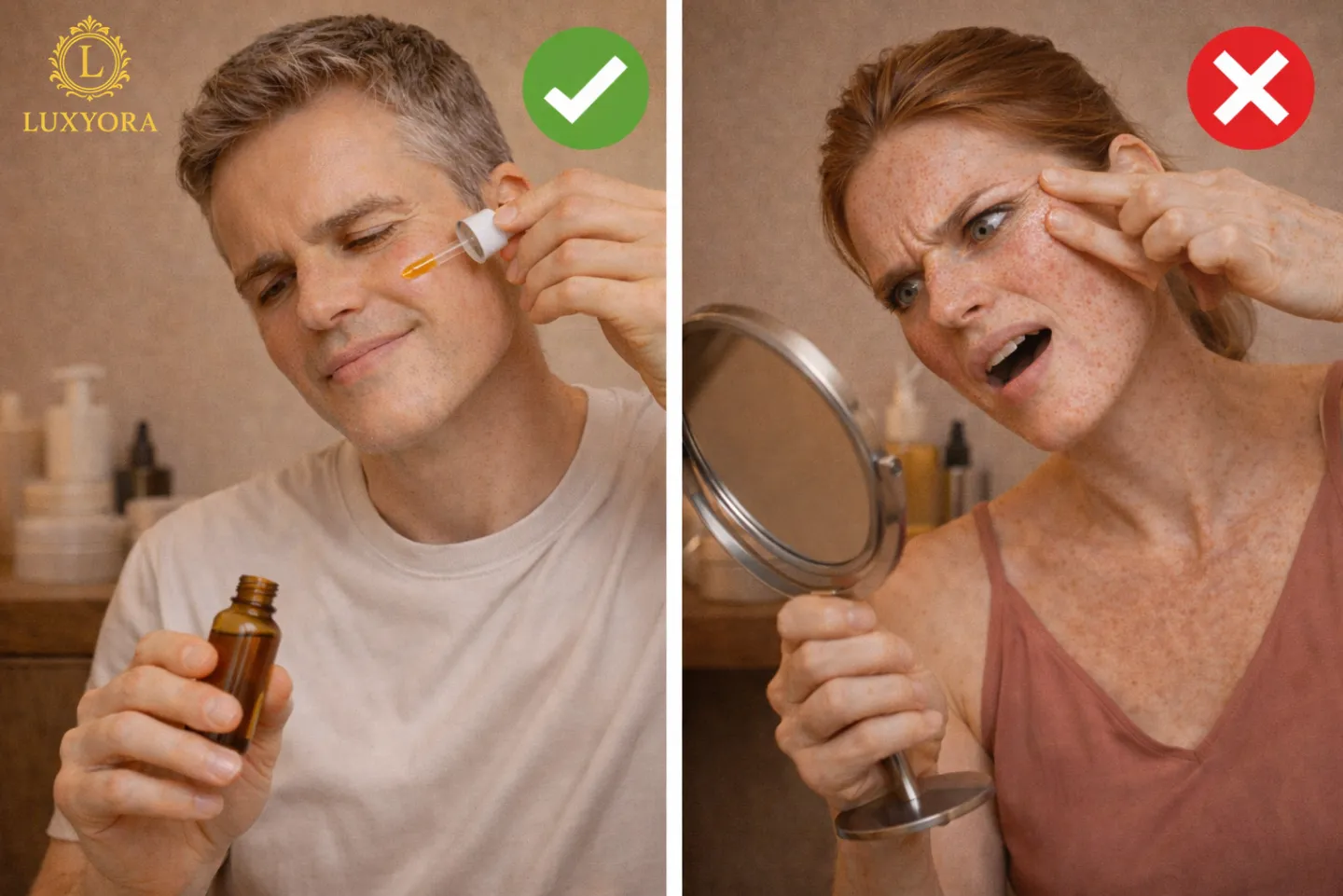
Anti-Aging Skincare : What Actually Works | Luxyora
Anti-aging skincare has two personalities. One is glamorous and loud, promising “glass skin” by Friday and “snatched” cheekbones by next Tuesday. The other is quietly powerful: a few evidence-backed habits, repeated with almost boring consistency, that genuinely change how skin looks over time.
Skin doesn’t require hundreds of products. It needs a focused plan that addresses the main causes of aging, sun, inflammation, and collagen decline while safeguarding your barrier to ensure you can handle beneficial ingredients.
Let’s separate the hype from the heavy hitters.
What “aging” actually is (and why your mirror can feel dramatic)
Skin aging is a blend of intrinsic aging (genetics + time) and extrinsic aging, mostly due to sun exposure, pollution, smoking, and lifestyle stressors. The extrinsic part is where skincare can truly make a difference. Reviews of photoaging consistently point to UV (and even visible light/infrared) as major contributors to wrinkles, laxity, and uneven tone.
So yes: your serum matters. But your sun habits matter more.
The “big three” that actually work
1) Sunscreen: the closest thing skincare has to a time machine
If you’re investing in any anti-aging step, make it daily sunscreen. Dermatologists recommend broad-spectrum SPF 30+ as a baseline. And the photoaging literature supports that broad-spectrum daily use helps reduce the effects of UV, and even suggests that tinted options may add visible-light protection.
Make it luxe, not labor:
- Choose a texture you’ll want to wear every day (fluid, gel, cream, tinted).
- Reapply outdoors (and after sweating/swimming).
- Pair it with a simple moisturizer if sunscreen feels drying.
2) Prescription retinoids (tretinoin): the gold standard for wrinkles + pigment
If sunscreen is prevention, tretinoin is the best-studied topical “repair.” A systematic review of randomized controlled trials found that topical tretinoin improved clinical signs of photoaging, such as wrinkling and mottled hyperpigmentation. A 2023 review in the British Journal of Dermatology also calls tretinoin the most efficacious topical rejuvenation treatment and the clinical gold standard.
How to use without wrecking your barrier:
- Start 2 nights/week, pea-size amount, on dry skin.
- “Sandwich” with moisturizer if you’re sensitive.
- Don’t stack with strong acids on the same night.
- Avoid retinoids during pregnancy (and check with a clinician if you’re trying to conceive).
3) Smart sun + retinoid pairing = the core strategy
This duo is the foundation because it addresses both the cause (UV damage) and the repair pathway (cell turnover/collagen signaling). Everything else is supportive, nice, sometimes helpful, but not a substitute.
The supporting cast (worth it, when chosen wisely)
Vitamin C: brightening + antioxidant support
Topical vitamin C (ascorbic acid and derivatives) has growing clinical evaluation for photoaging and uneven tone. A 2023 systematic review assessed evidence for topical vitamin C in melasma and photoaging, suggesting benefits but also noting that consistency and time matter. A 2024 review also summarizes vitamin C’s antioxidant role and potential anti-aging effects.
How to use: morning, under sunscreen, especially if dullness and spots are your main issues. Choose a formula that you tolerate. Vitamin C can sting sensitive skin.
Niacinamide (nicotinamide): barrier-friendly glow insurance
Niacinamide is the “quiet luxury” ingredient: supportive, flexible, and generally easy to wear. A 2021 evidence review describes mechanistic and clinical evidence for topical nicotinamide across concerns linked to aging and pigmentation.
Healthy, radiant skin often starts with a barrier that’s strong enough to withstand daily stress long before signs of aging appear. Find out why in Skin Barrier Luxury Products.
How to use: morning or night. Great if you’re dryness- or redness-prone, or if you’re using retinoids and want less irritation.
Peptides: promising, but formulation matters
Peptides can support anti-aging claims, but results depend heavily on the specific peptide and product design. A 2025 review summarizes emerging peptide candidates and references clinical trials showing wrinkle improvements for some peptide ingredients.
How to use: think of peptides as polish, not a replacement for retinoids or SPF, especially if your budget is finite.
Bakuchiol: a gentler alternative to retinol for some
If retinoids cause your skin to break out, bakuchiol has evidence as a more tolerable option. A randomized, double-blind trial found that bakuchiol was comparable to retinol in improving photoaging measures and was better tolerated.
How to use: a good “starter retinoid vibe,” especially for sensitive skin, though it’s not the same as prescription tretinoin.
What doesn’t work (or isn’t worth your money)
- Collagen creams: collagen molecules are large; they mostly act as moisturizers on the surface. If you want collagen support, look to retinoids, sunscreen, and barrier care.
- Over-exfoliation as “anti-aging”: too much acid can inflame skin, compromise barrier function, and make everything worse-looking (and harder to tolerate).
- “One miracle product” thinking: anti-aging is cumulative. Your results come from repetition, not novelty.
The routine that makes it all click
Morning (5 minutes, max)
- Gentle cleanse (or rinse)
- Vitamin C or niacinamide
- Moisturizer (optional, if your SPF is hydrating)
- Broad-spectrum SPF 30+ (tinted if you love the finish)
Night
- Gentle cleanse
- Tretinoin (2–4 nights/week, then build)
Or bakuchiol/retinol if you’re not doing prescription - Moisturizer (barrier-supporting, fragrance-free if sensitive)
Anti-aging skincare isn’t only about powerful ingredients it’s also about giving your skin the right support at the right time of day. Explore Morning vs Night Skincare: What Should Change?.
Timeline (because expectations should be expensive too):
- Hydration/glow: 1–2 weeks
- Texture + tone: 6–12 weeks
- Wrinkles + firmness: 3–6+ months
Consistency is the flex.
Luxyora Philosophy: Real anti-aging isn’t about chasing youth, it’s about protecting your skin’s peace. Choose proven essentials, stay consistent, and let quiet discipline become your most luxurious glow.
References:
- American Academy of Dermatology Association. (n.d.). Sunscreen FAQs. Retrieved February 1, 2026, from (American Academy of Dermatology)
- Boo, Y. C. (2021). Mechanistic basis and clinical evidence for the applications of nicotinamide (niacinamide) to the skin. Antioxidants, 10(8), 1312. (PMC)
- Dhaliwal, S., Rybak, I., Ellis, S. R., Notay, M., Trivedi, M., Burney, W., & Sivamani, R. K. (2019). Prospective, randomized, double-blind assessment of topical bakuchiol and retinol for facial photoageing. British Journal of Dermatology, 180(2), 289–296. (PubMed)
- Griffiths, T. W., et al. (2023). Skin ageing and topical rejuvenation strategies. British Journal of Dermatology, 189(Suppl 1), i17–i29. (OUP Academic)
- Guan, L. L., Lim, H. W., & Mohammad, T. F. (2021). Sunscreens and photoaging: A review of current literature. Journal of Clinical and Aesthetic Dermatology, 14(8), 28–34. (PMC)
- Jaros-Sajda, A., et al. (2024). Ascorbic acid treatments as effective and safe anti-aging therapy: A review. Clinical, Cosmetic and Investigational Dermatology. (PMC)
- Sitohang, I. B. S., et al. (2022). Topical tretinoin for treating photoaging: A systematic review of randomized controlled trials. Clinical, Cosmetic and Investigational Dermatology. (PMC)