Tips for Reducing Hair Breakage and Split Ends | Luxyora
Hair breakage has a way of feeling personal, like your ends are staging a tiny rebellion while you’re just trying to have a glossy, expensive-looking life. And split ends? They’re the uninvited plus-one that shows up whenever hair is dry, overprocessed, overstyled, or simply over it.
Here’s the chic truth: breakage and split ends are usually the result of “wear and tear” on the hair shaft, not a moral failing or a sign you’re doomed to forever buy emergency masks. The fix isn’t a single miracle product; it’s a system: less friction, smarter heat, gentler handling, and routine maintenance that keeps tiny problems from turning into full-blown fraying.
First, know what you’re dealing with
Breakage is when strands snap somewhere along the length (you’ll see shorter pieces, uneven density, and a halo of flyaways). Split ends are when the hair fiber frays at the tip, sometimes into a “Y,” sometimes into multiple splits. They’re related, but not identical.
One big headline worth remembering: once an end is truly split, the only permanent solution is cutting it off. Products can temporarily smooth or “seal” the look, but they can’t stitch the fiber back together forever.
Now let’s keep you from getting more of them.
1) Treat wet hair like it’s couture silk
Wet hair is more vulnerable to stretching and snapping, especially if you’re aggressively towel-drying or forcing a brush through knots. Dermatologists explicitly recommend minimizing rough handling and note that most people should handle wet hair as little as possible.
Try this instead:
- Blot, don’t rub: Wrap hair in a towel and press gently.
- Upgrade your towel: A microfiber towel or soft cotton T-shirt reduces friction.
- Detangle strategically: Start at the ends, work upward, and don’t fight tangles as they owe you money.
If your hair is tightly curled/textured, brushing while wet can actually reduce breakage (because dry detangling can be brutal).
2) Reduce friction (it’s the silent hair villain)
A lot of breakage isn’t from one dramatic event; it’s from daily micro-stress: brushing, elastics, pillowcases, rough accessories, even the way hair rubs against a coat collar.
Dermatology guidance calls out over-brushing as a real contributor; the old “100 strokes a day” myth can literally create split ends.
Friction fixes that actually feel luxurious:
- Use a wide-tooth comb for detangling (especially post-shower).
- Swap tight elastics for fabric-covered, snag-free ties.
- Sleep like a beauty editor: silk or satin pillowcase, or a loose braid to limit rubbing.
3) Shampoo your scalp; condition your lengths (the balance matters)
Over-cleansing can leave hair dry and more prone to splitting, but not cleansing enough can cause buildup that makes hair feel rough and tangle-prone. What helps most is targeted cleansing and consistent conditioning.
Conditioners are designed to make hair smoother and easier to comb, reducing mechanical stress and snapped strands. The science-y view: conditioning agents reduce friction between fibers and lower combing force; modern reviews of hair conditioning explain how surface changes can improve feel and manageability.
Make it practical:
- Shampoo mainly at the scalp.
- Condition from mid-lengths to ends.
- If your ends feel crunchy, add a leave-in conditioner before you brush.
4) Heat styling: you don’t have to quit; you just have to be strategic
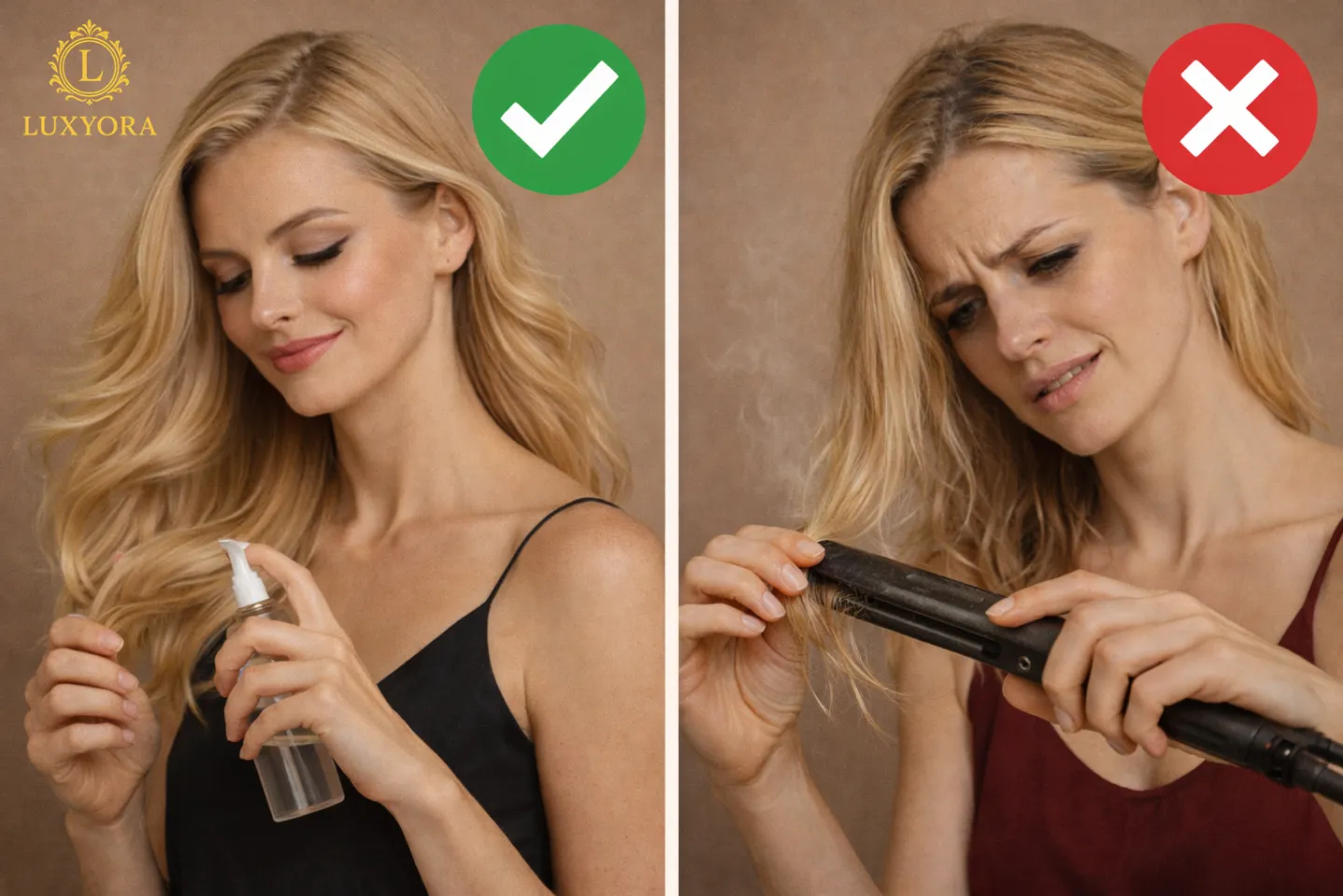
Heat is one of the fastest routes to breakage because it dehydrates the fiber and contributes to cuticle wear over time. It’s not “never use heat”; it’s “stop roasting your hair like it’s a Sunday chicken.”
Expert-led mainstream guidance consistently emphasizes using heat protectant and avoiding extreme temperatures. (You’ll see similar recommendations repeated across dermatology- and clinic-adjacent advice.)
The upgraded heat routine:
- Always use heat protectant when blow-drying or hot-tooling.
- Lower the temperature and do fewer passes.
- Dry hair gently first: hair that’s dripping wet takes longer to dry = more heat exposure.
- Try “style spacing”: do one polished blowout, then maintain with low-manipulation styles for a couple days.
5) Chemical services: spacing is the secret to keeping your hair on your head
Bleach, relaxers, perms, and frequent color changes can weaken the fiber structure and accelerate breakage, especially when layered with heat styling. If you’re chemically processing, your routine needs to become more “repair + protect” than “clean + go.”
Here’s a sane approach, echoed in salon and editorial guidance:
- Space out chemical appointments
- Add bond/protein-style treatments (weekly or biweekly, depending on feel)
- Keep moisture high so the hair stays flexible rather than brittle
Recent editorial breakdowns highlight chemical processing + heat + mechanical stress as a common trifecta behind snapping strands.
6) Trim like you mean it (because split ends travel)
Split ends don’t politely stay at the tips. If left alone, splitting can creep upward, creating more fraying and breakage over time.
While the “perfect trim schedule” varies, expert articles commonly recommend regular trims to prevent damage from progressing and keep ends looking crisp rather than wispy.
A good rule of thumb:
- If you heat-style or color your hair often, trim more regularly.
- If you wear your hair natural and low-manipulation, you may stretch longer; just watch the ends.
7) Protect from the environment (yes, your hair gets weather too)
Sun, heat, wind, and dryness can make hair feel brittle and more prone to split ends. A clinic-backed explainer from Cleveland Clinic notes that extended sun/heat exposure can contribute to dryness, brittleness, and breakage over time.
Low-effort protection that looks high-end:
- Wear a hat in intense sun (effortless, chic, and protective).
- Use a UV-protective hair product if you’re outdoors a lot.
- If you swim: wet hair first, use a conditioner barrier, rinse ASAP after.
8) Your “breakage-proof” routine (copy/paste version)
If you want the simplest routine that covers 90% of the problem, do this:
Wash day
- Gentle cleanse (scalp-focused)
- Conditioner (lengths-focused)
- Wide-tooth comb detangle while conditioned
- Leave-in conditioner on damp hair
- Heat protectant if heat styling
Between washes
- Minimal brushing (hands and a comb are your friends)
- Protective style at night (loose braid, silk pillowcase)
- A light oil or serum on ends if they feel dry
Weekly
- Deep conditioning mask (especially if dry or color-treated)
Every so often
- Trim the ends before they turn into a whole situation
Luxyora Philosophy: Healthy hair isn’t about perfection; it’s about preservation. Treat your strands like luxury fabric: less friction, less force, and more intention, and your length will keep its elegance.
References:
- American Academy of Dermatology Association. (n.d.). How to stop damaging your hair. (American Academy of Dermatology)
- American Academy of Dermatology Association. (n.d.). Hair styling without damage. (American Academy of Dermatology)
- Cleveland Clinic. (2023, March 29). Best ways to protect your hair from sun damage. (Cleveland Clinic)
- Fernandes, C., Almeida, I. F., & others. (2023). On hair care physicochemistry: From structure and degradation to the role of conditioning agents. Cosmetics. (PMC)
- Healthline Editorial Team. (2020, April 1). How to prevent split ends. (Healthline)
- Vogue. (2025). What causes hair breakage—and how to repair it. (Vogue)
- Byrdie. (2019). How to prevent split ends, according to experts. (Byrdie)