Curly Hair Care Guide for Beginners | Luxyora
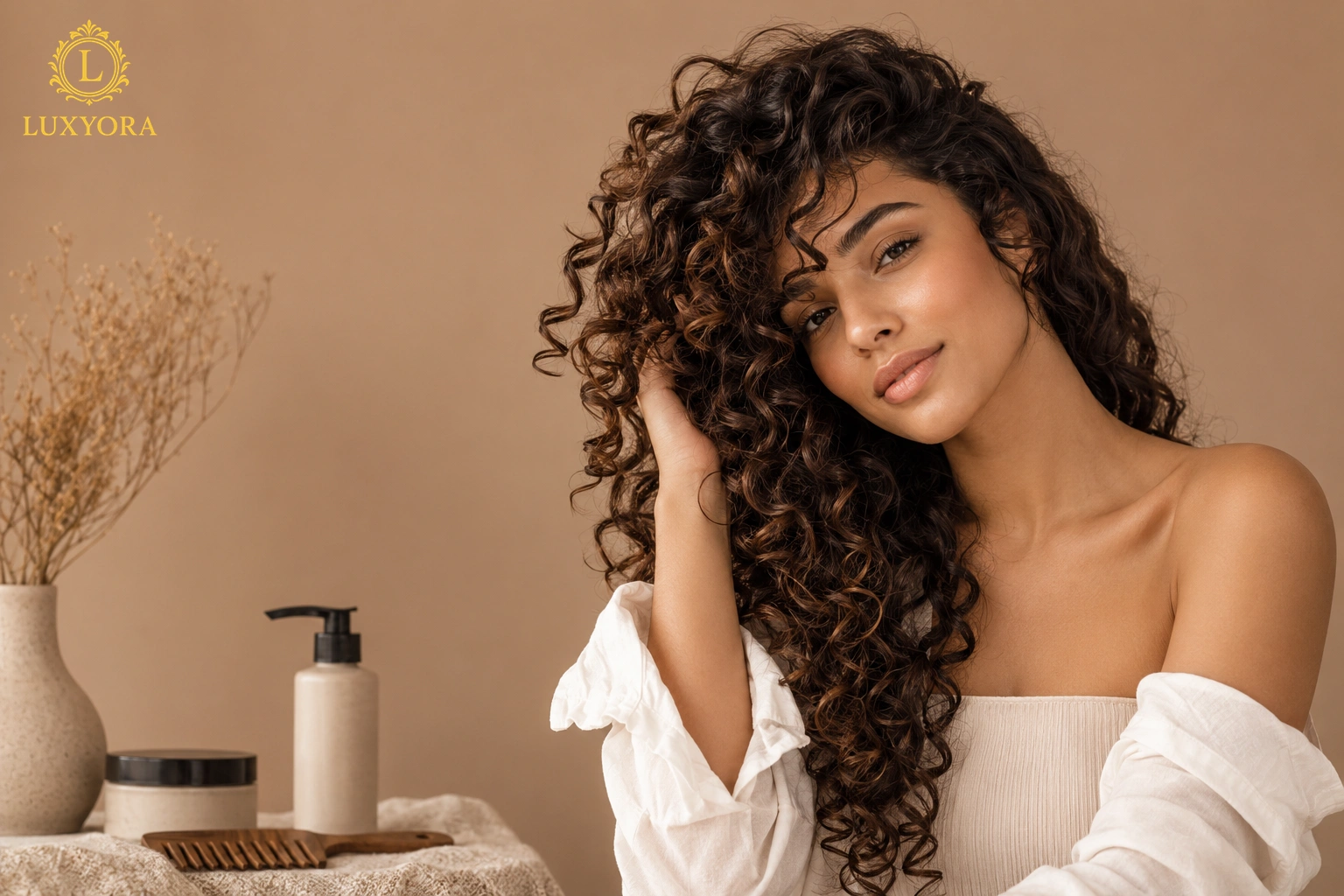
Curly hair is equal parts romance and rebellion. One day it’s glossy, spiralled perfection; the next it’s a frizz halo with opinions. If you’re new to caring for curls, here’s the reassuring truth: you don’t need a hundred products; you need a repeatable method. Curls thrive on three things: hydration, low friction, and consistent styling technique. Once you learn those pillars, your routine stops feeling like guesswork and becomes a quiet luxury.
Step 1: Understand what makes curls “different”
Curly hair isn’t just straight hair that decided to be artistic. The fibre behaves differently. Research on curly fibre mechanics shows curlier strands can have distinct mechanical behaviour compared to straighter hair, which helps explain why curls can be more prone to dryness, tangling, and breakage when handled roughly.
So the beginner mindset shift is simple:
- Your scalp is about cleansing and comfort.
- Your lengths are about moisture and protection.
- Your curl pattern is about technique (how you apply product and dry).
Step 2: Build a wash routine that doesn’t dehydrate your curls
Over-washing is one of the fastest ways to make curls feel dry and look undefined. The American Academy of Dermatology (AAD) recommends washing curly hair only when needed, noting that thick, curly, textured hair doesn’t need daily (or even weekly) shampooing while still advising a minimum wash cadence for scalp health (often every 2-3 weeks, depending on hair and scalp).
A beginner-friendly wash schedule:
- Wavy-curly (2A-3C-ish): every 3-7 days, depending on oil and workouts
- Coily/kinky (4A-4C-ish): weekly to every couple of weeks, depending on dryness
- If your scalp gets itchy or flaky, you may need more regular cleansing or a scalp-specific product rather than just adding oils.
How to shampoo curls (without wrecking them):
- Shampoo the scalp with your fingertips (not nails).
- Let lather rinse through the ends; don’t pile hair on top of your head and scrub it like laundry.
- Rinse product residue thoroughly to make curls look dull and feel coated.
Step 3: Condition like it’s a non-negotiable
Conditioner isn’t a “nice-to-have” for curls; it’s part of the architecture. Scientific reviews report that conditioners smooth the hair surface, reduce friction between fibres, improve manageability, and make combing easier (which is important because combing force and friction are major causes of breakage).
Beginner conditioning rules:
- Apply conditioner mainly to mid-lengths and ends.
- Detangle while conditioned (more slip = less snapping).
- If your curls still feel thirsty, add a leave-in conditioner after rinsing.
Step 4: Detangling 101 (a.k.a. the breakage prevention chapter)
Curls tangle because the shape encourages strands to wrap around each other. The goal is not “perfectly knot-free at all times.” The goal is low-friction detangling.
The best beginner method:
- Detangle in the shower with conditioner in
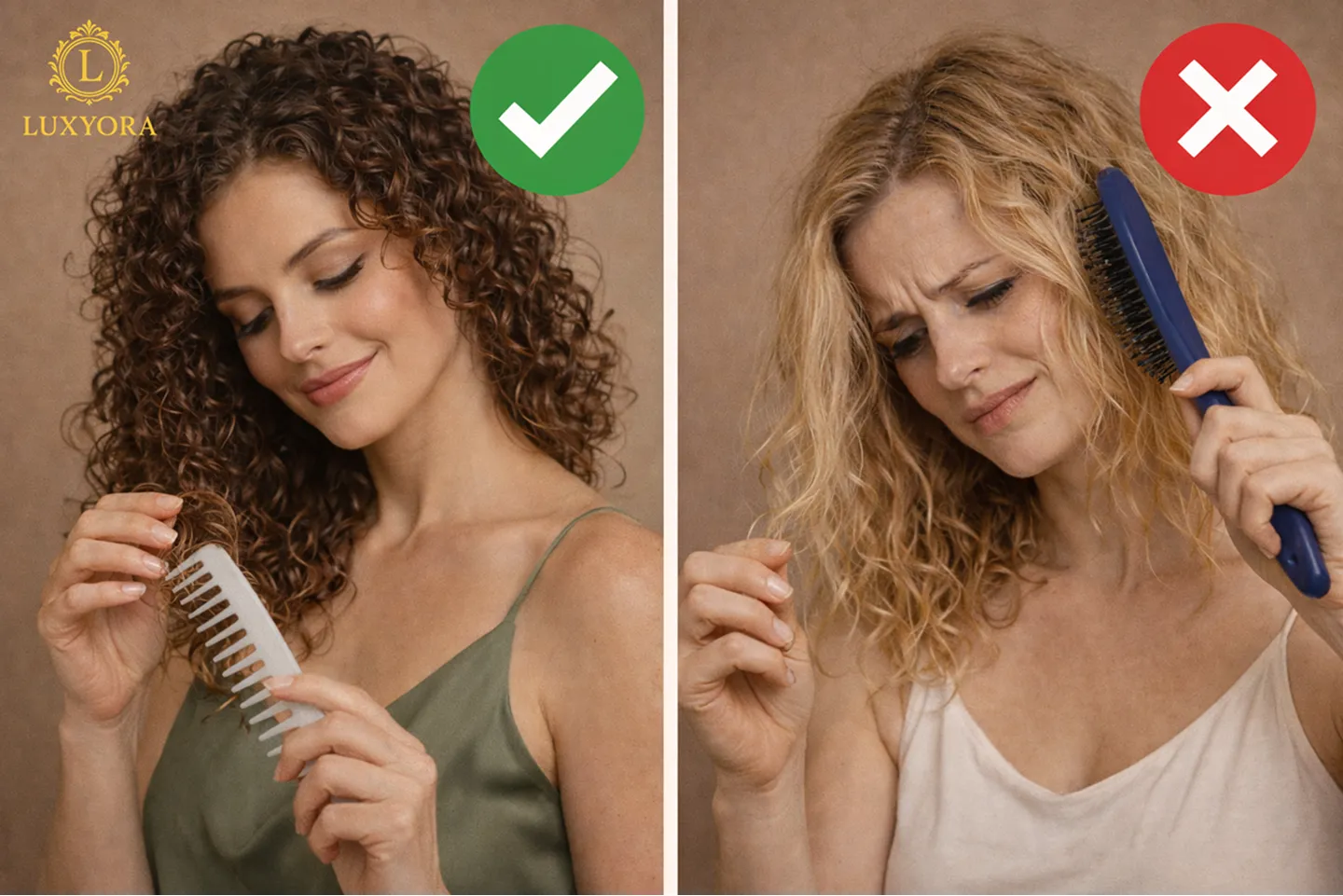
- Use fingers first, then a wide-tooth comb
- Start at the ends and move upward
- Work in sections if your hair is thick or long
Step 5: Styling is where curls are made
If wash day is skincare, styling is makeup. Your curls will look dramatically different depending on how you apply product.
A simple beginner styling flow often recommended by experts is:
- shampoo
- condition
- (optional) leave-in
- styling product(s) for definition and hold
The “one-and-done” beginner styler cocktail:
- Curl cream for softness and shape
- Gel or mousse for hold and frizz control
If your hair is fine, start with mousse + a light leave-in. If it’s coarse or very dry, start with cream + gel.
Application technique that actually works:
- Style on very wet hair (water helps distribute product evenly)
- Apply in sections
- Use “prayer hands” (smooth product down the hair) then scrunch upward
- Don’t touch your hair too much while it’s drying, frizz loves attention
Step 6: Drying: air-dry vs diffuser (and how not to get frizz)
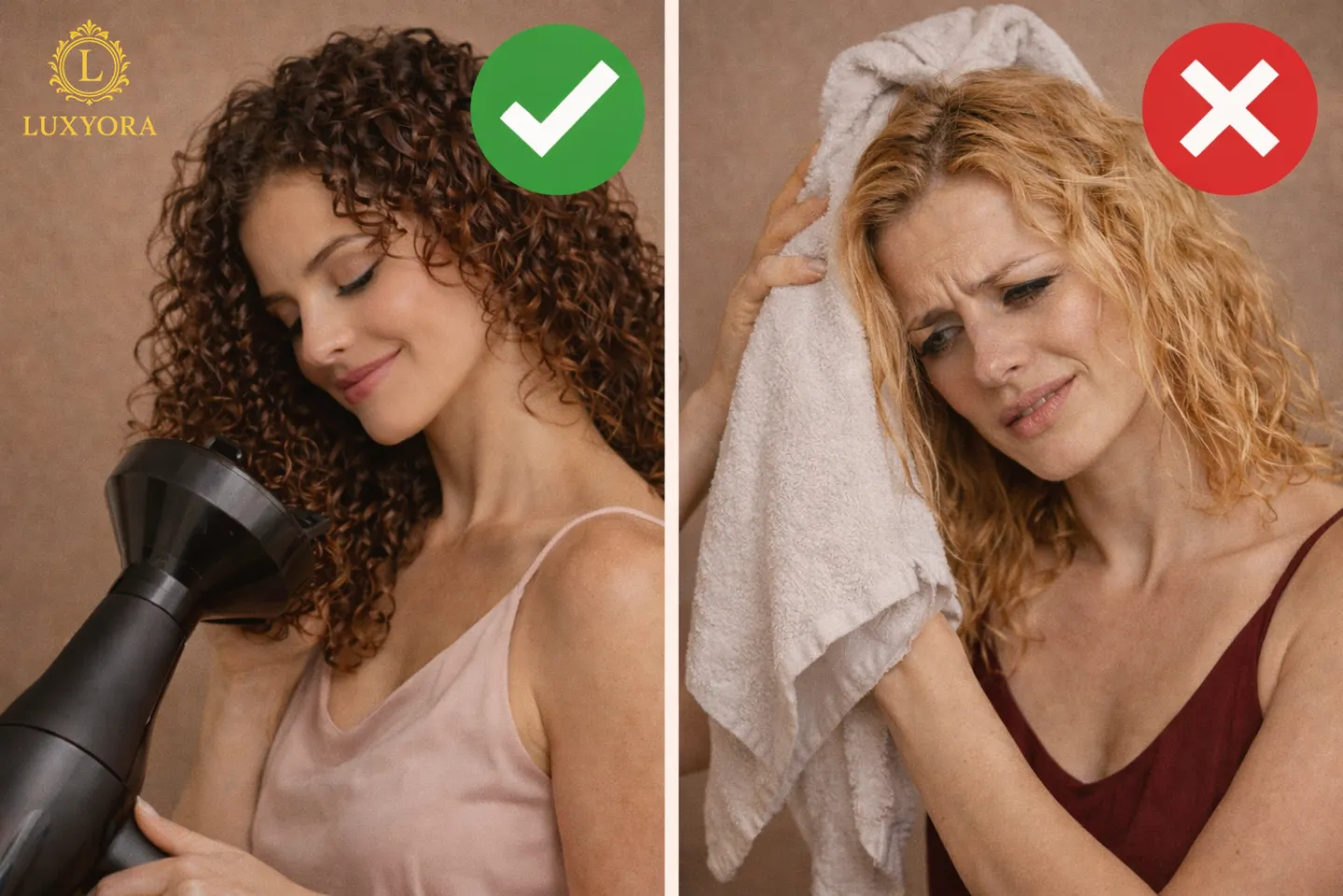
Air-drying can be great unless you live somewhere humid, have dense hair that stays wet forever, or crave volume. Diffusing is the “editor shortcut” when you want a definition without waiting hours. Curly hair guidance often highlights learning proper diffuser technique and adjusting heat based on hair thickness and sensitivity.
Beginner diffuser tips:
- Use low to medium heat + low airflow
- Don’t hover-blast curls in the wild cup curls into the diffuser bowl
- Diffuse in sections
- Stop at ~80-90% dry if frizz is an issue, then let the rest air-dry
Step 7: Sleep like a curl maximalist
Nighttime friction is sneaky damage. You wake up, fluff your hair, and wonder why your ends look tired. The fix is glam and practical:
- Silk/satin pillowcase or a silk/satin scarf
- Loose “pineapple” ponytail (high, loose gather) or a loose braid if your hair is long
- Refresh in the morning with water + a tiny bit of leave-in, then scrunch
Step 8: Your first 4-week curl plan (simple, repeatable, effective)
If you’re overwhelmed, follow this:
- Shampoo scalp
- Condition lengths
- Detangle with conditioner
- Leave-in (optional)
- Cream + gel (or mousse) on wet hair
- Air-dry or diffuse gently
Midweek refresh
- Mist with water
- Smooth a pea-size leave-in over frizzy areas
- Scrunch and let it dry untouched
Weekly maintenance
- Use a deep conditioner once a week if hair feels dry
- Clarify once every 3-4 weeks if you use heavy stylers or notice buildup (dullness, limp curls)
Step 9: Common beginner mistakes (and quick fixes)
- Mistake: brushing dry curls → Fix: detangle with conditioner, or refresh with water first
- Mistake: too much product → Fix: use less, apply on wetter hair, and distribute in sections
- Mistake: touching hair while drying → Fix: hands off until fully dry, then gently scrunch out stiffness
- Mistake: skipping scalp care → Fix: keep cleansing consistent enough for comfort (AAD notes minimum cleansing for scalp health).
Luxyora Philosophy: Curls don’t need control, they need collaboration. When you treat your texture with patience, moisture, and intention, definition becomes inevitable.
References:
- American Academy of Dermatology Association. (2022, June 29). 6 curly hair care tips from dermatologists.(Click Here)
- American Academy of Dermatology Association. (2024, August 12). Tips for healthy hair.(Click Here)
- Cloete, E., Khumalo, N. P., Ngoepe, M., & Turner, M. L. (2020). Understanding curly hair mechanics: Fiber strength. Journal of Investigative Dermatology.(Click Here)
- Fernandes, C., Almeida, I. F., & colleagues. (2023). On hair care physicochemistry: From structure and degradation to the role of conditioning agents. Cosmetics.(Click Here)
- Fernández-Peña, L., Silva, A. M., & colleagues. (2020). Physicochemical aspects of the performance of hair-conditioning products. Cosmetics, 7(2), 26.(Click Here)
- Vogue India. (2023, July 25). How I gave my curly hair the best summer it’s ever had.(Click Here)
- Vogue India. (2025, December 4). The only curly hair routine you need, according to an expert stylist.(Click Here)