Tips for Growing Healthier, Thicker Hair | Luxyora
Let’s get one thing straight (even if your hair isn’t): “thicker hair” is really two different goals wearing the same trench coat.
- Thicker strands = each individual hair fibre feels fuller, smoother, and less breakable.
- More density = you have more hairs actively growing, or fewer shedding out at once.
Most of us want both, and you can absolutely get closer, but the best results come from treating hair growth like skincare: steady, strategic, and a little bit patient.
1) Start at the source: your scalp is skin, not an afterthought
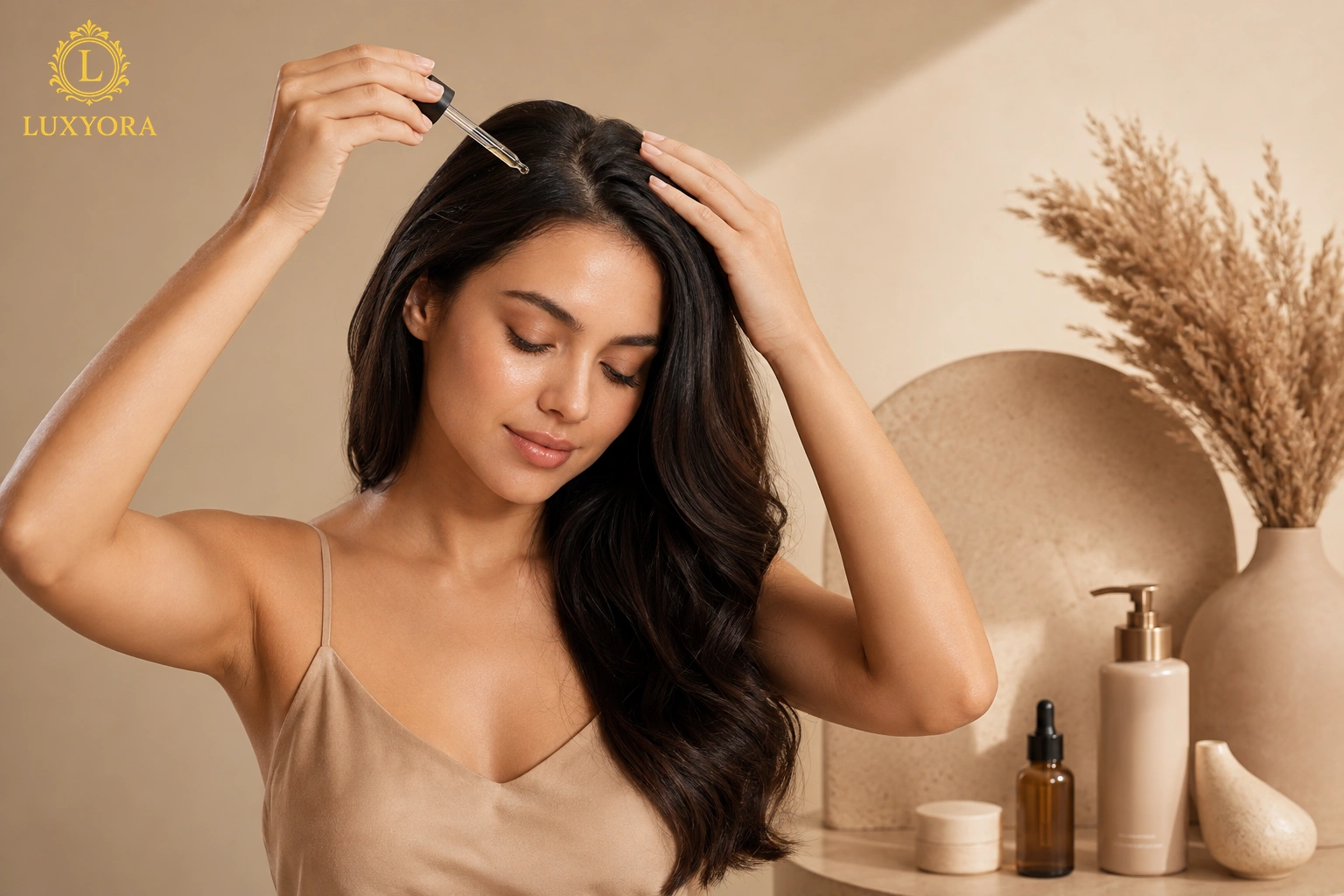
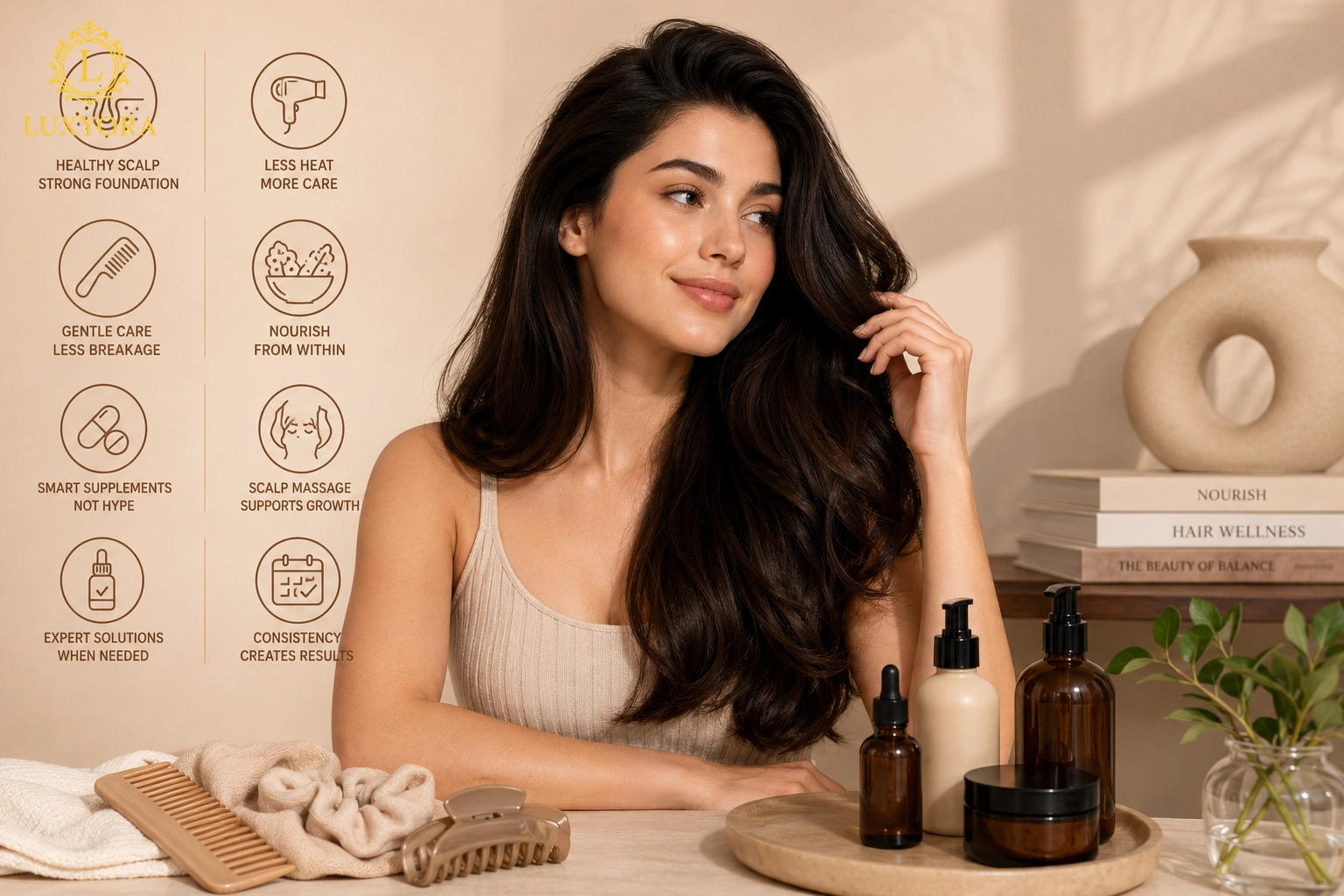
If your scalp is irritated, clogged with buildup, or chronically inflamed, hair can look limp and shed more than it needs to. Dermatologists consistently emphasize that healthy hair begins with healthy scalp habits, washing based on how oily/dirty your hair gets, choosing products suited to your hair type, and addressing flakes/itch rather than ignoring them.
A polished scalp routine:
- Shampoo as often as your scalp truly needs (oily scalps may need frequent washing; drier/curly textures can go longer).
- Massage shampoo in with fingertips (not nails).
- Rinse thoroughly leftover product can make hair look dull and feel heavy.
2) Handle hair like luxury fabric, because breakage “steals” thickness
Breakage is the quickest way to lose thickness, especially around the crown and ends. If your hair snaps faster than it grows, it will never look full, no matter how many serums you own.
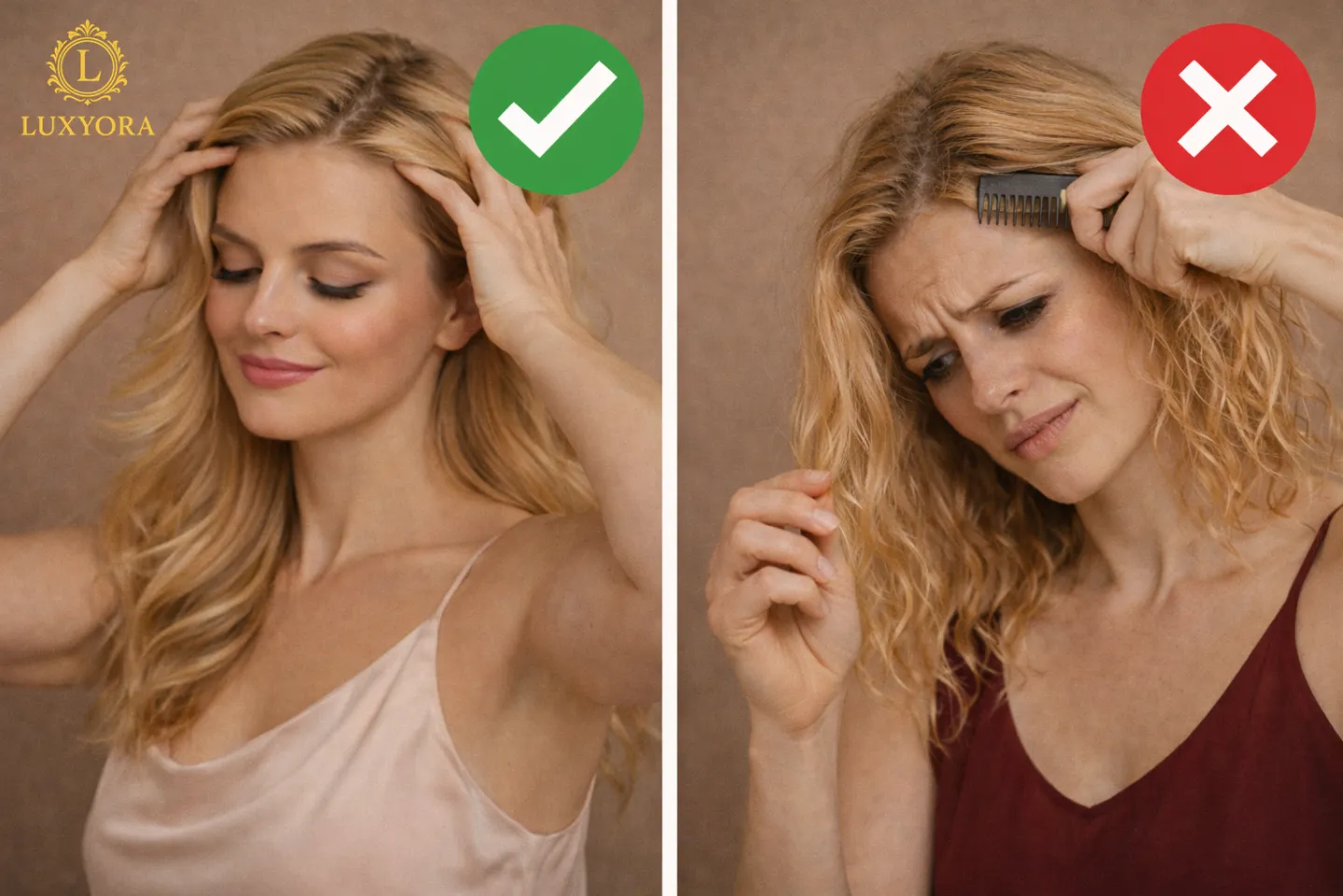
Dermatologist guidance on minimising damage is refreshingly simple: reduce rough handling, avoid aggressive brushing, be gentle when hair is wet, and keep heat and tension under control.
Tiny upgrades that make a big difference:
- Use a microfiber towel or soft tee to blot, don’t rub.
- Detangle from ends upward with a wide-tooth comb.
- Swap tight elastics for snag-free ties or a claw clip.
3) Nutrition: skip the hype, focus on what hair actually needs
Hair is made largely of protein, and growth can be affected when your body is under-fueled think crash dieting, illness, or prolonged stress. Also, nutrient deficiencies are sometimes associated with shedding (iron/ferritin, vitamin D, zinc, and certain B vitamins are often discussed in the clinical hair-loss context).
If you’re noticing sudden shedding or thinning, it’s worth asking a clinician about checking labs (especially if you have heavy periods, restrictive diets, or fatigue). Telogen effluvium (a common, diffuse shedding pattern) is frequently associated with stressors and physiological changes, and management focuses on addressing the trigger.
Food-first basics:
- Protein at most meals
- Iron-rich foods (and vitamin C with them)
- Omega-3s (fatty fish, walnuts, chia)
- A varied diet beats “one magic supplement” every time
4) Biotin isn’t a miracle unless you’re actually deficient
Biotin has excellent PR, but newer reviews are blunt: there’s no strong evidence that biotin supplements improve hair growth in healthy people without a deficiency. There are also cautions about biotin interfering with lab tests in certain contexts, so it’s not a casual “why not” supplement.
Translation: If your labs and diet are normal, spend that money on a great haircut and a heat protectant.
5) Heat styling: keep it… But make it smarter
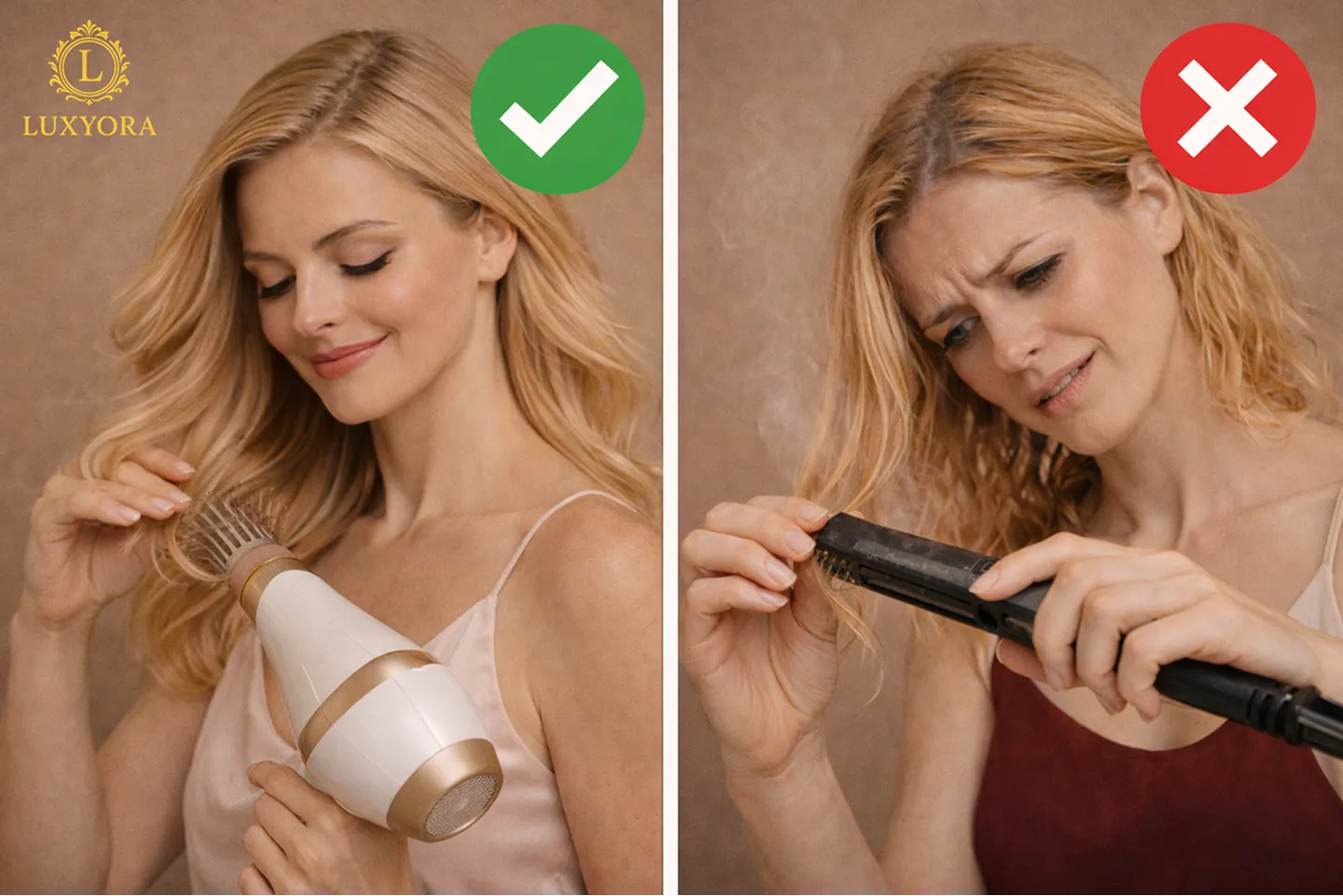
Heat can be part of your life, just not your hair’s entire personality. Excessive heat dehydrates the hair shaft and increases breakage, which makes hair look thinner over time. Dermatologists recommend limiting exposure to heat and using protective measures to prevent damage.
The thicker-hair heat checklist:
- Heat protectant every time
- Lower temp, fewer passes
- Don’t straighten damp hair
- Embrace “style spacing” (one blowout, then low-manipulation styles)
6) Consider scalp massage, but keep expectations realistic
Scalp massage is one of those “it feels good, and it might help” habits. A 2019 study on standardised scalp massage suggested improvements in self-assessed outcomes and discussed potential effects on hair thickness. Earlier work also observed changes in hair thickness measurements under controlled conditions, though not necessarily changes in growth rate.
Best use case: as a supportive habit alongside the real heavy-hitters (nutrition, medical treatment when needed, reduced breakage).
7) If thinning is noticeable, treat it like a medical issue, not a vibes issue
If your part is widening, your ponytail is shrinking, or you’re seeing miniaturised hairs, you may be dealing with pattern hair loss (androgenetic alopecia), postpartum shedding, thyroid issues, iron deficiency, or telogen effluvium, each with different solutions.
For female pattern hair loss, topical minoxidil remains a cornerstone option, and medical reviews continue to recommend it as a first-line therapy while also covering emerging alternatives (such as low-dose oral minoxidil under medical supervision).
8) Know when it’s time to see a dermatologist
If you’re noticing breakage that seems extreme, thinning at the hairline, or shedding that doesn’t match your normal pattern, don’t just buy another product and hope. Dermatology guidance recommends seeking professional help when you’re worried about hair loss or damage.
When to see a dermatologist:
- Sudden shedding lasting more than a few months
- Scalp pain, burning, or heavy flaking
- Patchy hair loss
- Thinning plus symptoms like fatigue, irregular periods, or weight changes
Dermatologists can help identify the cause and guide treatment; the AAD also provides practical hair-loss management tips for fragile hair.
8) Build a “thicker-hair” routine that’s actually doable
Here’s a routine that’s realistic, elegant, and doesn’t require a shelfie.
2-4x/week (or as needed)
- Shampoo scalp thoroughly
- Condition mid-lengths to ends
- Leave-in conditioner or lightweight serum on ends
Daily
- Gentle brushing (or finger-combing)
- Heat protectant if styling
- Low-tension hairstyles
Weekly
- One deep-conditioning mask (especially if color-treated or heat-styled)
Optional add-ons
- Scalp massage 3-5 minutes a few times a week
- If diagnosed with pattern loss: consistent minoxidil use as directed by a clinician (this is a “commitment relationship,” not a fling).
Luxyora Philosophy: Thicker hair isn’t built through urgency; it’s built through consistency. Protect the strands you have, support the growth you want, and let time do the refining.
References:
- American Academy of Dermatology Association. (2024, August 12). Tips for healthy hair.(Click Here)
- American Academy of Dermatology Association. (n.d.-a). Hair styling without damage.(Click Here)
- American Academy of Dermatology Association. (n.d.-b). Hair loss: Tips for managing.(Click Here)
- Cleveland Clinic. (2022, December 1). Telogen effluvium: Symptoms, causes, treatment & regrowth.(Click Here)
- Elston, D. M. (2024). Letter from the editor: First do no harm—biotin for hair and nail regrowth. Journal of the American Academy of Dermatology.(Click Here)
- English, R. S., Jr. (2019). Self-assessments of standardized scalp massages for androgenic alopecia. Dermatology and Therapy, 9, 167–178.(Click Here)
- Hughes, E. C., & Saleh, D. (2024). Telogen effluvium. In StatPearls. StatPearls Publishing.(Click Here)
- Ramos, P. M., Miot, H. A., & colleagues. (2023). Female-pattern hair loss: Therapeutic update. Anais Brasileiros de Dermatologia.(Click Here)
- Yelich, A., & Silverberg, J. I. (2024). Biotin for hair loss: Teasing out the evidence. Dermatology and Therapy.(Click Here)