Beginner’s Guide to Chemical Exfoliation | Luxyora
Beginner’s Guide to Chemical Exfoliation: Chemical exfoliation has a reputation problem. To the uninitiated, it sounds intense, clinical, stingy, maybe even a little scary. In reality, chemical exfoliation, when done correctly, is one of the most refined, skin-transforming steps you can add to your routine. Think polished, not punished.
If you’ve ever wondered what chemical exfoliation actually is, how to start without irritating your skin, and what beginners truly need to know, this guide is your calm, confident entry point.
What Is Chemical Exfoliation, Really?
At its core, chemical exfoliation uses acids or enzymes to dissolve the bonds holding dead skin cells on the surface. Unlike physical scrubs, which rely on friction, chemical exfoliants work evenly and intelligently, encouraging skin to shed old cells and reveal fresher ones beneath the surface.
Dermatology organizations like the American Academy of Dermatology highlight chemical exfoliation as an effective way to improve skin texture, dullness, acne, and uneven tone when used appropriately.
The keyword here is appropriately.
Why Beginners Are Turning to Chemical Exfoliation
The appeal is subtle but powerful:
- Smoother texture
- Brighter, more even-looking skin
- Fewer clogged pores
- Better absorption of skincare products
Over time, consistent and gentle chemical exfoliation can help skin look more refined, less “makeup-needed,” more naturally luminous.
Meet the Main Characters: Types of Chemical Exfoliants
AHAs (Alpha Hydroxy Acids)
Best for dry, dull, or sun-damaged skin.
- Common types: glycolic acid, lactic acid, mandelic acid
- Water-soluble; work on the skin’s surface
- Help with brightness, fine lines, and uneven texture
BHAs (Beta Hydroxy Acids)
Best for oily and acne-prone skin.
- Most common: salicylic acid
- Oil-soluble; penetrate pores
- Help with blackheads, breakouts, and congestion
PHAs (Polyhydroxy Acids)
Ideal for beginners and sensitive skin.
- Larger molecules, slower penetration
- Gentle exfoliation with added hydration benefits
According to guidance summarized by the Mayo Clinic, gentler acids and lower concentrations are best for first-time users.
How to Start Chemical Exfoliation (The Beginner Way)
Step 1: Choose one exfoliant
Resist the urge to try everything at once. One exfoliant, one formula, one goal.
- Sensitive or new to acids? Start with PHAs or low-strength lactic acid
- Oily or breakout-prone? Try salicylic acid
- Dull, uneven skin? A mild AHA can help
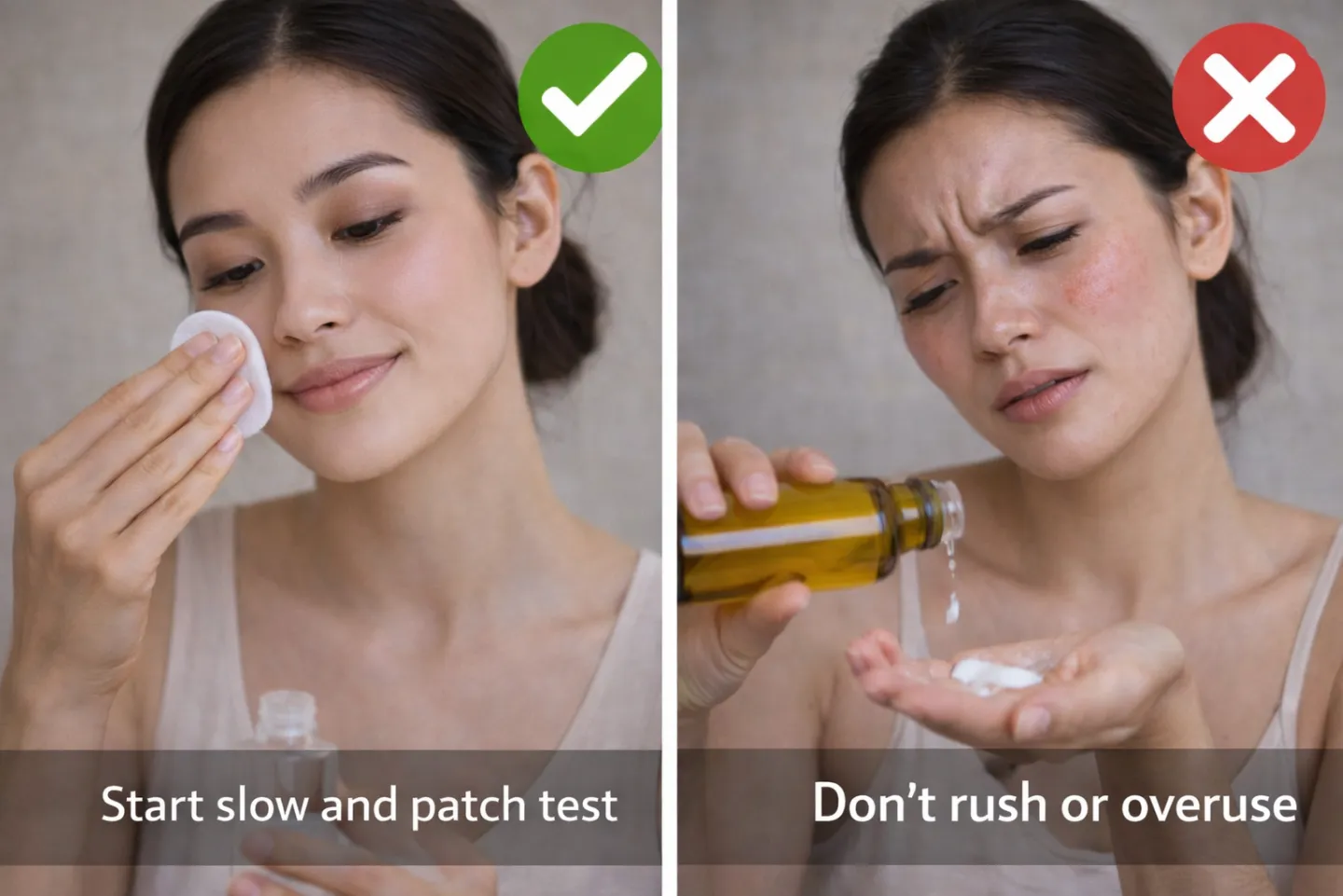
Step 2: Start slow (slower than you think)
For beginners, 1–2 times per week is plenty. More is not better, especially early on.
Step 3: Apply at night
Nighttime is ideal for chemical exfoliation because skin is in repair mode and less exposed to UV stress. Many dermatology sources recommend evening use to reduce the risk of sensitivity.
Step 4: Follow with moisturizer
Exfoliation clears the way; moisturizer seals the deal. This step supports the skin barrier and reduces irritation.
What Chemical Exfoliation Should Not Feel Like
A mild tingle? Fine.
Burning, stinging, redness that lasts? That’s your cue to stop.
Healthy chemical exfoliation feels controlled and calm, not dramatic.
Chemical Exfoliation Do’s and Don’ts
Do’s
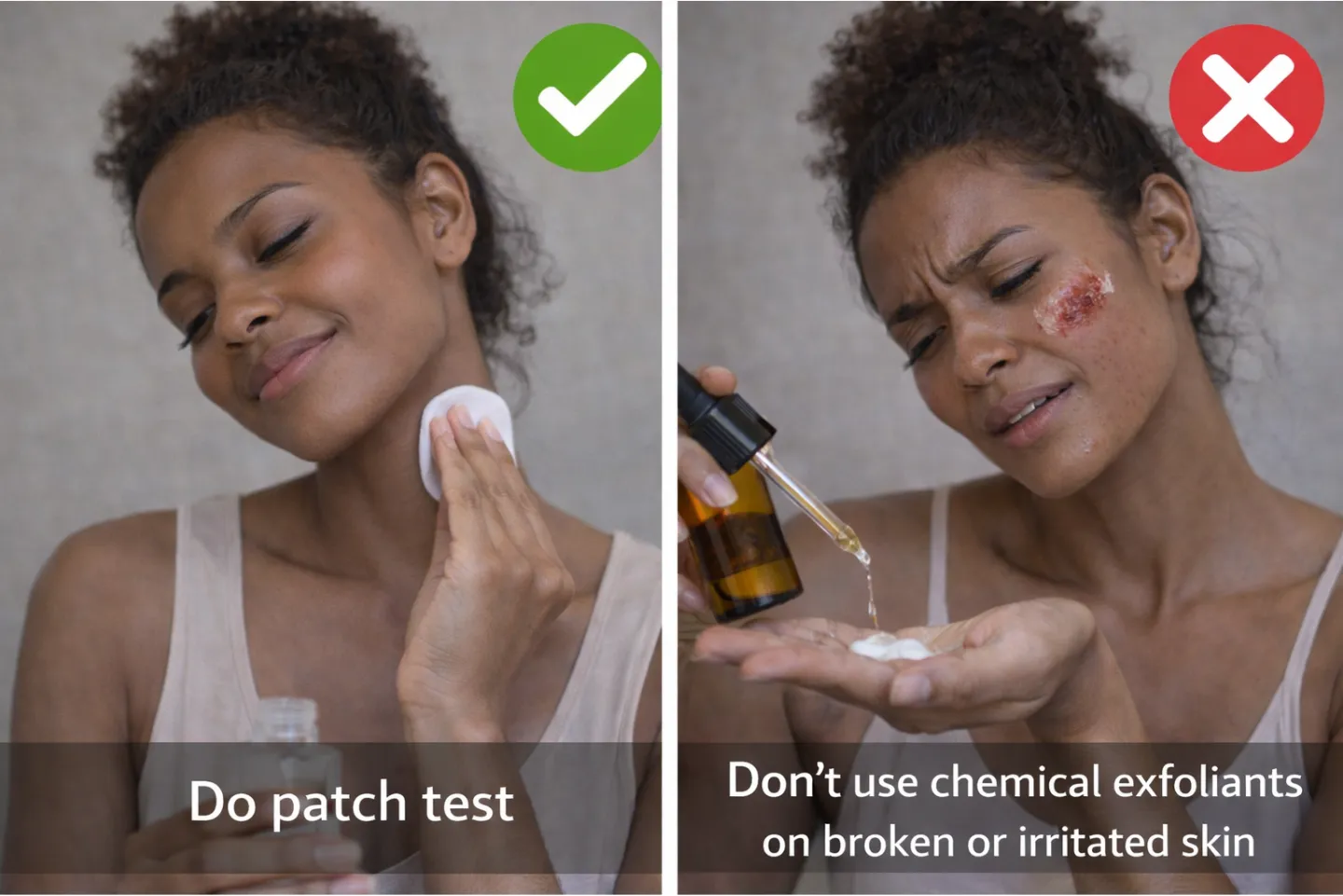
- Do a patch test before using any new exfoliant
- Do start with low concentrations and increase only if your skin tolerates it
- Do exfoliate at night and wear sunscreen during the day
- Do moisturize generously after exfoliating
- Do listen to your skin redness and tightness are signals, not challenges
Don’ts
- Don’t exfoliate daily as a beginner
- Don’t combine multiple exfoliating acids at once
- Don’t use chemical exfoliants on broken or irritated skin
- Don’t skip sunscreen. Exfoliated skin is more sun-sensitive
- Don’t chase instant results; consistency beats intensity
Common Beginner Mistakes (and How to Avoid Them)
One of the most common errors is over-exfoliation, either by using acids too frequently or by layering them with retinoids and potent acne treatments. Clinical dermatology guidelines emphasize that barrier damage can worsen acne, sensitivity, and inflammation.
Another mistake? Expecting overnight miracles. Chemical exfoliation works cumulatively. Think weeks, not days.
How Long Until You See Results?
- Texture improvements: 2-4 weeks
- Brighter appearance: 3-6 weeks
- Fewer clogged pores: ongoing with consistent use
Skin renewal is a process, not a performance.
Is Chemical Exfoliation for Everyone?
Most people can use chemical exfoliation, but conditions such as eczema, rosacea, or compromised skin barriers require extra caution. When in doubt, consult a qualified professional, especially if you’re managing a skin condition.
Luxyora Philosophy: True skin refinement isn’t about intensity, it’s about intelligence. When exfoliation is gentle, intentional, and consistent, skin doesn’t just change; it evolves.
References:
- American Academy of Dermatology Association. (n.d.). Exfoliation: What is it and how to do it safely. https://www.aad.org/public/everyday-care/skin-care-basics/care/exfoliation
- Draelos, Z. D. (2020). Cosmetic dermatology: Products and procedures (3rd ed.). Wiley-Blackwell.
- Mayo Clinic Staff. (2024). Skin care: 5 tips for healthy skin. Mayo Clinic. https://www.mayoclinic.org/healthy-lifestyle/adult-health/in-depth/skin-care/art-20048237
- Tang, S. C., & Yang, J. H. (2018). Dual effects of alpha-hydroxy acids on the skin. Molecules, 23(4), 863. https://www.mdpi.com/1420-3049/23/4/863
- Zaenglein, A. L., et al. (2018). Guidelines of care for the management of acne vulgaris. Journal of the American Academy of Dermatology, 74(5), 945–973. https://www.jaad.org/article/S0190-9622(15)02614-6/fulltext