Why Some Watches Get Better With Age While Others Need Updates | Luxyora
There are two kinds of “older” in the watch world. One is the kind that makes people lean in, eyes soft, voice lowered, because the piece has developed a presence. The other is the kind that makes you sigh, because the watch has become a polite reminder that technology moves on without sentimental attachments.
So why do some watches become more desirable, more beautiful, even more valuable with time, while others practically beg for an upgrade?
It comes down to what a watch is made of, what it’s made for, and whether its charm lives in craft… or in code.
The Watches That Age Like Cashmere
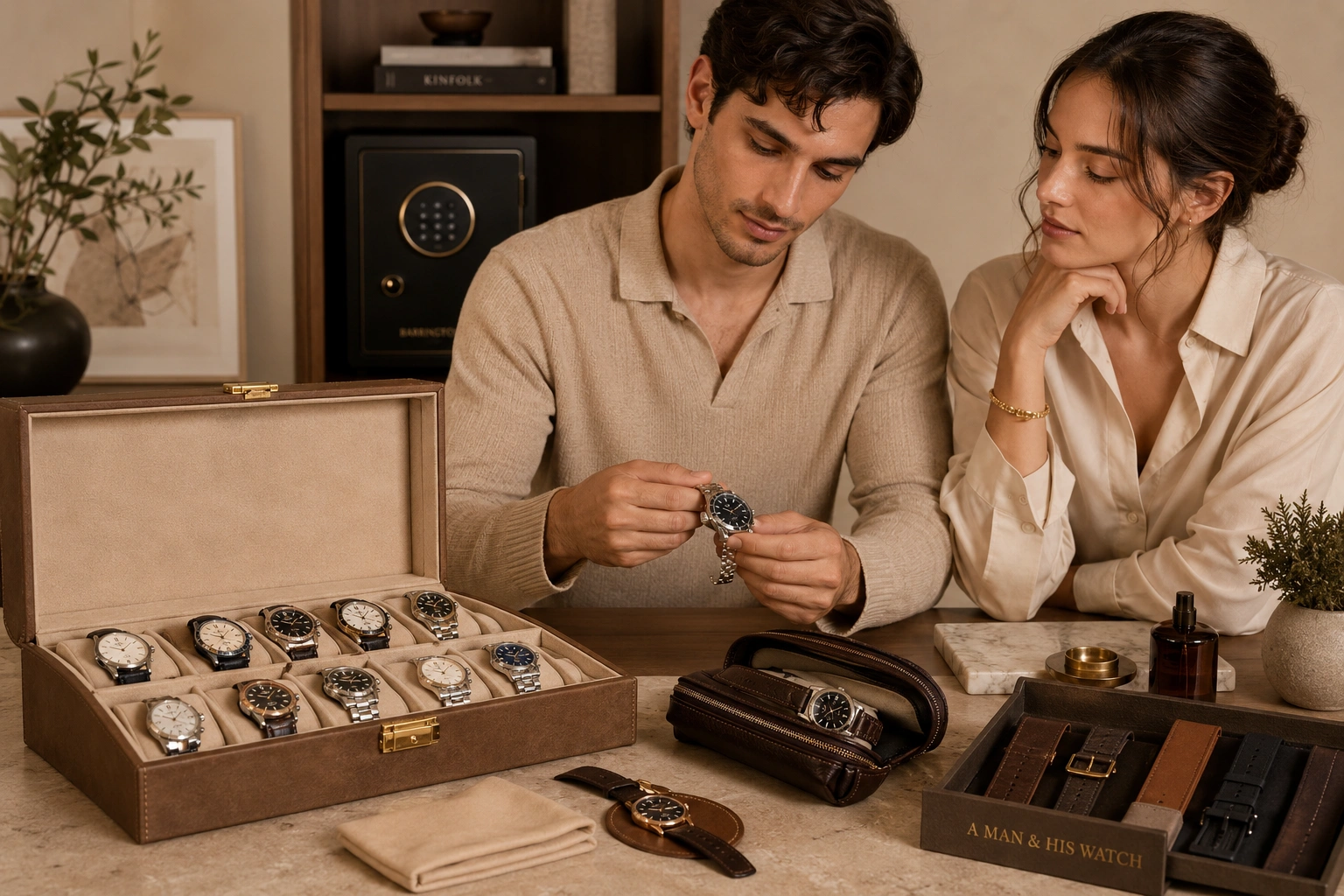
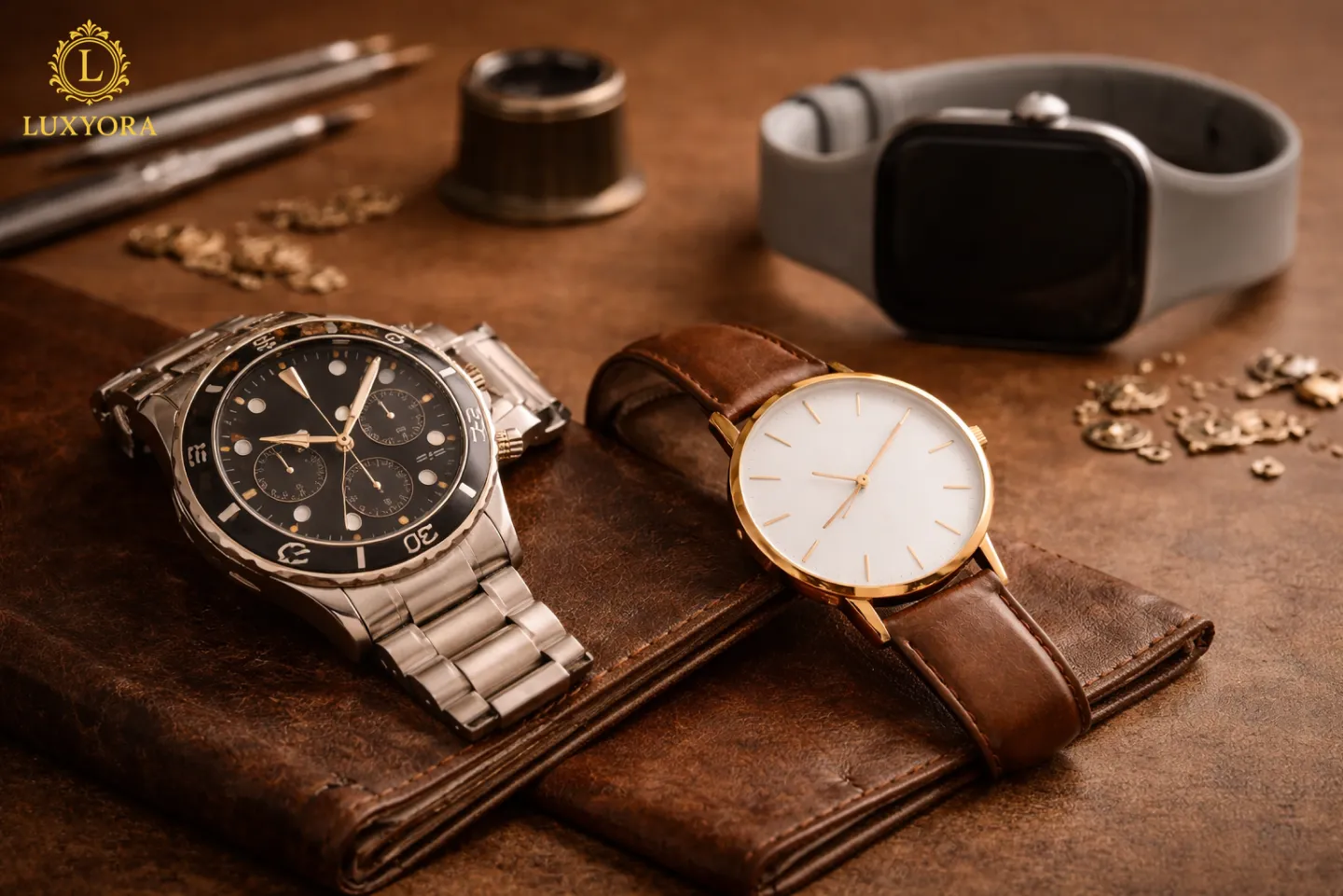
The watches that get better with age tend to share a certain DNA: they’re built as long-term objects, designed to be serviced, and meant to be lived with. Mechanical watches, especially those made with high-quality movements and thoughtful finishing, don’t “expire.” They evolve.
Over time, these pieces develop what collectors call “character,” but what your instincts recognize as authenticity. A softening of sharp edges. A bracelet that drapes more naturally. A dial that shifts slightly in tone. Even tiny marks that speak to a life well-worn, not a life neglected.
This isn’t wear-and-tear as damage; it’s wear-and-tear as narrative. Like a leather bag that looks better once it stops looking new vintage.
Patina: The Most Luxurious Kind of Honesty
Patina is the quiet star of the aging-watch conversation. It can appear as a gentle warm tint on luminous markers, a dial that takes on a creamy hue, or metal that gains depth with subtle micro-scratches. Some collectors chase these changes the way others chase rare vintage wine.
That’s because patina is unrepeatable. It can’t be rushed, and it can’t be perfectly replicated without looking like a costume. It’s time, visibly at work.
Of course, not all aging is desirable; water damage and careless polishing can ruin proportions and value, but well-preserved aging is often part of the appeal. It signals originality and history, the two things luxury collectors are increasingly hungry for.
Serviceability: The Secret Sauce of Longevity
Mechanical watches are essentially tiny machines. Machines can be maintained.
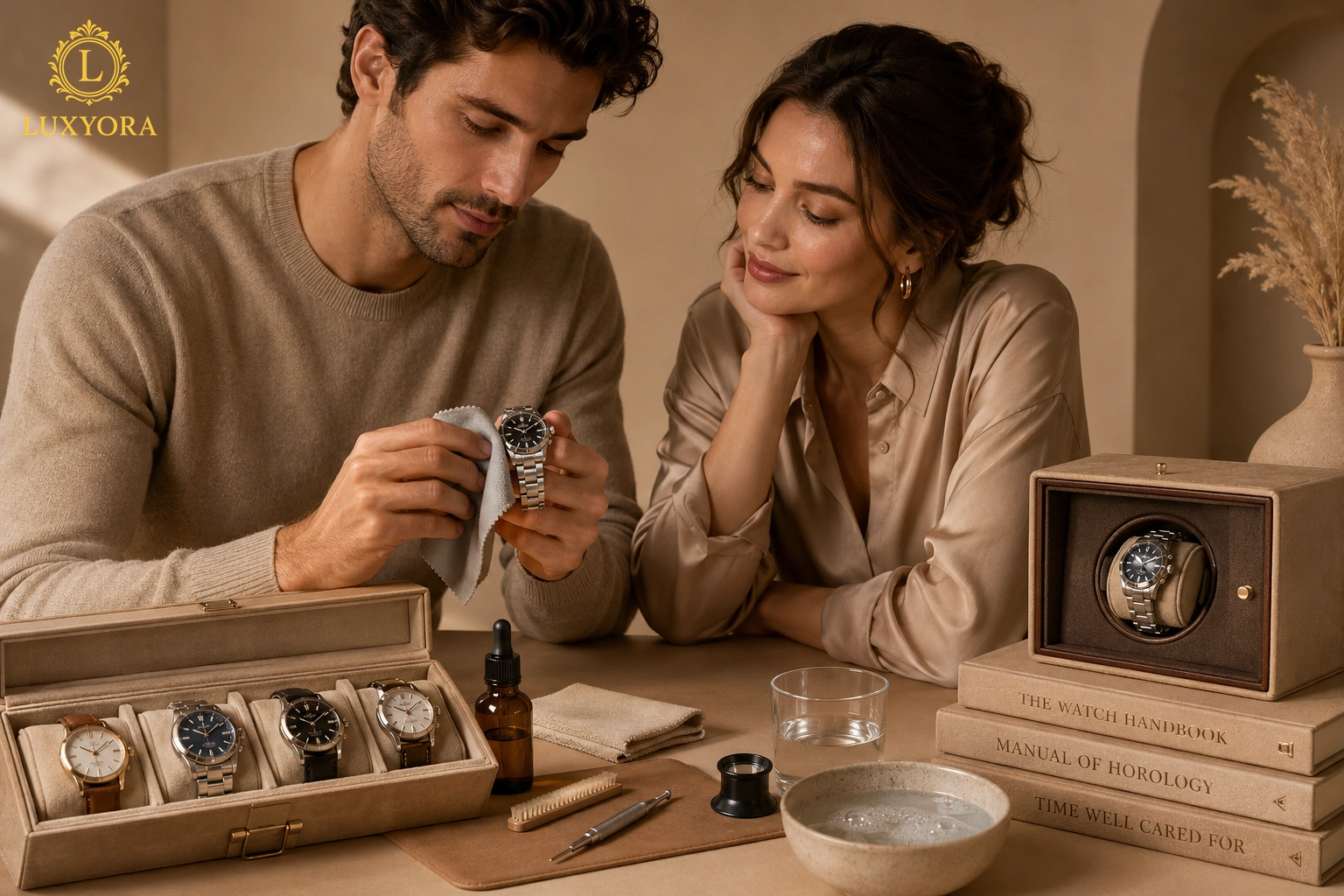
A well-made mechanical movement can be disassembled, cleaned, lubricated, adjusted, and reassembled again and again over decades. Brands with strong service networks and parts availability add another layer of confidence: you’re not just buying a watch, you’re buying the possibility of keeping it alive.
Some brands now even publicly recommend longer service intervals, reflecting advances in materials and lubricants. But the bigger point is this: a mechanical watch is designed for continuity. It’s not meant to be replaced; it’s meant to be cared for.
That care becomes part of the relationship, like taking a beloved coat to a specialist tailor instead of throwing it out.
Not every watch is meant to evolve the same way. Some become more meaningful through wear, time, and familiarity others are built around staying current. If you’ve ever wondered why traditional timepieces continue to hold their place in a world obsessed with progress, Why Mechanical Watches Still Matter in an AI-Driven World offers another perspective.
When Time Creates Desire
Here’s where the romance meets the marketplace. The “better with age” watch category often overlaps with collectability: models with heritage, scarcity, iconic design language, and strong brand equity. Auction houses and industry observers have repeatedly noted the growing enthusiasm for watches as collectible luxury objects, especially among younger buyers entering the market with a taste for provenance and story.
In other words: time doesn’t just mark these watches it markets them. A discontinued reference, a historically important design, a dial variant that existed only in a short run… age can turn “nice” into “necessary.”
The Watches That Need Updates
Now let’s talk about the other camp: watches that age like last season’s phone.
These are typically watches whose primary value is tied to features that are expected to improve connectivity, health tracking, processors, screens, and software ecosystems. If your watch’s magic depends on an operating system staying current, aging can become a vulnerability.
Smartwatches are the obvious example. Their appeal is built on performance and compatibility. Over time, batteries degrade, sensors evolve, and software support shifts forward. Even if the watch still turns on, the experience may feel slower, less secure, or less integrated with newer devices.
This isn’t a flaw in the category; it’s the deal you’re signing. You’re buying a living product, and living products demand updates.
Fast Fashion on the Wrist
Then there’s the middle space: watches that aren’t “smart,” but still behave like trend items. Many fashion watches are designed around a look, a moment, and a price point. They can be fun, stylish, and totally valid, yet they’re often not built with decades in mind.
The tells are usually in materials and finishing: plated cases that can wear through, inexpensive bracelets that stretch, mineral crystals that scratch more easily, and movements that may be cheaper to replace than to service.
These watches don’t become heirlooms because they weren’t engineered to become heirlooms. They’re more like statement heels than bespoke loafers.
Quartz: Reliable, But Not Always Romantic
Quartz watches deserve a nuanced mention. Some quartz watches are legendary for their high accuracy, beautifully finished, historically important, and absolutely collectible. But many quartz watches live in the “practical” lane: they run well, they need a battery, and if the movement fails, replacement is often more common than a full rebuild.
Quartz doesn’t automatically mean “won’t age well.” It simply means the watch’s long-term story depends more on brand, design, condition, and service approach than on the romance of a mechanical heart.
So, Which One Should You Buy?
Think of it like building a wardrobe.
If you want a watch that grows into you, something you’ll still recognize as beautiful ten years from now, lean toward timeless design, strong materials, and a reputation for serviceability. Mechanical watches, especially from heritage-driven brands, tend to reward patience.
If you want a watch that keeps you connected, tracked, and optimized, choose the best smartwatch for your ecosystem and accept that upgrades are part of the rhythm. That’s not wasteful, it’s simply matching the object to its purpose.
The mistake is expecting a smartwatch to age like a mechanical icon, or expecting a fashion watch to behave like a generational treasure. Different categories, different promises.
In an era that loves the new, the watches that age best are the ones that were never chasing novelty in the first place.
Some watches collect stories, scratches, and character, others collect updates, features, and newer versions. Neither approach is wrong, but understanding why we connect differently to each reveals more than just personal taste. Explore the contrast further in Analog vs Digital Watches: Which Is Right for You?
Luxyora Philosophy: A watch should either become a legacy or evolve with your life; either way, it’s luxury, as long as you choose with intention.
References:
- Deloitte. (2023). The Deloitte Swiss Watch Industry Study 2023: A calibre of its own. Deloitte Switzerland.
- Federation of the Swiss Watch Industry FH. (2025). World watchmaking industry in 2024. FH.
- Phillips. (2023). Phillips Watches achieves the most successful year in auction history for the second consecutive year (Press release). Phillips.
- Rolex. (n.d.). Caring for your Rolex: Frequently asked questions (Watch care and service). Rolex.
- Apple Support. (2025). Update your Apple Watch. Apple Inc.
- Barros, M. (2021). From planned obsolescence to the circular economy in the smartphone industry: An evolution of strategies embodied in product features (Master’s thesis). Aalborg University.
- Stone, G., & Sisson, J. (2018). The watch, thoroughly revised: The art and craft of watchmaking (Rev. ed.). Abrams.