What Your Choice of Fragrance Quietly Communicates About You | Luxyora
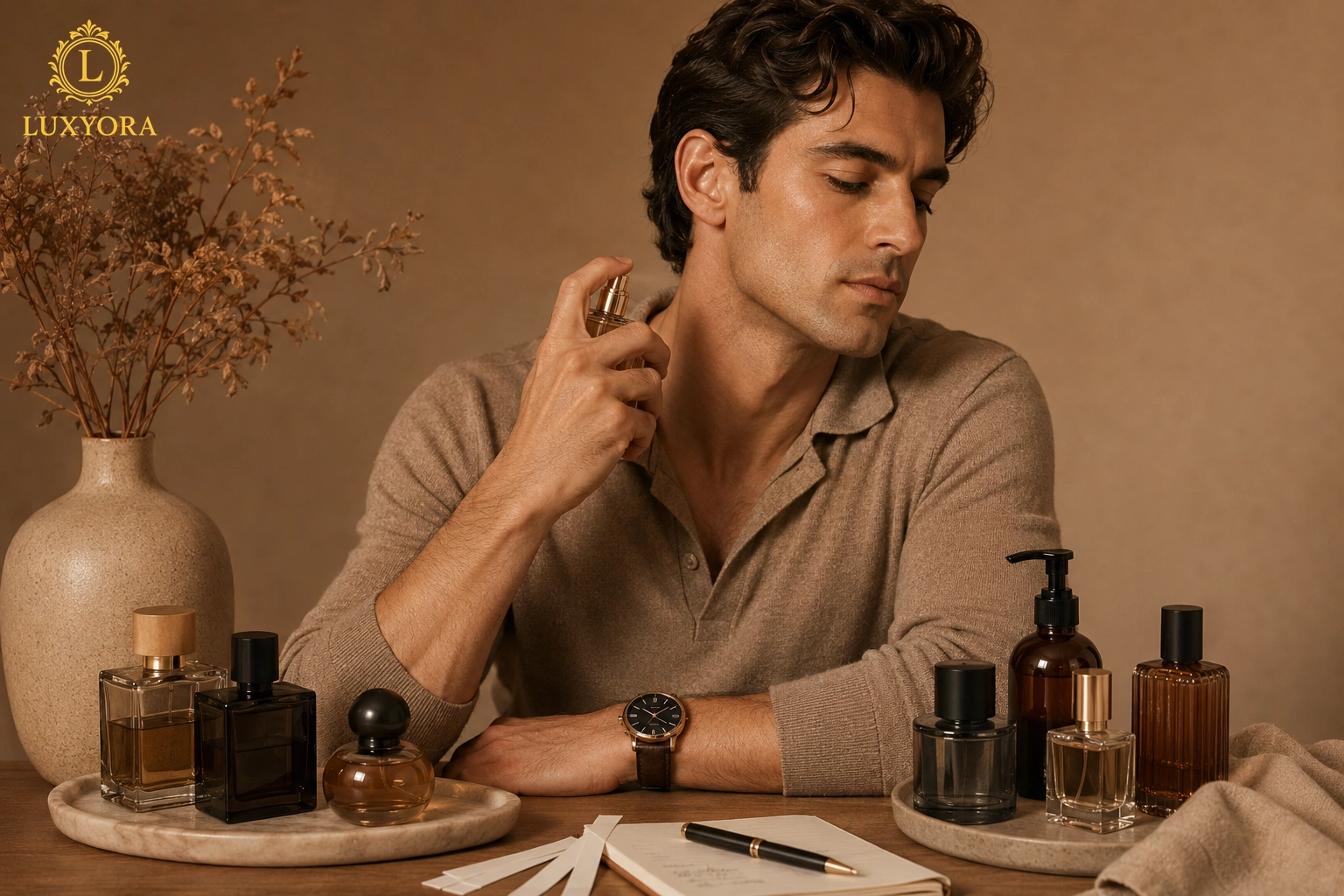
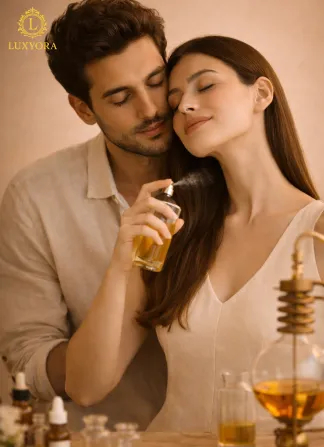
You can change your outfit in five minutes. You can swap your jewellery at the door. But fragrance? Fragrance is the detail that follows you into the room and stays when you’re gone. It’s the most private kind of styling: invisible, intimate, and oddly honest.
Because scent lives so close to emotion and memory, the perfume you reach for often says less about what you want people to see and more about what you need to feel. Confidence, calm, charisma, comfort, control. Sometimes it’s all of the above just in different concentrations.
Here’s what your fragrance choices can quietly communicate, and why people pick up on it faster than you’d think.
1) Fresh, “clean” scents: “I have my life together” (even if it’s aspirational)
Think crisp citrus, airy musks, watery florals, laundry-clean aldehydes, and shampoo-soft woods. These fragrances tend to broadcast polish and approachability. They read as organised, put-together, and low-drama, like you answer emails on time and always know where your keys are.
But the deeper message is often emotional: clean scents are regulated. They can feel like a reset button on a chaotic day. They’re also socially safe, rarely too loud, rarely too divisive, so they quietly communicate consideration. Not “look at me,” but “you’ll feel good near me.”
A preference for soft florals, warm woods, or bright citruses may say more about you than you realise. The reason lies in the remarkable relationship between scent, emotion, and recollection. Learn more in The Science of Scent: How Fragrance Affects Mood and Memory.
2) Skin scents and soft musks: “Come closer”
These are the fragrances that don’t announce themselves. They hover. Warm ambers, creamy sandalwood, gentle musks, subtle lactonic notes, perfumes that melt into skin instead of sitting on top of it.
Wearing a skin scent often signals that you value intimacy over spectacle. You don’t need a fragrance to do your talking; you want it to be discovered. There’s also a confidence in that restraint, a sense of control, of choosing who gets access to your softness. Its fragrance is a private language, spoken at close range.
The scents we gravitate toward often become invisible accessories, shaping not only first impressions but also our sense of self. Learn why a favourite fragrance can inspire unexpected confidence in The Invisible Confidence Boost of Wearing Fragrance.
3) White florals and luminous bouquets: “I’m romantic, but make it powerful”
Jasmine, tuberose, orange blossom, and gardenia florals that can feel creamy, radiant, and slightly theatrical. These scents are often described as “feminine,” but what they communicate is bigger: presence.
A bold floral can read like self-assurance with a satin lining. It’s sensual, yes, but also intentional. The person who chooses a luminous bouquet is often comfortable being perceived. There’s a willingness to be memorable and an understanding that elegance doesn’t have to whisper.
4) Woods, leather, and smoky notes: “I’m the main character, and I know it”
Cedar, vetiver, patchouli, incense, leather, tobacco, dark tea. These fragrances create a silhouette. They’re not just “nice”, they’re atmospheric. They suggest depth, mystery, and a taste for drama done well (not chaos, but cinema).
Wearing woods and smoke often signals a love of contrast: soft sweater energy with sharp edges, a quiet voice with strong opinions. It can also communicate independence, the kind that doesn’t ask permission to take up space.
5) Gourmands and edible warmth: “I’m comfort with a pulse”
Vanilla, caramel, tonka, cocoa, and almond scents that smell like dessert, but grown-up dessert. The best gourmands don’t scream cupcake; they purr like cashmere.
Gourmands often communicate warmth, generosity, and emotional openness. They’re inviting. They can make you feel instantly familiar, like someone people want to linger around. And on a psychological level, they can function like wearable comfort and sweetness as reassurance, warmth as safety.
6) Green, herbal, and aromatic scents: “I’m grounded, discerning, slightly untouchable”
Basil, fig leaf, galbanum, clary sage, mint, thyme, and tea notes fragrances that feel botanical, brisk, and smart. These choices tend to communicate a specific taste. Not fussy, but precise.
Green scents can read as calm authority: someone who doesn’t chase trends, who likes beauty with a backbone. They can also signal boundary freshness as clarity. “I’m friendly,” they say, “but I’m not for everyone.”
Why fragrance communicates so much in the first place
Scent is processed by brain systems heavily involved in emotion and memory, which is why fragrance can feel instantly transporting or instantly comforting without you fully understanding why. Research also shows that odours can influence how people judge others, including impressions like attractiveness and other social evaluations, especially when the scent is pleasant. That’s part of the magic: fragrance shapes the emotional “temperature” of an interaction before the conversation even warms up.
There’s also the quiet reality that fragrance isn’t static. It develops. It changes over time, with warmth, and with your skin chemistry, meaning your perfume becomes a collaboration between the formula and your body. Two people can wear the same fragrance and still smell like different stories.
A fragrance may seem like a personal indulgence, yet it often becomes one of the first details others notice and remember. Learn why scent can shape impressions so powerfully in How Fragrance Shapes First Impressions Without Words.
The unspoken etiquette: what you might be signaling without realizing it
Fragrance communicates not only who you are, but how you move through shared space.
- Projection (how far it travels): A big sillage can read as confident and glamorous or as unintentionally overwhelming, depending on context.
- Timing: A sparkling citrus at 8 a.m. feels bright and professional; the same scent at midnight feels playful and crisp.
- Consistency: A signature scent reads as stable, intentional, and memorable. A rotating wardrobe reads as expressive, mood-led, and modern.
Neither approach is “better.” They tell different truths.
A preference for fresh citruses, delicate florals, or deep woody notes may quietly communicate something about your personality, but it can also influence the energy you bring into a room. Learn more in How Wearing a Scent Changes the Way You Carry Yourself.
Build a fragrance wardrobe that matches your real life
If you’re curating luxury, think like a stylist just for your mood.
- The daytime signature: clean, bright, quietly elegant.
- The intimacy scent: skin-close, warm, personal.
- The power scent: something with structured woods, spice, aldehydes, or a statement floral.
- The comfort scent: vanilla, soft amber, creamy woods.
- The wild card: the one that surprises even you.
At events like Barnes Fragrance Fair 2026, you’ll have the opportunity to discover new perfume labels for your perfume wardrobe.
The goal isn’t to smell like someone else’s idea of sophistication. The goal is to smell like you, in high definition.
What your choice of fragrance quietly communicates about you may be too nuanced to be captured by a single bottle. Sometimes, different facets of your personality call for different scents. Discover the art in The Art of Fragrance Wardrobing: Build Your Personal Scent Collection.
Luxyora Philosophy: True luxury is what feels unmistakably yours, chosen with intention, worn with emotion, and remembered without effort.
References:
- Croijmans, I., et al. (2021). The role of fragrance and self-esteem in perception of body odors and impressions of others. PLOS ONE. (PLOS)
- Kehl, M. S., et al. (2024). Single-neuron representations of odours in the human brain. Nature. (Nature)
- Kontaris, I., & East, B. S. (2020). Behavioral and neurobiological convergence of odor, mood and emotion: A review. Frontiers in Behavioral Neuroscience. (Frontiers)
- Schlintl, C., et al. (2023). Olfactory imagery as a retrieval method for autobiographical memories. Psychological Research. (Springer)
- Spence, C. (2021). The scent of attraction and the smell of success. i-Perception. (PMC)
- Nez Éditions. (2020). The Big Book of Perfume: For an Olfactory Culture (J. Doré, Ed.). Nez Éditions. (Nez Éditions)
- Financial Times. (2024). Perfume offers a new “lipstick effect” in the luxury slowdown. (Financial Times)