The Thin Line Between Wearable Art and Impractical Design | Luxyora
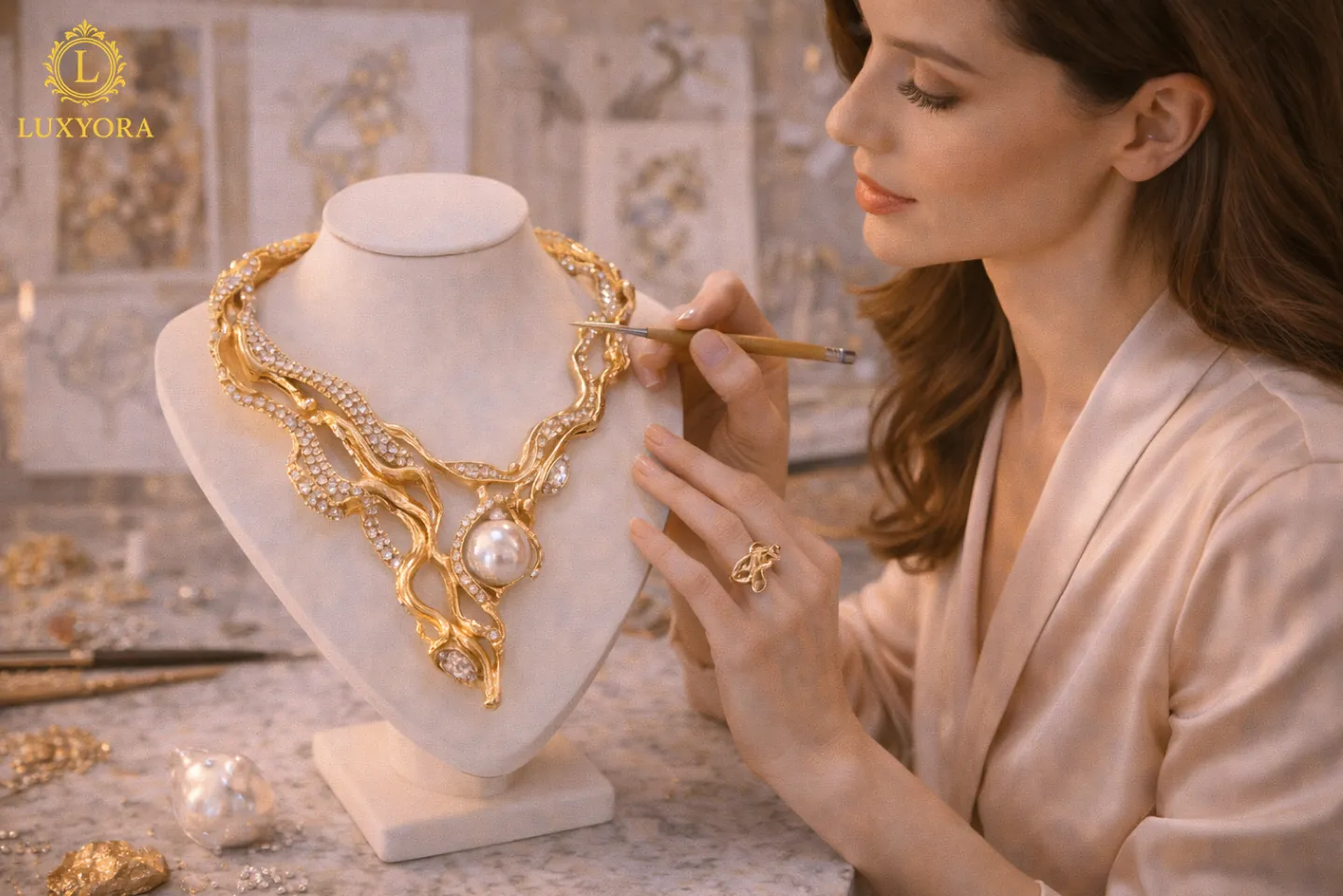
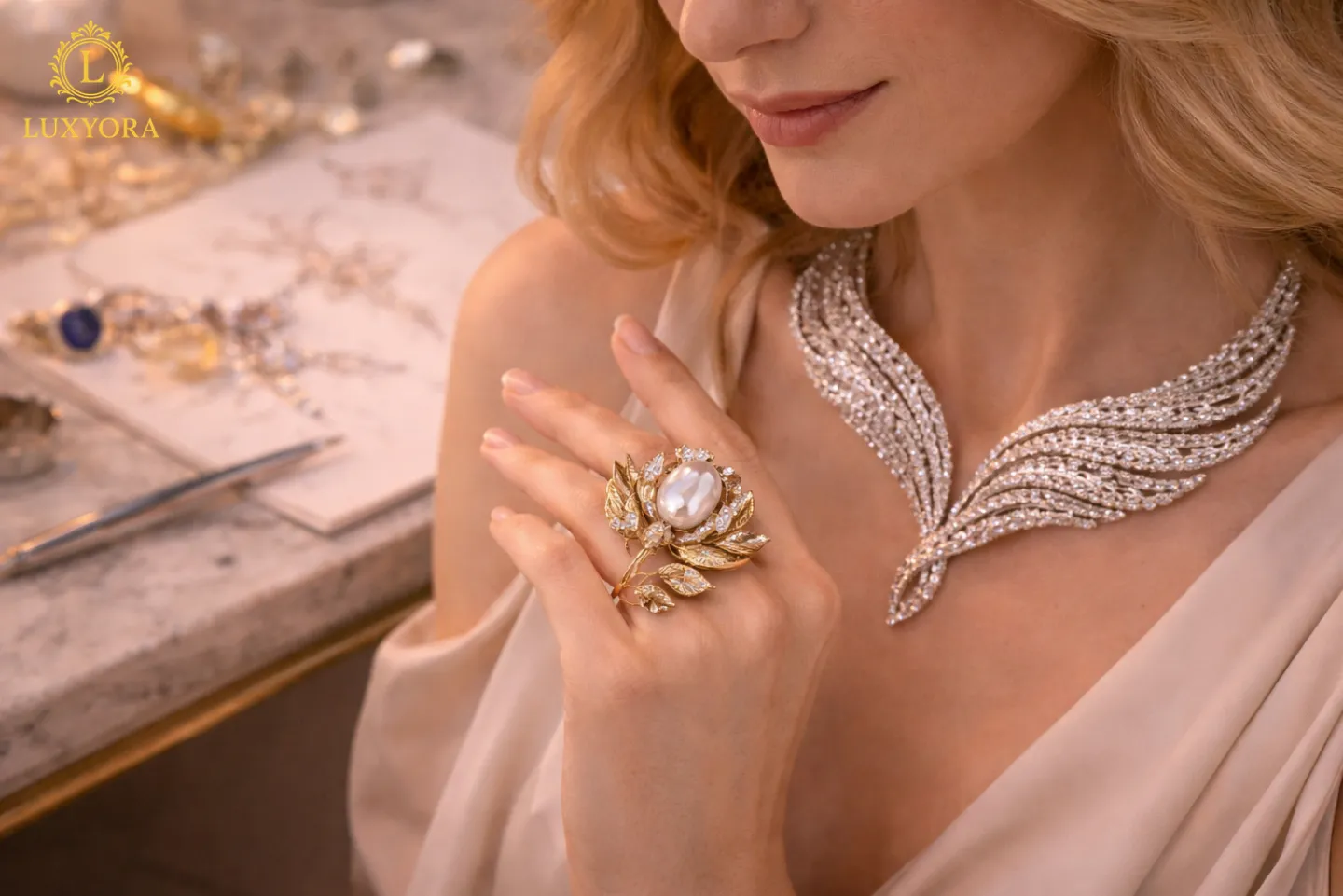
There’s a moment in every fashion enthusiast’s life when they see a piece of jewellery that feels more like a sculpture than an accessory, a ring that looks like a bird in mid-flight, a necklace that loops impossibly around the neck, a cuff that seems to defy gravity. These pieces make you pause, even gasp. They’re audacious, provocative, mesmerizing. They are art.
But then you wonder: Could anyone actually wear this outside a museum?
This is the fascinating and sometimes maddening tension at the heart of luxury design: the thin line between wearable art and impractical spectacle. Some pieces live beautifully in both worlds, worn with confidence and photographed on red carpets. Others serve their purpose best behind glass, admired up close but rarely worn.
Understanding that fine line reveals not just how jewellery is crafted but why meaning and practicality matter as much as visual ambition.
When Jewellery Becomes Art
Art jewellery doesn’t set out to be invisible. It’s meant to be seen, studied, and felt. These are pieces that often emerge from the overlap between sculpture, fashion, and performance. They challenge the conventions of traditional design and invite dialogue about form, identity, and expression.
Artists and designers look to movements like surrealism, modernism, and even architecture for inspiration. They play with scale, negative space, and unconventional materials. Sometimes, the goal isn’t to create something you’ll wear every day but something you’ll remember every time you see it.
Art jewellery thrives on imagination, but imagination alone doesn’t sustain a piece once it steps off the runway or out of the gallery.
The Demands of Wearability
Traditional jewellery design begins with a question no one ever sees on paper: Can someone actually wear this without a wardrobe malfunction? It isn’t glamorous, but it is essential.
Wearability means considering:
- Weight: Heavy pieces can strain earlobes, wrists, and necks.
- Movement: Does the piece restrict motion? Catch on fabric?
- Comfort: Does it sit right against the skin or pinch, poke, or press?
- Durability: Will fragile elements break with normal wear?
Even in minimalist design, balance is everything. When you push into statement territory, large components, complex structures, suspended elements, you enter the realm where art and practicality compete for dominance.
Great wearable art isn’t only about how it looks; it’s about how it feels and how it lives with the body.
The line between bold creativity and everyday wearability becomes clearer when you understand the principles of minimalist design. Explore Why Minimalist Jewellery Is Harder to Design Than It Looks.
Stories Behind the Spectacle
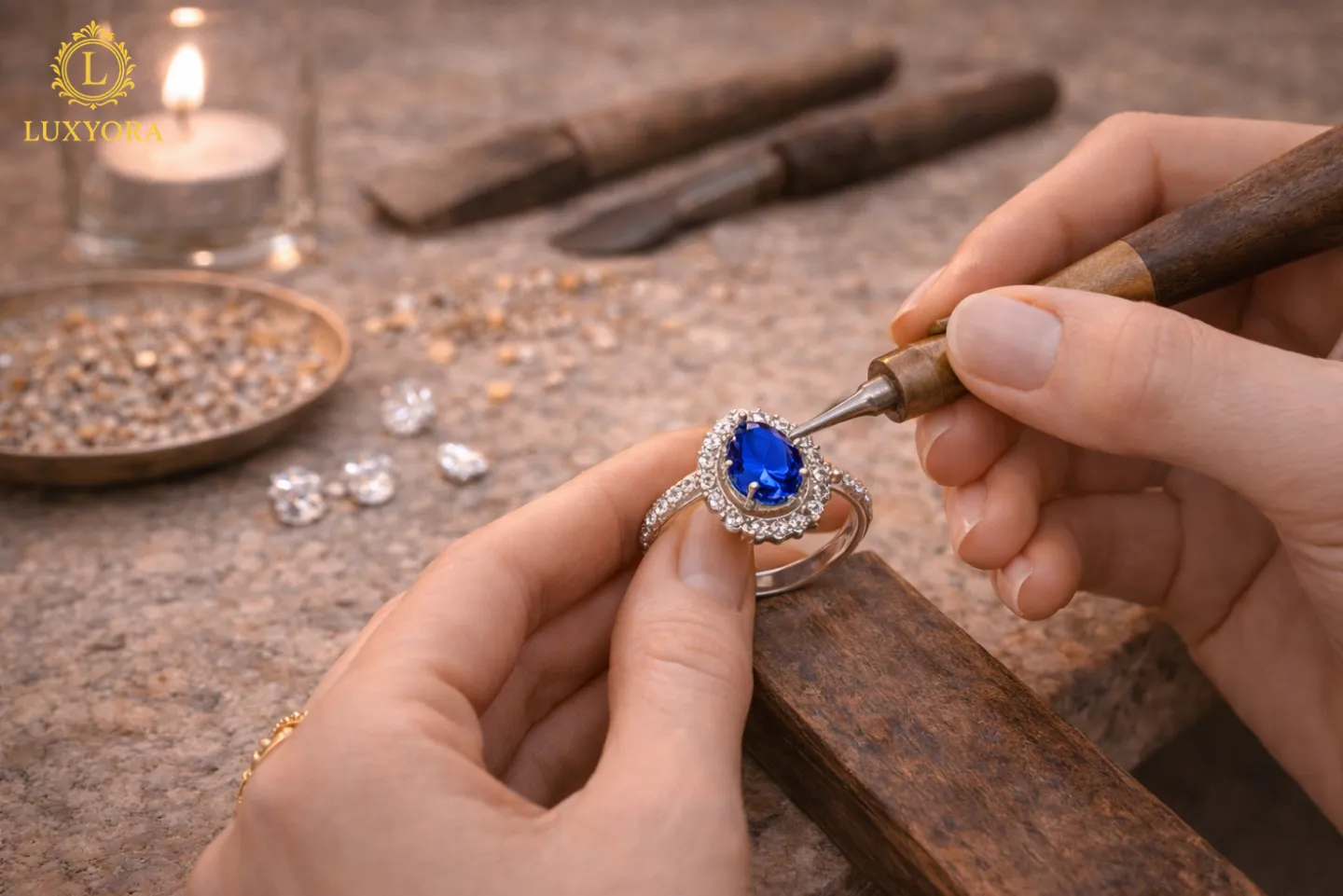
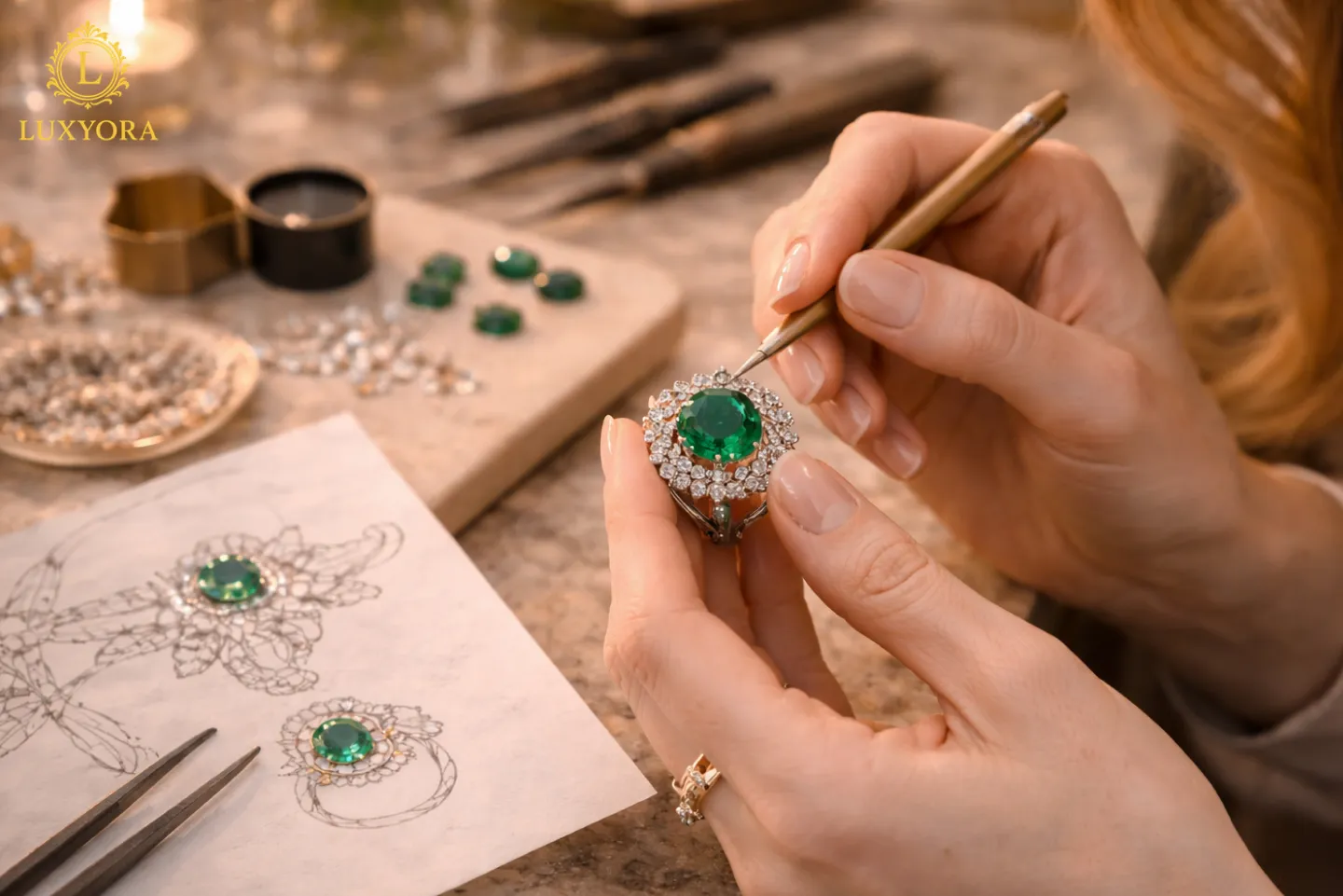
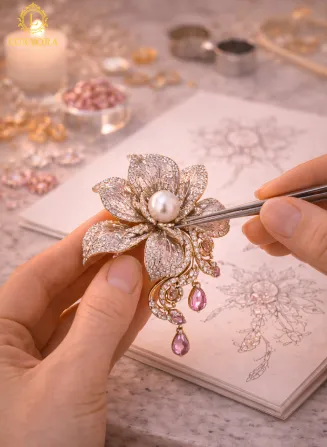
Some of the most remarkable jewellery pieces began as ideas that flirted with impracticality, only to evolve into wearable masterpieces. Designers often sketch wildly ambitious concepts first because that’s where originality lives. They then refine, adjust, and engineer until the design not only looks stunning but also works in motion.
Think about iconic jewellery moments: a dramatic collar necklace seen under spotlights, a bracelet worn while raising a glass of champagne, a ring that looks seamless in a handshake. These moments are proof that design can dance between art and function.
Yet not all designs survive that transition. And that’s okay, not every piece should be worn like everyday jewellery. Some are meant to be admired, explored, and photographed, but not lived in.
A remarkable jewellery design is rarely the product of inspiration alone; it’s the result of a creative journey from sketch to craftsmanship. Discover the story in How a Simple Sketch Becomes a Luxury Jewel.
Why Impractical Isn’t Always Bad
Impractical design doesn’t always mean failure. Sometimes it’s a conversation starter, a conceptual piece that expands what jewellery can mean. Impractical elements can happen for artistic reasons: to provoke, to disrupt, to question the conventions of balance, symmetry, or beauty itself.
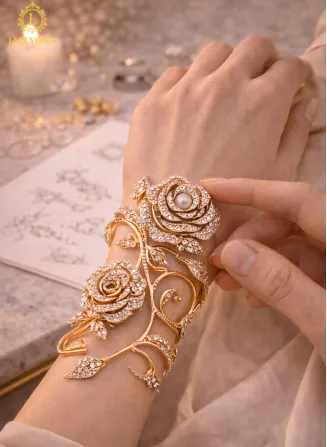
Consider those pieces that wrap around the wrist in spirals like dancers in motion. Or rings that nestle across multiple fingers like a constellation. They may not be the best choice for dinner and dancing, but they redefine expectations, challenge assumptions, and influence future design.
In these pieces, impracticality becomes a tool, not a flaw.
The Technical Balancing Act
The dual demands of art and wearability often force designers into technical problem-solving at the highest level. It’s not unusual to see:
- Innovative lightweight alloys that reduce physical burden.
- Hidden support mechanisms that maintain form without compromising beauty.
- Flexible structures that move with the body.
- Modular designs that can be reconfigured for actual wear.
Engineers, metallurgists, and master craftspeople frequently collaborate to bridge the gap between concept and reality. The resulting piece might look ethereal, but underneath is a latticework of thoughtful intention and precision engineering.
The Audience Matters
Who is the piece for? That’s another layer in the art vs. practicality debate. Some jewellery is designed for collectors and connoisseurs who value meaning and innovation more than ease. Others are designed for everyday elegance or red carpet impact. Some pieces are one-of-a-kind statements; others are meant to inspire an entire collection.
Understanding the audience helps both the designer and the wearer interpret whether a daring piece succeeds or stumbles.
The Power of Narrative
Jewellery becomes more than art or an accessory when it carries a narrative, whether personal, cultural, or conceptual. A piece might be technically wearable but emotionally impractical, like a ring that symbolizes heartbreak and renewal. That emotional complexity can outweigh its practicality.
The best wearable art tells a story that resonates both visually and personally. Wearability in this sense isn’t about utility alone; it’s about connection.
Wearable Art in Everyday Life
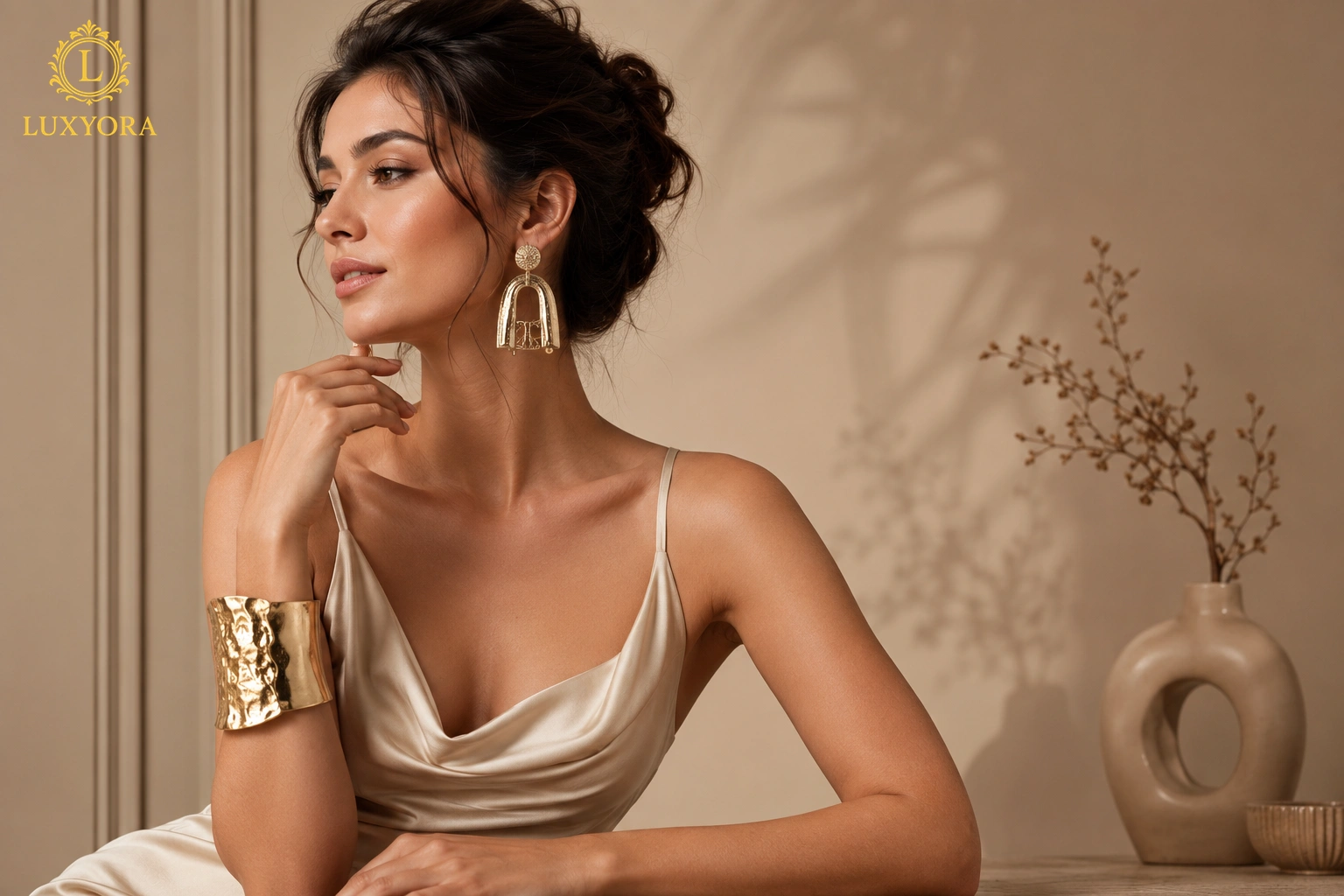
It’s worth noting that the most powerful pieces, whether practical or artful, find ways to live with the wearer. Someone might not wear an architectural necklace to brunch, but they might choose it for a meaningful event. A bold cuff might be impractical for typing emails, but perfect for turning heads in a gallery.
The essence of wearable art is flexibility, not just physical, but contextual. It should invite participation, not just observation.
The Future of Jewellery: Hybrid Forms
As jewellery continues to evolve, designers are increasingly merging art and practicality in intelligent ways. Technology plays a role too, 3D modeling, virtual try-ons, and wearable alloys expanding what designers can attempt without sacrificing wearability.
The result? Pieces that are as expressive as contemporary sculpture, yet as comfortable and reliable as classic design. Art and functionality aren’t enemies; they’re collaborators in a new era of luxury fashion.
Luxyora Philosophy: True design isn’t confined to one realm or the other; it thrives where beauty meets purpose, and art meets life.
References:
- Bain & Company. (2023). Long live luxury: Converge to expand through turbulence. Bain & Company.
- Bain & Company. (2024). Luxury and technology: Toward the boutique of the future (2023 report) (Comité Colbert & Bain & Company).
- Faurschou, C. (2019). Jewellery as sculpture: The works of modern designers. Thames & Hudson.
- McKinsey & Company. (2021, June 14). State of fashion: Watches and jewellery. McKinsey & Company.
- Miller, M. (2020). The craft and culture of jewellery: An introduction. Bloomsbury Visual Arts.
- Seijen ten Hoorn, L. (2023). Design for jewellery makers: Inspiration, development and creation. Search Press.