Why Handcrafted Jewellery Still Beats Machines | Luxyora
In an age where precision tooling, automated production lines, and laser-guided manufacturing have revolutionized how we make nearly everything, it’s easy to assume that machines have won. After all, they offer speed, uniformity, and efficiency that handwork struggles to match. But in the rarefied world of luxury jewellery, something remarkable happens: handcrafted pieces do more than survive; they thrive. They captivate, endure, and hold value not just because of the material used, but because of the human touch woven into every millimeter of metal and sparkle of gemstone.
The truth is, machines are extraordinary at repetition. Yet handcrafted jewellery celebrates intentional imperfection, emotional resonance, and human creativity qualities that are profoundly visible, even if only appreciated subconsciously. When you wear a handcrafted piece, you’re wearing something that carries the memory of human hands, eyes, and decisions. And in the realm of luxury, that matters. A lot.
Let’s explore why handcrafted jewellery still beats machines and why this tradition not only survives in the modern era, but feels more precious because of it.
1) Craftsmanship is the soul of luxury
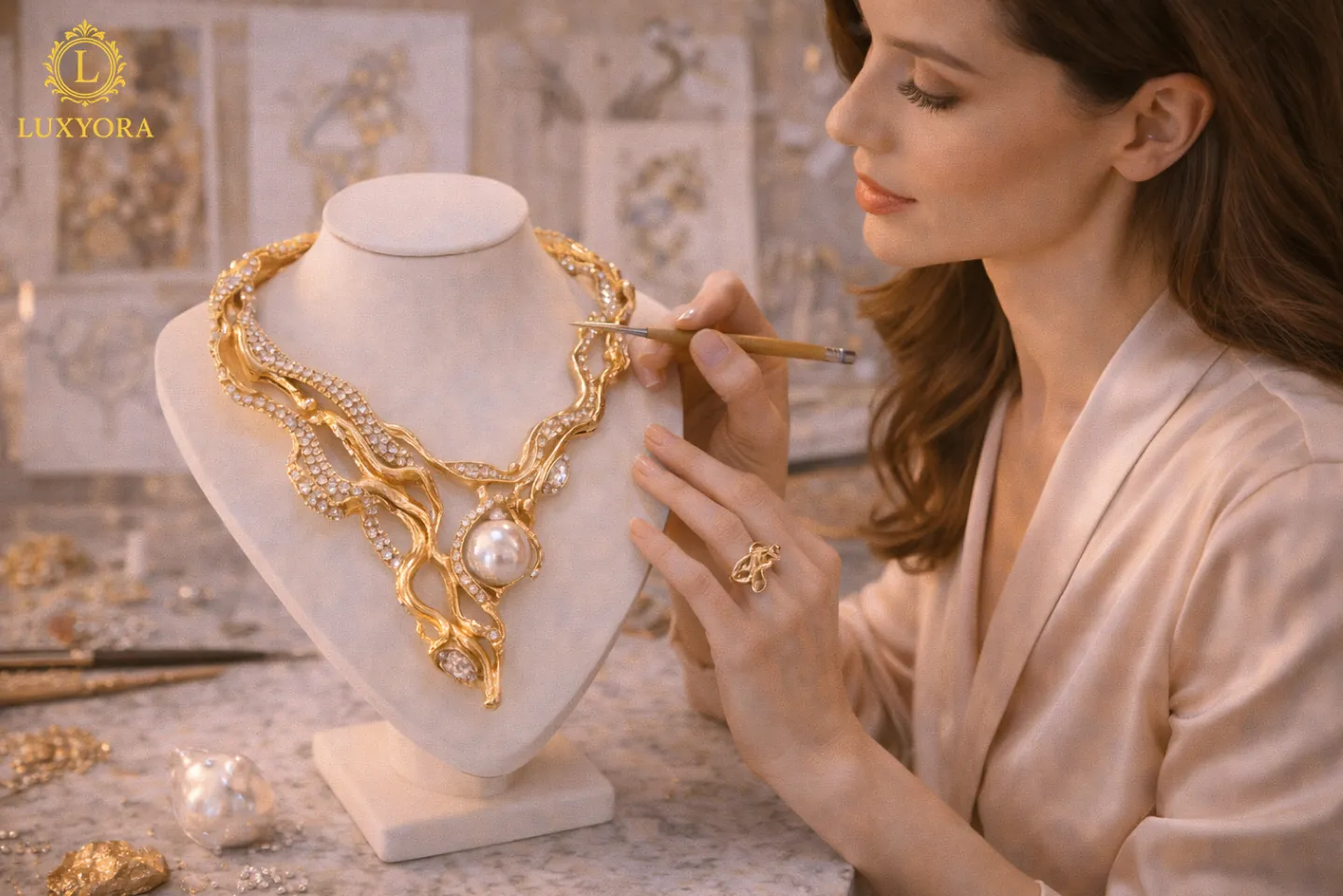
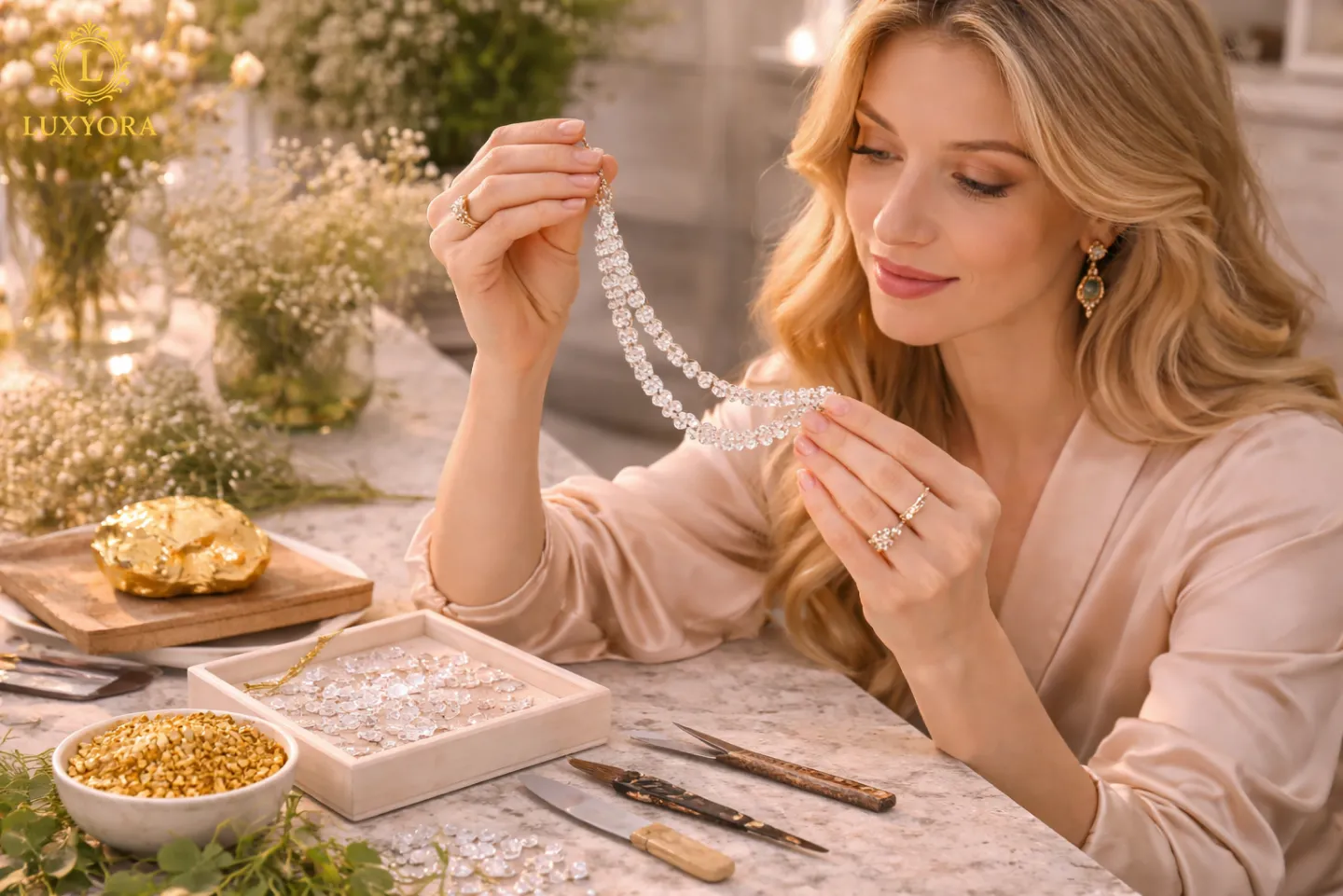
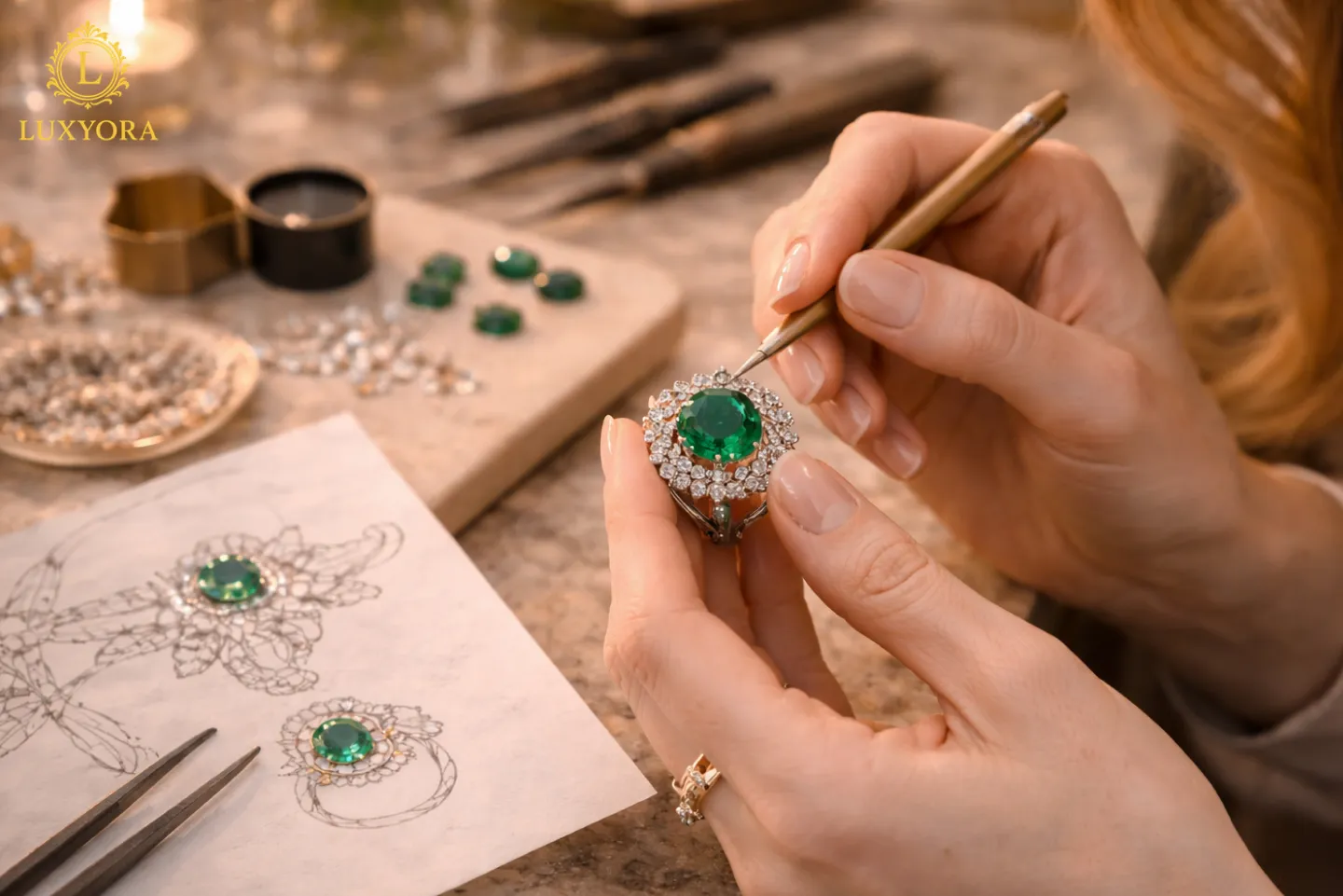
At its best, handcrafted jewellery embodies an artisan’s intuition. These are designs that evolve through sketches, prototypes, and tactile exploration, not just digital renderings. The artisan’s eye is trained to see subtleties in proportion and balance that aren’t reducible to numbers alone. There’s a sensitivity to curve, weight, and form that grows from years of practice, not algorithms.
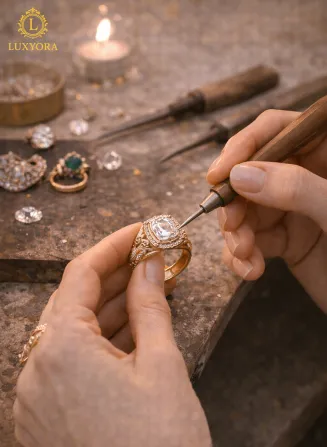
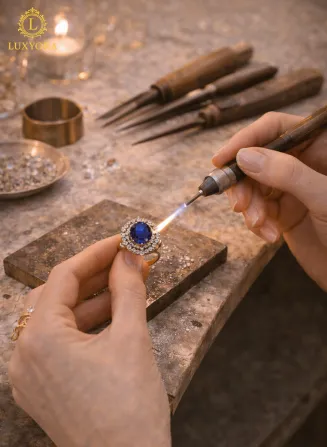
Machines are excellent tools, but they don’t feel. They can execute a design precisely, but they don’t interpret it. When a master goldsmith shapes a ring or sets a stone by hand, they bring an invisible quality call it nuance, intention, or soul that defines true luxury.
2) Each handcrafted piece has a story
Humans are storytellers. That’s why we connect emotionally with objects that have a narrative arc. A handcrafted jewel carries not just gold and gemstones, but the story of its creation: the artisan’s decision to adjust a prong here, to subtly curve a band there, or to select a stone that resonates in light and emotion.
Even imperfections, very intentional and controlled, become marks of authenticity. They signal that this piece was made, not manufactured; chosen, not churned out. In a cultural moment when authenticity feels increasingly rare, handcrafted jewellery’s story becomes as valuable as its sparkle.
Every handcrafted piece tells a story of imagination and craftsmanship that reaches far beyond seasonal fashion. Explore When Jewellery Becomes Art Instead of Fashion.
3) Machines excel at uniformity; humans excel at nuance
Machine fabrication shines when consistency is the goal. Identical parts, symmetrical shapes, predictable outputs these are the domains where machines dominate. And yet, jewellery that feels characterful doesn’t always come from perfect uniformity.
Artisans understand that nuance matters: a slightly thicker bezel that feels more comfortable on the finger, a prong subtly angled to catch light just right, a metal finish with just the right warmth. These are choices not easily encoded into software, because they emerge from experience, not parameters.
Small variations can make each piece feel unique even when the design is part of a larger collection. That uniqueness is part of what makes handcrafted jewellery feel alive.
4) The human eye is the ultimate quality control
There’s craftsmanship, and then there’s discernment. Machines operate on programmed tolerances; humans operate on judgment honed by years of seeing, touching, and correcting.
Artisans don’t just execute a design; they evaluate it at every step. They detect microscopic surface inconsistencies, subtle imbalances in gem alignment, and nuances in finish that escape even high-resolution cameras. Their decisions aren’t binary; they’re aesthetic.
This human judgment is the safeguard against the mechanical coldness that can make perfectly manufactured jewellery feel sterile.
5) Emotional resonance can’t be manufactured
A handcrafted ring often becomes a family heirloom not only because of its quality, but because of the meaning embedded in it over time. Emotion attaches to objects that feel personal. And handcrafted jewellery feels personal because it was literally shaped by human intention.
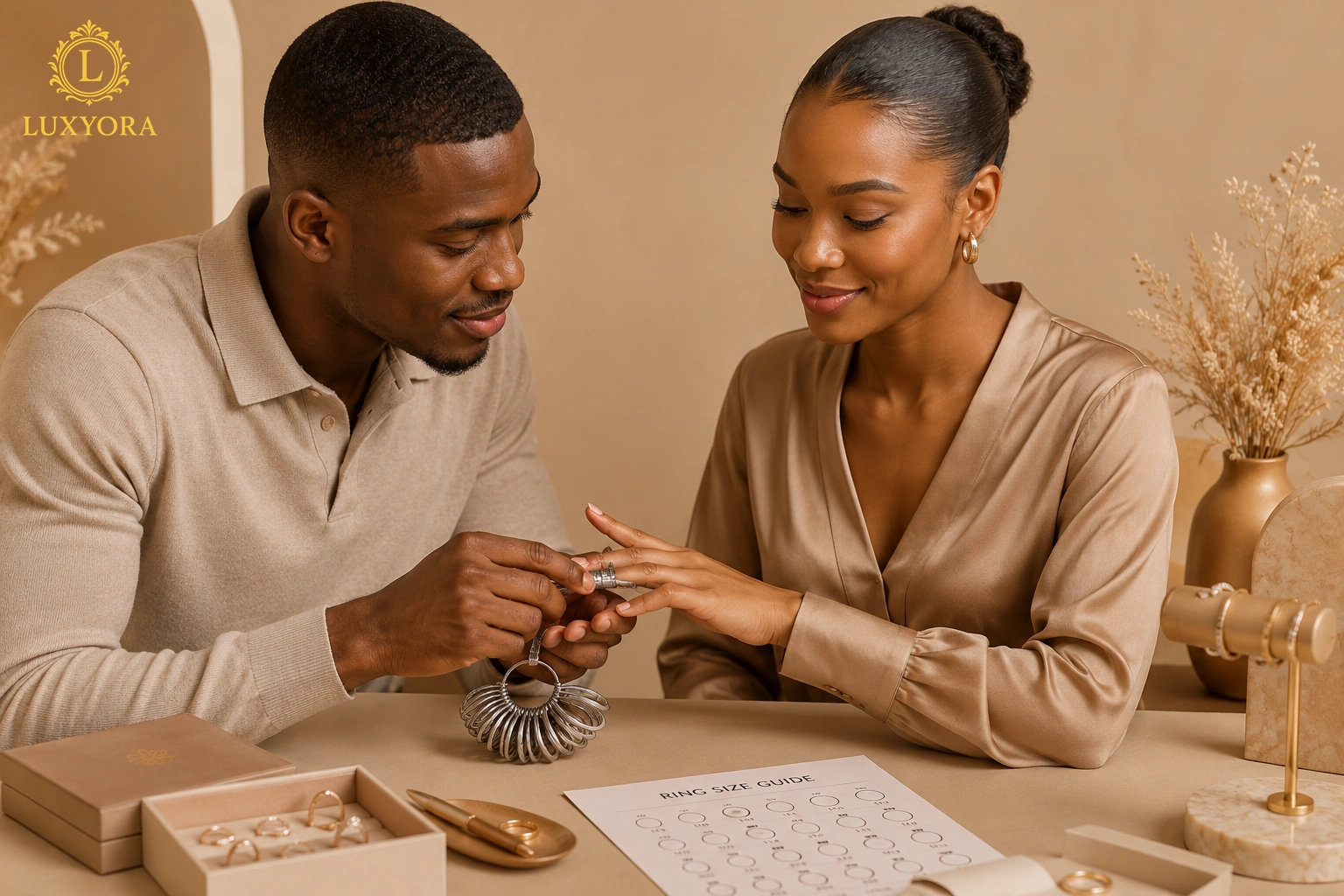
When a piece is made by hand, especially in response to a customer’s story an engagement, an anniversary, a memory the emotional connection deepens. That connection can’t be duplicated by machines, no matter how precise the tooling.
Sociologists studying material culture often note that objects crafted by hand tend to carry social meaning more strongly than mass-produced items. This isn’t just sentimentality; it’s a documented human response to crafted artifacts.
The human touch behind handcrafted jewellery often creates emotional value that grows stronger with every passing generation. Learn the deeper story in Heirloom Jewellery: Turning Family Treasures into Modern Statements.
6) Handcrafting sustains artisanal traditions
There’s a lineage to artisanal craft that connects generations of makers. Skills passed from mentor to apprentice, studios with decades of history, techniques that survive despite industrial pressure these are cultural treasures.
Luxury jewellery houses often maintain dedicated ateliers where traditional handwork lives alongside modern technology. That blend doesn’t retreat from progress; it honors heritage while progressing thoughtfully. In preserving these skills, handcrafted jewellery sustains cultural knowledge that machine production alone cannot.
7) Repairs and longevity are easier to personalize
Handcrafted pieces are often easier to repair meaningfully because the artisan’s fingerprints, so to speak, are part of the object’s structure. A master jeweller who made a piece by hand can often restore it with an understanding of the original intentions and techniques, ensuring the piece lives longer and evolves gracefully over time.
Machines, on the other hand, may produce intricate parts that are difficult to repair or replace without specialist input, which can reduce longevity.
8) Machines are tools, not replacements for creativity
This is the heart of the matter: machines extend human creativity; they don’t replace it. When used well, technology supports the artisan’s vision, enabling precision in prototyping, complex internal shapes, and consistent components where necessary without supplanting the hand.
Designers today often use digital tools to visualize and iterate ideas rapidly, but the final execution, whether it’s texturing, setting, or finishing, is often done by hand in luxury jewellery.
This synergy is where craftsmanship thrives, not where it competes with machines.
9) The luxury market values story, rarity, and soul
Consumers of luxury jewellery aren’t just buying metal and gems. They’re buying experience, identity, and connection. Handcrafted jewellery speaks to those values because it carries intentionality, rarity, and human involvement at every step.
In contrast, machine-made uniformity may satisfy consistency, but rarely inspires awe or emotional connection. Luxury buyers increasingly understand this, and the market reflects it.
10) In the end, craftsmanship outlives trends
Machines are exceptional at keeping up with trends. They can produce what’s “in” quickly and at scale. But handcrafted jewellery transcends trends because it’s rooted in personal expression and timeless workmanship.
A well-crafted piece isn’t disposable fashion. It’s an heirloom, a gift, a story in metal and stone that retains its significance long after seasonal cycles fade.
Luxyora Philosophy: Craftsmanship isn’t nostalgia; it’s intentional beauty. When jewellery is made by human hands, it carries not only form and function, but meaning that machines can’t replicate.
References:
- Bain & Company. (2023). Long live luxury: Converge to expand through turbulence (Bain–Altagamma Luxury Goods Worldwide Market Study). Bain & Company.
- McKinsey & Company. (2021). State of fashion: Watches and jewellery. McKinsey & Company.
- Seijen ten Hoorn, L. (2023). Design for jewellery makers: Inspiration, development and creation. Search Press.
- Countouris, C. (2020). Handcrafted jewellery: A contemporary perspective. Art Jewelry Forum.
- Braun, V., & Clarke, V. (2019). Handmade material culture and meaning. Journal of Material Culture.