How to Verify Jewellery Certification | Luxyora
Luxury jewellery is meant to feel effortless sparkle on, compliments in, a story attached. But behind every “effortless” piece that lasts (and holds value) is something far less glamorous and far more important: proof. Proof of what the metal is. Proof of what the stone is. Proof that what you’re paying for is what you’re getting.
That’s what jewellery certifications do. They turn a beautiful object into a verified one. And in a world where lighting is flattering, marketing language is poetic, and “premium” can mean anything, certification is the difference between trusting your taste and testing your luck.
Here’s why certifications matter, what they actually cover, and how to shop like the kind of buyer who never has to wonder, “Did I overpay?”
1) Certification protects you from expensive ambiguity
Jewellery can be misrepresented in subtle ways: gold purity that isn’t what it claims, diamonds described vaguely, gemstones treated without disclosure, pearls presented as rarer than they are. Certifications don’t make jewellery “better,” but they make it honest.
A certified piece gives you clarity on:
- what materials are used (gold/platinum fineness, diamond grading, pearl type)
- whether treatments exist (common in colored gemstones; sometimes in diamonds and pearls)
- how the quality was assessed (grading standards, lab methodology, identifiers)
Luxury buying isn’t about suspicion; it’s about smart certainty.
2) The most common certifications you’ll see
Not all “certificates” are equal. Some are legally meaningful; others are basically fancy paper.
Diamond grading reports
For diamond jewellery, a reputable grading report is your most powerful document. It usually includes:
- the 4Cs (cut, color, clarity, carat)
- measurements and proportions
- fluorescence details
- a report number (sometimes laser-inscribed on the diamond)
A grading report is especially important for higher-value center stones and major diamond purchases like tennis bracelets or statement earrings.
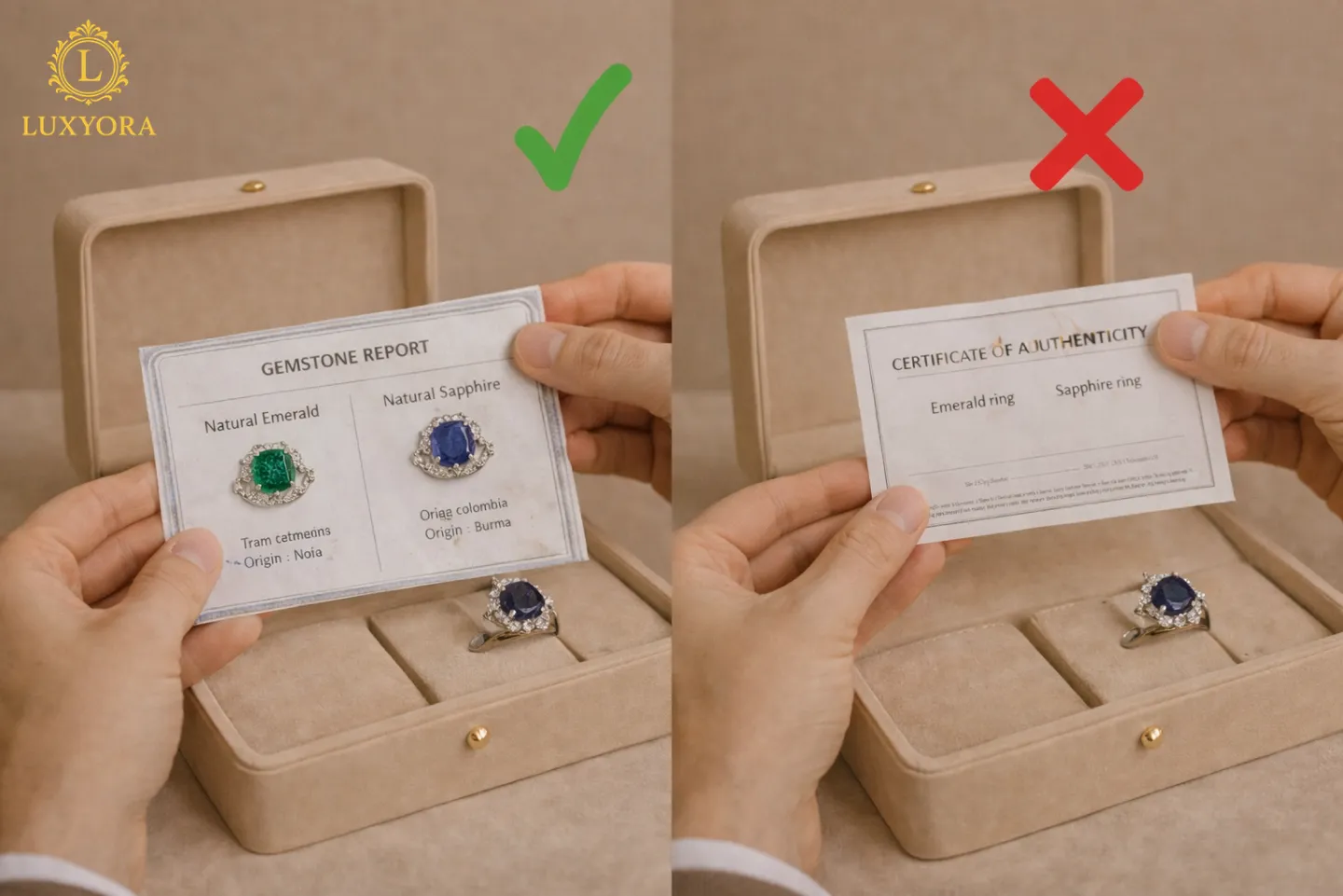
Colored gemstone reports
Gemstone reports often focus on:
- species/variety identification (e.g., sapphire, emerald)
- disclosure of treatments (heat, oiling, filling, etc.)
- origin opinions (sometimes offered, depending on the lab and stone)
If a stone’s value is tied to being “untreated” or from a specific origin, documentation becomes non-negotiable.
Pearl reports
Pearls are a world of nuance: natural vs. cultured, saltwater vs. freshwater, possible treatments, and quality factors like luster and surface. A pearl report can help confirm what you’re buying when the price suggests rarity.
Precious metal hallmarking
Hallmarking is one of the most consumer-protective systems in jewellery. In hallmarking jurisdictions, it indicates the item has been independently tested and verified for metal fineness. This matters because metal purity is not something you can reliably judge by eye.
3) Certification is also about disclosure
Modern jewellery standards emphasize transparency: what’s natural, what’s lab-grown, what’s treated, what’s plated, and what’s an imitation.
A trustworthy seller should clearly disclose:
- natural vs laboratory-grown diamonds
- gemstone treatments (and what they mean for care and value)
- whether white gold is rhodium plated
- whether pearls are dyed or treated
If a seller gets vague when you ask “Is anything treated?” that’s a sign to pause.
4) Hallmarks vs certificates vs appraisals: know the difference
These words get mixed up constantly, so here’s the clean breakdown:
- Hallmark: a stamp on the metal confirming fineness (often independently verified in hallmarking systems).
- Lab report / grading report: a technical assessment of a stone or pearl by a gemological lab.
- Appraisal: a value estimate for insurance or resale context, usually written by an appraiser and not the same thing as a lab grading report.
Luxury buyers often need more than one. For example:
- Diamond ring: hallmark + diamond grading report + appraisal (for insurance)
- High-value pearl strand: pearl report + appraisal
- Gold jewellery: hallmark + detailed invoice (and sometimes appraisal)
5) Certifications matter most when…
You don’t need a lab report for every tiny piece. But you do want documentation when the stakes are higher.
Prioritize certification when:
- the stone is a major cost driver (large diamond, rare gemstone, high-end pearl)
- the seller emphasizes “rare” claims (natural pearl, untreated gemstone, specific origin)
- the piece is intended as an heirloom
- you care about insurance, resale, or long-term value protection
- you’re paying a luxury premium and expect luxury-grade accountability
A luxury price without luxury documentation is just expensive hope.
6) Standards exist for a reason, and they shape the language you should hear
Industry standards (and consumer protection guidelines) help reduce misleading terminology. That’s why you’ll see rules around what can be called “gold,” what needs disclosure in diamond marketing, and how the trade should describe lab-grown vs natural stones.
If the sales pitch is heavy on adjectives and light on specifics, ask for:
- the grading report
- the metal fineness mark
- written disclosure of treatments
- a detailed invoice that matches what was verbally promised
Great sellers love informed buyers. They’ll welcome the conversation.
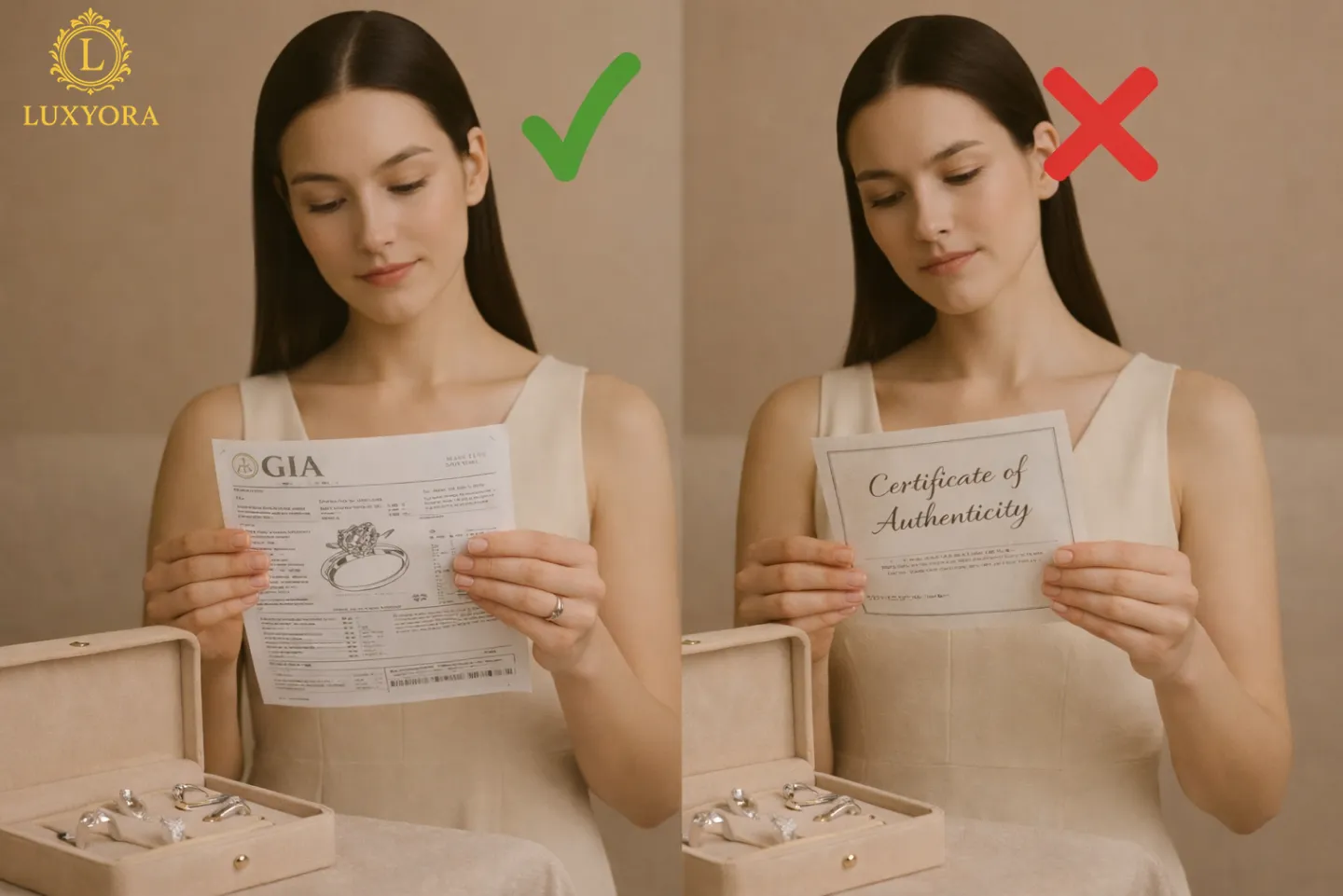
7) How to spot “fake certifications”
Some documents are designed to impress rather than inform.
Red flags:
- no lab name or no report number
- vague statements like “premium quality diamond” without 4Cs
- “certificate of authenticity” that doesn’t specify what was authenticated
- a “brand certificate” with no independent verification for high-value stones
- mismatched details between invoice and paperwork
A real certification is specific, technical, and traceable.
8) The luxury payoff: easier ownership, not just safer buying
Certifications don’t only protect you at purchase. They also help you later with:
- insurance documentation
- resale or upgrade conversations
- repairs and servicing (knowing exactly what you have)
- inheritance and estate planning
- avoiding disputes over what a piece actually is
In other words: certifications make jewellery simpler to own.
Luxyora Philosophy: True luxury is not just beauty, it’s proof. When your jewellery is certified, you don’t just wear it with style; you wear it with certainty.
References:
- CIBJO—The World Jewellery Confederation. (2024). CIBJO Diamond Blue Book 2024-1. CIBJO.
- CIBJO—The World Jewellery Confederation. (2024). Ensuring consumer confidence: Trading in diamonds, coloured gemstones, pearls & corals—The Do’s and Don’ts (Official English version 2024). CIBJO.
- Federal Trade Commission. (2018). Guides for the Jewelry, Precious Metals, and Pewter Industries (16 CFR Part 23). Federal Register.
- Federal Trade Commission. (n.d.). 16 CFR Part 23—Guides for the Jewelry, Precious Metals, and Pewter Industries (eCFR). U.S. Government Publishing Office.
- International Organization for Standardization. (2015). ISO 18323:2015 Jewellery—Consumer confidence in the diamond industry (Confirmed in 2020). ISO.
- UK Government. (2022). Hallmarking is the law: Guidance summary. GOV.UK.
- UK Government. (2022). Hallmarking guidance notes (PDF). GOV.UK.
- The Assay Office (Birmingham). (n.d.). Hallmarking: Legislation, requirements and pricing. The Assay Office.